Category: Sports Entertainment and Media
Clear ResultsIntellectual Property
Danger Zone: Top Gun Heirs Ask Supreme Court to Rewrite the Rules on Copyright Similarity
When Ehud Yonay wrote "Top Guns" for California Magazine in 1983, an 11-page account of the Navy's elite fighter pilot training program, Paramount Pictures came calling almost immediately, licensing the rights, and using the article as the springboard for the 1986 blockbuster Top Gun. After Yonay's death in 2012, his heirs attempted to exercise a powerful but often-overlooked copyright tool: statutory termination rights under 17 U.S.C. § 203, which allow an author's heirs to reclaim copyright grants made during the author's lifetime after a statutory period has elapsed. When Paramount released Top Gun: Maverick in 2022 without compensating or crediting the Yonay estate, the heirs promptly sued for copyright infringement and breach of contract. A district court disposed of the case in 2024, granting Paramount’s motion for summary judgment. The Ninth Circuit affirmed in January 2026, holding that Maverick did not infringe the article because every meaningful similarity between the two works, the shared setting, the fighter-pilot culture, aerial training sequences, etc., reflected unprotectable facts about the real Top Gun program rather than any protected original expression from Yunay’s work. While courts ultimately resolved the § 203 claim forming the basis of the suit in the Yonay’s favor, confirming that the rights to the initial article reverted to them, the central legal battleground became "substantial similarity,” the established standard that copyright plaintiffs must satisfy to show that a defendant copied their original creative expression, as opposed to the underlying facts or ideas, which lie in the public domain. The Ninth Circuit applies a two-step approach to determine substantial similarity. First, an "extrinsic test" that dissects a work into its component parts, filters out unprotectable elements like facts and generic ideas, and compares what remains piece-by-piece. Only works that clear this analytical gauntlet proceed to an "intrinsic test,” a holistic, ordinary-observer assessment of overall similarity. The Yonays argued that the article's vivid language, innovative structure, and the distinctive way Yonay wove those elements into a coherent portrait of a fighter pilot’s life were all protectable, including under a "selection-and-arrangement" theory, which recognizes that an original combination of otherwise unprotectable elements can itself merit copyright protection. The Court disagreed; every similarity, the Court stated, either dissolved into uncopyrightable facts about the real program or evaporated into abstract narrative ideas too general to be owned (the "redemption of a hero," beauty and terror juxtaposed in aerial sequences). Thus, the Yonays' selection-and-arrangement theory failed because the narrative patterns they identified were storytelling conventions, not Yonay's original contribution. The Yonays are appealing the Ninth Circuit’s decision and are applying for certiorari to make their case before the Supreme Court, basing their appeal on a new theory highlighting a significant circuit split. While the Ninth Circuit requires plaintiffs to clear the extrinsic-dissection test before any holistic similarity assessment, the Second, Third, Fifth, Seventh, and D.C. Circuits consider overall similarity without the threshold hurdle. Should SCOTUS grant certiorari and find for the Yonays, the result may be a sea change in the way copyright analysis is handled in one of the busiest jurisdictions for such cases. The Second and Ninth Circuits handle the heaviest copyright dockets in the country, covering the publishing and entertainment capitals. Yet, rights holders face materially different legal standards depending on which coast their lawsuit lands. The Yonays’ petition frames this as a $2 trillion problem, invoking copyright-intensive industries' contribution to the national economy, and argues that the Ninth Circuit's approach effectively strips protection from works like Yonay's, where original expression is inseparable from journalism about real events. Whether the Court grants certiorari remains to be seen, but the petition puts a consequential question about how courts measure creative similarity directly on its radar.
August 3, 2026
Estates and Trusts
Why Membership in the Sandwich Generation Hits Professional Athletes Especially Hard
My trust and estate practice services multi-generational families and those in the “public” space, which includes actors, musicians, and professional athletes. In recent years, I have delved deeper into “sandwich generation” issues (a shorthand term for those of us in midlife balancing the competing demands of caring for aging loved ones while still supporting and launching our young-adult children). Three years ago, “The Sandwich Generation Survival Guide” podcast was launched to provide resources to those of us in the “middle.” It has been enlightening to see how deeply these sandwich generation issues are being felt by professional athlete clients. This demanding and dynamic phase of life for professional athletes is seemingly intensified, accelerated, and often financially magnified in ways that traditional planning frameworks fail to address for other clients. The core challenge for the athlete in the “sandwich” begins with timing. A professional athlete’s earning window is compressed, with peak income often arriving in their 20s or early 30s and career longevity uncertain at best. At precisely the moment when many athletes are earning the most, it appears they are prematurely finding themselves in the “sandwich generation,” certainly earlier than non-professional athlete clients, which typically begins in their late 30s and early 40s, as they are also expected (implicitly or explicitly) to provide for parents, siblings, extended family members, and, like many clients, their own children. This expectation creates a fundamental mismatch between short-term income spikes and long-term, multigenerational obligations. Unlike most clients who accumulate wealth over decades, athletes are frequently required to make high-stakes financial decisions quickly, without the benefit of time, experience, or perspective. Compounding this issue is the expansive definition of family that often surrounds professional athletes. Financial responsibility often extends far beyond the nuclear household to include parents who sacrificed to support the athlete’s career, siblings, and extended relatives who rely on the athlete’s success, and even broader community expectations to give back in meaningful and visible ways. When layered with the needs of a spouse, partner, or young children, the athlete becomes the financial center of a wide, and often informal network. This is the sandwich generation in its most amplified form. These pressures are not purely financial; they are deeply emotional. Many professional athletes grapple with how to set boundaries without damaging relationships, how to distinguish between one-time gifts and ongoing obligations, and how to manage expectations of others when their own income fluctuates, injuries occur, or careers end. Feelings of loyalty, gratitude, and identity are often intertwined with financial decision-making, making it even more difficult to approach these issues objectively. The result is a heightened risk of overextension, where generosity and obligation can easily outpace sustainability. Too often, these dynamics are managed informally, through direct payments, unstructured allowances, or verbal commitments that lack documentation or long-term planning. While well-intentioned, this approach creates significant legal and financial exposure, including tax inefficiencies, unequal distributions (leading to family conflict), and a lack of thoughtful asset protection. It also leaves athletes vulnerable in the event of incapacity, injury, or premature death, where there is no clear structure governing how support should continue or how assets should be preserved. Traditional estate planning models are not well-suited to a professional athlete’s reality. Estate plans are generally designed for clients with longer earning horizons, more predictable income streams, and narrower, more foreseeable definitions of financial responsibility and obligation. Professional athletes, by contrast, require planning that accounts for income volatility, public visibility, name and image value, complex family systems, and of course, the psychological weight of being the primary provider for multiple generations. A more effective estate planning approach reframes these obligations through structure and intentionality. Formal planning tools can transform informal support into sustainable systems, creating clarity, consistency, and accountability while alleviating some of the emotional burden. Thoughtful multigenerational planning allows athletes to support both parents and children without compromising their own long-term financial security, while sophisticated asset protection and tax strategies help preserve wealth in a high-risk, high-visibility environment. Just as importantly, introducing governance and financial education into the family dynamic can help manage expectations and foster a shared understanding of how resources are allocated. Professional athletes are not simply part of the sandwich generation; they often represent its most extreme expression. The convergence of high earnings, short careers, expansive obligations, and emotional complexity creates a unique set of challenges that cannot be addressed with conventional planning alone. When approached strategically, however, this period of financial intensity can become an opportunity to build a lasting, multigenerational legacy. The key lies in shifting from reactive, informal support to deliberate, well-structured planning that reflects both the realities of an athlete’s career and the broader family system they support.
June 22, 2026
Intellectual Property
AI Back in Court: MiniMax Studio’s “In your Pocket” Faces Hollywood Studios Copyright Infringement Claims
When an AI company markets its product as a "Hollywood studio in your pocket," it probably shouldn't be surprised when Hollywood lawyers come knocking. Such is the lot of MiniMax, a Shanghai-based tech company whose video and image generation platform, Hailuo AI, became the target of a joint copyright lawsuit filed by Disney, Universal, and Warner Bros. Discovery in a California federal court last fall. The studios' complaint alleges that Hailuo AI was built on a foundation of stolen intellectual property: that MiniMax scraped and trained its model on the studios' copyrighted films without permission, and that the resulting platform can generate eerily accurate, downloadable images and videos of characters like Darth Vader, Wonder Woman, and the Minions, all with MiniMax's own branding slapped on them, at the push of a button. The lawsuit raises two distinct types of copyright infringement claims. The first involves the AI's training: the argument that feeding a model copyrighted films without a license is itself an unauthorized reproduction of those works, regardless of what the model later produces. The second involves the AI's outputs: the finished videos and images that directly replicate protected characters. The studios also pursued a theory of contributory infringement, arguing that MiniMax didn't just passively enable infringement, but actively encouraged it. The company's own promotional materials featured generated clips of the studios' characters, and it sponsored tutorial videos walking users through how to produce content like "Spider-Man and Supergirl kissing in the park." On May 22, 2026, a federal judge denied MiniMax's motion to dismiss, rejecting both the company's claim that a U.S. court lacked authority over a Chinese defendant and its argument that the studios hadn't stated a viable legal claim. On the contributory infringement theory in particular, the court found the studios' allegations sufficient to proceed. The studios have framed the stakes in stark terms, warning that as generative AI advances, it's only a matter of time before these tools can produce full-length unauthorized films. While that outcome remains speculative, the core legal question the case will force courts to answer is concrete: can an AI company build a commercial product on copyrighted works it never licensed, and then profit from an output that reproduces those works on demand? If the studios prevail, the answer will reshape how AI developers approach content licensing and what rights holders can expect in return. For now, MiniMax's motion to dismiss has been denied, the parties are headed toward discovery, and the "Hollywood studio in your pocket" is facing the real Hollywood in court.
June 22, 2026
Trademark and Copyright
“Alright, Alright, Alright,” — Taylor’s Version. Taylor Swift follows Matthew McConnaughey’s Novel Approach to Using Trademark Rights to Enforce Against AI Impersonation
Ever eager to retain control over her masters and ensure that she “never goes out of style,” Taylor Swift is the latest public figure looking toward registration of sensory trademarks to protect her name and likeness in a roundabout way. On April 24, 2026, Taylor Swift's company, TAS Rights Management, filed three trademark applications with the U.S. Patent and Trademark Office: two "sound marks" capturing her spoken voice (which include the language "Hey, it's Taylor" and "Hey, it's Taylor Swift") and one design mark consisting of a photograph of Swift performing onstage during The Eras Tour. This echoes our prior writing regarding similar applications filed by the actor, Matthew McConnaughey, as Swift’s applications represent the latest in a growing movement of public figures attempting to use trademark rights to protect their names and likenesses — most likely due to the increasing accessibility of AI technology, which can impersonate such figures. While sound marks have historically been used to protect iconic brand audio cues, like Netflix's "tu-dum", the MGM lion roar, or NBC's chimes, these public figures have attempted to apply the same framework for their spoken voices and image. This genuinely novel use of trademark law is as-of-yet untested, and Swift's motivation here is not hard to read, as her likeness has been used without permission in numerous AI-generated fakes, including by Meta's AI chatbots, in non-consensual pornographic images, and in false political endorsements shared during the 2024 presidential election. The legal theory underlying these filings is novel and creative precisely because existing law was never designed for this purpose. Under current U.S. law, a musician's recorded performances are protected by copyright law, while the unauthorized commercial exploitation of a person's name or likeness is addressed by state-level right-of-publicity statutes. Individual states, including New York and California, have right-of-publicity laws that prevent unauthorized commercial use of a person's name, image, and likeness (“NIL”), but trademark infringement claims can be filed in federal court, making them a potentially more powerful deterrent as those cases apply nationwide and are not dependent on individual states’ differing enforceability limitations. Most importantly, trademark enforcement doesn't just stop identical uses as copyright enforcement does. Rather, trademark enforcement is designed to protect a rights owner against anything "confusingly similar" to a registered mark. This is a meaningfully broader standard that could reach AI-generated content that approximates, but doesn't exactly replicate Swift's voice or appearance. Trademark claims also enhance the ability to obtain emergency injunctive relief and to recover damages against AI platforms themselves. However, these applications face an unsure road to registration. Trademark protection traditionally requires that the mark function as a source identifier (i.e., signaling to consumers the origin of a product or service) and it is far from settled whether a person's voice or image satisfies this standard. Historically, trademarks are not designed to protect an individual's general likeness, voice, or persona. Swift's filings may be best understood as a deliberate effort to layer additional federal remedies on top of existing right-of-publicity and copyright protections rather than a “cure-all” to the elusive offense of AI impersonation, the scale and sophistication of which is not subject to a single body of law. Whether these applications ultimately succeed, they reflect a broader and accelerating trend: public figures and their counsel actively searching for any available legal structure to fill the enforcement gap that generative AI has created. It is clear that Swift believes that she will continue to Party Like It's 1989™. image credit SockaGPhoto - stock.adobe.com
May 11, 2026
Labor and Employment
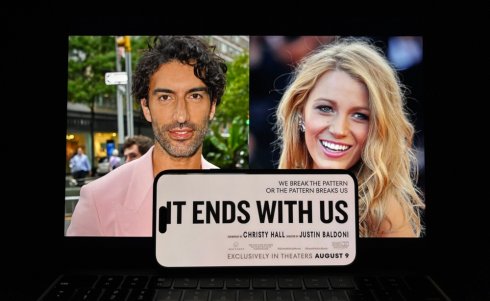
It Ends Quietly: What the Lively-Baldoni Settlement Really Tells Us About Litigation
For nearly two years, this case unfolded the way modern legal disputes often do. Not in a courtroom, but in fragments and narratives. In articles, group chats, comment sections, and carefully curated statements. It felt, at times, like a story in search of an ending. But when the ending finally arrived, it was not a verdict. It was a settlement announced in a handful of sentences, issued jointly, and designed to close the door rather than resolve the conflict. No trial. No jury. No public reckoning of who was right. Instead, something quieter. And in many ways, far more revealing. What does it mean when a case settles right before trial? The timing matters. This case did not settle early, when uncertainty is highest and discovery has yet to sharpen the issues. It settled at the last possible moment, just weeks before a scheduled May trial, after the legal landscape had already shifted in a meaningful way. By that point, the court had done what courts do best. It stripped the case to its essentials. Of the original claims, 10 were dismissed, including the most visible, leaving only a narrow set of theories to be decided by a jury. What remained was not the sweeping narrative the public had been following. It was something much smaller. Something much more technical. Something that would have required jurors to answer precise legal questions about retaliation and contractual obligations rather than broader questions about conduct or character. And then, before any of those questions could be answered, the case ended. That sequence is not unusual. It is, in fact, typical. Once discovery is complete and the court has defined the case, the parties are no longer negotiating in the abstract. They are negotiating in the shadow of a very specific trial. One that now comes with clearer risks and fewer unknowns. In that environment, settlement is not retreat. It is recognition. Why would a high-profile case end without money changing hands? Perhaps the most surprising detail emerging from early reporting is the apparent lack of financial exchange between the parties. Each side reportedly walked away covering its own legal fees. That outcome can feel counterintuitive in a case defined by claims of massive reputational and economic harm. But it aligns with something lawyers understand instinctively, and the public often overlooks. Litigation is not a referendum on harm. It is a method for proving it. At various points in the case, the parties advanced dramatically different accounts of damages. One side spoke in terms of lost opportunities and reputational impact. The other questioned both the methodology and the underlying premise. By the time a case reaches the brink of trial, those claims are no longer theoretical. They have been tested, challenged, constrained by evidentiary rules and expert scrutiny. The result is rarely as expansive as the initial pleadings suggested. A no-payment resolution, in that context, does not mean nothing happened. It means something more specific. It reflects the gap between what could be alleged early and what could ultimately be proven in court. Did the settlement change anything or simply confirm what the court had already signaled? In many ways, the settlement feels less like a turning point and more like a conclusion to a process that had already narrowed the case substantially. The April ruling set the trajectory. It was not an early procedural decision. It was a merits-driven assessment after discovery, focused on what the record could actually support. That ruling reshaped the case in several important ways. It clarified that many of the claims failed for reasons grounded in legal structure rather than public perception. Employment status, jurisdiction, and contract formation all played decisive roles in determining what could proceed. At the same time, the court allowed certain claims to move forward, particularly those tied to retaliation and contractual obligations. Those surviving theories reflected something more subtle. A shift in where legal risk often resides in modern workplace disputes. The settlement did not undo any of that analysis. It accepted it. What does this case reveal about power, proof, and perception? Earlier, this litigation offered a useful lens into how power, proof, and perception interact. The settlement shows how that interaction resolves. Perception drove the public conversation. From the beginning, the case was understood through competing narratives that invited audiences to take sides long before the pleadings had settled. But perception did not determine the legal outcome. It could not expand jurisdiction. It could not convert an unsigned agreement into an enforceable contract. It could not substitute for admissible evidence. Proof did the work that proof always does. It narrowed. It filtered. It transformed broad allegations into discrete questions anchored in documents, communications, and contemporaneous records. By the time the case reached its final stage, what mattered was not how the story felt, but what could be demonstrated. Power remained present throughout, but not in the way it is often imagined. Influence shaped the stakes and the visibility of the dispute, but it did not rewrite the legal standards that governed it. The court applied the same framework it would apply in any workplace case, even if the setting was far from ordinary. The end result reflects that hierarchy. Perception set the stage. Proof controlled the script. Power influenced the audience, not the outcome. What lessons should employers and practitioners take from how this ended? Strip away the names and the attention, and what remains is a fairly familiar legal arc. A workplace dispute arises in a setting that blurs professional and personal boundaries. Allegations are made, both legal and reputational. The case expands quickly, incorporating multiple causes of action and overlapping narratives. Discovery follows, and with it a more disciplined examination of the evidence. The court narrows the issues. What survives is more precise, more technical, and often less satisfying to anyone looking for a sweeping resolution. From there, the incentives shift. The cost of trial becomes concrete. The risks are no longer abstract. And the question becomes less about proving everything and more about resolving what remains. This case also reinforces something increasingly important. Even where underlying misconduct claims fall away, retaliation theories can persist. The alleged harm is not always tied to traditional employment actions. It may instead center on reputation, messaging, and the way narratives are managed in public spaces. That evolution matters because it expands the kinds of conduct that may be examined through a legal lens, even when the original allegations do not move forward. Why does this ending feel so incomplete? Because it is. Settlements are designed to end disputes, not to explain them. They provide closure without resolution, finality without full transparency. They are, by their nature, unsatisfying for anyone seeking a definitive account of what happened. And yet, they are the most common ending to cases like this. In that sense, the conclusion here is entirely consistent with the system in which it unfolded. The case did not fail to deliver an answer. It delivered the answer the legal process is structured to give. A narrowing of claims. A testing of proof. A recalibration of expectations. And, ultimately, a decision to stop litigating before the final question is put to a jury. What is the real takeaway from how this case ended? The title of the film at the center of the dispute suggests a clean conclusion. A moment where something definitively ends. The litigation tells a different story. It suggests that in modern workplace cases, especially those that unfold in public view, resolution rarely comes in the form people expect. It does not arrive with a clear declaration of fault or vindication. It arrives more quietly, shaped by legal constraints, evidentiary realities, and the practical considerations that define every case once it moves from narrative to proof. What began as a story about conduct became a case about law. What felt expansive became precise. What seemed headed toward a dramatic ending instead resolved in silence. Not because the issues disappeared. But because, in the end, litigation only answers the questions it knows how to ask.
May 7, 2026
Labor and Employment
From Allegations to Adjudication! Court Strips Lively–Baldoni Case to a Retaliation Reckoning
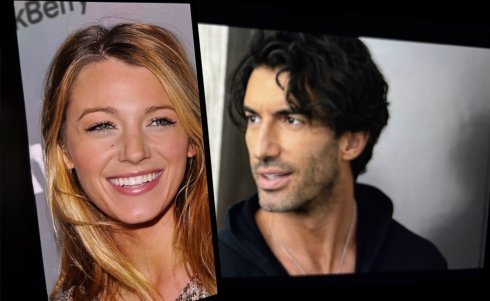
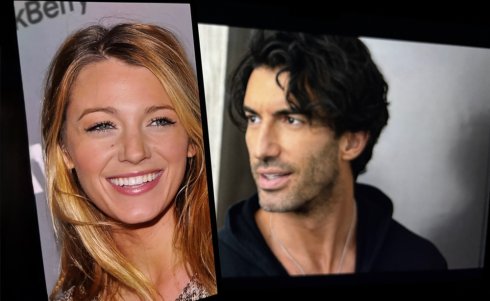
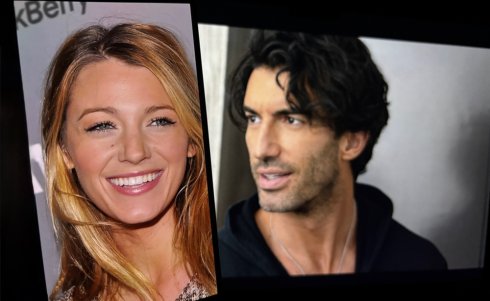
The April 2, 2026, decision in the dispute between Blake Lively and Justin Baldoni is best understood as a post discovery narrowing that leaves the case both smaller and more legally coherent. Judge Lewis Liman granted the defendants’ motion for judgment on the pleadings and motion for summary judgment in substantial part, dismissing most of the claims and allowing only a limited set to proceed. This was not an early-stage plausibility ruling. It was a merits-driven assessment of what the record can actually support. What remains is precise. Lively’s retaliation claim under the California Fair Employment and Housing Act proceeds against the production entities. Her aiding and abetting retaliation claim proceeds against the public relations firm. Her breach of contract claim proceeds against the entity that signed the Contract Rider Agreement. The rest of the case, including Title VII, Labor Code retaliation, and the common law theories, has been dismissed. The contractual analysis is where the opinion does some of its most important work, and it explains why the case looks the way it does now. The court treated two agreements very differently, and the reason is not subtle. One was never signed. One was. The Actor Loanout Agreement failed as a matter of contract formation. The court focused on express language that made execution a condition of any obligation. The agreement provided that the company’s obligations were conditioned on “receipt of executed copies of this Agreement signed by Lender and Artist.” It also required execution of the inducement. Those provisions were not treated as boilerplate. They were treated as dispositive. Lively never signed. The parties continued to negotiate material terms, including the very provision addressing sexual harassment and remedies. On those facts, the court held there was no binding contract to enforce. That conclusion carries broader significance than this case. The court rejected the idea that substantial performance can override an express intent not to be bound absent execution. Filming occurred. Compensation was paid. Negotiations continued. None of that altered the contractual analysis. Where the parties clearly reserve the right not to be bound until signature, courts will enforce that reservation. In practical terms, the court treated the ALA as exactly what it was in the record. An unconsummated negotiation. The Contract Rider Agreement, by contrast, is the rare piece of paper in this record that does exactly what lawyers expect a contract to do. It was signed. It contains operative language. And that language goes directly to the theory that survived. Paragraph 10 provides that there shall be “no retaliation of any kind” against Lively for raising concerns, including retaliation “during publicity and promotional work.” That provision is not abstract. It is tailored to the very conduct Lively alleges occurred after she raised complaints. The court’s willingness to let the contract claim proceed flows directly from that text. The difference in treatment between the ALA and the CRA is therefore not a matter of judicial preference. It is a straightforward application of contract law. An unsigned agreement with disputed terms does not bind. A signed agreement with a clear anti-retaliation clause does. The retaliation analysis follows a similar pattern of doctrinal precision. Several claims failed because they required an employment relationship that the court concluded was not present. That determination eliminated the Title VII and Labor Code theories. But FEHA retaliation is written differently. It protects any person who engages in protected activity. That statutory distinction is what allows the claim to proceed. The court also declined to treat the alleged conduct as too remote from California to support a FEHA claim. It found a sufficient connection based on allegations that California-based actors directed and executed the challenged conduct. That holding keeps California law in play and preserves a framework that is often broader than its federal counterpart. The most closely watched aspect of the case, the alleged reputational campaign, survives but only in the narrow sense that matters at this stage. The court did not find that retaliation occurred. It held that a reasonable jury could find it occurred. It also held that the defendants’ explanation that they were protecting their reputations and the film does not resolve the issue as a matter of law. Competing explanations are for a jury where the record supports them. That brings us to the question that tends to get lost in the headlines. What about Baldoni himself. Is he out? The answer is no, but his exposure is materially reduced. Many of the claims asserted directly against him, including harassment and certain statutory claims, have been dismissed. However, he remains a defendant to the extent he is part of the group alleged to have engaged in retaliatory conduct and conspiracy. The case against him now lives or dies on the retaliation theory rather than on the broader set of claims originally pleaded. The same narrowing applies across the board. Wayfarer is no longer in the contract case because it was not a party to the agreements and the argument was not preserved. But it remains in on retaliation. The public relations entity remains in on aiding and abetting. The film specific entity remains in on both retaliation and contract. The cast of defendants is still present. The script they are operating under is simply much tighter. What the court has done is not to decide who is right. It has decided what can be decided later. The case now turns on a set of familiar but demanding questions. Whether Lively engaged in protected activity. Whether she experienced adverse action after doing so. Whether that action was motivated by retaliation. And whether it breached a written promise prohibiting retaliation. For a legal audience, the lesson is as straightforward as the holding. Contracts matter in the form they are actually executed, not the form in which they are discussed. Statutes matter in the words they actually use, not the words we assume they contain. And at summary judgment, claims survive not because they are compelling in the abstract, but because the record permits a reasonable jury to accept them. The case that remains is narrower. It is also more dangerous in a familiar way. Retaliation claims tend to turn on motive and sequence rather than a single discrete act. Those are questions that courts are often reluctant to resolve as a matter of law. That is why, even after a ruling that eliminates most of the complaint, this litigation is far from over.
April 3, 2026
Intellectual Property
Britney Spears' Music Catalog Sale Highlights Rise in IP Deals Across the Music Industry
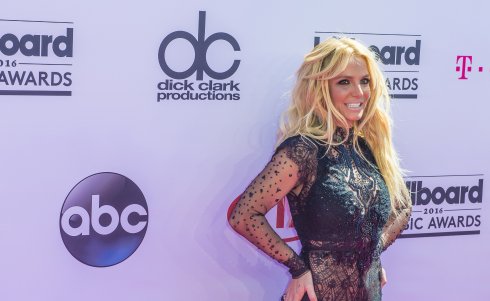
Britney Spears is the latest cultural icon to monetize her intellectual property by selling the rights to her entire music catalog to publisher Primary Wave for an estimated $200 million. This landmark agreement encompasses over two decades of hits and underscores a surging industry trend in which creators convert the long-term value of their IP portfolios into immediate capital. Spears joins a growing list of major artists (including Bruce Springsteen, Bob Dylan, Justin Bieber, and Katy Perry) who have recently brokered massive nine-figure transfers of their publishing and recorded music rights. For artists evaluating their intellectual property strategy, liquidating a catalog offers compelling advantages. The chief and obvious benefit is the immediate, guaranteed lump-sum payout an artist receives, which protects the artist from the uncertainties of fluctuating streaming revenues and shifting market trends. Additionally, a sale relieves the artist and their heirs from the complex, ongoing administrative burdens of managing copyright rights, negotiating licensing deals, and auditing royalties. The firms that acquire these rights assume the responsibility of actively pitching the catalog for lucrative placements in film, television, and commercial branding, by using their resources to maximize the IP's reach. However, cashing out requires artists to make significant trade-offs, the most notable drawback being the forfeiture of long-term royalty streams. If the music's value spikes due to a viral trend or a high-profile placement, the publishing firm reaps the financial windfall, not the creator. Furthermore, artists often surrender the ultimate right to control how their work is commercialized, opening the door for their music to be licensed for campaigns or media they might otherwise have rejected. In today’s highly charged political climate, this trade-off is not insignificant. This monumental sales strategy highlights the immense, tangible value of a well-protected IP portfolio, illustrating the careful balance creators must strike between immediate financial certainty and the long-term stewardship of their brand.
March 2, 2026
Intellectual Property
Beckham v Beckham: The Legal Anatomy of a Very Public Breakdown
If HBO’s writer’s room is looking for its next prestige drama, then they should look no further than the Brooklyn family feud. Brooklyn Beckham, the first son of David and Victoria Beckham, took to his Instagram story to unleash a set of accusations against his family, including allegations of interference with his marriage to Nicola Peltz and “Brand Beckham” priorities. These statements intensified an already rumored family rift dating back to wedding-related disputes. But the most commercially significant feature of this story is not interpersonal conflict; it is that the conflict is playing out inside a high-value brand ecosystem, creating a multijurisdictional intellectual property battle. Once such allegations are made to millions of followers, the situation stops being purely private: it becomes an enterprise risk event that is capable of triggering contractual defaults, insurance notifications, and formal legal positioning, even if nobody wants to ever walk into a courtroom. Viewed through a legal lens, the dispute quickly breaks into several distinct areas of exposure. Defamation Risk (and why wording matters) When accusations are aired on social media, lawyers immediately ask: fact or opinion? Statements framed as verifiable facts that harm reputation can trigger defamation claims, especially when a reputation is also a revenue stream. When endorsements and licensing deals are involved, reputational harm can quickly morph into business tort exposure. “Rights to My Name”: Trademarks as Leverage Brooklyn’s reported complaint that he was pressured to sign away rights to his name pulls the dispute squarely into trademark law. Public reporting suggests the Beckhams registered their children’s names as trademarks while they were minors, with renewals now looming. That matters because whoever controls the mark controls licensing, commercial use, and has negotiation leverage in a family fallout. Contracts, Endorsements, and Morals Clauses Public drama makes brand partners nervous. Endorsement and licensing agreements often include morality clauses, non-disparagement language, and notice requirements. Once a controversy breaks, counterparties will quietly check whether they have termination rights, or at least a reason to renegotiate. Non-Disparagement and Confidentiality in Family Businesses Family empires often run through layers of companies and agreements. If any family members are contractually bound by confidentiality or non-disparagement provisions, public statements can create legal headaches. Enforcement is tricky, though. Injunctions risk free-speech pushback or loss of goodwill, damages are hard to quantify, and over-lawyering can amplify the story instead of burying it. Cease-and-Desist Letters: The First Legal Chess Move Some outlets report that lawyers got involved. From a litigator’s perspective, early correspondence matters: non-privileged pre-litigation letters can become evidence, admissions can haunt later filings, and privilege only protects communications handled carefully. A cease-and-desist letter is more about positioning than the endgame. Media Control, Privacy, and Narrative Wars Complaints about “media manipulation” raise different legal questions depending on jurisdiction. In the UK, privacy and misuse-of-private-information claims loom larger; in the US, privacy torts vary wildly by state. Fame doesn’t erase rights, but it does complicate them. Brand Custodianship and Fiduciary-Adjacent Issues When parents hold intellectual property rights for children, especially through guardian or trust structures, disputes can trigger questions that sound a lot like fiduciary duties: who controlled the asset, who benefited, and whether transitions to adulthood were properly documented. Who’s Authorized to Speak? PR teams, agents, managers, and family members often operate under overlapping authority. When statements fly, lawyers look at who approved what, whether anyone exceeded their mandate, and whether internal PR or confidentiality protocols were breached. In conclusion, Brooklyn’s private grievances should trigger public company-level risk management. The Beckham name is a business after all, and Brooklyn’s public breakdown is risky for the business. Beckham v Beckham is a battle for control. For anyone operating inside a family enterprise or personal brand, the warning is clear: adequate governance, contracts, and IP planning prepare your brand for when that Instagram statement goes live.
February 13, 2026
Trademark and Copyright
Actor Matthew McConaughey Registers Sensory Trademark “Alright, Alright, Alright” in Enforcement Effort Against AI Deepfakes
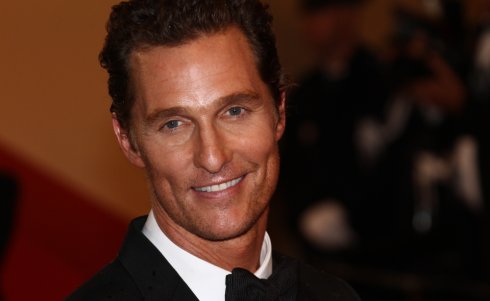
Well-known actor Matthew McConaughey has attracted headlines following the registration of a number of trademarks, not just related to brands with which he may be associated, but also those that address his pop-culture persona. Most interesting among these is McConaughey’s recent registration of the phrase "Alright, alright, alright," first uttered by the actor in the 1993 film Dazed and Confused, which has become strongly associated with the actor’s laid-back, Texas public image. McConaughey, however, has not only registered “Alright, Alright, Alright” as a trademark, but also as less common sensory marks. Sensory marks are trademarks that identify brands through senses other than just text or static logos. Well-known examples include the three-note (G-E-C) NBC Chimes, the MGM lion’s roar accompanying many well-known films, and the specific scent of Play-Doh. According to McConaughey’s legal team, the registration of these sensory marks and other recent registrations represents an attempt to enforce against the ever-increasing problem of AI-generated “deep fake” videos, in which celebrities or other well-known individuals are impersonated, in strikingly authentic fashion. The registration of “Alright, Alright, Alright,” (Reg. Nos. 7995951 and 8070191) as sensory marks, specifically, has the potential to represent a tactical shift in celebrity rights management. By securing federal trademark protection for the specific sound and motion of his delivery of the phrase, McConaughey attempts to move beyond the patchwork of state-level "right of publicity" laws. A federal trademark registration provides nationwide constructive notice of McConaughey’s ownership and creates a legal presumption that his distinct mannerisms and delivery of the phrase serve as source identifiers for the registered Class 09 goods and Class 41 entertainment services, which constitute his on-screen performance. In the context of AI, this allows his legal team to pursue infringement claims under the Lanham Act against entities using AI voice clones or deepfakes to endorse products. Unlike a right of publicity claim, which often requires proving the appropriation of one's "likeness," a trademark claim focuses on consumer confusion; specifically, whether an AI’s use of the catchphrase falsely suggests McConaughey’s sponsorship or approval. However, relying on trademark law to police AI has significant limitations. The primary hurdle is the "commercial use" requirement; trademark laws are designed to prevent consumer confusion in the marketplace, not to protect personal dignity. Consequently, this registration may be ineffective against non-commercial AI generations, such as artistic deepfakes, memes, or satire, which may be protected by the First Amendment or the doctrine of Fair Use. Ultimately, the scope of protection offered by these new registrations may be narrow. While McConaughey can now vigorously enforce against an AI creation saying “alright, alright, alright," this specific registration offers little recourse against an AI model mimicking his voice to say anything else. Infringers could potentially bypass this protection by simply creating AI content that avoids his registered catchphrases while still exploiting his vocal timbre and mannerisms. While this registration adds one weapon to his arsenal, it is likely a specific deterrent rather than a comprehensive shield against unauthorized digital exploitation.
January 26, 2026
Labor and Employment
Power, Proof, and Perception in the Blake Lively–Justin Baldoni Litigation
This blog provides an update on the ongoing litigation involving Blake Lively and Justin Baldoni. If the original blog explored how this case began, this chapter is about what it has become. Some lawsuits resolve disputes, and there are lawsuits that reveal systems. The litigation between Blake Lively and Justin Baldoni belongs squarely in the latter category. What began as a conflict arising out of the production of It Ends With Us has become a slow-moving but oddly illuminating seminar on how modern employment law operates when the workplace is glamorous, the parties are famous, and the stakes extend well beyond liability. At a distance, this case is often flattened into a familiar cultural shorthand. Two celebrities. Competing narratives. A public eager to assign heroes and villains before the pleadings have even settled. Up close, however, the litigation is far more interesting and far less cinematic. It is not about grand gestures or dramatic revelations. It is about burden shifting, evidentiary texture, and the unromantic mechanics of proving what the law actually requires rather than what public opinion might prefer. Lively’s claims are rooted in doctrinally orthodox territory. Hostile work environment and retaliation are not exotic causes of action, even in Hollywood. What complicates matters is not the legal framework but the context in which it must be applied. Film sets are workplaces that market intimacy, emotional exposure, and creative vulnerability as professional virtues. That does not exempt them from employment law, but it does make line-drawing more delicate. Conduct that might be clearly inappropriate in a corporate office can appear, at least superficially, normalized when wrapped in the language of art and collaboration. Juries are asked to navigate that ambiguity without losing sight of the legal question, which is not whether the environment was intense or uncomfortable, but whether it crossed a legally cognizable threshold. This is where the case becomes less about personalities and more about proof. Severity and pervasiveness are not abstract concepts. They are constructed through accumulation. Frequency. Context. Reaction. Silence or objection. Response or indifference. The text messages and communications that have emerged through discovery are legally interesting not because they are personal, but because they are contemporaneous. They are the breadcrumbs juries are trained to follow when reconstructing intent and impact long after the moment has passed. Baldoni’s defense strategy reflects a sophisticated understanding of those dynamics. His posture has not been limited to denial. Instead, it has focused on reframing. Recharacterizing interactions as misread. Suggesting that objections were unclear or retrospective. Implicitly arguing that what the plaintiff experienced as coercive or hostile was, in fact, part of a fraught but mutual creative process. This is not an argument that misconduct never occurs. It is an argument that ambiguity exists, and in civil litigation, ambiguity can be a powerful ally. The brief countersuit, though procedurally unsuccessful, fits neatly within that strategy. Its real value was never doctrinal. It was narrative. It signaled resistance rather than retreat and attempted to reposition reputational harm as a two-way street. Courts can dispatch weak claims with relative ease. Jurors, however, carry impressions with them long after motions are denied. Litigation is as much about what lingers as what survives. The retaliation component of the case may ultimately prove more consequential than the underlying harassment claims. Retaliation law is less concerned with tone and more with timing. It asks whether adverse consequences followed protected activity and whether those consequences can be explained without resort to post hoc rationalization. In industries where decisions are informal and documentation is sparse, that inquiry can quickly become uncomfortable. Silence, in these cases, is rarely neutral. Hovering over all of this is the court’s increasingly difficult task of managing relevance in an era of celebrity saturation. Discovery disputes over third-party anonymity and sealing are not merely procedural housekeeping. They reflect a more profound anxiety about what happens when litigation escapes the courtroom and becomes cultural content. The law presumes openness for good reason, but it was not designed for cases where relevance is routinely conflated with notoriety. Judges are left to perform a delicate balancing act while everyone else watches for entertainment. What makes this case compelling is not the promise of a dramatic verdict, but the way it exposes the friction between legal standards and human storytelling. Employment law is intentionally unsentimental. It reduces experience to elements and burdens and asks factfinders to be disciplined in their empathy. Celebrity culture, by contrast, thrives on immediacy, identification, and moral clarity. When the two collide, neither emerges entirely intact. By the time this case reaches a jury, if it does, much will already have been decided in quieter ways. In discovery conferences. In evidentiary rulings. In how jurors are primed to interpret ambiguity. And perhaps in how the industry itself recalibrates its tolerance for informality masquerading as creativity. This lawsuit will not end Hollywood’s reckoning with power or fix the uneasy relationship between art and accountability. The law is not built for that kind of closure. What it can do, and what this case is already doing, is force a conversation about what workplaces owe their employees, even when the workplace happens to come with a red carpet. What is perhaps most striking about this litigation is how little of it turns on dramatic moments and how much of it turns on endurance. Employment cases of this kind rarely win with a single revelation. They win through accumulation. Through patience. Through the unglamorous discipline of discovery, motion practice, and evidentiary framing. In that sense, the Blake Lively and Justin Baldoni case is an unusually pure illustration of how civil law actually functions when stripped of narrative shortcuts. The public tends to assume that credibility is something a party either has or lacks. Courts know better. Credibility is constructed incrementally through consistency, corroboration, and the absence of convenient revision. It is shaped as much by what parties do when no one is watching as by what they say once litigation begins. That is why contemporaneous documentation looms so large here, and why informal industries often find themselves at a disadvantage once formality is imposed retroactively by a lawsuit. Film production culture has long relied on trust, improvisation, and professional intimacy as operating norms. Those norms are not inherently unlawful, but they are legally fragile. They assume good faith, mutual understanding, and aligned incentives. Litigation, by contrast, assumes none of those things. It assumes conflict, misinterpretation, and self-interest. When a dispute moves from the set to the courtroom, the cultural currency of collaboration is abruptly converted into the legal currency of proof. Not all industries make that exchange gracefully. This case also illustrates the quiet but significant role of institutions that never appear in the caption. Insurers, production companies, distributors, and financiers are watching closely, not for moral lessons but for risk signals. They are asking whether existing safeguards are sufficient, whether reporting mechanisms function in practice, and whether informal authority structures create exposure that contracts alone cannot neutralize. These are not abstract questions. They affect underwriting decisions, contractual provisions, and the degree of oversight studios are willing to impose on creative leads who have historically operated with broad discretion. There is, too, a cautionary tale here about the limits of reputational self-help through litigation. Aggressive narrative counteroffensives may satisfy an immediate impulse to respond, but they also lengthen disputes and deepen entanglement. The longer litigation persists, the less control any party has over how they are perceived. The law does not reward eloquence. It rewards coherence. And it is remarkably indifferent to whether a party feels misunderstood. For lawyers, this case is a reminder that celebrity does not simplify litigation. It complicates it. Famous clients are scrutinized differently by jurors, judges, and adversaries alike. Their communications are read with suspicion. Their motives are interrogated. Their silence is rarely interpreted as restraint. Representing them requires not just technical competence but also strategic restraint and a tolerance for ambiguity, which can be difficult to maintain under public pressure. For workplaces, particularly creative ones, the lesson is not that informality must disappear, but that it must be bounded. Clarity, documentation, and meaningful response mechanisms are not bureaucratic intrusions. They are legal insulation. They protect not only employees but also leadership by ensuring that disputes are addressed early, internally, and with a record that reflects intent rather than reconstruction. And for observers tempted to treat this case as entertainment, it offers a quieter but more durable insight. The law is not a referendum on character. It is a method for resolving disputes under conditions of uncertainty. It does not promise catharsis. It promises a process. When we mistake one for the other, we misunderstand both. As this case continues its methodical progress toward trial, it will likely generate more headlines, more commentary, and more attempts to distill it into a morality play. That impulse is understandable. It is also misleading. The real work of this litigation is happening in places that do not trend. In conference rooms. In discovery disputes. In evidentiary rulings that shape what a jury will ultimately be allowed to hear. That is where outcomes are decided. Quietly. Incrementally. Without a soundtrack. Again, while the original blog examined the origins of this case, this chapter focuses on how the matter has evolved and what it has now become. Not a scandal, but a study. Not a spectacle, but a process. And for anyone interested in how the law actually mediates power, creativity, and accountability, it is a study worth paying attention to.
January 16, 2026
Family Law
Penalty Clauses in Prenuptial Agreements: Lessons from the Reported “Cocaine Clause”
Prenuptial agreements have long evolved beyond simple asset division roadmaps. Modern prenups address conduct during marriage, incorporating so-called “penalty” or “incentive” provisions that attach financial consequences to specific behaviors. While these clauses can be powerful planning tools, they also sit at the intersection of contract law, family law, and public policy — an intersection that courts carefully scrutinize. Frequently, penalty or incentive clauses find their way into celebrity prenuptial agreement. Keith Urban is an Australian-American country music performer who has won four Grammys and 15 Academy of Country Music Awards. Nicole Kidman is an Australian-American actress and producer. The couple was married on 25 June 2006 at Cardinal Cerretti Memorial Chapel on the grounds of St Patrick’s Estate, Manly, in Sydney. They have two daughters. Various news outlets are reporting that Keith and Nicole negotiated an extensive, detailed prenuptial agreement before getting married. Interestingly, it appears that one clause of the prenuptial agreement provided a monetary reward to Keith if he maintained his sobriety. Per sources, Keith was to abstain from alcohol and other drugs, including cocaine, and would earn $600,000 per year for doing so. Considering Keith has reportedly been sober since 2006, he could be in line to receive more than $11 million as a result of the alleged prenuptial agreement clause. Penalty clauses in prenuptial agreements generally impose financial consequences if one spouse engages in specified conduct during the marriage. These provisions may be framed negatively (a reduction or forfeiture of benefits upon breach) or positively (financial incentives for compliance.) Common subjects include infidelity, substance abuse, gambling, or other addictive behaviors, and failure to pursue agreed-upon education or employment goals. Other not so common subjects include weight gain, boundaries on family visits— even going so far as to ban specific relatives from making appearances—regulating social media behaviors, clauses protecting pets and money available for their support. A creative mind can find a penalty for the gambit of behaviors. In theory, these clauses allow parties to align financial outcomes with shared values or risk management goals. However, in practice, enforceability is far from guaranteed. Courts typically analyze prenuptial agreements under contract principles, tempered by heightened scrutiny due to the marital context. Penalty clauses raise particular concerns: Public Policy Courts are reluctant to enforce provisions that appear to regulate personal behavior in a way that undermines the marital relationship or encourages divorce. A clause that functions as a punishment rather than a reasonable allocation of risk may be deemed void as against public policy. Fault-Based Restrictions Many jurisdictions have moved away from fault-based divorce regimes. Provisions that effectively reintroduce fault — by attaching severe financial penalties to personal misconduct — may be disfavored. Vagueness and Proof Problems Behavioral clauses often hinge on subjective or difficult-to-prove conduct. What constitutes “use,” “relapse,” or “impairment”? Who bears the burden of proof? Ambiguity can render a clause unenforceable. Unconscionability at Enforcement Even if a clause was reasonable at the time of signing, courts may examine whether enforcement at divorce would be unconscionable given the parties’ circumstances at that time. Whether or not the reported clause would ultimately be enforced, it serves as a useful illustration of how parties attempt to balance compassion, risk allocation, and financial certainty. For practitioners and clients considering penalty clauses in prenups, several best practices emerge: Frame provisions as incentives or risk allocation, not punishment Define conduct precisely and address evidentiary standards Ensure proportionality between the conduct and the financial consequence Confirm full disclosure and independent counsel for both parties Revisit public policy considerations in the relevant jurisdiction Penalty clauses in prenuptial agreements occupy legally sensitive territory. While high-profile examples like the reported Urban–Kidman provision capture public attention, their real value lies in what they teach about careful drafting and realistic expectations. Prenuptial agreements are strongest when they anticipate future uncertainty without attempting to police the marriage itself — a balance that remains as delicate as it is essential. Stay tuned for what interesting penalties may find their way into the potential and highly probable Taylor Swift and Travis Kelce prenuptial agreement.
January 13, 2026
Trademark and Copyright
Embedded Videos — Fair Use or Infringement? What the Latest Court Decision Means for Publishers
In early December 2025, the Southern District of New York issued a decision in Level 12 Productions, LLC v. Mediaite, LLC. The holding highlights a growing risk for publishers and businesses that use embedded social media content in their online publications – a widely used practice among a multitude of media companies. This case concerns two videos created by journalist Brendan Gutenschwager, both of which are owned by Plaintiff Level 12 Productions. Defendant Mediaite embedded these videos in articles without obtaining licenses from the plaintiff. The first video showed an anti-immigration rally outside New York City’s Gracie Mansion; the second captured celebrity couple Chrissy Teigen and John Legend walking through a protest at a White House Correspondents’ Dinner. Mediaite’s use of the latter video also included commentary by pundit Megyn Kelly during the playing of the video. Both videos were registered with the U.S. Copyright Office. Mediaite argued that its embedding of these videos did not constitute infringement under the Ninth Circuit’s “server test” and claimed its use was fair use. The Ninth Circuit’s “server test” doctrine holds that a website does not infringe when it embeds protected material hosted on a third-party server, because the site never creates or stores a copy of the work. Instead, a user’s browser is merely directed to retrieve it from its original source. In other words, embedded video is considered to be equivalent to linking to a source rather than a public display as defined by the Copyright Act. The Second Circuit has previously declined to adopt the Ninth Circuit’s server test in prior disputes involving similar uses of embedded video. Judge Vargas followed the Second Circuit’s precedent, rejecting the server test and reaffirming that embedded video constitutes a public display under 17 U.S.C. § 101 even if the content itself is hosted on a third-party server. Regarding fair use, the court reached different conclusions for the two videos. In video one, the court did not overturn the lower court’s holding, which found no fair use. For video two, however, the court held that Mediaite’s use was fair, since Mediaite embedded the copyright-protected video in a manner featuring Megyn Kelly’s commentary on the same, and thus the copyright-protected material was effectively transformed. The fact that media publishers cannot rely on the Ninth Circuit’s server test in the Second Circuit, while not surprising, remains significant, as it limits publishers’ ability to embed media in online publications without a license. On the other hand, this holding does little to affect either Circuit’s application of highly contextual fair use analyses. Courts will still look for a transformative purpose to establish that a use is fair. For publishers and media outlets, the takeaway is clear: audit your embedding practices and treat embedded social media content as you would any other copyrighted material. When in doubt, secure a license, especially if the embedded content is central to your story but not the subject of commentary.
January 9, 2026
Trademark and Copyright
Termination Rights Under Scrutiny in Harper Lee Adaptation Cases as USCO Steps In
It’s said: “you never really understand a person until you consider things from his point of view,” but the Dramatic Publishing Company (“DPC”) is not so interested in considering the point of view of the Harper Lee Estate in the disputes over the rights to produce stage adaptations of Lee’s seminal work, To Kill a Mockingbird. The suits center on the exercise of termination rights under Sections 203 and 304 of the U.S. Copyright Act, invoked by Harper Lee in 2011 to terminate the exclusive right granted to DPC in 1969 to create and license amateur stage adaptations of the novel, and whether a derivative work created prior to such a termination may continue to be licensed by the licensee. The Lee Estate seeks to terminate Lee’s 1969 grant of dramatic rights, however DPC argues that its adaptation constitutes a lawful derivative work created prior to the effective date of termination, thereby preserving its continued exploitation rights under the derivative works exception to Sections 203 and 304. This conflict places the parties at odds, in both the Second and Seventh Circuits, over the scope of the termination right and the durability of licenses which permit the creation of derivative works, pre-termination. The U.S. Copyright Office (“USCO”) weighed in on April 15, 2025, by amicus brief, saying “Terminate all the rights you want, but it’s a sin to expand a derivative post-termination.” Addressing the core legal issue, the USCO supported a narrow reading of the derivative works exception, warning that an expansive interpretation would erode the statutory policy underpinning termination rights. The brief emphasizes that post-termination exploitation of derivative works should be confined to uses that do not alter or expand upon the original derivative work, and that new derivative post-termination uses should remain unauthorized. The brief thus urges the courts to adopt an interpretation that protects the integrity and utility of Sections 203 and 304. This position reinforces the principle that termination rights are intended to give authors and their heirs a meaningful opportunity to renegotiate or reclaim control of their works. Note that Section 203 of the Copyright Act does not cut off the right of a former licensee to exploit lawfully created derivative works. Instead, the law specifically allows the continued use of derivative works prepared before the termination date. The termination only reverts the licensed rights to the original copyright owner and prevents the creation of new derivative works after the termination date. The result of these suits may drastically limit an author’s ability to control the use of derivatives versions of their works, provided such works were created during the original grant period. While we do not know when we can expect the Seventh and Second Circuits to issue their decisions, rest assured we will provide an update at that time. The USCO’s amicus brief echoes the rationale they employed when confirming their final rule regarding termination rights of songwriters under the Music Modernization Act in July 2024, which further reinforces the narrow interpretation of the derivative works exception advocated in the brief. While the rule addresses royalty distributions for, specifically, musical works (as opposed to other copyright-protected works), its underlying principle, that post-termination exploitation must not expand upon pre-existing derivative works, applies in this Harper Lee dispute. Here, DPC’s continued licensing of stage adaptations arguably constitutes an expansion of the original derivative work, especially if new productions introduce changes or reinterpretations. The Office’s rule affirms that termination rights are meant to restore meaningful control to authors and their heirs, and that derivative works created under an original grant should not serve as a perpetual license to innovate or profit post-termination. The principle underlying the USCO’s July 2024 rule lends weight to the Lee Estate’s position and may influence how courts assess the scope of permissible post-termination uses.
December 1, 2025
Estates and Trusts
The Legal Playbook for Athletes Crossing Borders
The 2025-2026 NBA season started with a bang last Tuesday night. It is reported that 135 international players from 43 countries are on the court this season. When an athlete leaves their home country to pursue a professional or collegiate career in the United States, the transition involves far more than training schedules, new teammates, and different coaching styles. It is also a major legal and financial shift. Immigration status, contract terms, taxes, and estate planning all come into play — often at once. Without the proper legal documents in place, even the most talented athlete can find their career and income at risk. The first and most fundamental step is securing the right visa and immigration documentation. Most international athletes arrive under a P-1 visa, for those internationally recognized athletes competing professionally, or an O-1 visa for athletes who demonstrate extraordinary ability in their sport. Collegiate athletes often enter the U.S. on an F-1 student visa. It’s critical that the visa category matches the athlete’s intended activities, whether training, competition, or endorsement work and that both the athlete and the sponsoring organization (professional team or university) comply with the visa’s terms. Working outside the scope of a visa, such as signing sponsorships or promotional deals without proper authorization, can lead to serious tax consequences and even more dire immigration consequences, which could jeopardize the athlete’s future entry into the country. According to Michael Freestone, Immigration Attorney and Principal at Offit Kurman, “For student athletes, the evolving rules around NIL compensation add another layer of complexity. International students on F-1 visas are generally prohibited from earning income outside authorized employment, meaning many cannot legally profit from NIL activities while in the U.S. Although F-1 students can earn “passive” income, the legal grey area with NIL activities makes such income problematic and could jeopardize the student’s status. Some athletes are exploring creative solutions, such as establishing businesses in their home countries or deferring income until after graduation, but these strategies should always be reviewed by an attorney experienced in both immigration, tax and contract law to avoid inadvertent violations.” Tax compliance often catches international athletes off guard. The U.S. tax system is complex, even for citizens, and foreign athletes are often surprised to learn they may owe taxes in both the U.S. and their home country. To avoid double taxation and other pitfalls, every athlete earning income in the U.S. should consult a tax professional familiar with cross-border income and endorsement deals. Proper withholding and filing documentation are essential to prevent crushing surprises at the end of the season. Beyond taxes, every international athlete must consider basic estate and incapacity planning. A durable power of attorney allows a trusted person to manage financial or legal affairs if the athlete is abroad or incapacitated. A health care proxy ensures that someone can make medical decisions in an emergency. These documents are often overlooked until a crisis strikes, but they help prevent confusion and protect the athlete’s interests during critical and unexpected moments. Estate planning itself is another critical piece of the puzzle. Even young athletes, particularly those signing lucrative contracts or endorsement deals based on their Name Image and Likeness (NIL) rights, can accumulate substantial assets quickly. A trust can make sure those assets are managed and distributed according to their wishes. For athletes with family members abroad, these documents also help avoid international probate complications and unnecessary tax burdens. Insurance coverage deserves equal attention. Health insurance is essential, but athletes should also explore disability insurance to protect against career-ending injuries and liability insurance to cover potential risks from public appearances or endorsement deals. Life insurance can also provide long-term planning options when the athlete’s professional sports career is long over. For student athletes, the evolving rules around NIL compensation add another layer of complexity. International students on F-1 visas are generally prohibited from earning income outside authorized employment, meaning many cannot legally profit from NIL activities while in the U.S. Crossing borders to compete in the U.S. can be a career-defining opportunity, but it also requires a careful understanding of the legal landscape. From visas to trusts, international athletes benefit from assembling a strong team off the field — an immigration lawyer, a tax advisor, an insurance professional, and an estate planning attorney who understands the unique intersection of sports, law, and global mobility. A little preparation now can safeguard a lifetime of achievement later.
October 27, 2025
Estates and Trusts
More Than a Game:Why Young Athletes Need Estate Planning for Their NIL Assets
When college athletes gained the right to profit from their name, image, and likeness (“NIL”), a new era of opportunity began. Take, for example, the University of Texas’s quarterback, Arch Manning, with a deal estimated to be worth $5M; Miami’s Carson Beck, and Ohio’s Jeremiah Smith’s deals are reported to be north of $4M. Endorsement deals, social media sponsorships, appearances, and personal brands have turned student-athletes into entrepreneurs before they have even stepped onto a professional court or field. With these new opportunities come adult-sized responsibilities, and one of the most overlooked is estate planning. Estate planning usually conjures images of elderly retirees or high-net-worth professionals meeting with their equally elderly lawyers. For young athletes making real money from NIL deals, estate planning has become a critical part of protecting what they have built, planning for what comes next, and hopefully, building generational wealth. NIL Rights Are Real Assets A young athlete’s NIL is an intangible but very real property right. The value of your name, image, and likeness can outlast your playing career and even your lifetime. A player’s legacy lives on through merchandise, video games, brand partnerships – to name a few. Without an estate plan, those rights and the income they generate may not be handled according to your wishes if something unexpected happens. Engaging an estate planning lawyer to create a corporate entity like an LLC and then transferring that corporate entity into a trust ensures your NIL assets are managed and protected during your life and transferred to the people or causes you care about when you die - not left to be sorted out in court. Protecting Family and Future Generations Many athletes sign their first contracts by age 18. Despite their young age, it is not uncommon for athletes earning a salary from NIL to already serve as a financial resource to other family members, consider a life after their playing days by investing in businesses, and look for opportunities to give back to the communities that helped them achieve their success in the first place. Each of these reasons amplifies the need for a proper estate plan and the legal infrastructure to ensure that those commitments are carried forward and honored upon injury and death. By establishing an LLC and a trust, you can manage and protect your NIL earnings during your life, manage how those funds are used after your death, and, in some circumstances, minimize taxes. The infrastructure of a trust that holds your LLC that owns your NIL rights allows the you to appoint a trusted adult or a professional fiduciary to help manage the assets responsibly while you focus on your education and athletic career. Building a Foundation for Long-Term Wealth Estate planning not only plans for what happens after you are gone, it also maximizes the growth and preserves wealth while you are here. By thinking strategically, setting up an LLC and a trust to hold your NIL assets, you may also gain tax advantages, protect yourself from lawsuits, and prepare for life after sports. Proper planning can mean the difference between athletes who simply make money and those athletes who build a legacy. Estate planning plays an integral part in ensuring that your brand is a business, and your future is an investment. Modeling Financial Maturity, Responsibility, and Control For young athletes, especially those in the public eye, planning ahead sets an example. It shows future sponsors, teammates, and fans that you are serious about your career, your money, and your name and your legacy. In the same way you train your body and mind, you can also train your financial and legal muscles. Estate planning is part of that discipline — it is another way to take control of your story. Your NIL is more than a paycheck — it is part of your personal legacy. Whether you are signing your first deal or building a brand that will last for decades, estate planning ensures that your hard work benefits you and the people and causes you care about most. Young athletes are learning that financial power comes with legal responsibility. Getting an estate plan in place now is not just smart—it is part of playing the long game.
October 17, 2025
Sports Entertainment and Media
From Cameo to Courtroom: George Santos’ Copyright Claims Fall Flat
Despite the best efforts of the government, George Santos refuses to leave the public eye – for now, at least. On September 15, 2025, the Second Circuit affirmed the dismissal of former Congressman George Santos' copyright infringement and state law claims against late night show host and comedian, Jimmy Kimmel, as well as the Walt Disney Company. The case arose from Kimmel's use of personalized videos on his late-night show, Jimmy Kimmel Live! that Santos created through the Cameo platform. Kimmel and his staff submitted paid requests to George Santos through the popular app, Cameo, in which notable public individuals record and send personalized messages in exchange for money. Kimmel proceeded to air these recordings on his late-night show as part of "Will Santos Say It?" segments, which mocked Santos' willingness to create content for money. The district court dismissed all claims under Rule 12(b)(6), finding that the Fair Use doctrine barred the copyright claims, while the state law claims for breach of contract, breach of implied contract, and fraudulent inducement either failed on the merits or were preempted. On the copyright claims, the Second Circuit conducted a thorough fair use analysis under 17 U.S.C. § 107, focusing primarily on the transformative nature of Kimmel's use of the materials for satirical purposes. The court rejected Santos' argument that the use wasn't transformative because Kimmel had "instigated" the videos' creation, emphasizing that transformativeness is judged by what a reasonable observer would think rather than the subjective intent of either party creating the work at issue. The court found Kimmel's use was clearly transformative commentary and criticism, noting that while Santos claimed Kimmel’s purpose in soliciting the recordings was also to mock Santos and demonstrate Santos’ willingness to say absurd things for money, a reasonable observer would view the videos as conveying "feelings of hope, strength, perseverance, encouragement, and positivity." The court also found no harm to the market, since Kimmel's use didn't usurp Santos' market by offering a competing substitute. As for Santos’ state claims, the court affirmed their dismissal on substantive grounds. Santos' direct breach of contract claim failed because he was not considered a party to Cameo's Terms of Service and could not establish third-party beneficiary status under Illinois state law, which requires implied terms to a contract to be "so strong as to be practically an express declaration." His implied contract claim failed under New York law for not pleading essential contractual terms or demonstrating a meeting of the minds. Finally, his fraudulent inducement claim failed because he could not allege actual out-of-pocket losses as required under New York law. While Kimmel could have relied on commentary under Section 107 of the Copyright Act as a non-infringing use, this case reaffirms the power that satire also has to transform a work under the Fair Use doctrine. While deceit may not endear one to the deceiver, neither will it necessarily endanger them in a court of law (depending on the use, of course).
October 17, 2025
Sports Entertainment and Media
Neil Young and Backing Band Hit Like a Hurricane, Sued for Trademark Infringement by Luxury Jewelry Brand
Luxury jewelry and apparel brand, Chrome Hearts, LLC has filed a lawsuit against rock legend Neil Young and his current backing band, the Chrome Hearts, in the Central District of California, alleging that both the backing band’s use of the “CHROME HEARTS” phrase and Young's use of "Neil Young and the Chrome Hearts" on merchandise (NYTCH) generates significant consumer confusion in the market, and infringes Chrome Hearts' federally registered CHROME HEARTS trademarks. The complaint asserts five causes of action including, federal trademark infringement, false designation of origin, unfair competition under California law, and common law trademark infringement and unfair competition. Chrome Hearts, which has operated its brand since 1988, and frequently collaborates with well-known musicians, argues that Young's band’s incorporation of the exact CHROME HEARTS word mark on merchandise and promotional materials violates their federally protected rights. In support of their contention, Chrome Hearts alleges salient instances of actual confusion, strengthening the plaintiff’s allegations beyond mere hypotheticals. Per the complaint, multiple apparel vendors have already mistakenly assumed a connection between NYTCH and Chrome Hearts, strongly suggesting the consumer perception of a purported relationship between Chrome Hearts, Young, and his band. The complaint also includes images of specific instances of use of Chrome Hearts designs, or designs evocative of Chrome Hearts’ IP, by third party vendors adorning the t-shirts and other merchandise sold at Young’s concerts, even though Young’s official merchandise does not use Chrome Hearts’ registered designs. The complaint further alleges that Young and Co. had knowledge of the alleged infringement, as Chrome Hearts had sent multiple notice letters regarding this alleged misuse prior to filing suit. Chrome Hearts seeks aggressive relief including temporary, preliminary, and permanent injunctions to halt all use of the NYTCH name and Chrome Hearts marks, mandatory recall and destruction of infringing inventory, and damages including attorney fees. If Chrome Hearts’ allegations make it to trial, we will see whether Neil Young truly has a Heart of Gold, or whether this Old Man’s callous disregard for well-established intellectual property rights were left Down by the River back in 1969.
October 14, 2025
Sports Entertainment and Media
Court Reinstates Jury Finding in Disney Motion Capture Copyright Dispute
The Ninth Circuit recently issued a partial reversal of a grant of summary judgment to Disney in a dispute stemming from the misuse of motion capture software. This case arose when Disney's visual effects contractor, Digital Domain 3.0 “DD3,” allegedly used Rearden's copyrighted MOVA motion capture software without authorization during production of the 2017 Beauty and the Beast film. While a jury found Disney vicariously liable and awarded $250,638 in actual damages plus $345,098 in profits, the district court granted Disney's motion for judgment as a matter of law, concluding that Disney lacked the ability to supervise DD3's directly infringing conduct. The ability of Disney to supervise DD3’s misuse constitutes a necessary element of vicarious liability. The Ninth Circuit disagreed on appeal, holding that sufficient evidence supported the jury's finding that Disney had the practical ability to supervise and control DD3's conduct. The court rejected Disney's arguments that it was impractical to conduct due diligence on every piece of software used by vendors and that it had no way to identify the infringement, finding that the jury could reasonably conclude Disney had the reasonable ability to identify DD3's potentially infringing use of MOVA. However, the court affirmed the district court's decision to treat the jury's profit award as advisory, ruling that there is no jury trial right for profit remedies under the Copyright Act. This decision has the potential to motivate large studios such as Disney to rethink their due diligence obligations in cases involving large-scale productions with multiple vendors and complex technological workflows.
September 25, 2025
Estates and Trusts
Trust Issues: Did the Clippers’ Leonard's Aspiration Deal Skirt the NBA Salary Cap?
As a trust and estates attorney for professional athletes, I was shocked when news broke that fintech start-up Aspiration owed the LA Clippers small forward, Kawhi Leonard’s personal LLC millions of dollars heading into its bankruptcy. At first glance, it sounded like a straightforward endorsement dispute. However, buried in the otherwise mundane bankruptcy filings was a “companion trust,” another name for an LLC, one that I have drafted for clients, but which has certainly raised some questions. The biggest question of all was whether the LLC was just a conduit for the Clippers’ clumsy attempt to boost Leonard’s income outside the NBA’s salary cap? The Players and the Paperwork Aspiration was founded as a banking platform invested heavily in by Clippers owner, Steve Ballmer. Leonard, a talented 10-year veteran, was already paid well by the Clippers on a max contract with the team. Then in 2022, he signed a four-year, $28 million “endorsement” deal through his personal limited liability company called KL2 Aspire. According to bankruptcy records, a “companion trust,” namely Leonard’s personal LLC, was set up to receive payments from Aspiration. That trust reportedly included a clause voiding the deal made with Leonard and any future payments if Leonard left [1]the Clippers. It should be noted that I draft LLCs and trusts for players all of the time; both can be an integral part of a properly drafted estate plan. Athletes, like all my clients, use trusts and LLCs for probate avoidance, creditor protection, privacy, and tax efficiency. In Leonard’s case, it seems that the LLC was instead drafted to function as a private channel to funnel money received from a company partly funded by the Clippers’ owner into a vehicle controlled by Leonard. The contract then tied the payments specifically to Leonard’s role with the Clippers[2]. Why It Matters Under NBA Rules The NBA’s collective bargaining agreement forbids “salary-cap circumvention”: a team is prohibited from channeling extra compensation to a player under the guise of a third-party deal. The use of a trust or an LLC to marshal assets or income does not change that rule. If the pay by a third party is well above market value for actual promotional work expected of the athlete, or contingent upon staying with the team, it still fits the bill as “compensation” and therefore a violation. It seems there is no evidence that Leonard performed any promotional duties that one would expect of a professional athlete paid millions of dollars. According to podcast host and journalist Pablo Torre, former Aspiration employees have said the marketing component was minimal. Despite the lack of service provided by Leonard, so far, the Clippers and Ballmer have denied any involvement with the generous arrangement. However, the combination of Ballmer’s hefty investment, reportedly in the tens of millions, the team-service clause, and the LLC’s transfers, provides the NBA with plenty to investigate. To be clear, the question is not whether the use of LLCs and trusts to hold players’ assets, or even income, is legal—they are—but whether this one was used as a poorly drafted device to mask Leonard’s compensation as an end-run around the cap rules. If investigators find that the LLC collected “endorsement” distributions meant to keep Leonard in Los Angeles playing for the Clippers, the repercussions will be steep, resulting in hefty fines, loss of draft picks, or perhaps even voided contracts. Until the league finishes its review, the Aspiration deal and Leonard’s LLC remain a cautionary tale to all in the professional sports world and their lawyers. Estate-planning tools like LLCs and trusts are perfectly legitimate and appropriate, but when the use of these documents intersects with team ownership and conditional contracts, these documents may look less like tools in a properly drafted estate plan and more like an end-run around the salary cap. [1] Report - Kawhi Leonard paid after Clippers partner's investment - ESPN [2] Kawhi Leonard situation explained as NBA investigates Clippers
September 18, 2025
Labor and Employment
Getting Paid for Nothing? The Legal Risks of No-Show Jobs
From political scandals to organized crime cases, the phrase “no-show job” is often associated with something shady. Think HBO’s The Sopranos, where Tony Soprano’s crew collected paychecks on construction sites without having to lift a finger. The idea of being paid well for doing very little — or nothing at all — might sound like a dream job, but it often comes with strings attached. And now, with recent reporting about NBA star Kawhi Leonard’s alleged $28 million endorsement deal, the “no show job” is back in the headlines. What Exactly Is a “No-Show Job”? A “no-show job” is a position where someone collects a paycheck without actually doing meaningful work. In some cases, the person is officially listed on the payroll but may not be expected to report or perform the same duties as other employees or contractors. These arrangements can take many forms, but typically include symbolic titles, roles specifically created for family or friends, or mechanisms for shifting money outside traditional channels. No-Show Jobs in the Private Sector In the private sector, employers have greater latitude to structure compensation as they wish. Executive contracts, retainers, and consulting agreements may guarantee pay, regardless of performance. Still, such arrangements can become problematic if they involve misuse of company resources, breaches of fiduciary duty, or violations of payroll and tax laws. Public Sector and Organized Labor With taxpayer funds, the line is far clearer. “No-show jobs” funded with public money are often the target of federal investigation and have led to convictions for fraud, embezzlement, and corruption. In labor relations, the practice of “featherbedding” (requiring payment for unnecessary work) has been unlawful since the Taft-Hartley Act of 1947, which prohibits unions and employers from agreeing to pay for work not actually performed. Where Sports Money Gets Complicated In professional sports, the legal issues surrounding “no-show jobs” differ from those in ordinary employment. In the NBA, the primary concern is salary cap circumvention. The league’s Collective Bargaining Agreement (CBA) requires that all compensation related to a player’s services be disclosed and counted toward the salary cap, promoting competitive balance among teams. That’s why recent reports involving Kawhi Leonard are drawing attention. According to investigative reporting and bankruptcy filings brought to light by sports podcaster Pablo Torre, a now-bankrupt fintech company allegedly promised $28 million to a Leonard-managed entity in exchange for endorsement duties that Leonard never performed. That company was reportedly tied to Los Angeles Clippers owner Steve Ballmer, which prompts speculation about whether the deal was merely an off-the-books way to supplement Leonard’s NBA compensation with the Clippers. Notably, even if this would be considered a lawful private agreement under general contract law, a hidden “no-show job” arrangement of this kind could be interpreted as an attempt to skirt NBA salary rules. If proven to be the case, the league has the authority to impose penalties, including heavy fines or the loss of draft picks. For now, both Ballmer and the Clippers have denied any wrongdoing. The NBA launched a formal investigation on September 3, but NBA Commissioner Adam Silver recently said the league is not rushing to judgment. Still, the story highlights how compensation structures in sports or business alike can blur the line between creative deal-making and questionable circumvention. Lessons Beyond the NBA For businesses outside the world of professional sports, the Kawhi Leonard headlines offer a reminder that “no-show jobs” can trigger serious problems for employers. Shareholders may view it as misuse of company funds, regulators may question classification of workers, as well as payroll and tax compliance, and company reputation and trust may be at risk. The best practice for all employers is to have a clear record of what each employee on payroll is doing to earn their compensation.
September 11, 2025
Sports Entertainment and Media
Federal Court Rules SoundExchange Lacks Standing in SiriusXM Royalty Dispute
Judge Naomi Reice Buchwald of the U.S. District Court for the Southern District of New York dismissed SoundExchange's $150 million lawsuit against SiriusXM, finding that the performance rights organization lacks legal standing to pursue litigation against broadcasters. The August 7, 2025, decision centered on allegations by SoundExchange, a non-profit entity designated by Congress as the singular entity responsible for collecting and distributing digital performance royalties for sound recordings, that SiriusXM manipulated its revenue accounting to shortchange artists on royalties stemming from the company’s satellite radio services. SoundExchange based its suit primarily on Section 114 of the U.S. Copyright Act, and claims that the underpaid royalties by SiriusXM have climbed since filing the initial suit in 2023, now allegedly exceeding $400 million. Judge Buchwald's opinion concluded that while Section 114 of the Copyright Act designates SoundExchange as the authority for collecting and distributing digital performance royalties, Congress never explicitly granted the body a private right to enforce nonpayment through litigation —unlike Section 115 — which expressly confers similar litigation powers to The Mechanical Licensing Collective. Notably, Judge Buchwald did not specifically address the merits of SiriusXM’s alleged nonpayment, restricting analysis solely to the threshold issue related to Section 114 of the Copyright Act, potentially leaving a door ajar for further enforcement by SoundExchange. SoundExchange disputed the ruling, calling Judge Buchwald's interpretation "entirely wrong on the law" and argued that Congress's inclusion of the word "enforcement" in Section 114 necessarily implies litigation authority. The organization contends that being charged with collecting and distributing royalties without the ability to bring legal action against non-compliant licensees would undermine the entire statutory licensing framework's function and efficiency. SoundExchange also points to practical precedent, noting as well that SiriusXM has acknowledged in prior disputes that SoundExchange reserves the right to sue for compliance. The ruling may have broader implications beyond the immediate SiriusXM case, affecting SoundExchange's enforcement capabilities across the digital music industry, including pending lawsuits against Napster and Sonos for similar nonpayment. SoundExchange is considering an appeal to the Second Circuit and potentially filing actions in state courts to preserve its enforcement mechanisms. The case presents a fundamental question about Congressional intent in creating the modern digital music licensing framework and whether administrative efficiency requires corresponding enforcement authority, with the resolution likely to have lasting implications for the balance of power between streaming services and rights holders in the music industry.
August 20, 2025
Intellectual Property
Voice Actors Clear Early Legal Hurdle in AI Cloning Suit
Voice actors received a rare, if incomplete, victory against alleged AI infringers in a recent opinion from an SDNY judge in Lehrman v. Lovo, Inc. Voice actors Paul Lehrman and Linnea Sage filed an action against AI voiceover company Lovo, alleging the company used artificial intelligence to synthesize and sell unauthorized "clones" of their voices. Plaintiffs discovered their voices being used in YouTube videos and podcasts after they had been hired through the freelancing app, Fiverr, for what they believed were limited voice recording projects used for research purposes. The result is a case of first impression regarding AI voice cloning tech, asserting claims under New York civil rights and consumer protection laws, the Lanham Act, the Copyright Act, and various common law theories, including breach of contract, fraud, conversion, unjust enrichment, and unfair competition. Judge J. Paul Oetken issued a mixed ruling on Lovo's motion to dismiss, concluding that "for the most part, Plaintiffs have not stated cognizable claims under federal trademark and copyright law." The court explained that what plaintiffs sought was essentially "copyright protection for their voices" as abstract concepts rather than specific expressions, and that copyright "must concern the expression of ideas, not the ideas themselves." However, the court did allow the plaintiffs’ breach of contract and right of publicity claims to proceed, finding that communications through Fiverr and the platform's terms of service supported their allegations that the voice recordings were used beyond the agreed scope. The court also moved claims under New York Civil Rights Law Sections 50 and 51 forward, stating that these state laws are "tailored to balance the unique interests at stake" in voice misappropriation cases. While the ruling represents a partial victory for the voice actors, it highlights significant gaps in federal intellectual property protections for AI-generated content and voice cloning technology. The court's decision suggests that voice actors and similar plaintiffs may find more success pursuing state law remedies for unauthorized AI voice cloning rather than relying on federal copyright protections.
August 6, 2025
Estates and Trusts
Estate Planning for Musicians and Protecting Your Legacy Off the Stage
For musicians, estate planning is not just about deciding who inherits guitar collections or song royalties. It is about protecting your artistic legacy, ensuring your intellectual property is handled according to your wishes, and providing clarity for loved ones who may be unfamiliar with the nuances of the music industry. Unlike a typical estate plan, musicians face unique considerations, especially when it comes to rights management, royalties, and long-term protection of their creative works. Whether you are a seasoned performer or an up-and-coming artist, here are essential estate planning steps every musician should take. Catalog and Protect Your Intellectual Property Your songs, recordings, compositions, and even unreleased material are valuable assets. The first step is creating a comprehensive inventory of your published works, unreleased recordings or demos, copyright registrations, licensing agreements, and publishing contracts. Ensure these assets are clearly documented in your estate plan, which means if you have a revocable trust in place, these assets must be “assigned” to that trust to avoid probate. You should also provide instructions to your trustee or executor on how these assets should be managed, distributed, and monetized after your death. Establish Ownership Structures for Royalties Royalties can continue to generate income long after a musician’s passing. To ensure proper management, it is most efficient to set up a trust to collect and distribute these royalties to your beneficiaries. A trust can provide the mechanism to provide ongoing support to your loved ones to ensure they receive the funds in a way that makes sense, particularly if your beneficiaries are minors. Having a trust in place can also make it easier to manage the various income streams to ensure they flow centrally during your life in the way that you intend. Certain trusts can even provide creditor protection, protection from estate disputes, and mismanagement if you become incapacitated. When a trust is created, it is important to think about who will serve as your trustee if you can no longer act, or upon your death. The trustee chosen by you should have familiarity with your intellectual property, royalties, licensing, and the value of your catalogue. Assign Control Over Your Artistic Legacy Do you want your unreleased recordings shared with the world? Should certain songs be licensed for commercials or films? It is essential that you appoint the right person with this level of discretion to answer these questions because they can determine how your music is used after your death. It is, therefore, vital to ensure that the person you assign the control has an understanding of your legacy. This person is often referred to as a “creative executor” or a “creative trustee” who understands your artistic vision and can carry out your wishes regarding issues like posthumous releases, licensing decisions, and the preservation of your work. Digital Assets and Social Media A musician’s online presence can be as valuable as their physical recordings. A properly drafted estate plan will include instructions regarding your social media profiles, your official website, your digital music platforms (Spotify, Apple Music, YouTube channels), and access to each of those platforms. You may direct whether these platforms should remain active as they were during your life, or if you would prefer that they remain active as a memorial or taken down altogether. Business Succession Planning for Bands or Labels If you own a record label, music publishing company, or are part of a band with business agreements, succession planning is critical. Ensure that your partnership agreements address what happens in the event of your death or incapacity and how ownership interests will be transferred or managed. Your operating agreements and shareholder agreements should be reflective of your wishes and must address your particular circumstance; failure to do so allows your state to determine how those interests can be transferred or managed. Plan for Personal Assets and Family Needs Beyond your musical career, you must ensure that you have a traditional estate plan in place that also addresses bequests to your family members and friends, guardianship of your children, and designations of health agents and powers of attorney. If your musical career is successful, you should consider the issue of estate tax and consult with an insurance professional for life insurance policies that could provide economic support for your family or liquidity to pay estate tax. If your music catalog has significant value, proactive estate tax planning is essential. Strategies might include gifting portions of your catalog during your lifetime, setting up irrevocable trusts to shield assets, and working with a valuation expert to determine accurate appraisals for estate tax purposes. Musicians, like most artists, often experience fluctuating incomes, so proper planning is crucial for providing long-term security to loved ones. Final Thoughts Proper planning is the ultimate backstage pass to your legacy. It empowers musicians to control not just the financial aspects of their legacy, but also the integrity and future of their creative works. Without a solid plan, disputes over rights, royalties, and artistic decisions can tarnish the legacy you have worked so hard to build.
August 5, 2025
Intellectual Property
Supreme Court to Hear Cox Communications Case on ISP Copyright Liability
On June 30, 2025, the Supreme Court accepted a petition for certiorari brought by Cox Communications, and denied one brought by Sony in the same matter, following the advice of Solicitor General Sauer. The dispute stems from a massive $1 billion copyright infringement verdict against Cox Communications, in which music publishers (including Sony, Universal, and Warner Music, among others) alleged that Cox was liable for the illegal distribution of 10,017 musical works by the ISPs subscribers. The Fourth Circuit previously affirmed a lower court’s ruling that Cox was liable to the plaintiff publishers for contributory infringement, while overturning the lower court’s finding of vicarious liability. As a result, both Cox and Sony filed competing petitions for certiorari seeking clarification from the Supreme Court regarding different aspects of ISP copyright liability. The Supreme Court will review two critical questions that could reshape how internet service providers handle copyright infringement. First, whether an ISP materially contributes to copyright infringement by continuing to provide internet access to particular subscribers after receiving notice that their accounts have been linked to active and ongoing copyright infringement. The Department of Justice noted this ruling creates "substantial tension" with a recent Supreme Court analysis of contributory liability in Twitter v. Taamneh, where the Court found that mere passive provision of services without active assistance doesn't constitute contributory liability. Second, the Court will examine the "circumstances under which a contributory infringer can be held liable for enhanced statutory damages based on a finding of "willful infringement,"" specifically whether knowledge of subscriber infringement alone suffices for a willfulness finding or if the ISP must have reasonably believed its own conduct violated copyright law. The decision could fundamentally alter how ISPs manage their networks and respond to copyright infringement notices, with Cox arguing that overly broad liability standards could jeopardize internet access for all Americans. Depending on the outcome of this case, American internet users may see ISPs tighten their grip when enforcing against pirate websites or unauthorized distributors of IP, as ISPs aim to minimize any and all liability potential. We will continue to keep this space updated as the case progresses.
July 11, 2025
Family Law
Privacy, Public Image, and Legal Strategy in Celebrity Divorces
When celebrity couples divorce, the public follows the drama with the same intensity as a red-carpet premiere. Yet behind the headlines are important lessons about the delicate balance between privacy, public image, and sound legal strategy—especially when clients live under a microscope. Celebrity clients are brands. Their business interests, endorsement deals, and future earning potential can hinge on how their divorce is perceived by the public. As legal counsel, we must weave reputation management into every legal decision—from the timing of filings to the phrasing of public statements, to courtroom demeanor, and even potential warding off of gossip outlets from incorrectly spinning the narrative. As a family lawyer practicing in New York and New Jersey, I’ve both followed celebrity divorces and represented public figures. While there are many takeaways, for clients in the public eye, privacy isn’t just a preference. It’s a key part of the legal strategy. Privacy Is a Legal and Strategic Asset Joe Jonas’s and Sophie Turner’s divorce became global tabloid fodder. What began as a Florida divorce filing escalated into federal litigation when Ms. Turner claimed that Mr. Jonas had wrongfully removed their children from the United Kingdom. A media frenzy ensued, magnified by her public outings with Taylor Swift, a former Jonas partner. Despite having a prenuptial agreement and eventually reaching a confidential settlement,the couple endured severe public scrutiny. Their case underscores the strategic value of privacy-preserving mechanisms: strong non-disclosure clauses, sealed filings, private judging, and mediation over litigation. A public filing can spiral fast. Counsel should always explore alternatives that shield sensitive matters from public consumption. Public Image and Legal Outcomes Are Intertwined Kevin Costner and Christine Baumgartner’s contentious split made headlines not just for the numbers—she reportedly sought $248,000 in monthly child support—but for the tone. The case sparked media debates over lifestyle expectations, motives, and personal relationships. Ultimately, the court awarded less than half the requested amount, and the couple’s prenuptial agreement significantly shaped the resolution. What mattered wasn’t just the law,it was the public narrative. Media coverage heavily influenced public sentiment and, arguably, the legal posture of both parties. For attorneys, it serves as a reminder that in high-profile cases, public perception often aligns with, and sometimes precedes legal strategy. Social Media Is the New Courtroom When Britney Spears and Sam Asghari’s marriage ended in 2023, legal documents played second fiddle to social media speculation. Instagram posts, anonymous “sources,” and cryptic captions fueled widespread rumors. Although their prenuptial agreement guided a swift financial settlement, public narratives spun far beyond the facts. For attorneys, digital platforms introduce new vulnerabilities. Social media can jeopardize confidentiality, erode legal positioning, and fan the flames of conflict. Today, we must counsel clients on digital discretion,often in the initial consultation. Consider integrating social media clauses into engagement letters and encourage clients to pause or limit online activity until proceedings conclude. Strong Prenuptial Agreements Limit Conflict In contrast to some messy public splits, Sofia Vergara and Joe Manganiello’s 2023 separation unfolded with minimal drama, thanks in part to a robust prenuptial agreement. Though high-profile, their divorce has remained relatively quiet—no drawn-out disputes, no major media spectacle. A sharp contrast is Angelina Jolie and Brad Pitt’s still-ongoing legal battles. For clients of all financial levels, especially those entering second marriages or high-net-worth unions, a well-crafted prenup provides clarity and reduces conflict. It sets expectations, simplifies asset division, and, most importantly, preserves dignity. International Elements Complicate Everything Shakira and Gerard Piqué’s breakup, though not a divorce, exemplifies the complexity of international family law. Their custody negotiations involved multiple countries, tax jurisdictions, and cross-border parenting issues—all while facing intense media attention. Notably, they managed to resolve custody matters privately and amicably, without involving the court. Their approach illustrates the importance of clear, enforceable agreements—especially when children and multiple jurisdictions are involved. For lawyers, global cases demand coordination with foreign counsel, tax advisors, and translators. Early identification of international legal issues—such as passport control, travel restrictions, and Hague Convention risks—is essential. Unapproved relocations or custody changes can lead to serious legal consequences. Lessons from the Spotlight Celebrity divorces amplify the same tensions present in many high-conflict separations,just with brighter lights and louder headlines. But they also offer valuable guidance: Prioritize Privacy: Strong confidentiality clauses and alternative dispute mechanisms can shield clients from public fallout. Manage Reputation Strategically: Legal decisions have PR consequences; coordinate with media professionals early. Integrate Social Media Protocols: Digital missteps can derail even the best legal strategies. Leverage a Strong Prenuptial Agreement: Well-drafted agreements prevent costly, public battles. Plan for International Complexities: Jurisdiction matters. So do passports, treaties, and global tax laws. Promote Dignity Over Drama: The emotional cost of conflict often outweighs the financial one. Celebrity divorces are messy, dramatic, and endlessly dissected. But behind the paparazzi and public statements are real people navigating loss, transition, and legal complexity. For attorneys, these cases offer enduring lessons—reminders that in the pursuit of justice, strategy must go hand-in-hand with empathy and discretion.
July 1, 2025
Estates and Trusts
Protecting Legacy: Privacy and Estate Planning Tips for Athletes
Professional athletes face unique challenges when it comes to managing their personal, professional, and financial affairs. With significant public visibility, substantial income, a grueling training schedule, and a fast-paced lifestyle, athletes need to protect both their privacy and their legacy. Whether the athlete is just beginning their professional career or, like many of my clients, has already cemented their place into athletic history, effective estate planning and privacy protection can shield the new or long-established professional athlete from risk and exposure, providing long-term peace of mind. Why Privacy and Estate Planning Matter for Athletes There are many reasons why privacy is more of a priority for professional athletes than those in the general public. First and foremost, athletes experience intense media scrutiny. Interviews following each event, reporters covering their personal and family lives, bloggers commenting on their lifestyle, and their family members’ every move. This scrutiny often occurs “overnight” without providing the athlete and their family the opportunity to adjust and ease into this new level of inquisition. Added to the sudden celebrity, the athlete’s career span is generally shorter than the rest of us, which means that the bulk of their earnings is realized in a very short window of time. The lifestyle change happens swiftly, and the duration is generally limited. Because of this compressed time schedule, the athlete has a short runway to transition into their new life, leaving them particularly vulnerable to lawsuits, predatory actors and financial scams. In addition to the sudden shift in assets and scrutiny, an athlete’s family dynamics can also suffer the consequences. Whether it is because the newfound wealth and fame represents a departure from their former life, which they shared with friends and family members, or because those friends and family members feel entitled to share in the of the athlete’s earnings, there is immense pressure. Therefore, creating a thoughtful, discreet plan that safeguards the athlete’s earnings is essential. Establish a Comprehensive Estate Plan As this author has covered in other articles, an estate plan goes beyond a simple Last Will and Testament. It includes a structure that provides the opportunity to manage wealth and guard privacy during the athlete’s lifetime, through the end of their career, and thereafter protects their families upon the death of the athlete. A Last Will and Testament directs how assets will be distributed upon death and names guardians for minor children, but it is not private. Wills are “published” in the court and can be viewed by anyone. A Trust can take the place of a Will because it also directs the distribution of assets upon the athlete’s death, but it is not published in court. Instead, it is a private instrument that is managed by the athlete’s designated trustee upon their death. During the athlete’s life, the trust can also manage the athlete’s assets. Trusts can hold real estate, stocks, bonds, and even NIL rights, which hold value long after an athlete’s career is over. For many athletes, we take it a step further and establish certain trusts in states that provide an extra layer of privacy and creditor protection. Proactive Privacy Protection Privacy for athletes is not just about dodging the paparazzi; it is about controlling the narrative surrounding their professional and personal reputation, in addition to safeguarding their financial information. Establishing Corporate Structures. The use of Limited Liability Companies and other corporate structures can hold real estate interests, vehicles, and investments instead of holding those assets in the athlete’s personal name. Those corporate interests can then be “funded” into a trust instrument, as explained above. Securing their Digital Footprint. The digital footprint is a new facet of an athlete’s legacy and must be considered. There are cyber companies (www.360privacy.io) that monitor on-line mentions, prevent hacking, and help remove destructive and false claims to protect the athlete’s reputation and legacy. Companies like Regal Credit (www.regalcredit.com) take protective measures to safeguard an athlete’s credit and financial assets, as well. Minimize public records – For real estate purchases, athletes can use tools like trusts and corporate structures to ensure that their names are not disclosed via public records. Planning for the Unexpected. The average career of a professional athlete is, by any definition, short: the NFL athlete’s career hovers just over three years, and the NBA athlete’s career lasts about five years. Athletes have the added risk of an even shorter career in the event of an injury or any number of other unforeseen events. Planning now helps avoid chaos later. Insurance. Connecting with a reputable insurance advisor can be game-changing to cover injuries and disabilities if the athlete is unable to play, even temporarily. Life insurance not only covers the athlete’s family upon death but can also be an opportunity for investment strategy, particularly when income is earned quickly but for a shorter duration. Some athletes even invest in liability insurance to protect themselves from extortion attempts. In fact, Ernst and Young report that professional athletes sustained almost $600 million in fraud and extortion-related losses from 2004 to 2019, a number that has continued to climb. Pre-nuptial agreements. We all know the statistics: one in two marriages ends in divorce. Athletes are no different, and the added stressors of constant travel, a grueling training schedule, and fame can make marriages particularly vulnerable and challenging to maintain. Prenuptial agreements are a must for athletes to ensure that their hard-earned savings are protected, even in the event of a divorce. Update Your Plan Regularly An athlete’s life and financial situation will evolve over time; income levels, contracts, relationships, and even states of residence change with great frequency. An athlete should revisit their plan immediately after signing a new contract, upon injury, following a major purchase, upon marriage, the birth of children, upon retirement or when starting a new business venture. A properly created plan should be nimble and easy to update. Work with a Trusted Team As with any team sport, you should not go it alone. An athlete’s privacy and estate strategy should be guided by an experienced estate planning attorney, a licensed financial professional, a tax advisor, a security and privacy consultant, and an insurance professional. Athletes work hard to build a legacy on and off the field. By taking a proactive approach to privacy and estate planning, athletes can protect their assets, support their loved ones, and maintain control of their personal legacy.
May 30, 2025
Intellectual Property
Jimmy Page Accused of Infringing 'Dazed and Confused'
If the ongoing acrimony between Daryl Hall and John Oates wasn’t enough to fill the void of aging rock stars airing their grievances in court, never fear. There’s an endless well where that came from. Jake Holmes, original writer and composer of the song Dazed and Confused, has sued Led Zeppelin’s Jimmy Page, among other musical production and publishing entities, for damages related to a songwriting credit he feels he is owed. Indeed, Holmes wrote the now-iconic hit in 1967, at which time Jimmy Page heard the song and rearranged the composition for his then-outfit, The Yardbirds. Page would later work with Robert Plant to reimagine the song for their upstart band, Led Zeppelin, again neglecting to credit Holmes for his role in the song’s creation. Off the heels of a now-settled 2010 lawsuit regarding the issue, the recently released documentary, Becoming Led Zeppelin, has brought the song, and Holmes’ claims, back into public consciousness. Doubtless, Holmes wanted to strike while the iron is hot. Plaintiff Holmes filed a complaint in the U.S. District Court for the Central District of California, asserting three primary claims: two for copyright infringement and one for breach of contract. Holmes alleges he is the sole copyright owner of Dazed and Confused, originally registered in 1967. He claims that Jimmy Page and associated defendants, willfully infringed on this copyright by exploiting the composition without authorization—first in connection with the Yardbirds’ performances and later through its use in the 2025 documentary Becoming Led Zeppelin. Holmes's complaint alleges that, despite a 2011 settlement agreement (resolving the prior 2010 suit, which affirmed Holmes’s exclusive rights to the composition), Jimmy Page, Succubus Music Ltd., and WC Music Corp. continued to falsely license and monetize recordings of Dazed and Confused as if Page were the sole author. Holmes contends that these recordings include numerous Yardbirds live releases and that the defendants generated revenue from licensing, streaming, and royalties without proper attribution or payment to Holmes. Additionally, Holmes claims that the recent documentary film Becoming Led Zeppelin incorporated unauthorized performances of Dazed and Confused—both by the Yardbirds and by Led Zeppelin—again falsely crediting Page and excluding Holmes. He asserts that multiple defendants, including major production and distribution entities like Sony Pictures Classics and Big Beach LLC, participated in the infringing activity. Holmes seeks actual or statutory damages, injunctive relief, an accounting of profits, and attorneys' fees, alleging willful infringement and breach of the 2011 settlement agreement. This new action has the potential to set a standard for infringement cases regarding works so central to the infringing entity’s identity as to reframe that entity’s success completely. Time will tell whether Page’s Levee will finally Break, or whether Page and Zeppelin will Ramble On as they have for the past 50+ years.
May 28, 2025
Business
Unexpected Tax Penalties in Talent Contracts: Could Your Motion Picture, Recording, or Sports Contract be Subject to IRC Section 409A?
Could your motion picture agreement, recording agreement, or sports contract be a non-qualified deferred compensation arrangement? You may think it unlikely, but a non-qualified deferred compensation arrangement refers to any agreement under which an employee or independent contractor—i.e., a “service provider”—may receive a payment in a taxable year later than the year in which the service provider had a legal right to the payment. There are specific rules governing non-qualified deferred compensation arrangements: Code Section 409A of the Internal Revenue Code of 1986, as amended. Failure to comply with the detailed requirements of Code Section 409A can trigger the immediate taxation of deferred income and impose an additional 20% penalty tax on that income. Any contract providing for the provision of services that provides that some payments may be made after the year that the contract was entered into may be a non-qualified deferred compensation arrangement. This is because the Internal Revenue Service takes the position that a service provider first has a legal right to payment when the contract is entered into, and this applies even if the contract requires the service provider to provide services and the services have not yet been provided. Entertainment Industry Examples: How Code Section 409A May Apply Motion picture contracts frequently provide top talent with a percentage of the box office as compensation for services. In recording contracts, a new artist is generally given an advance to deliver a master recording to a record company. The record company owns the master recording, but the agreement provides the artist receives a “royalty” equal to a certain percentage of sales that will be offset against the advance that the artist received. Since the artist does not have a property right in the master recording, the “royalties” are compensation and will be subject to Code Section 409A, unless an exception applies. Sports contracts often provide for deferred compensation in a colloquial sense. Since the payment to be received by the athlete is not a payment under a qualified retirement plan governed by ERISA, the deferred compensation will be subject to Code Section 409A unless an exception applies. One exception to Code Section 409A is the short-term deferral exception. A payment qualifies as a short-term deferral if the payment must be made by March 15 (for a calendar year service recipient) of the year following the year in which the payment becomes vested or is no longer “subject to a substantial risk of forfeiture.” In this case, this is a short-term deferral and Code Section 409A does not apply. Permissible Payment Events Under Code Section 409A If a payment constitutes non-qualified deferred compensation, then there are only certain events on which the payment can be made: An objectively determinable time or schedule set forth in the agreement (e.g., on January 1 of a certain year or the athlete’s 50th birthday) Death or disability Separation from service (with a very specific definition) Change of control (also a very special definition) Unforeseen emergency Once the payment terms are set forth in an agreement, the terms cannot change, except in very limited circumstances. The payment can never be accelerated by more than 30 days, and there are very strict rules regarding further deferral of the payment. One of those rules is that if a payment is deferred, it must be deferred by more than 5 years from the original payment date. Consequences of Violating Section 409A If Code Section 409A applies and is violated, the penalties are generally imposed on the service provider. These penalties include acceleration of recognition of income for all payments to be made under the agreement in the year in which the violation occurs. Additionally, the service provider is required to pay a 20% penalty tax, as well as ordinary income tax on these accelerated payments. Code Section 409A is complex and often overlooked in entertainment and sports agreements. But if your contract includes future payments tied to services performed now, it is worth asking whether these rules apply. Careful planning can help avoid unexpected taxes and penalties.
May 5, 2025
Labor and Employment
It Ends with Us, But Continues in Court: Blake Lively and Justin Baldoni's Legal Battle
The film “It Ends With Us” was a massive hit in 2024, grossing $350 million globally. Yet, the drama surrounding the film has shifted from the big screen to the courtroom, with a series of legal battles between its stars, Blake Lively and Justin Baldoni, that have captivated both the public and legal observers alike. In the ongoing legal battle between actors Blake Lively and Justin Baldoni, a federal judge has stepped in to try and quell the increasingly public war of words. At a hearing in Manhattan on February 3, 2025, Judge Lewis J. Liman ordered both legal teams to limit their out-of-court commentary, citing a New York rule (Rule 3.8) designed to prevent public statements that could prejudice legal proceedings. This intervention comes as the public has been parsing footage of a scene at issue in Lively’s lawsuit, recently released alongside a statement from Baldoni’s attorney. Baldoni’s team has also launched a website where users can access court documents related to the film's production. The lawsuits present conflicting accounts of events on the set of "It Ends With Us," an adaptation of a novel about domestic abuse, in which Lively plays the heroine and Baldoni her abusive partner. Lively’s suit accuses Baldoni and Wayfarer Studios CEO Jamey Heath of sexual harassment, including entering her trailer uninvited while she was undressed or breastfeeding, improvising unwanted kisses, and discussing his “previous pornography addiction.” She claims that after raising objections, Wayfarer launched a “retaliation campaign” against her. Baldoni’s suit denies these accusations, claiming all trailer entries were consensual, kissing scenes were not improvised, and the discussion of his past addiction was contextualized. He accuses Lively, her husband Ryan Reynolds, and her publicist of defamation and extortion, claiming she sought to “extract concessions and creative control” of the movie. He further alleges that he was the victim of her attempts to damage his reputation. The hearing was the first court appearance by the lawyers since Lively filed her initial complaint in California in December, followed by a New York Times report on her accusations. Baldoni has since sued the Times for libel, claiming the article omitted key information. The Times has stated they will vigorously defend their reporting. Judge Liman, acknowledging the extensive public record of the accusations, emphasized that the court proceedings, not public pronouncements, will ultimately determine the facts of the case. Neither Lively nor Baldoni was present at the hearing. Initial Allegations On December 20, 2024, Blake Lively filed a formal complaint with the California Civil Rights Department, accusing director and co-star Justin Baldoni, producer Jamey Heath, and Wayfarer Studios of sexual harassment and creating a toxic work environment. It seems that behind the movie magic was a not-so-glamorous reality. Lively’s complaint lays out a series of troubling incidents, including Baldoni allegedly ignoring intimacy protocols, improvising unapproved physical contact (like, biting Lively’s lower lip during a scene), and inserting controversial sexual content into the film without consent. Meanwhile, producer Heath is accused of showing Lively an unsolicited nude video of his wife giving birth. From a legal standpoint, these allegations—if proven true—could present serious violations under California’s Fair Employment and Housing Act (FEHA). FEHA protects workers from discrimination, harassment, and retaliation, and sexual harassment is a particularly serious violation that could expose the production company and individuals involved to significant liability. In Lively’s case, the allegations regarding unsolicited physical contact and the lack of consent for intimate scenes could amount to unlawful sexual harassment in the workplace. These types of cases are taken very seriously in California, where the state’s strict sexual harassment laws are designed to prevent such behavior and ensure that victims have legal recourse. The real complexity in these claims lies in proving the behavior was pervasive and unwelcome. Given that these events allegedly took place during production and involved multiple key players—director Baldoni and producer Heath—it will be important for Lively to provide evidence of the repeated and pervasive nature of the harassment to make her case. The New York Times published an article about the allegations the very next day, also hinting at deeper tensions, including a campaign allegedly aimed at destroying Lively’s reputation. Baldoni Fires Back with Defamation by Implication Claim Ten days later, Baldoni fired back and sued the New York Times for defamation on December 31, 2024[i]. Baldoni claims the publication’s story about the sexual harassment allegations against him was part of a broader “smear campaign” orchestrated to undermine him. This counters Lively’s claims; Baldoni accuses Lively of damaging his reputation through false reporting. Baldoni’s lawsuit presents an interesting legal angle, focusing on defamation by implication. According to his complaint, the New York Times article contained damaging content that painted him in a false light. While the article never directly accused him of sexual harassment, Baldoni contends that the context and tone of the reporting led readers to infer his guilt. Defamation by implication occurs when the publication or communication indirectly suggests false information that harms a person’s reputation. Baldoni argues that the story—by highlighting Lively’s allegations without providing his side—implicitly presented him as the perpetrator. Moreover, Baldoni also seeks to address the “damage to his career” caused by these articles, which is a standard claim in defamation suits (i.e., the plaintiff is claiming that the defamatory statements harmed their reputation and resulted in professional or financial loss). He’s not just asking for retraction or correction; he’s pursuing actual damages (compensation for the real losses suffered as a result of the defamation) and possibly punitive damages (additional financial penalties aimed at punishing the defendant if the reporting was done with reckless disregard for the truth or malicious intent). Baldoni has also claimed that Lively was actively working against him throughout production, asserting that she "berated" him on set and attempted to undermine his creative control. The lawsuit further alleges that Lively edited the film’s final cut without his approval and attempted to block him from attending the premiere. Baldoni claims that Lively’s actions amounted to a "pattern of vindictiveness" designed to ruin his professional standing. This part of Baldoni’s claim—focused on the editing of the film and his exclusion from the premiere—could potentially lead to a breach of contract or tortious interference claim. A breach of contract claim would suggest that terms agreed upon in a legal agreement were violated, while tortious interference occurs when someone intentionally disrupts the relationship or contractual agreement between parties, potentially leading to significant financial damages and reputational harm. Film directors often have the final say on creative decisions, so Lively’s interference could be viewed as overstepping and damaging to Baldoni’s reputation in the film industry. Additionally, Baldoni claims that Lively, along with her husband Ryan Reynolds, leveraged their Hollywood clout to push for his removal from the film's production, including allegedly pressuring William Morris Entertainment to drop him as a client. If true, this could form the basis for a tortious interference claim. In such a claim, one party would argue that another intentionally interfered with their contractual relationships or business dealings. This can be tricky to prove, as it requires showing that the interference was unjustified and intentional. Lively Escalates Her Complaint into a Federal Lawsuit On the same day as Baldoni filed his lawsuit against the New York Times in Los Angeles, Lively formalized her California Civil Rights Department complaint into a federal lawsuit[ii] in New York. According to Lively’s lawsuit, Baldoni, Heath, and a crisis PR expert named Melissa Nathan tried to bury Lively’s reputation by manipulating social media, planting negative stories, and leveraging crisis communications to protect Baldoni’s public image. Lively claims that this campaign included texts from Nathan and Baldoni discussing how to “bury” people and target women in the public eye. The lawsuit alleges that even the big money folks at Wayfarer Studios, including co-founder Steve Sarowitz, were involved in the plot. From a legal perspective, if Lively’s claims about the smear campaign are proven, this could be a strong case for defamation and tortious interference. Defamation requires showing that false statements were made about a person, which harmed their reputation. In this case, the alleged "burying" of Lively through negative media manipulation would likely involve defamatory statements, whether directly or indirectly implied. Tortious interference claims, on the other hand, focus on one party intentionally damaging another’s business or reputation by improper means. If Lively can demonstrate that Baldoni and his team used these tactics intentionally to damage her career, there could be significant legal repercussions for all involved. However, the challenge for Lively will be proving that these negative media tactics were both intentional and defamatory, rather than part of a broader public relations strategy designed to mitigate the fallout from the initial complaints. PR teams are often hired to clean up a reputation, but if they cross the line into deceptive practices or actively seek to harm someone's reputation, they may have legal exposure. The decision to file the lawsuit in New York—despite the initial complaint being lodged in California—appears to be a strategic move regarding forum selection. California might offer more protections under its state laws, but New York law allows for quicker and more direct access to the courts, enabling Lively and her legal team to bypass some procedural hurdles and go straight to litigation. Additionally, the New York venue may offer a broader legal framework by incorporating both federal and state claims, and it could potentially provide a more favorable jurisdiction for Lively's case, particularly considering that much of the case's events occurred in New York. Lively’s complaint included demands for a jury trial. Baldoni Also Sues Lively in the Southern District of New York Adding another layer to the legal battle, Baldoni and Wayfarer Studios filed a lawsuit[iii] against Lively, Reynolds, and publicist Leslie Sloane on January 16, 2025, seeking a staggering $400 million in damages. This suit, filed in the federal District Court for the Southern District of New York, expands upon the existing claims, alleging civil extortion, defamation, and a series of contract-related violations. This lawsuit reinforces the argument that the conflict originated from a creative struggle. It alleges that Lively gradually increased her influence, demanding creative control beyond the typical scope of an actor's role. This included taking over wardrobe decisions, rewriting scenes, creating her own film cut, and ultimately demanding Baldoni's exclusion from promotional activities. The lawsuit vehemently denies any sexual harassment or inappropriate behavior by Baldoni, Heath, or any member of the production team. Instead, it accuses Lively and Reynolds of engaging in "extortionate threats" to damage Baldoni's reputation. Baldoni amended his complaint on January 31, 2025, just days before the scheduled initial pretrial conference. In the amended filing, which now includes the New York Times as a defendant, Baldoni alleges that metadata on the New York Times' website reveals the paper had access to Lively's civil rights complaint at least 11 days prior to their bombshell December 21st report. That report, titled "'We Can Bury Anyone': Inside a Hollywood Smear Machine," accused Baldoni and his publicists of orchestrating a campaign to damage Lively's reputation, seemingly in retaliation for her complaints of sexual harassment on set. This new information regarding the Times' prior knowledge of the complaint raises questions about the timing and context of their reporting. Furthermore, the amended lawsuit includes new claims regarding Ryan Reynolds' portrayal of the character Nicepool in "Deadpool & Wolverine," with Baldoni accusing Reynolds of using the character to mock and bully him. The amended filing includes claims for civil extortion, defamation, false light invasion of privacy, breach of implied covenant of good faith and fair dealing, intentional interference with contractual relations, intentional interference with prospective economic advantage, negligent interference with prospective economic advantage, promissory fraud, and breach of implied-in-fact contract. Leaked Footage, Gag Order Request, and Website Launch On January 21, 2025, Justin Baldoni's legal team dropped a bombshell: a 10-minute video from the "It Ends With Us" set. This move, intended to counter Blake Lively's sexual harassment allegations, captures intimate moments, including a rehearsal of a romantic dance with Lively. While Baldoni claims the footage exonerates him, Lively's team argues it actually supports her claims, pointing to specific scenes as evidence of inappropriate behavior. In a dramatic escalation, Lively and Reynolds filed a motion for a gag order against Baldoni's lawyer, Bryan Freedman. They accuse Freedman of a relentless media campaign, including inflammatory statements and potential leaks, aimed at swaying public opinion and prejudicing the jury pool. This, they allege, is a continuation of the alleged retaliation orchestrated by Baldoni and his team since Lively first spoke out. Additionally, a day after amending his New York complaint on January 31, 2025, Baldoni’s legal team launched a website, featuring the amended complaint and a detailed timeline of events. Given the proximity of the launch to the pre-trial conference, this may have been a preemptive move by Baldoni to circumvent any potential gag order. By publishing the information online, Baldoni may be attempting to solidify his narrative in the public eye and potentially undermine the basis for a gag order. Case Consolidation and Trial Date Set In a major update from New York, federal judge Lewis J. Liman has scheduled a trial date for March 9, 2026, marking the next chapter in this high-profile legal battle. The trial, which will address the complex claims of sexual harassment, defamation, and contract violations, is now set to proceed after Liman moved the initial conference from mid-February to next week. The court is also preparing for discussions on pretrial publicity and attorney conduct, with both sides expected to present concerns over the impact of public statements and potential jury bias. This adjustment follows a filing by Lively’s legal team, which alleges that Baldoni’s attorney is attempting to influence potential jurors. Specifically, Lively’s lawyers claim that Baldoni’s legal team has been actively working to harm Lively’s career by launching a website that selectively releases documents and communications between the two stars. According to Lively’s legal representatives, the goal of this strategy is to sway public opinion and turn prospective jurors against her before the trial even begins. As the New York case gains momentum, another legal front has emerged in Texas. Lively has filed a request in a Texas court to depose a man she claims played a central role in turning online sentiment against her during the film’s release and promotion. This new legal move adds further complexity to the already tangled web of lawsuits, as Lively seeks to identify and address those responsible for the negative publicity she alleges was orchestrated to damage her public image during the film's promotional campaign. As the legal battle intensifies on both coasts, all eyes will be on the actions of the court and the legal strategies of both Lively and Baldoni as they prepare for what promises to be a protracted and high-profile trial. The Legal Implications Moving Forward Judge Liman's January 27th decision to consolidate the Lively and Baldoni cases in the Southern District of New York marks a new, and potentially decisive, phase in their legal battle. This procedural move streamlines the trial process, focusing the complex factual and legal issues into a single proceeding, while simultaneously raising the stakes considerably for both parties. Consolidation not only avoids duplicative litigation but also presents a unified narrative to the court, forcing both sides to confront the totality of the allegations and defenses. While it remains to be seen whether Judge Liman will also consolidate Baldoni's separate, and arguably related, suit against the New York Times, the fact that the Times is now a defendant in the consolidated case suggests this is highly probable. This joinder could significantly broaden the scope of discovery and potentially introduce thorny First Amendment issues regarding journalistic privilege and fair report. The outcome of these lawsuits carries significant implications for the entertainment industry, potentially shaping the landscape of workplace conduct and media scrutiny. If Lively's claims of sexual harassment and retaliation are substantiated, particularly given the high-profile nature of the case, it could establish a crucial precedent for worker protections in Hollywood, especially for women navigating the pervasive power imbalances. This could embolden others to come forward and trigger a wave of policy changes regarding reporting and investigating harassment claims. Conversely, Baldoni's claims of defamation and tortious interference, if successful, could raise important questions about the often blurry line between personal and professional conduct on set, potentially chilling the willingness of individuals to report misconduct for fear of legal reprisal. This aspect of the litigation touches upon the delicate balance between free speech and reputational harm, an area of law ripe for development in the context of the #MeToo era. As the litigation unfolds, the entertainment industry will be watching closely. It will be interesting to see how the courts navigate these complex issues of proof and credibility, particularly regarding allegations of harassment and retaliation, which often rely on circumstantial evidence. The case also presents a fascinating interplay between traditional defamation law and the evolving standards for media reporting on sensitive matters, particularly in the context of ongoing investigations and public accusations. Furthermore, the potential long-term effects on industry dynamics, including the power of public opinion and social media pressure, are significant. Regardless of the outcome, this litigation is likely to leave a lasting mark on Hollywood and beyond. [i] Wayfarer Studios LLC v. New York Times, 24STCV34662 (Ca. Sup. Ct. Dec. 31, 2024) [ii] Lively v. Wayfarer Studios LLC, 1:24-cv-10049, (S.D.N.Y.) [iii] Wayfarer Studios LLC v. Lively, 1:25-cv-00449, (S.D.N.Y.)
February 4, 2025
Family Law
Divorce and the Professional Athlete: Managing Assets, Custody, and Public Scrutiny
Representing an athlete through a divorce requires a unique blend of legal expertise, emotional intelligence, and public relations savvy to guide a high-profile client through this complex and challenging period. Professional athletes live under constant public scrutiny and media attention, with their personal lives often under a microscope. This heightened visibility can add significant pressure during a divorce. To effectively advocate for their client's interests, legal representatives must understand and navigate this unique environment. Navigating Asset Division The legal landscape for divorcing athletes is intricate, with elements that differ from a typical divorce case. Professional athletes often possess substantial and complex asset portfolios, including endorsement deals, contracts, and investments. Accurately, valuing these assets and negotiating their division can be challenging. Recommendation: Work with professionals who specialize in high-net-worth divorces and understand the nuances of athletes' contracts, including potential future earnings. Determining spousal support or income for child support can be particularly complex, as factors such as the athlete's contract, endorsement deals, current income, future earning potential, age and health must all be considered. Custody Considerations When children are involved, their well-being is paramount. Navigating custody arrangements requires sensitivity and an understanding of how the athlete's career demands may impact their parenting. Recommendation: A creative attorney will collaborate with child psychologists or family counselors to develop a custody schedule that prioritizes the children's emotional needs while accommodating the athlete's career obligations. Managing Public Scrutiny The athlete's personal life will likely attract significant media attention, making the management of public perception and privacy a critical aspect of representation. Developing a proactive media strategy is essential for controlling the narrative, and the sooner this is implemented, the better. Recommendation: This strategy may include preparing public statements, managing press inquiries, and addressing rumors before they escalate. It's vital for the divorce legal team to work with a PR team experienced in handling high-profile cases to mitigate potential damage to the athlete's public image and their family. Ensuring the client's privacy during the divorce process is also paramount, which includes managing court documents and legal filings to minimize leaks and public scrutiny. Virtual platforms like Zoom and Teams can also provide a secure way for athletes to meet with their attorneys without the risk of paparazzi intrusion. Emotional Support Divorce can take a significant emotional toll, particularly for those in the public eye. Athletes may experience heightened stress due to media scrutiny, public pressure, and potential career impacts. Providing emotional support is as important as legal representation. Recommendation: Encouraging athletes to seek counseling or therapy can provide a valuable outlet for dealing with the emotional strain; a support network of trusted friends, family, and mental health professionals can be instrumental in this process. It is essential to help the athlete stay focused on their career and personal well-being during the divorce process, which may involve collaborating with their coaching and management teams to ensure their professional commitments are managed effectively. Strategic Future Planning Divorce can have significant and long-lasting implications for an athlete's career and personal life, making strategic planning for the future essential. Assessing how the divorce may impact the athlete's career trajectory, endorsements, and public image is important. Recommendation: Developing strategies to mitigate potential negative effects is crucial for preserving their professional reputation. Additionally, post-divorce financial planning should address changes in income, expenses, and asset distribution. Collaborating with financial advisors to develop a robust plan for managing their finances is vital for long-term stability. Conclusion In summary, representing a professional athlete through a divorce requires a comprehensive approach that integrates legal, emotional, and public relations considerations. By understanding the unique aspects athletes face — such as complex asset portfolios, custody arrangements, and the need for media management — legal representatives can effectively navigate this difficult period. Ultimately, the goal is to protect the athlete's interests while preserving their personal and professional integrity in this high-stakes process. Implementing these recommendations can enhance the effectiveness of representation and support the athlete through this challenging transition.
September 25, 2024
Estates and Trusts
Navigating NIL Deals: Why Estate Planning is Essential for College Athletes
As September brings students back to school across the country, college athletes are encountering new opportunities and challenges, particularly with the recent developments in Name, Image, and Likeness (NIL) rights. Now able to leverage their personal brand as a valuable commodity while competing at the collegiate level, athletes face a paradigm shift that requires financial literacy and strategic planning. This transformation has turned student-athletes into potential entrepreneurs, with their talents and popularity becoming marketable assets. One crucial element of a strategic plan that is often overlooked is estate planning, which can protect a student-athlete’s newly acquired assets and ensure long-term financial security. The NIL “Revolution” The National Collegiate Athletics Association’s (NCAA) decision to allow athletes to profit from their NIL rights has opened a significant and long-overdue financial door for college athletes. Now, they can capitalize on endorsement deals, social media partnerships, and even personal business ventures during their college careers rather than waiting for professional opportunities to unlock financial rewards. However, with these new earnings come added complexity. For young athletes, rapidly growing income and brand recognition introduce significant financial and legal considerations. Estate planning—often thought of as something for older individuals—becomes crucial for these athletes to manage their wealth, mitigate taxes, and ensure long-term security. Estate planning involves organizing how assets will be managed and distributed in the event of incapacitation or death. It typically includes creating wills, trusts, powers of attorney, healthcare directives, and implementing tax strategies. For college athletes, however, estate planning is not just about planning for life after death—it is about protecting assets, managing new income, and ensuring their families and loved ones are cared for in case of the unexpected. Why Should the College Athletes Plan Ahead? Asset Protection: NIL deals can yield substantial income, with earnings likely to increase as an athlete’s career progresses. A comprehensive estate plan helps protect this wealth from creditors, lawsuits, and other risks. Trusts, for instance, can provide a layer of legal protection, ensuring that the newfound fame and exposure do not lead to financial vulnerability. Trusts can also facilitate smooth transfers in the event of incapacity. Tax Efficiency: Significant earnings from NIL deals can result in hefty tax liabilities. An estate plan can implement strategies to reduce tax exposure during an athlete’s career, into retirement, and beyond. Since tax laws vary by state, working with an expert can help athletes navigate complex tax requirements and avoid overpaying. Disability Planning: In high-contact sports like football, soccer, or basketball, the risk of injury is always present. Estate planning can include provisions for medical or financial decision-making in case of incapacitation due to injury. This ensures that a trusted individual is in place to manage the athlete’s financial affairs and act in their best interests, even if they are unable to make decisions themselves. Brand Management: For student-athletes whose personal brand significantly contributes to their earnings, estate planning can safeguard their image, likeness, and business ventures, even after their retirement. A well-structured trust or corporate entity can hold and manage these rights, ensuring that the athlete’s brand remains protected and managed according to their wishes. The Foundational Elements of an Athlete’s Plan Last Will and Testament: The cornerstone of any estate plan. It outlines how assets should be distributed and designates guardians for any dependents, ensuring that loved ones and interests are cared for according to the athlete’s wishes. Trusts: Offer flexible tools for asset protection, tax planning, and managing income over time. They help avoid probate, reduce tax burdens, protect trust assets from potential lawsuits, and provide tailored terms for beneficiaries. Power of Attorney: This document grants a trusted individual the authority to make financial and legal decisions on behalf of the athlete if they become incapacitated or even if the athlete is unavailable due to in-season travel, ensuring that important matters are handled effectively in their absence. Healthcare Directives: These directives detail medical care and treatment preferences and designate someone to make healthcare preferences and appoint someone to make healthcare decisions if the athlete is unable to do so due to injury or illness. This ensures that their medical treatment aligns with their wishes. Business and Brand Succession Planning: For athletes with substantial earnings from NIL deals, succession planning is crucial. This includes strategies for protecting intellectual property, trademarks, or businesses tied to their name and image. Proper planning ensures their brand and business ventures are preserved and managed in alignment with their long-term goals, even after death, to ensure that their loved ones reap the benefit of their brand well into the future. The Importance of Estate Planning in the NIL Era In the fast-paced and often unpredictable world of college sports, estate planning provides student-athletes and their families with a crucial safety net. As NIL deals continue to grow in both value and complexity, so too does the need for thoughtful estate management. Estate planning equips athletes with the tools to protect their assets, preserve their brand, and ensure their legacy both on and off the field. For any college athlete navigating the new NIL landscape, estate planning is not just a financial strategy but a pathway to long-term security and peace of mind for themselves and their loved ones. If you or your family are navigating the opportunities and challenges of NIL agreements, it’s worth considering a conversation with someone who understands both the legal and financial landscape. Candace Dellacona is available to discuss how estate planning can fit into your broader financial strategy, ensuring you’re prepared for the future.
September 17, 2024
Family Law
New Jersey vs. California: A Divorce Law Comparison Through JLo and Ben's Separation
Recent media coverage has been swirling with rumors surrounding Jennifer Lopez (JLo) and Ben Affleck’s separation. On August 20, 2024, it was reported that JLo filed for divorce in California, where they both primarily reside, after just two years of marriage. While the separation was not unexpected, it came as a surprise that JLo and Ben did not have a prenuptial agreement prior to walking down the aisle in July 2022. Without a prenuptial agreement, the earnings, profits, and assets acquired during the marriage are subject to division. In determining how marital property should be divided, courts will consider a variety of factors, which can differ depending on the state where the divorce is filed. While their divorce is being filed in California, exploring how New Jersey would handle a similar situation offers an interesting perspective on the differences in divorce law across states. Unlike California, which is a community property state where marital assets are generally divided 50/50, New Jersey follows an "equitable distribution" model, meaning that marital property is divided in a manner deemed fair based on the circumstances — not necessarily equally. Equitable Distribution in New Jersey If this matter were pending in New Jersey, the allocation of marital assets between spouses would be governed by N.J.S.A. 2A:34-23.1, regardless of ownership. Unlike California, New Jersey is an equitable distribution state, meaning that marital property is not necessarily divided equally but, in a manner, deemed fair based on the circumstances. In conducting an equitable distribution analysis, New Jersey courts follow a three-step process: Identification: The court first identifies the specific property and liabilities of each spouse that are subject to distribution. Valuation: The court then determines the value of this property. Distribution: Finally, the court analyzes and decides how to distribute the property fairly. At Step 3, the court has broad discretion to determine the most equitable way to distribute marital assets, guided by the factors outlined in N.J.S.A. 2A:34-23.1. Among the 16 factors considered, the most important include: The length of the marriage. The economic circumstances of both parties. Each party’s financial and non-financial contributions to the marriage. Additional factors such as the age and health of both parties, the standard of living established during the marriage, and the tax consequences of proposed distributions. Considerations for High-Profile Divorces For high-profile clients like JLo and Ben, a New Jersey court might consider a variety of assets when determining the distribution of their assets and liabilities. This list includes, but is not limited to: The earnings from films in which either party starred or was involved as a director/producer during the marriage. For Ben, this includes films such as Air and Hypnotic, This Is Me… Now: A Love Story, Small Things Like These, Kiss The Future, The Greatest Love Story Never Told, The Instigators, and The Accountant 2, while JLo’s films include Shotgun Wedding, The Mother, This Is Me… Now: A Love Story, and Atlas[1]. The court would also take into account their Beverly Hills home, Promotional contracts, streaming dividends, and royalties earned during the marriage. In certain circumstances, the appreciation of separate property may be considered a marital asset subject to equitable distribution. However, given the short duration of JLo and Ben’s marriage, it is uncertain whether a New Jersey court would divide any increase in the value of their separate property or premarital assets. Typically, prenuptial agreements address this issue directly and provide protection against such outcomes. How New Jersey Differs from Other States It is important to note that each state’s approach to divorce can differ significantly. For instance, New York, like New Jersey, is an equitable distribution state but has its own unique guidelines and considerations that could lead to different outcomes. These variations emphasize the importance of understanding the nuances of divorce law in your jurisdiction. Protect Your Interests: Consult with a Family Law Attorney High-profile cases like this often involve complex financial portfolios and unique challenges that require careful planning and attention. If you’re concerned about protecting your assets or understanding how your property might be divided in a divorce, we strongly recommend consulting with a knowledgeable family law attorney licensed in your jurisdiction, as every case is unique and fact-specific. If you would like to discuss your matter or have any questions, please contact us by email at emily.ingall@offitkurman.com and rhmoud@offitkurman.com or by phone at 929-476-0046 or 347-589-8528. [1] This list may not be all-encompassing and may not include unreleased projects.
August 28, 2024
Estates and Trusts
Estate Planning for Young Professional Athletes: A Comprehensive Guide
The Barclay’s Center in Brooklyn recently buzzed with the first round of the NBA draft — a gathering of young, exceptionally talented players hoping to be drafted to a professional team, the pinnacle and the reward for years of hard work and dedication. As young athletes, their focus rightly revolves around training, competition, and achieving a peak performance. However, it's also important for them to consider their financial future, particularly given the short average duration of an athletic career —only 3.5 to 5.6 years, according to The Bleacher Report. As a result, it is imperative that young athletes start off on the right foot immediately to protect their hard-earned assets, their potentially brief career, and their loved ones. While so many assume that the topic of estate planning is for an older demographic, beginning early can provide peace of mind and secure the athlete’s hard-earned wealth for the future. Why Should Young Athletes Consider an Estate Plan? Financial Security: While athletes can earn significant income early in their careers, the average professional athlete only earns between $362,000 - $680,000 per season, according to the Motley Fool. Proper estate planning is key to ensuring that the young athlete’s assets, whether substantial or not, are managed and protected, providing a stable and secure financial future beyond their career. Uncertainty of Career Length: The length of a professional athlete’s career is highly unpredictable. Injuries, even minor ones, can abruptly end a career or lead to being sidelined, benched, traded, or marginalized. Additionally, the physical demands of professional athlete’s training schedules and physical demands can diminish athletic abilities over time. An estate plan serves as a safety net in case of unexpected events. Family Protection: Many athletes come from families that have collectively pooled their resources to provide the support that propelled the young athlete to the professional arena. When athletes succeed, they often want to protect those who have supported them. The athlete is often relied upon to ensure financial security for themselves and their larger family of origin. An estate plan ensures that the athlete and their family are protected, especially if their career ends earlier than expected. The “Plays” of an Athlete’s Estate Plan Last Will and Testament: A Will is a legal document that outlines how assets will be distributed after death. It names beneficiaries, designates guardians for minor children, and appoints an executor to carry out the athlete’s wishes. Trusts: Often referred to as a Will “substitute,” Trusts offer more privacy, control, and flexibility over the athlete’s asset distribution than a Will. Trusts also help minimize estate taxes, protect assets from creditors and other predatory actors, and provide for loved ones in a structured manner. Power of Attorney: This document grants the athlete’s trusted advisor the authority to make financial decisions on the athlete’s behalf, especially during busy times like pre-season training. If the athlete becomes incapacitated, even temporarily, the Power of Attorney allows another trusted person to make financial decisions on their behalf. It's crucial for the athlete to choose someone who understands their unique financial situation and has their best interests at heart. Healthcare Proxy: Similar to a Power of Attorney, a Healthcare Proxy appoints a person to make medical decisions on behalf of the athlete if the athlete is unable to do so themselves. This ensures that the athlete’s healthcare wishes are respected when they are unable to make decisions themselves. Beneficiary Designations: Often overlooked, beneficiary designations on accounts direct who inherits the asset upon the athlete’s death. It is imperative that the athlete review and update beneficiary designations on life insurance policies, retirement accounts from their respective league, and other financial instruments regularly to ensure they align with the athlete’s Will, Trust, and overall estate plan. The Young Athlete’s Next Move: Assess Your Assets: The young athlete should start simple: list all their assets, including property, investments, intellectual property, and personal items. Set Goals: Determine the goals for the estate plan. What is most important? There is no one right answer: every athlete has different priorities, whether it be financial security for the family, a charitable cause, or minimizing taxes. Regardless of the goal, it can be achieved with the right plan. Consult Professionals: Avoid cautionary tales of athletes who engaged unqualified “professionals” (here’s looking at you, Tim Duncan.) Working with an experienced estate planning attorney, a competent financial advisor, and a skilled accountant will ensure a comprehensive estate plan structured and tailored to the young athlete’s needs. Regular Reviews: The life circumstances of young athletes change frequently. Being traded to a team in a new state with different estate planning rules, experiencing drastic income fluctuations, and evolving interpersonal relationships mean the estate plan must pivot to remain relevant. Regular reviews ensure the plan continues to reflect current circumstances. Estate planning can seem daunting, especially for young athletes just starting their careers. However, taking the time to plan now can provide significant benefits in the future. By securing their financial future, protecting their assets, and ensuring their loved ones are cared for, young athletes can focus on what they do best on the field, the court, or the ice.
July 12, 2024
Estates and Trusts
When Athletes Stumble: The Perilous Pitfalls of Financial Scams and the Simple Legal Mechanisms to Stop Them
In a world where reputation is paramount, athletes often stand as symbols of hard work, determination, wealth, and success. Despite their celebrity, they are not immune to the snares of financial scams. Take, for example, the LA Dodger’s own Shohei Ohtani’s former interpreter, who pled guilty just last week to bank and tax fraud after admitting to stealing more than $16M from the Dodger’s phenom. It drew to mind the NBA’s own Tim Duncan, who lost more than $20M to an unscrupulous financial advisor, leading Duncan down a seven-year path of bad investment after bad investment. From musicians (here’s looking at you, Billy Joel) to politicians and athletes to actors like Kevin Bacon, a victim of Bernie Madoff, the list of those who have fallen victim to fraudulent schemes is as diverse as it is alarming. In this article, we delve into the web of financial scams and explore why even the most prominent athletes at the top of their game can become ensnared. We will also offer insight into simple ways that others in their position can avoid the quandary in which Shohei, Tim, Billy, and Kevin found themselves. The Allure of the Scheme Scams come in various guises, each designed to exploit vulnerabilities and capitalize on trust. Whether it's a Ponzi scheme promising unrealistic returns, a phishing scam targeting personal information, or old-fashioned fraud, perpetrators often employ sophisticated tactics to ensnare their victims. The allure of these schemes can be particularly potent for athletes and public figures. With wealth and often hectic training and game schedules, many athletes entrust their financial affairs to advisors or hangers-on, unwittingly exposing themselves to exploitation. Moreover, the desire for greater returns or the fear of missing out on lucrative opportunities can cloud judgment, making them susceptible to manipulation. Trust Betrayed One of the most devastating aspects of financial scams is the betrayal of trust. In Shohei’s case, his translator, the person he relied upon to bridge language barriers, engage with the press, and provide the in-game interpretation that Shohei needed to perform, was the culprit, gambling away what many believe is more than $20M in total, $16M of which came from Shohei. For Tim Duncan, his financial advisor, whom he had trusted for nearly a decade, unwittingly involved Duncan in speculative investments and risky loans and took Duncan down with him. Busy athletes rightly place their faith in advisors, managers, and associates to safeguard their assets and guide their financial decisions. When that trust is violated, the repercussions can be profound, both financially and emotionally. The Power of Due Diligence While no one is immune to the threat of financial scams, athletes can take steps to mitigate their risk. Chief among these steps is the power of due diligence and having proper legal mechanisms plan in place to reduce exposure. By thoroughly vetting financial advisors and lawyers, conducting independent research, scrutinizing investment opportunities, and then creating the proper legal infrastructure of checks and balances, athletes can better protect themselves from potential scams. Financial advisors, as licensed professionals, undergo scrutiny to ensure their integrity. Their licenses are subject to review for any prior acts of misconduct. At large institutions, advisors face additional scrutiny from their compliance departments. Ensuring that client assets are invested properly, aligning with the standards of a prudent investor based on the asset amount, age, and relationship to risk. Licensing and infrastructure can go a long way to ensure that one bad actor cannot misuse funds. Like financial advisors, lawyers also hold licenses and have their own areas of concentration. If an athlete requires legal assistance for estate and financial documents, most likely, they should consult a lawyer other than the one that drew up his playing contract. Instead, the athlete should turn to a lawyer who has expertise in properly drafting estate planning and financial documents that will insulate and thwart predators from penetrating the athlete’s financial assets. Trust the Process The level of protection that a properly drafted legal infrastructure to manage an athlete’s assets cannot be understated. Most estate plans for athletes and other public figures include one or more Trust instruments to accomplish this protection. Trust instruments, whether revocable or irrevocable, can own all types of assets; from the earnings of a lucrative contract to real estate to business ventures to life insurance, a Trust is the vehicle that manages most assets for athletes. First and foremost, when a Trust is created, it is private. There is no disclosure to the public or in the public record to disclose the identity of the Trust creator. A Last Will and Testament, for example, is a public record that can be viewed and reviewed by any member of the public. Trust assets are held and distributed without notice to anyone other than those authorized in the Trust instrument. Upon the athlete’s death, their estate is likewise distributed without an action of the court or notice to the public. The bequests that the athlete makes in his Trust can also be made in further Trust to protect the athlete’s family members from the same financial vulnerability they may have faced during their lives. It Takes Two When a Trust is created, the role of the Trustee is vitally important to protect the athlete from wrongdoing. As the name implies, the Trustee must be trusted. The Trustee’s job is to manage Trust assets, make investments, and distribute income and principal among countless other financial transactions related to Trust assets. Many of my public figure clients are inclined to appoint their closest friend or a family member in this role for their rightful fear of exploitation. While often these relationships are the most trusted, these individuals may lack the necessary skill set to effectively manage such significant assets and stave off financial scams and opportunistic predators. For those with significant assets like athletes and other public figures, having more than one Trustee appointed in this capacity may make sense, requiring that they act jointly. For practical purposes, appointing two Trustees requires two signatures, two sets of eyes, and two individuals reviewing transactions. Simply put, an act of fraud is much harder to commit when two Trustees are involved. When two individuals are appointed, the most trusted person together, with someone with the financial acuity, can work as a team to ensure that the athlete does not fall victim like so many who came before them. Leave it to the Professional Choosing the right Trustee to execute the athlete’s wishes and oversee their Trust assets typically requires a professional with the expertise to navigate the complexity of significant net worth. Given the complexities involved, including tax considerations, intricate investment vehicles, and corporate structures, an independent corporate Trustee is often necessary. A corporate Trustee is not an individual but rather a financial institution, such as a bank or investment firm, that assumes the fiduciary responsibility of managing a Trust. Athletes often hire corporate Trustees for their professional experience, financial acumen, and legal knowledge in trust matters, qualities that a trusted family member or friend may not possess. Hiring a corporate Trustee to collaborate with the athlete’s trusted family member or friend provides an additional layer of protection against financial misconduct. This partnership ensures that the athlete’s assets are safeguarded and minimizes the risk of unchecked financial mismanagement that could occur with the sole reliance on one individual. The Road to Recovery For those who have fallen victim to financial scams, the road to recovery can be long and arduous. Beyond the immediate financial losses, there may be legal battles, reputational damage, and emotional trauma to contend with. The prevalence of financial scams is a stark reminder that no one is immune to deception, regardless of their stats on the court or stature in pop culture. Shining a spotlight on financial scams and sharing personal experiences like those of Tim and Shohei can help raise awareness, potentially preventing others from suffering a similar fate. Thoroughly vetting professionals and ensuring that athletes or public figures have the proper legal documents in place can help to avoid a similar fate.
May 15, 2024
Estates and Trusts
Estate Planning for Professional Athletes: The Playbook for Success on and off the Field
Professional athletes are no strangers to the limelight, but beyond the enthusiastic cheers of the fans lies the need for careful planning that extends far beyond their playing days. Estate planning can easily be forgotten amid the hustle and bustle of a rigorous training schedule and a busy sports season. In this article, we will delve into the unique considerations that professional athletes should consider when crafting a comprehensive estate plan. The Play: Understand the Game of Estate Planning Estate planning involves more than just the drafting of a Last Will and Testament. A proper estate plan creates an overall strategy to manage the professional athlete’s hard-won assets during their lifetime. A well-drafted plan also ensures a smooth transition of assets to the athlete’s loved ones in the event of an injury or following one’s death. As a professional athlete, income streams, investments, intellectual property, and property ownership are customarily quite complex. Over the course of one’s career, an athlete may move frequently, acquiring assets in different jurisdictions with different laws along the way. They may also experience significant and volatile swings in their financial outlook that necessitate a review of an estate plan more often than most. In addition, due to the dynamic lifestyle of the professional athlete, close relationships may also change rapidly. It is vital that the professional athlete collaborates with tax professionals, financial advisors, and estate planners who have experience in handling the ever-changing and unique planning needs of athletes. The Starting Lineup: Wills and Trusts A Last Will and Testament is certainly one of the cornerstones of an estate plan. Most understand that Wills can assist in outlining how assets are distributed upon death. What many do not know is that Wills can also designate guardians for minor children and appoint a trusted advisor as the executor to carry the terms of a Will. Trusts are an even more powerful tool for athletes. Trusts provide much-needed privacy, minimize taxes, and allow for tailored distribution of assets to beneficiaries over time. The benefits of a Trust are often critical for an athlete, particularly if they have young children or heirs who require financial guidance. The MVPs: Powers of Attorney and Healthcare Directives One of the most challenging hurdles that athletes must face is injuries. More than any client, creating advanced directives is of the utmost importance for professional athletes who may face injury more regularly than others. Designating an agent under a power of attorney ensures that a trusted person nominated by the professional athlete can manage the likely complicated financial affairs in the event of injury or incapacity. Likewise, healthcare directives outline medical preferences and can empower a chosen individual to make medical decisions on behalf of the injured athlete if they cannot do so Game Strategy: Tax The substantial earnings of professional athletes are often subject to high tax rates. Those tax rates vary from state to state and from year to year. Implementing a tax-efficient estate plan can help minimize the tax burden on the professional athlete and their heirs. A properly created estate plan must include strategies like lifetime gifting, charitable giving, and utilizing trusts to preserve a professional athlete’s wealth and legacy. Protecting A Legacy: Intellectual Property Considerations An athlete’s brand, image rights, and related intellectual property assets continue to generate income long after the playing days are over. Including provisions in an athlete’s estate plan that address how these assets are managed and protected is essential. Harnessing this intellectual property involves setting up corporate structures to handle licensing and endorsement deals and ensuring a stream of income for the athlete’s beneficiaries – all of which must be appropriately allocated in an athlete’s estate plan. Team Collaboration: The Agent, the Manager, The Accountant, and the Lawyer Just as winning championships requires teamwork, a successful estate plan relies on effective and regular communication and collaboration between various trusted professionals. A professional athlete’s manager, agent, financial advisor, accountant, and estate planning attorney should work in tandem to ensure that all aspects of a professional athlete’s overall plan align with their goals and protect their interests and their family’s interests for years to come. Revise the Playbook: The Moving Target of an Estate Plan The life of an athlete is dynamic on nearly every level, and their estate plan is no different. Major life events, such as marriages, divorces, birth of children, disability, or even the death of a loved one, require the professional athlete to constantly assess their estate plan playbook. Changes in an athlete’s home state or playing career can immediately impact their financial circumstances, which will accordingly warrant adjustments to their estate plan. Professional athletes must regularly review and update their estate plans to reflect their current situation, location, and aspirations. Professional athletes spend their careers preparing for the “big game” — an estate plan is no different, but it requires a different kind of strategy. It is not just about preserving wealth, fame, and fortune; it’s about securing a legacy, providing for an athlete’s loved ones, and ensuring their hard-earned assets are properly managed. By assembling a winning team of experts and crafting a comprehensive estate plan, professional athletes can confidently stride into the future, both on and off the field. If you are a professional athlete, a loved one, or a sports agent, please contact me so that together, we can ensure that the professional athlete’s legacy and loved ones are secure for years to come.
September 8, 2023
Intellectual Property
Name, Image & Likeness (NIL): Three Key Legal Issues Facing Businesses in College Athlete Endorsement Deals to Date
The commercial landscape of college athletics has experienced significant change in recent months. The release of the new NCAA “interim policy,” prompted in part by the U.S. Supreme Court decision in NCAA v. Alston, has allowed college athletes and businesses to benefit from new endorsement and income opportunities involving the licensing of an athlete’s name, image, and likeness (“NIL”). Following the NCAA interim policy released in June 2021, a multitude of states enacted NIL statutes outlining the procedures and limitations for endorsement deals by athletes to license their NIL. Despite the world of opportunities that have opened up, the NIL landscape faces ongoing uncertainty and potential pitfalls due to the patchwork of NCAA, state, and university rules and regulations requiring compliance by college athletes and businesses. In order to benefit from all that NIL has to offer and avoid problems, businesses should be aware of three main legal issues that have been prevalent in NIL deals to date. (1) NIL agreements should comply with NCAA policies, state laws, and university rules In pursuing opportunities to contract with college athletes, businesses should perform their legal due diligence before finalizing any deal. Companies should strive to ensure that an NIL agreement complies with the NCAA interim policy, state law, and any applicable rules adopted by the school itself. If the state has yet to pass an NIL statute, the agreement should be flexible enough to accommodate future laws that may be enacted. Businesses should also consider that Congress may adopt a uniform federal law affecting NIL agreements. Even if a possible NIL deal satisfies the relevant state laws, businesses should also seek compliance with NCAA policies, such as the prohibitions against both pay-to-play and using NIL as a recruiting inducement. This means the agreement and related compensation cannot be, among other things, contingent on the athlete attending a specific school, participating in a certain number of games, or performing at a certain level. Businesses seeking endorsement deals with college athletes should also be aware of the categorical prohibitions on athlete association with certain brands or products under state law or university rules. These categorical exclusions vary by state and by institution and may even be enforced through team-specific codes of conduct. (2) NIL agreements should avoid conflicts with the university’s intellectual property and existing sponsorships A frequent hot topic in NIL deals has been the potential for conflicts with existing school or team sponsorships and with the use of school-specific intellectual property (“IP”), which may involve the school’s logos, nick-names, slogans, mascots, venues, and in some cases, team colors. Businesses should be aware of the possible limitations of NIL deals. NIL deals usually grant the sponsor the right to use the athlete’s IP. However, these agreements may not cover the use of the school’s IP, and the schools are not obligated to agree that their IP can be used. If the business wants the athlete to wear their team jersey, use the team locker room, or showcase a school landmark, the company will need to seek permission from the school itself. Universities have sometimes invoked their right to refuse such requests. Additionally, agreements between businesses and college athletes cannot conflict with existing school or team sponsorships with other companies. Athletes may face serious consequences if a NIL deal conflicts with existing sponsorships. Thus, it is in the business’s best interest to ensure that such conflicts do not occur. (3) NIL agreements should consider social media legal and branding issues The marketing opportunities presented by NIL deals have attracted both national brands and small, regional, and non-traditional businesses that may have previously struggled to secure high-profile endorsements. Nearly all businesses can now partner with college athletes, especially for relatively low-cost social media campaigns promoting their brands to an athlete’s followers. Using an athlete’s NIL in a social media campaign presents an enticing option for businesses that wish to engage with a younger audience, but there are certain risks associated with social media that should be evaluated and monitored closely. First, businesses should carefully vet the athlete and ensure that their personal brand and character align with the business’s approach to marketing. Social media campaigns can allow athletes to promote a company in a way that feels more personal and authentic to consumers. However, social media platforms also allow for real-time posting of user-generated content, which might not be subject to prior review. This could potentially hurt the business’s image if the athlete or others make comments that are not a good fit for the company. In addition, the ease through which photos and videos are shared on social media presents the risk of an athlete inadvertently violating IP limitations imposed by the school. To avoid these issues, businesses should consider designating a representative who will be responsible for managing the social media relationship between the athlete and the company’s brand. Conclusion In short, the groundbreaking changes in the NCAA interim policy on NIL have opened up a world of opportunities for businesses and college athletes. However, the legal risks associated with NIL deals require the respective parties to stay well informed on the relevant and quickly changing rules and regulations. In order to ensure your business is well protected, it is important to consult with counsel before entering into any NIL agreement. This summary of legal issues is published for informational purposes only. It does not dispense legal advice or create an attorney-client relationship with those who read it. Readers should obtain professional legal advice before taking any legal action.
December 29, 2021
Intellectual Property
Navigating the New NIL Landscape: A Checklist for Athletes Looking to Profit
On June 30, 2021, the college athletics landscape was significantly altered, as the NCAA announced an “interim policy” concerning the commercialization of college athletes’ names, images and likenesses (“NIL”). NIL includes an athlete’s name, appearance, signature, nicknames and any other signs, slogans, sayings or symbols that can be used to identify that individual. Here is a basic step-by-step guide to help college athletes profit from their own NIL while complying with NCAA, state and school rules: (1) Know the interim NCAA policy. Athletes can now profit from NIL. State law where the school is located will apply. The school’s rules will also apply, even if there is no state NIL law. You can hire professional representation (attorneys, agents) with certain limitations. You must report NIL activities consistent with state law and school rules. Avoid NIL affiliation with NCAA’s banned sub-stances (drugs, performance-enhancing drugs, etc.). (2) Does your state have an NIL law? If so, know it. In order to play the game, you have to know the rules. Therefore, start by learning about your state's NIL law. If you are unsure, contact your athletic department or a local attorney for guidance. What are the “banned categories” in the state (drugs, alcohol, gambling, etc.)? What are the reporting requirements? What makes someone eligible to help you with NIL deals (state agency requirements)? (3) Know your institution’s NIL policy. You must know what your school does and does not allow. Can you use the school’s logo or facilities in your NIL activities with or without pre-approval? Is there a process to request approval to use school logos and facilities? Can you conduct NIL activities during team-sanctioned events? What are your school’s “banned categories”? Are there special NIL social media rules? Does your proposed endorsement conflict with the school’s existing product agreements? What are the school’s NIL reporting requirements? Does your school have a designated NIL administrator to help you? What is the enforcement mechanism and ap-peal procedure if you make an alleged NIL mistake? (You should consider hiring professional representation to help avoid this.) (4) Protect your NIL. If you are in the market for significant NIL deals, you should consider protecting your intellectual property (“IP”). Seek legal counsel with experience in both IP and sports law. The initial consultation will typically be at no cost. Beyond that, a small expense up front can pay off down the road. Register your IP. Register your name, nickname, or slogan as domain names. Protect your right to use your own NIL and prevent unauthorized third-party use by filing for trademark protection. What is a trademark? It is a word (name or nickname), symbol, design or slogan that can specifically identify you in commercial activities. Consider hiring a trademark attorney to assist you. How do I determine if it is cost-effective to take these steps? The NIL market is extremely new and, therefore, tough to judge. However, the more substantial contracts are being executed by players with larger social media followings and on-field presence. Regardless, do NOT sell yourself short. Test the market and see what deals you may attract. (5) Understand the impact of any earned income. Earning income from NIL may affect your personal financial situation, including your tax status and liabilities, your immigration status, and/or your financial aid package. (6) Seriously consider hiring professional representation. In accordance with NCAA, state and school guidelines, consider obtaining professional representation, such as an attorney or agent registered in the state. Also, consider whether obtaining financial, tax, immigration or other professional advice would be helpful. At the end of the day, no NIL deal is worth your NCAA eligibility or institutional good standing. This summary of legal issues is published for informational purposes only. It does not dispense legal advice or create an attorney-client relationship with those who read it. Readers should obtain professional legal advice before taking any legal action.
September 13, 2021
Intellectual Property
A Checklist for University Policies Addressing Student-Athlete Name, Image and Likeness (NIL) Issues
In the wake of the Supreme Court's decision in Alston v. NCAA, the National Collegiate Athletic Association ("NCAA") issued an interim policy announcing that it will no longer enforce its rules prohibiting compensation for the use of a student-athlete's name, image and likeness ("NIL"). Other athletic associations have like-wise amended their bylaws to allow student-athletes to profit from the use of their NIL. Additionally, new laws recently enacted by many states, such as Pennsylvania, now require institutions of higher education to publish policies on these issues. To comply with NCAA rules and state law, universities face a range of somewhat complex considerations in forming and implementing NIL policies and procedures. Here are some of the key issues in the form of a practical checklist: Know the NCAA policy or the policy of the athletic association that governs your institution's teams. The NCAA has a Division Manual for each of its three divisions. The Manuals are several hundred pages long and include at least several dozen policies that address issues that may be impacted by NIL activity. These manuals and policies have not yet been revised. Instead, the NCAA's interim policy states simply: "Individuals can engage in NIL activities that are consistent with the law of the state where the school is located. Colleges and universities may be a resource for state law questions. Individuals can use a professional services provider for NIL activities. College athletes who attend a school in a state without a NIL law can engage in NIL activity without violating NCAA rules related to name, image, and likeness. State law and schools/conferences may impose reporting requirements." https://www.ncaa.org/about/taking-action Know what hasn't changed in the NCAA manuals. Subject to state law, the NCAA still prohibits a "NIL agreement without quid pro quo (e.g., compensation for work not performed)." Subject to state law, the NCAA prohibits "NIL compensation contingent upon enrollment at a particular school." Subject to state law, the NCAA still prohibits "compensation for athletic participation or achievement. Athletic performance may enhance a student-athlete's NIL value, but athletic performance may not be the 'consideration' for NIL compensation." Subject to state law, the NCAA still prohibits "institutions providing compensation in exchange for the use of a student-athlete's name, image or likeness." https://ncaaorg.s3.amazonaws.com/ncaa/NIL/NIL_QandA.pdf (See Q. 11) Know your state's NIL law. A majority of states have enacted brand-new NIL laws, and the requirements vary considerably. Some states even require that institutions create funds from ticket sales or other promotional activities to benefit athletes. Pennsylvania's new law contains many provisions similar to those in other states. For example: Pennsylvania's law applies to institutions within Pennsylvania and to students participating in intercollegiate athletics at those institutions. The laws of other states may also apply to their residents regardless of where they attend school. 24 P.S. §20-2001k, et seq. Pennsylvania's law permits college athletes to earn compensation for the use of the athlete's NIL and provides that the compensation must be commensurate with the market value of the athlete's NIL. Pennsylvania's law prohibits college athletes from accepting compensation in exchange for their attendance, participation, or performance at the institution ("pay-for-play"). Pennsylvania's law prohibits college athletes from earning compensation for NIL use "in connection with a person, company or organization related to or associated with the development, production, distribution, wholesaling or retailing" of the following: Adult entertainment products and services. Alcohol products. Casinos and gambling, including sports betting, the lottery, and betting in connection with video games, online games, and mobile devices. Tobacco and electronic smoking products and devices. Prescription pharmaceuticals. A controlled, dangerous substance. Other products or activities prohibited by the institution. Pennsylvania's law also permits institutions to prohibit student NIL use more broadly: (i) in activities that conflict with existing institutional sponsorship arrangements and (ii) based on other considerations that conflict with institutional values, as defined by the institution. The Pennsylvania law requires institutions to have policies that "specify the name, image or like-ness activities [in] which the college student may not engage." Pennsylvania's law requires students to disclose proposed NIL contracts to a designated official of the institution at least seven days before the execution of the contract. Pennsylvania's law prohibits institutions (i) from preventing student-athletes from earning compensation through the use of the student's NIL or (ii) from obtaining professional representation in relation to NIL use. Pennsylvania's law prohibits institutions from arranging third-party compensation for a student-athlete relating to NIL use as an inducement to recruit prospective students. Pennsylvania's law requires any person producing a college team jersey, video game, or trading card for profit to make a royalty payment to each athlete whose NIL or "other individually identifiable feature" is used. Pennsylvania's law does not require institutions to facilitate or enable NIL opportunities for athletes. The law specifically states that it does not require an institution to permit athletes to use the institution's marks, logos, mascots, or other intellectual property. Know your state's student-athlete agency law. Many states, including Pennsylvania, require registration, which may include payment of fees and posting of bonds. See, e.g., 5 Pa.C.S. §3301 et seq. Tell the students where to find a list of "banned products." Pennsylvania's law requires that institutions disclose to students the types of deals that the institution prohibits. Therefore, institutional policies should let students know which products and activities are prohibited by state law and by institutional decree. For example, should student-athletes be permitted to engage in NIL activity for CBD and hemp products? Nutritional supplements? Guns? Professional sports teams? Gambling? Broadcasters? Can they contract with university entities, such as a meal service? Institutional policies should also specify products that conflict with school contracts, such as institutional sponsorship deals that include exclusivity promises. Policies should let students know whether all teams have a conflict or just certain teams. Is certain activity prohibited on social media? Tell students whether and how they can use the school's copyright materials (including game footage, logos, nicknames, mascots, etc.), and if appropriate, how to get permission to do so. Consider requiring all vendors, whether involved through the student NIL process or otherwise, to seek approval in the same way for the use of school marks. Tell students whether they can use the school's facilities and fields for NIL purposes, and if so, how to get permission to do so. Tell students whether NIL activity can interfere with class time or team activities. Warn students of other potential hazards, including: The need to consult with the designated school official for international students (because many students are in the United States on visas that prohibit employment), and The need to consult with the financial aid office (because a successful NIL venture may result in income, which may need to be included in determining income-based financial aid eligibility and awards). Indeed, before rolling out an NIL policy, it might be a good idea to coordinate with the university's financial aid office and international student office. Require disclosure of student-athlete NIL contracts. Pennsylvania law requires disclosure to the institution of all NIL contracts at least seven days prior to the execution of the contract. In other states, some institutions are establishing dollar amount thresholds. Your policy should clarify what happens in the event the institution is unable to respond in a timely manner. Does a failure to respond mean that the student has the institution's approval to proceed? Create a formal process for disclosure of NIL deals by student-athletes and review by the school. Many schools may find it helpful to designate an NIL coordinator. Consider requiring all agents representing student-athletes for NIL activities to register with your school and to provide basic information. Consider advising students of the need to comply with NCAA rules regarding agents, including that students "shall be ineligible… if the individual enters into an oral or written agreement with an agent for representation in future professional sports negotiations that are to take place after the individual has completed eligibility in that sport." NCAA Manual, Div. 1, 2021-22, bylaw 12.3.1.3. Consider providing education to students about (a) the NIL and agent registration laws, (b) protecting intellectual property, (c) financial acumen, and (d) university policies and procedures. Consider an internal appeal process or grievance process for NIL issues. Consider other policies and documents that may require review and revision: School contracts containing licensing provisions. Will the school be responsible for student NIL disputes with a university vendor? Insurance policies. Will the university's insurance respond if there are disputes? Social media policies. Student forms granting the university permission to use the student's NIL in connection with university promotional activity. Student discipline policies which may need to specifically identify the types of discipline that may be assessed on students who violate NIL rules. Student grievance policies. Do existing policies allow students to file complaints if the institution prohibits a proposed NIL contract or fails to respond to a proposed contract? Takeaways. Institutions of higher education must create policies to inform student-athletes of their rights and responsibilities and consider updating related rules across the full range of inter-connected issues within the institution. Institutions must be prepared to make further updates as additional guidance becomes available and as rules change.
September 13, 2021
Intellectual Property
It’s a New Game: Pennsylvania Statute Adopted on College Athlete Compensation for Name, Image and Likeness
On June 30, 2021, Governor Tom Wolf signed legislation to allow college athletes in Pennsylvania to earn compensation for the use of their name, image, and likeness ("NIL"). The new law, adopted as part of Senate Bill 381 ("SB 381"), was signed on the same day the NCAA approved a related policy reversing its long-held prohibition against such NIL activity. The new Pennsylvania statute, along with similar laws in other states and the NCAA policy reversal, follows years of mounting pressure from athletes. These reform initiatives reached a clear turning point with the unanimous antitrust decision by the U.S. Supreme Court in National Collegiate Athletic Association v. Alston on June 21, 2021, affirming an injunction against NCAA rules that had limited the education-related benefits schools may offer student-athletes. The NCAA's June 30 policy allows students who participate in intercollegiate athletics to engage in NIL activities consistent with the laws of the state in which their school is located. Those attending school in a state without NIL laws can still participate without violating the NCAA's NIL rules. Other non-NCAA athletic conferences may issue their own rules as well. However, Pennsylvania's new statute does not include those who take part in club or intramural sports or professional sports outside of intercollegiate athletics. SB 381 returns the individual Right of Publicity to college athletes, which was originally denied by prior NCAA regulations. With these regulations set aside, athletes can now take advantage of the same rights enjoyed by other public figures. SB 381 provides much-needed guidance in Pennsylvania for institutions of higher education and for athletes and their potential representatives in this brand-new and unprecedented era of student-athlete endorsements and compensation. Essential analysis and practical takeaways for athletes and schools are presented below. COLLEGIATE ATHLETES SB 381 states that "a college student-athlete may earn compensation for the use of the college student athlete's name, image or likeness." However, athletes should be cautious when pursuing opportunities, as there are specific rules and limitations under this new law. The statute includes detailed provisions about disclosure required by athletes before signing potential NIL deals; avoiding NIL compensation in exchange for participation or commitment to a school; avoiding product and service categories banned for use of NIL; avoiding conflicts with current school sponsorships; hiring professionals for assistance; and bringing a lawsuit if necessary. Under SB 381, athletes must disclose any potential NIL deals "at least seven days prior to execution of the contract to an official of the institution of higher education, who is designated by the institution of higher education." NIL compensation cannot be "provided in exchange ... for a current or prospective student-athlete to attend, participate or perform at a particular institution." This provision is intended to avoid transforming collegiate athletics into some form of a "pay-to-play" scheme. By way of restriction, the law provides that athletes "may not earn compensation . . . in connection with a person, company or organization" associated with these product and service categories: - Adult entertainment, - Alcohol, - Casinos and gambling, including sports betting, - Tobacco and electronic smoking products, - Prescription pharmaceuticals or - Controlled substances Furthermore, athletes may not engage in NIL activities and contracts that "conflict with existing institutional sponsorship arrangements at the time." For example, a school may be able to prohibit an athlete from engaging in an NIL agreement with one athletic shoe company when the school has a prior sponsorship arrangement with a different athletic shoe company. Schools may also prohibit a student's NIL activities based on other considerations, such as conflicts with "institutional values." In addition, schools "shall have policies that specify" the NIL activities in which athletes "may or may not engage." In addition to NIL compensation paid on a fixed-fee basis, athletes may also earn royalty payments. SB 381 requires a party that produces a college team jersey, video game or trading cards "for the purpose of making a profit" to make a royalty payment to each athlete whose NIL or "other individually identifiable feature" is used. It is important to note that payment for royalties or endorsements shall not affect the athlete's eligibility, scholarship, or grant-in-aid. College athletes can hire professional representation for their NIL dealings. These professionals can be: (1) An athlete agent meeting state registration requirements under 5 Pa.C.S. Ch. 33; (2) A financial advisor acting under Pennsylvania law; or (3) An attorney admitted to practice law by a court of record of the Commonwealth. However, "a person that represents an institution of higher education may not represent a college student-athlete in a business agreement." This language in the Commonwealth's new law needs clarification, but some may interpret this to mean that an individual representing the school in some capacity cannot also represent an athlete of that same university in their NIL dealings. These issues regarding potential conflicts for law firms in particular and whether such conflicts can be waived are yet to be determined. Athletes also maintain their right to pursue a private civil action for any violation of SB 381's NIL provisions, and they may receive costs and reasonable attorney fees, in addition to damages, if they prevail. COLLEGES AND UNIVERSITIES Pennsylvania colleges and universities ("institutions") and athletic associations and conferences, including the NCAA, are now prohibited from preventing an athlete from earning NIL compensation. An institution itself cannot be prevented by an association or conference from participating in intercollegiate athletics due to an athlete's NIL dealings. Institutions are not required "to identify, create, facilitate, negotiate or enable opportunities" on behalf of athletes to earn NIL compensation, but they can choose to do so. In addition, institutions are not required by SB 381 to allow athletes to use the school's "name, trademarks, service marks, logos, symbols or any other intellectual property," but again, they can choose to do so. This will open the door to opportunities for institutions to share in a revenue stream should they elect to license the use of their intellectual property as part of an athlete's endorsement campaign. Institutions may prohibit an athlete's involvement in NIL dealings that conflict with existing institutional sponsorship arrangements at the time of the athlete's disclosure. Similarly, institutions can prohibit NIL dealings that conflict with "institutional values." Institutions of higher education "shall have policies" that specify the NIL activities in which athletes "may or may not engage." As discussed above, prohibited NIL activities could include, at the very least, adult entertainment, alcohol, casinos and gambling (including sports betting), tobacco and electronic smoking products, prescription pharmaceuticals, or controlled substances. Schools also have the right to expand this list in accordance with their values and codes of conduct. In addition, schools maintain the right to establish and enforce academic standards and requirements, team rules of conduct or other rules of conduct, disciplinary rules applicable to all students, and policies regarding participation in intercollegiate athletics, such as NCAA rules. Schools must designate "an official of the institution of higher education" to receive notice from students disclosing a possible NIL contract. Also, "any person" who sells merchandise using an athlete's NIL must pay royalties to the athlete. This includes sales of jerseys, cards, or other merchandise that uses an athlete's name, image, or some other feature of identity. While the use of the term "any person" is slightly ambiguous, we believe that this is intended to include institutions of higher education. PRACTICAL TAKEAWAYS Athletes thinking about profiting from their NIL should consider contacting a licensed attorney and/or other professionals to assist them with the process. Endorsement agreements are often long, complicated documents that may contain language that works against the athlete's interests if not carefully reviewed. In addition, students will need assistance to ensure they are abiding by state law, school rules, and NCAA policies. Athletes may also benefit from professional representation if they want to negotiate for the right to use the logos and other intellectual property of their school or conference. Colleges and universities will need to closely address and monitor this issue. In considering opportunities for NIL compensation, an athlete who deems it to be cost-effective may further benefit from seeking federal trademark protection for his/her name, signature, nicknames, logos, and the like. Similarly, athletes should consider registering internet domain names based on such categories. Legal counsel well-versed in the costs and processes associated with intellectual property laws and practices can help to make these economic determinations and strategic filings. Institutions should consider drafting specific NIL rules, including those required by SB 381, and updating other relevant policies. Effective written policies will provide necessary guidance for athletes and protect the interests of the school. Ongoing training for staff and monitoring of NIL activities will also protect the school's interests in the event of a dispute. Policies should identify the official at the school who will be responsible for reviewing and approving contracts disclosed by athletes and address the circumstances under which contracts will not be approved. In order to protect its intellectual property, an institution should also consider expanding its portfolio of registered trademarks and logos to include protection for product categories that are likely to be the subjects of athlete NIL endorsements. Although institutions are not required to facilitate NIL opportunities for students, it will likely benefit the institution to find appropriate ways to assist athletes in such activities. Schools may want to consider relaying such opportunities to their athletes and suggest prospects for mutual participation in these deals. SB 381 constitutes a significant development for collegiate athletes in their longstanding efforts to protect and benefit from their Right of Publicity. However, there are some outstanding questions that remain, including: Will institutions be subject to the statutory provisions requiring royalty payments for the sale of merchandise using athletes' NIL? Can institutions charge athletes a royalty or a flat fee for the use of the institutions' trademark, logo, and other intellectual property in conjunction with the athletes' endorsement deals? What are the parameters of the conflicts provision stating, "a person that represents an institution of higher education may not represent a college student-athlete in a business agreement"? What effect will this have on lawyers and law firms, and can these conflicts be waived? Is there a transparency requirement for these NIL contracts, and must they be disclosed to the public? When a student discloses a potential NIL contract at least seven days prior to its execution, as required by SB 381, what will happen if the school fails to review the contract within this time? Athletes and institutions, as well as companies con-templating endorsement deals with students, should consider working with attorneys and other professionals who have broad experience with the various interrelated aspects of these issues, including the state and federal laws for higher education, intellectual property, sports law, and other relevant subjects. In short, the game has changed in a big way for both college athletes and their educational institutions. We are monitoring these emerging issues and will continue to report on material developments. As these matters evolve over time, individuals and organizations should consult with counsel. This summary of legal issues is published for informational purposes only. It does not dispense legal advice or create an attorney-client relationship with those who read it. Readers should obtain professional legal advice before taking any legal action.
July 15, 2021