Trademark and Copyright
“Alright, Alright, Alright,” — Taylor’s Version. Taylor Swift follows Matthew McConnaughey’s Novel Approach to Using Trademark Rights to Enforce Against AI Impersonation
By W. Drew Kastner, Edward Baxter, Stephenie Wingyuen Yeung 楊穎苑, and LuAnne Morrow
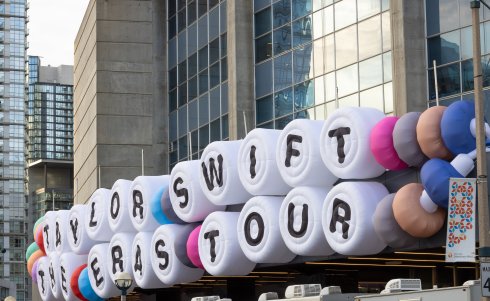
Ever eager to retain control over her masters and ensure that she “never goes out of style,” Taylor Swift is the latest public figure looking toward registration of sensory trademarks to protect her name and likeness in a roundabout way. On April 24, 2026, Taylor Swift's company, TAS Rights Management, filed three trademark applications with the U.S. Patent and Trademark Office: two "sound marks" capturing her spoken voice (which include the language "Hey, it's Taylor" and "Hey, it's Taylor Swift") and one design mark consisting of a photograph of Swift performing onstage during The Eras Tour. This echoes our prior writing regarding similar applications filed by the actor, Matthew McConnaughey, as Swift’s applications represent the latest in a growing movement of public figures attempting to use trademark rights to protect their names and likenesses — most likely due to the increasing accessibility of AI technology, which can impersonate such figures. While sound marks have historically been used to protect iconic brand audio cues, like Netflix's "tu-dum", the MGM lion roar, or NBC's chimes, these public figures have attempted to apply the same framework for their spoken voices and image. This genuinely novel use of trademark law is as-of-yet untested, and Swift's motivation here is not hard to read, as her likeness has been used without permission in numerous AI-generated fakes, including by Meta's AI chatbots, in non-consensual pornographic images, and in false political endorsements shared during the 2024 presidential election.
The legal theory underlying these filings is novel and creative precisely because existing law was never designed for this purpose. Under current U.S. law, a musician's recorded performances are protected by copyright law, while the unauthorized commercial exploitation of a person's name or likeness is addressed by state-level right-of-publicity statutes. Individual states, including New York and California, have right-of-publicity laws that prevent unauthorized commercial use of a person's name, image, and likeness (“NIL”), but trademark infringement claims can be filed in federal court, making them a potentially more powerful deterrent as those cases apply nationwide and are not dependent on individual states’ differing enforceability limitations. Most importantly, trademark enforcement doesn't just stop identical uses as copyright enforcement does. Rather, trademark enforcement is designed to protect a rights owner against anything "confusingly similar" to a registered mark. This is a meaningfully broader standard that could reach AI-generated content that approximates, but doesn't exactly replicate Swift's voice or appearance. Trademark claims also enhance the ability to obtain emergency injunctive relief and to recover damages against AI platforms themselves.
However, these applications face an unsure road to registration. Trademark protection traditionally requires that the mark function as a source identifier (i.e., signaling to consumers the origin of a product or service) and it is far from settled whether a person's voice or image satisfies this standard. Historically, trademarks are not designed to protect an individual's general likeness, voice, or persona. Swift's filings may be best understood as a deliberate effort to layer additional federal remedies on top of existing right-of-publicity and copyright protections rather than a “cure-all” to the elusive offense of AI impersonation, the scale and sophistication of which is not subject to a single body of law. Whether these applications ultimately succeed, they reflect a broader and accelerating trend: public figures and their counsel actively searching for any available legal structure to fill the enforcement gap that generative AI has created. It is clear that Swift believes that she will continue to Party Like It's 1989™.
image credit SockaGPhoto - stock.adobe.com