Marquee Background
Marquee Background

Offit Kurman Blogs

Trademark and Copyright

Actor Matthew McConaughey Registers Sensory Trademark “Alright, Alright, Alright” in Enforcement Effort Against AI Deepfakes

January 26, 2026

By W. Drew Kastner, Edward Baxter, and Stephenie Wingyuen Yeung 楊穎苑
Actor Matthew McConaughey Registers Sensory Trademark “Alright, Alright, Alright” in Enforcement Effort Against AI Deepfakes

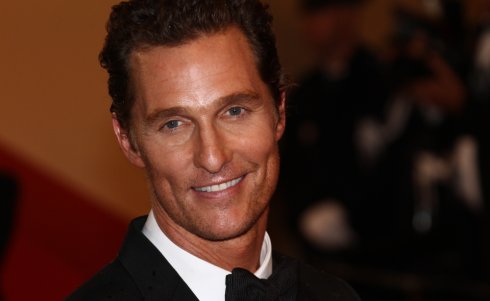
Well-known actor Matthew McConaughey has attracted headlines following the registration of a number of trademarks, not just related to brands with which he may be associated, but also those that address his pop-culture persona. Most interesting among these is McConaughey’s recent registration of the phrase "Alright, alright, alright," first uttered by the actor in the 1993 film Dazed and Confused, which has become strongly associated with the actor’s laid-back, Texas public image. McConaughey, however, has not only registered “Alright, Alright, Alright” as a trademark, but also as less common sensory marks. Sensory marks are trademarks that identify brands through senses other than just text or static logos. Well-known examples include the three-note (G-E-C) NBC Chimes, the MGM lion’s roar accompanying many well-known films, and the specific scent of Play-Doh. According to McConaughey’s legal team, the registration of these sensory marks and other recent registrations represents an attempt to enforce against the ever-increasing problem of AI-generated “deep fake” videos, in which celebrities or other well-known individuals are impersonated, in strikingly authentic fashion.

The registration of “Alright, Alright, Alright,” (Reg. Nos. 7995951 and 8070191) as sensory marks, specifically, has the potential to represent a tactical shift in celebrity rights management. By securing federal trademark protection for the specific sound and motion of his delivery of the phrase, McConaughey attempts to move beyond the patchwork of state-level "right of publicity" laws. A federal trademark registration provides nationwide constructive notice of McConaughey’s ownership and creates a legal presumption that his distinct mannerisms and delivery of the phrase serve as source identifiers for the registered Class 09 goods and Class 41 entertainment services, which constitute his on-screen performance. In the context of AI, this allows his legal team to pursue infringement claims under the Lanham Act against entities using AI voice clones or deepfakes to endorse products. Unlike a right of publicity claim, which often requires proving the appropriation of one's "likeness," a trademark claim focuses on consumer confusion; specifically, whether an AI’s use of the catchphrase falsely suggests McConaughey’s sponsorship or approval.

However, relying on trademark law to police AI has significant limitations. The primary hurdle is the "commercial use" requirement; trademark laws are designed to prevent consumer confusion in the marketplace, not to protect personal dignity. Consequently, this registration may be ineffective against non-commercial AI generations, such as artistic deepfakes, memes, or satire, which may be protected by the First Amendment or the doctrine of Fair Use. Ultimately, the scope of protection offered by these new registrations may be narrow. While McConaughey can now vigorously enforce against an AI creation saying “alright, alright, alright," this specific registration offers little recourse against an AI model mimicking his voice to say anything else. Infringers could potentially bypass this protection by simply creating AI content that avoids his registered catchphrases while still exploiting his vocal timbre and mannerisms. While this registration adds one weapon to his arsenal, it is likely a specific deterrent rather than a comprehensive shield against unauthorized digital exploitation.


Firm Highlights

  • Events
    RE+ Mid-Atlantic Opportunities: Market Trends and Business Development Tips
    RE+ Mid-Atlantic is where developers, financiers, investors, project buyers, utilities, and technology providers come together to evaluate opportunities, advance transactions, and build relationships that move clean energy projects forward. Whether you're looking to secure financing, identify partners, position projects for sale, or expand your network, the conversations you have at RE+ Mid-Atlantic can have a lasting impact on your business. Join this exclusive webinar, hosted by Offit | Kurman, to preview key topics that will be explored during the event and learn practical strategies for preparing for productive business conversations. By the end of this webinar, attendees will be better equipped to: Discuss emerging trends and opportunities in the regional solar and storage landscape. Learn how to communicate project readiness, regulatory strategy, and development milestones to build investor and buyer confidence. Understand strategies for reducing perceived project risk and strengthening financing conversations. Maximize meetings and networking opportunities at RE+ Mid-Atlantic to advance partnerships, financing, and project sale discussions. Whether you're a developer, investor, project buyer, or business development professional, this webinar will help you arrive at RE+ Mid-Atlantic with the knowledge, messaging, and strategy needed to turn conference conversations into meaningful business opportunities. Speakers: Lindsay Cherry  Director of Regulatory, NineDot Energy Lindsay Cherry is the Director of Regulatory Affairs at NineDot Energy, where she leads efforts at the intersection of clean energy policy, regulation, and distributed energy development. With a background in energy policy and public affairs, Lindsay works closely with regulators, policymakers, and industry stakeholders to advance innovative energy solutions and support the transition to a more resilient and sustainable power grid. She holds a master's degree from Columbia University’s School of International and Public Affairs (SIPA). Matthew Karmel, Esq. Principal, Offit Kurman Matthew Karmel is the Practice Group Leader of Offit Kurman’s Environmental & Sustainability Law Group. He advises businesses, developers, and property owners on environmental compliance, site remediation, renewable energy, sustainability, and environmental risk management. In the renewable energy industry specifically, Matthew leads a national team that handles mergers and acquisitions, site control, land use, permitting, financing, and more.  A recognized leader in the field, Matthew, is a frequent speaker and author on environmental and sustainability issues and serves on the boards of several industry organizations, including the Mid-Atlantic Solar Storage Industries Association. David Murray Director of Business Development, Turning Point Energy David Murray is the Director of Business Development at TurningPoint Energy, where he leads business development efforts in Maryland and emerging markets. With more than 15 years of experience in clean energy and environmental policy, David has held leadership roles with the Chesapeake Solar & Storage Association and the American Clean Power Association, advancing solar energy, land use, and community engagement initiatives. He holds a B.A. in Public Policy from the University of North Carolina at Chapel Hill and an M.A. in Renewable Energy & Development from the University of Cape Town and currently serves on the boards of the Chesapeake Solar & Storage Association and Wallace Centers of Iowa. Alec Ward Senior Director of Regulatory Affairs, SEIA Alec Ward is Senior Director of Regulatory Affairs at the Solar Energy Industries Association (SEIA), where he represents the solar and energy storage industry before federal agencies on key energy policy issues. He brings extensive experience in clean energy, regulatory affairs, and public policy, having previously led legislative and federal affairs efforts at Ava Community Energy, served at the California Public Utilities Commission, and worked on federal conservation and climate policy initiatives with The Nature Conservancy and congressional campaigns. Alec holds degrees from the University of Virginia and Johns Hopkins University and is based in Richmond, Virginia.