Category: Immigration Law
Clear ResultsLabor and Employment
ICE’s Updated Form I‑9 Inspection Guidance: What Employers Need to Know
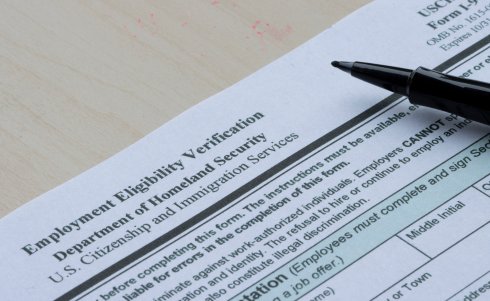
For more than three decades, Form I‑9 has been a cornerstone of U.S. employment eligibility verification. Every employer—regardless of size, industry, or location—is required to complete and retain a Form I‑9 for each employee hired after November 6, 1986. While the form itself has evolved over the years, the underlying obligation has remained constant: employers must verify identity and work authorization, maintain accurate records, and be prepared for inspection by U.S. Immigration and Customs Enforcement (ICE). But in 2026, ICE issued updated inspection guidance that significantly changes how the agency evaluates Form I‑9 errors. These updates don’t alter the form or the law, but they do reshape the compliance landscape. Many mistakes that were once considered minor or “technical” are now treated as substantive violations, meaning they can trigger immediate fines with no opportunity for correction during an audit. For HR leaders, compliance teams, and hiring managers, understanding these changes, and adjusting internal processes accordingly, is essential. How ICE I‑9 Inspections Work ICE conducts thousands of Form I‑9 inspections each year. When an employer receives a Notice of Inspection (NOI), they typically have three business days to produce their I‑9s and supporting documentation. ICE then reviews the forms for accuracy, completeness, and compliance with federal regulations. Historically, ICE distinguished between technical or procedural violations, which employers could correct within 10 business days, or substantive violations, which were immediately subject to penalties. This distinction mattered. A missing date, an incomplete field, or a minor oversight could often be corrected during the audit window, reducing or eliminating fines. The new guidance changes that calculus. What’s New in ICE’s Updated Fact Sheet ICE’s updated fact sheet expands the list of substantive violations, errors that cannot be corrected once an audit begins. These include many issues that employers previously treated as minor administrative mistakes. Examples of errors now considered substantive: Missing employee date of birth in Section 1 Missing or incomplete employer attestation information in Section 2 Missing date of hire Missing document title, issuing authority, or expiration date—even if a copy of the document is on file Missing rehire date in Supplement B Improper use of the Spanish‑language Form I‑9 outside Puerto Rico Deficiencies in electronic I‑9 systems, such as incomplete audit trails or signature issues These are critical as they cover all parts of the form including areas completed by the employer and employee. ICE also clarified that employers cannot rely on document copies to cure missing information. If the form itself is incomplete, the violation stands. Why This Matters: Increased Penalties and Higher Risk The consequences of these changes are significant. Substantive violations can result in fines ranging from hundreds to thousands of dollars per error. For employers with large workforces or high turnover, cumulative penalties can escalate quickly. Accordingly, industries at heightened risk include: the hospitality business, retail stores, construction companies, various forms of manufacturing businesses, certain healthcare providers, staffing and recruiting agencies, and federal contractors. These sectors often rely on decentralized hiring, multiple onboarding locations, or large volumes of I‑9s, conditions that increase the likelihood of errors. ICE’s updated guidance signals a stricter enforcement posture and a reduced tolerance for administrative mistakes. Employers can no longer assume that routine errors will be fixable during an audit. What Employers Should Do Now Conduct a proactive internal I‑9 audit. Review all existing I‑9s — especially older forms completed under prior guidance — to identify and correct errors before ICE ever requests them. All covered I-9s that could be audited include terminated employees for the last three years, which underscores how critical record keeping is for I-9 compliance. Employers should work with immigration compliance counsel to ensure corrections are made properly. Strengthen onboarding and I‑9 completion procedures. Ensure HR staff and authorized representatives understand the new classifications and the importance of complete, accurate entries in all sections of the form. Real-time review of the completion of form I-9 is recommended as substantive violations are incorporated into sections completed by the employee as well as the employer. Review your electronic I‑9 system. Confirm that your system meets DHS requirements for: Audit trails Electronic signatures Data integrity Proper indexing and retrieval Auto‑population features should be reviewed to ensure they do not create incomplete or inaccurate fields. Retrain all I‑9 preparers. Training should cover: Proper document review Accurate recording of hire dates and document details Correct use of the preparer/translator section Proper reverification procedures Ensure proper use of alternative verification procedures. If your organization uses DHS‑authorized remote verification, confirm that all eligibility requirements, such as E‑Verify participation, are consistently met. The Bottom Line ICE’s updated Form I‑9 inspection guidance represents a meaningful shift in enforcement. Employers now face higher stakes and less flexibility when errors occur. The organizations that invest in strong I‑9 practices today through audits, training, and system improvements will be far better positioned to withstand increased scrutiny. In the current environment, proactive compliance is not optional. It’s essential risk management. For more information visit: Form I-9 Inspection Under Immigration and Nationality Act § 274A | ICE
May 5, 2026
Immigration Law
Understanding the EB 5 Program’s Critical Deadlines: What Investors Need to Know
The EB‑5 Immigrant Investor Program continues to be one of the most reliable pathways for families seeking permanent residency in the United States through investment. But with the passage of the EB‑5 Reform and Integrity Act (RIA), timing has become more important than ever. Two key dates—September 30, 2026, and September 30, 2027—now shape the strategic landscape for investors. Understanding the difference between these deadlines can help you protect your immigration process, secure your place in line, and avoid unnecessary risk. History of the EB‑5 Immigrant Investor Program The EB‑5 Immigrant Investor Program was created by Congress in 1990 to stimulate the U.S. economy through foreign investment and job creation, offering eligible investors and their families a path to permanent residency in exchange for investing in a new commercial enterprise that creates at least 10 full‑time U.S. jobs. In 1992, Congress introduced the Regional Center Program, allowing investors to participate in pooled, federally designated projects and count indirect job creation, which dramatically expanded the program’s reach and popularity. Over the decades, EB‑5 has undergone significant reforms, most notably the 2022 EB‑5 Reform and Integrity Act, which modernized oversight, increased investment thresholds, and introduced strong integrity measures. September 30, 2026, Grandfathering Deadline Under the RIA, any EB‑5 Regional Center petition filed on or before September 30, 2026, receives powerful “grandfathering” protection. This means: USCIS must continue processing your petition even if the EB‑5 Regional Center Program expires in the future Your case remains valid under the rules in place at the time of filing You are shielded from political uncertainty, program lapses, or regulatory changes that could otherwise disrupt your immigration process For many families, this date represents the safest window to file. Submitting an I‑526E petition before the 2026 deadline locks in today’s requirements and ensures your case cannot be altered by future program interruptions. September 30, 2027, Program Authorization Deadline The EB‑5 Regional Center Program is currently authorized through September 30, 2027. Investors may still file after the 2026 grandfathering deadline and before the 2027 program expiration. However, filings made between October 1, 2026, and September 30, 2027, do not receive the same guaranteed protection. If Congress fails to reauthorize the program after 2027: Petitions filed after September 30, 2026, may be paused or left unprocessed Investors could face delays, uncertainty, or the need to refile under new rules Investment thresholds or program requirements could change In short, you can file until 2027, but only filings made by 2026 are guaranteed protection. Why Investors Should Act Before 2026 Filing before the September 30, 2026, grandfathering deadline offers several advantages: Guaranteed case processing, regardless of future political developments Earlier priority dates, which matter for investors from backlogged countries Protection from future rule changes, including potential increases in investment amounts Reduced risk of delays caused by last‑minute filing surges Given the long‑term nature of the EB‑5 process, securing stability early is often the most prudent choice. Investment total increases and potential fee increase in 2027 January 1, 2027, is another critical date for potential EB-5 investors, as at that point, the USCIS can increase the investment totals under RIA. In addition, new fees and changes to the program are also possible. What This Means for You If you are considering the EB‑5 program, the next 18–24 months represent a uniquely important window. Filing before the 2026 deadline provides the strongest legal protections available under current law. Filing after that date remains possible but carries more uncertainty. Whether you are just beginning your EB‑5 journey or evaluating project options, now is the time to understand your timeline and prepare your strategy.
April 16, 2026
Immigration Law
The Gold Card Gamble: High Stakes for U.S. Residency
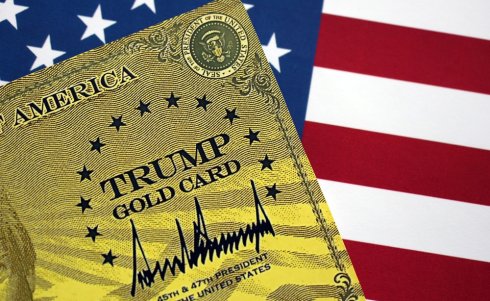
The United States Citizenship and Immigration Service has released the brand-new form I-140G – the Immigrant Petition for the Gold Card Program. This form can be used by applicants who have previously registered on www.trumpcard.gov. The form also requires a $15,000 filing fee per applicant. The USCIS also explains the “gift” requirement for the filing. Individuals filing an I-140G must provide a gift of $1 million per applicant. The per-person rule is a significant increase in the program’s anticipated costs since its initial inception. While more details of the process have emerged, significant questions and concerns regarding the program remain. What We Know About the Gold Card The Gold Card offers a $1 million payment to the United States in exchange for legal permanent residence. The 24-page I-140G form lays out the process for potential Gold Card applicants, including biographic information and the usual attestations regarding potential grounds of inadmissibility. The form includes entirely new sections on the applicant’s source of funds and net worth. The source-of-funds instructions lack the complexity of EB-5 applications and are likely to be subjected to additional screening. Further, the form includes a section for corporations to complete if they are the sponsoring entity. Lastly, the G140 form requires a potential recipient to indicate if they are seeking an immigrant visa under one of two categories: the first preference alien of extraordinary ability, or the second preference alien of exceptional ability seeking a National Interest Waiver (NIW). This path was outlined early as the proposed mechanism for gold card applications to be counted with annual immigrant visa limitations imposed by the Immigration and Nationality Act. The form and its instructions state that the entire process will be completed online with biometrics required for all applicants, even if abroad. What We Don’t Know While a form is now available, details are still lacking. Vague instructions regarding filing the case online after paying the substantial filing fee are provided, with no evidence that the online portal at MyUSCIS can actually process the cases. No timelines or processing details are provided. The Department of Homeland Security has indicated that proposed rulemaking for the employment-based immigrant petitions is scheduled for early 2026. It is possible that clarity and the creation of the regulatory framework for the gold card will be included. Significant questions remain regarding the actual program. For example, is the program authorized under the Immigration and Nationality Act? That question is still up in the air. There are some major issues with the current proposed format, as the Executive order that created the program differs from the application process as described. In addition, the authority of the USCIS to create programs is limited by its mandate from Congress. This means that, without a change in the law (not regulation) new programs cannot be created that materially impinge on existing programs such as the EB-5 investment visa. Given the major questions relating to the legal underpinning of the program, as well as the technical details of its processing, any potential applicant should consider whether to proceed very carefully. For example the stated “nonrefundable” filing fee of $15,000 per applicant would be at risk, should the program be found in violation of the will of Congress, not to mention the gifted funds should an applicant progress that far. The examination of the potential risk for loss here is critical, especially when compared to existing programs such as the EB-5 investment visa, which also involves risks but provides for a repayment of investment funds to the intending immigrant.
December 23, 2025
Estates and Trusts
The Legal Playbook for Athletes Crossing Borders
The 2025-2026 NBA season started with a bang last Tuesday night. It is reported that 135 international players from 43 countries are on the court this season. When an athlete leaves their home country to pursue a professional or collegiate career in the United States, the transition involves far more than training schedules, new teammates, and different coaching styles. It is also a major legal and financial shift. Immigration status, contract terms, taxes, and estate planning all come into play — often at once. Without the proper legal documents in place, even the most talented athlete can find their career and income at risk. The first and most fundamental step is securing the right visa and immigration documentation. Most international athletes arrive under a P-1 visa, for those internationally recognized athletes competing professionally, or an O-1 visa for athletes who demonstrate extraordinary ability in their sport. Collegiate athletes often enter the U.S. on an F-1 student visa. It’s critical that the visa category matches the athlete’s intended activities, whether training, competition, or endorsement work and that both the athlete and the sponsoring organization (professional team or university) comply with the visa’s terms. Working outside the scope of a visa, such as signing sponsorships or promotional deals without proper authorization, can lead to serious tax consequences and even more dire immigration consequences, which could jeopardize the athlete’s future entry into the country. According to Michael Freestone, Immigration Attorney and Principal at Offit Kurman, “For student athletes, the evolving rules around NIL compensation add another layer of complexity. International students on F-1 visas are generally prohibited from earning income outside authorized employment, meaning many cannot legally profit from NIL activities while in the U.S. Although F-1 students can earn “passive” income, the legal grey area with NIL activities makes such income problematic and could jeopardize the student’s status. Some athletes are exploring creative solutions, such as establishing businesses in their home countries or deferring income until after graduation, but these strategies should always be reviewed by an attorney experienced in both immigration, tax and contract law to avoid inadvertent violations.” Tax compliance often catches international athletes off guard. The U.S. tax system is complex, even for citizens, and foreign athletes are often surprised to learn they may owe taxes in both the U.S. and their home country. To avoid double taxation and other pitfalls, every athlete earning income in the U.S. should consult a tax professional familiar with cross-border income and endorsement deals. Proper withholding and filing documentation are essential to prevent crushing surprises at the end of the season. Beyond taxes, every international athlete must consider basic estate and incapacity planning. A durable power of attorney allows a trusted person to manage financial or legal affairs if the athlete is abroad or incapacitated. A health care proxy ensures that someone can make medical decisions in an emergency. These documents are often overlooked until a crisis strikes, but they help prevent confusion and protect the athlete’s interests during critical and unexpected moments. Estate planning itself is another critical piece of the puzzle. Even young athletes, particularly those signing lucrative contracts or endorsement deals based on their Name Image and Likeness (NIL) rights, can accumulate substantial assets quickly. A trust can make sure those assets are managed and distributed according to their wishes. For athletes with family members abroad, these documents also help avoid international probate complications and unnecessary tax burdens. Insurance coverage deserves equal attention. Health insurance is essential, but athletes should also explore disability insurance to protect against career-ending injuries and liability insurance to cover potential risks from public appearances or endorsement deals. Life insurance can also provide long-term planning options when the athlete’s professional sports career is long over. For student athletes, the evolving rules around NIL compensation add another layer of complexity. International students on F-1 visas are generally prohibited from earning income outside authorized employment, meaning many cannot legally profit from NIL activities while in the U.S. Crossing borders to compete in the U.S. can be a career-defining opportunity, but it also requires a careful understanding of the legal landscape. From visas to trusts, international athletes benefit from assembling a strong team off the field — an immigration lawyer, a tax advisor, an insurance professional, and an estate planning attorney who understands the unique intersection of sports, law, and global mobility. A little preparation now can safeguard a lifetime of achievement later.
October 27, 2025
Labor and Employment
Department of State Limits Nonimmigrant Visa Applications
On Saturday, September 6th, 2025, the Department of State announced that, effective immediately, all applicants for U.S. nonimmigrant visas (NIV) should schedule their visa interview appointments at the U.S. Embassy or Consulate in their country of nationality or residence. Individuals who currently have appointments booked are advised that their appointments “generally will not be cancelled” – however, no guarantee is made that their NIV will be issued. This policy changes the current guidance for so-called “third country nationals,” i.e., individuals who apply for a visa outside of their home country. It has been a long-standing policy that individuals can apply for an NIV anywhere in the world. Some embassies have pushed back on third-country nationals due to the overwhelming number of requests. Some examples include Canada, Mexico, and smaller consulates such as the Bahamas. This change drastically affects the visa options for individuals from countries with lengthy wait times and delays in visa processing. Indian nationals can no longer avail of interview waivers, and the current NIV wait times of two-three months are set to dramatically increase. This change underlines the importance of planning ahead for travel and understanding all potential risks. Individuals and employers should carefully consider the implications of travel if an individual would be required to travel to another country for an extended period. Finally, individuals with current visa appointments should consult with an immigration attorney to assess the risks of attending their visa interview. What is residency for NIV purposes? No further guidance is provided on what NIV applicants should provide to demonstrate residence in the country in which they are applying. Accordingly, applicants should carefully assess the totality of evidence that they can provide to an Embassy ahead of their appointment. It is advisable to have as much evidence as possible of residency at the interview to avoid any lengthy administrative processing. Exceptions to the rule? The current guidance states that “rare exceptions may also be made for humanitarian or medical emergencies or foreign policy reasons.” With no further guidance immediately available, it is safe to assume that exceptions will be very limited. Typically, humanitarian exceptions can include family unity reasons, as well as deaths or illness within a family, so applicants can potentially advocate for an exception on these grounds. The risks are substantial as the applicant may only be informed that their visa application is not eligible for processing at the interview. Accordingly, caution is advised when exploring exceptions in this area. But what if there is no US Embassy in my home country? Further guidance was provided for NIV applicants where NIV processing is suspended in their home country; they should make an appointment at their designated NIV consulate or embassy: NATIONAL OF DESIGNATED LOCATIONS(S) Afghanistan Islamabad Belarus Vilnius, Warsaw Chad Yaoundé Cuba Georgetown Haiti Nassau Iran Dubai Libya Tunis Niger Ouagadougou Russia Astana, Warsaw Somalia Nairobi South Sudan Nairobi Sudan Cairo Syria Amman Ukraine Krakow, Warsaw Venezuela Bogota Yemen Riyadh Zimbabwe Johannesburg
September 8, 2025
Immigration Law
Top Mistakes That Jeopardize Your Green Card—and How to Avoid Them
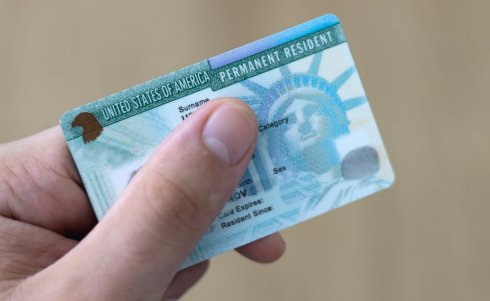
As we are currently in a time of extensive scrutiny of immigration actions, individuals must understand their status, rights and obligations. Legal Permanent Residents possess many protections that nonimmigrants do not have, but must carefully maintain their status. One of the key aspects of maintaining a green card is maintaining an existing “intent” to permanently reside in the United States. This is an issue that comes up with green card holders who move abroad or spend significant time outside of the United States. If the Department of Homeland Security (DHS) has reason to believe an individual does not have the intention to reside in the United States, then they can bring proceedings against the individual to remove their green card. The law and policy are summarized by the U.S. Citizenship and Immigration Services (USCIS) as follows: Permanent Resident Cards become technically invalid for reentry into the United States if the holder is absent from the United States for 1 year or more. U.S. permanent residence status may be considered abandoned for absences shorter than 1 year if the green card holder takes up residence in another country. The first point is technical; if one is out of the country for a year or more, their green card is no longer valid for entry. Customs and Border Protection (CBP) will raise this issue at the Ports of Entry to the United States. It can be waived at entry, but the CBP rarely allow that. Instead, they follow a “hawkish” approach to individuals with absences of a year or longer. It should be noted that legal permanent resident status is protected by law and must be removed by legal proceedings. The second point is where individuals can potentially incur CBP scrutiny through a prolonged periods of absence from the United States. For example, if an individual comes into the U.S. twice a year for several years to maintain their green card, questions may arise about the individual’s intent to reside in the U.S., even though that they were technically compliant. Generally speaking, if a legal permanent resident thinks they will spend more than six months outside the United States, they should talk to an immigration attorney. On May 1, 2025, CBP updated its guidance to legal permanent residents returning to the United States. This policy document states that legal permanent residents who have been out of the country for longer than six months will be subject to new immigration inspection procedures. No further details of these new and increased inspections have been released. See Traveling outside U.S. - Documents needed for Lawful Permanent Residents (LPR)/Green Card holders Certain key actions can automatically raise a question of the green card holder’s intent if they leave the United States, specifically: Clearly manifesting an intent of permanently residing in another country (i.e., applying for long-term status in that country. Green card holders must file US taxes on their global income, and they must file taxes as residents for tax purposes; failure to file resident tax returns can be seen as an intentional abandonment of status. Making statements to CBP or DHS that do not support the green card holders’ assertions that their trips abroad are temporary. Accordingly, green card holders who move abroad temporarily must be diligent in maintaining ties to the United States and take proactive steps to protect their green card. They must realize they are jeopardizing their status by extended time abroad. Returning to the United States once a year will eventually draw the ire of the CBP, and the green card holder can expect to receive progressively more intrusive and sustained questioning upon entry to the United States. Steps that green card holders who live abroad could take to protect their status include the following: Travel with evidence of why your trip outside of the US is temporary – temporary job offer, extended care for a family member, explanations for delays, etc. Continue to file US Income taxes. Maintain a residence in the US. Be diligent in not spending 365 days outside of the United States. Registering with the Selective Service is required. Updating their home address with USCIS via Form AR-11. Obtain a Re-Entry Permit:Re-Entry Permits protects a green card holder’s status for two years upon approval. Although not a guarantee of entry, the Re-Entry Permit is excellent evidence to present to CBP that the individual’s absence abroad is temporary. Re-Entry Permits can be renewed depending on the circumstances that the individual faces. Re-Entry Permits must be applied for in person in the U.S.; Having the USCIS receipt notice as evidence of the application is good evidence to demonstrate to the USCIS. Been out of the country for a year or longer?The safest route is to apply for an SB-1 immigrant visa at your local U.S. Embassy to avoid issues entering the country. Lastly, should an individual face potentially denial of entry to the United States for circumstances beyond their control, they can apply for a returning resident special immigrant visa to ensure they can enter the U.S.
May 20, 2025
Immigration Law
Heightened Scrutiny at U.S. Borders: What Travelers Need to Know
There has been a significant increase in media coverage of travelers subjected to increased scrutiny at ports of entry to the United States. In some cases, individuals have been refused entry and detained until sent back home. Furthermore, U.S. Customs and Border Protection have increased their searches of travelers’ electronic devices upon entry to the United States. Is it considered safe for nonimmigrants and legal permanent residents to travel? Increased scrutiny at ports of entry We are now seeing the impact of the implementation of President Trump’s Executive Action: “Protecting the United States from Foreign Terrorists and other National Security and Public Safety Threats”1. There have been media reports of individuals from NATO Allied countries being detained at border crossings and, in some cases, subjected to expedited removal. Aside from the news, we have seen advanced vetting and security screenings reported at the US border. This vetting has included legal permanent residents and non-immigrants. This vetting is likely to continue and may be introduced at U.S. Consulates in the coming months and in the processing of matters with the U.S. Citizenship and Immigration Service. Is it safe to travel on my green card? Legal permanent residents (LPRs) are provided significant protections and rights similar to those of United States citizens regarding international travel. In the last few months, we have seen an increased scrutiny of LPR travel. Certain fact patterns have come to light, including increased interviews of LPRs with active (even if minor) criminal matters or a history of certain immigration violations. In addition, LPRs who spend significant time outside of the United States and who, in previous years, would be let back without issue if they visited every six months are now subject to harsher scrutiny of their ties to the country. Finally, LPRs from countries floated as soon to be subjected to a travel ban have also faced issues coming into the United States. (See Draft List for New Travel Ban Proposes Trump Target 43 Countries - The New York Times.) In light of the above – is it safe to travel on my green card? The answer is generally yes; however, if you fit into one of the above situations we advise consulting with an immigration attorney immediately. Furthermore, your status may be at risk if you have been outside the United States for longer than six months or even a whole year. Lastly, legal permanent residence may only be taken by a legal process initiated in the immigration court system. Travelers should be exceptionally wary of signing any document that purports to surrender their legal permanent residence at a port of entry. Is it safe to travel on my nonimmigrant visa? Non-immigrant visa holders report increased vetting at ports of entry, and US Customs and Border Protection agents possess the power to deny entry to visa holders. Most nonimmigrant travelers should be prepared for additional questions regarding their status and should carry evidence regarding their status. This could include USCIS petition approval notices, evidence of continued employment, and itineraries for travel. Employment-based non-immigrants should inform their HR of international travel if specific immigration advice is needed. We advise all nonimmigrants who are not confident regarding travel to consult an immigration attorney for guidance. Certain nonimmigrants should be especially vigilant now; this includes J1 and F1 scholars and students. Both visa holders should consult with their school Designated School Official (DSO) regarding their ability to travel and travel with up-to-date evidence regarding their status. Student and Exchange Visitor Information System (SEVIS) termination of student status with little to no warning or evidence has been reported, and affected students should contact their DSO and an immigration attorney immediately. Electronic device searches – what you need to know The United States Customs and Border Protection (CBP) has significant powers of search and seizure at ports of entry to the United States. These powers are part of the “border exemption” to the Constitution's Fourth Amendment and have been upheld by the Supreme Court. (See United States v. Ramsey, 431 U.S. 606 (1977)). This power can be used regardless of the nationality of the traveler. Further, this search power has been used by CBP to search the electronic devices of travelers, which can include their social media. Travelers are advised to be exceedingly careful regarding social media usage and content on their mobile devices. By way of example of this vetting, current administration priorities include extreme vetting of individuals supporting designated terrorist organizations, which includes Hamas and the conflict in Palestine. The only exception to this search power that the courts have upheld is attorney-client privilege. Be calm, be courteous, be contrite The process of additional scrutiny at border crossings can be intimidating and stressful. It is important to remain calm during the process. Traveling with evidence of your status and activities in the United States is a good idea to support your statements to upon entry.
April 25, 2025
Immigration Law
Trump’s $5 Million “Gold Card” Visa: What it Means for EB-5 Investors
President Donald Trump recently announced a proposed “Gold Card” visa, sparking speculation about its potential impact on the EB-5 Immigrant Investor Program. While details remain unclear, this proposal raises important questions for current and prospective EB-5 investors. Here’s what you need to know. What is the “Gold Card” Visa? The Gold Card visa would offer U.S. permanent residency to individuals investing $5 million in the country. The proposed program is modeled after similar international investor visa initiatives, such as Dubai’s Golden Visa. Key details include: Investment Requirement: The program would require a $5 million investment—substantially higher than the EB-5 program’s minimum of $800,000. Pathway to Citizenship: This visa would offer high-net-worth individuals a streamlined route to U.S. citizenship. Potential Economic Impact: The Trump administration aims to attract a million investors, potentially raising $5 trillion in revenue. Geopolitical Considerations: Given that over 60% of EB-5 investors come from China, some speculate this is a strategic response to U.S.-China tensions. Can the “Gold Card” Replace EB-5? Initial reports suggested that the Gold Card visa might replace EB-5. The Commerce Secretary even indicated this intention, while the president hinted that companies could use the Gold Card to purchase legal permanent residence for employees. However, eliminating the EB-5 program is easier said than done: Congressional Authorization: The EB-5 program is authorized by Congress through at least September 30, 2027. Any attempt to dismantle it would require congressional approval, which is unlikely given past legislative support. 2022 EB-5 Reform & Integrity Act: This act reinforced protections for investors, ensuring that those who file before September 30, 2026, will be grandfathered into the current system. Legislative Hurdles: Introducing a new visa category requires congressional approval. Lawmakers benefiting from EB-5 investments in their states may resist any changes that could reduce economic contributions to their regions. Key Challenges and Concerns While the Gold Card visa has captured attention, several uncertainties remain: Realistic Demand: Expecting one million investors to each contribute $5 million seems highly optimistic, given that the EB-5 program has attracted only about 70,000 applicants over the past 30 years. Tax Implications: There is speculation that Gold Card holders might avoid U.S. global taxation, which could raise legal and policy concerns. Coexistence with EB-5: Rather than replacing EB-5, the Gold Card visa is more likely to exist alongside it, targeting a different investor demographic. What This Means for EB-5 Investors The key takeaways for those currently navigating the EB-5 process is that EB-5 remains intact and legally protected. Current EB-5 Investors: Your investment remains secure, and your path to a green card is unchanged. Thanks to legislative safeguards, your petition will continue to be processed. Prospective Investors: If you’re considering EB-5, filing before September 30, 2026, ensures your investment is protected under the program’s grandfathering provisions. The Bottom Line While Trump’s Gold Card proposal has generated interest, its viability is uncertain. The EB-5 program remains a structured and legally protected pathway to U.S. permanent residency. Investors should stay informed but proceed with confidence in EB-5’s stability. For those looking to secure U.S. residency, now is the time to act before the 2026 grandfathering deadline.
March 5, 2025
Immigration Law
What to Expect in the 2025 H-1B Season
The 2025 H-1B Cap Season is upon us, along with a new administration. There will likely be numerous changes at United States Citizenship and Immigration Services (USCIS) regarding policy and regulation, but in the immediate term, let’s take a look at the upcoming H-1B lottery and what we can expect. Increased Application Fee The filing fee for H-1B lottery applications has increased significantly for this cap season, jumping to $215 per application. USCIS increased fees across the board last year and has provided a fee calculator to assist petitioners and applicants: Calculate Your Fees | USCIS. Site Visits and Increased Compliance Recent rule changes at USCIS have expanded compliance requirements for H-1B employers. While site visits have long been a part of the H-1B program, the increase in third-party worksites and remote work has prompted USCIS to adjust enforcement accordingly. Additionally, worksite inspections and stricter enforcement of immigration rules are expected to increase under the new administration. Don’t Forget the H-1B for Entrepreneurs Individuals who own more than 50% of the sponsoring H-1B business can now qualify for H-1B status. These new petitions are limited to an initial 18-month validity period but represent a significant opportunity for entrepreneurs who previously would have missed out on the H-1B lottery. Revisions to H-1B Specialty Occupations Regulatory updates to the definition of “specialty occupation” have been implemented by USCIS, tightening key qualification areas related to the proposed position and the employee’s education. Specifically: Positions requiring a general or nonspecific degree will no longer qualify for H-1B purposes. Individuals with a general degree must demonstrate how their coursework directly relates to their proposed position. Employers must justify how each accepted degree is directly related to the role when multiple degree fields are listed as acceptable qualifications. These changes add complexity to certain occupations and underscore the importance of seeking legal advice early in the H-1B lottery process. Expect the Unexpected With a new administration taking the reins, significant changes to legal immigration policies are likely in the coming months and years. While there may not be enough time to implement major changes before this year’s H-1B lottery, we could see slowdowns in USCIS processing and potential disruptions in visa issuance.
February 10, 2025
Immigration Law
What is an H1B and Who Should Know About It?
H1B – Specialty Occupation The H-1B nonimmigrant visa allows companies and other employers in the United States to temporarily employ foreign workers for up to six years in occupations that require the theoretical and practical application of a body of highly specialized knowledge and a bachelor’s degree or higher in the specific specialty, or its equivalent. H-1B specialty occupations may include fields such as architecture, engineering, mathematics, physical sciences, social sciences, medicine and health, education, business specialties, accounting, law, theology, and the arts. Who Needs to Know About H1B visas? The H1B is a very popular visa category as it can be very useful for a large number of potential applicants. So, who can benefit from this flexible employment-based visa? Students completing their studies in F1 status who are graduating with a bachelor’s or advanced degree are designed to be the typical H1B applicants. Specific provisions exist to assist the transition from OPT to H1B. Students who have multiple years of OPT ahead of them should also look carefully at the H1B visa as it is still a lottery, and they should maximize their attempts to make the lottery; Individuals with other nonimmigrant visas that don’t allow for employment (H4 dependents, etc.) or are running out of validity period (L1B, etc.). Professionals who are working in a status that ties them to a specific employer such as L1 visa holders or E visa holders. Professionals who are abroad – there is no geographic limit on H1B lottery submissions. Individuals who need a visa status that provides “dual intent” to allow them to easily pursue an employment-based green card in the United States. H1B Cap and the Lottery The number of new H1B Nonimmigrant visas is limited by law to 65,000 a year, and they must be submitted before April 1 for jobs that begin October 1 of that same year. In addition, there are an extra 20,000 H1B visas available for beneficiaries who hold a US master’s degree. When there is anticipated demand for more than the 85,000 available H1B visas, the USCIS is required to conduct a lottery for the selection of H1B visas. The current H1B lottery takes place in multiple stages. Initially a lottery for H1B applicants who hold US master’s degrees is conducted. Then, the remaining US master’s degree applicants are added to the larger applicant pool, and a lottery for the remaining 65,000 available visas is conducted. Finally, a lottery is conducted in the summer for any unused H1B visas. This process is conducted electronically, and selected applicants are informed very quickly if they have made the H1B Cap. Cap Exempt Employers H-1B workers who are petitioned for or employed at an institution of higher education or its affiliated or related nonprofit entities, a nonprofit research organization, or a government research organization are not subject to the H1B cap. These H1B petitions may be filed at any time and are not subject to the lottery rules. Key Aspects of H1B Petitions Employers should be informed about all the aspects of H1B nonimmigrant workers as regulations cover their placement, pay, and qualifications. As discussed, H1B workers must hold at least a bachelor’s degree, and they must also be employed in a position that at least requires the equivalent of a bachelor’s degree. The definition of specialty occupation is complex and requires careful review. Dependents of H1B visa holders can also obtain H4 status. However, H4 status does not by itself allow for work authorization. Only the spouses of H1B visa holders with an approved Immigrant Worker Petition that is subject to backlogs in obtaining permanent residence can apply for work authorization in H4 status. Fees H1B Petitions require filing fees to be paid to the Department of Homeland Security. The US immigration service is fee-based and relies entirely on these fees to provide its services. The fees for H1B petitions are complex and they can be significant. Below, please find the current breakdown of H1B petition filing fees; there is also an optional additional premium processing fee should that service be available for the H1B Cap. Below is a list of the current fees with a higher range provided for employers that have more than 25 employees: H1B Registration fee, to participate in the lottery: $210 Base Nonimmigrant petition filing fee: $460 - $780 Asylum program fee: $300 - $600 Fraud prevention and detection fee for all new H1B Petitions: $500 AICWA Fee (Imposed by the American Competitiveness and Workforce Improvement Act of 1998): $750 – for employers with 1 to 25 full-time employees $1500 – for employers with 26 or more full-time equivalent employees Public Law 114-113 Fee, only applicable for employers with 50 or more employees and more than 50% of employees are working under H1B or L1 status: $4,000 Premium Processing Fee, guarantees a response from USCIS on a petition in 15 days: $2,805 The Labor Condition Application H1B petitions must be accompanied by a certified Labor Condition Application from the Department of Labor. This application includes certain attestations, a violation of which can result in fines, bars on sponsoring nonimmigrant or immigrant petitions, and other sanctions to the employer. The application requires the employer to attest that it will comply with the following labor requirements: The employer/agent will pay the H-1B worker a wage that no less than the wage paid to similarly qualified workers or, if greater, the prevailing wage for the position in the geographic area in which the H-1B worker will be working. The employer/agent will provide working conditions that will not adversely affect other similarly employed workers. At the time of the labor condition application, there is no strike or lockout at the place of employment. Notice of the filing of the labor condition application with the DOL has been given to the union bargaining representative or has been posted at the place of employment. Prevailing Wages Pursuant to the Labor Condition Application, the H1B employer must offer to pay the actual wage or the prevailing wage level for the H1B occupational classification in the proposed area of employment, whichever is greater, based on the best information available. For example, a prevailing wage for a computer engineer could be a lower figure in a specific region, but if all similarly placed employees in the company are paid a higher figure that wage must be offered to the H1B worker. Accordingly, the prevailing wage must equal the average of the rate of wages paid to other workers similarly employed in the area of intended employment. Employers must be careful in identifying the specific wage ranges and areas of employment. Material Changes Matter US Citizenship and Immigration Services and Department of Labor regulations of H1B workers are strict and complex, with fines and penalties abound for the unwary. H1B employers must abide by the material terms of the H1B petition that they submit. Changes to job title, job duties, job location, salary, benefits, and any other material changes can have significant consequences. For example, H1B workers cannot be “benched,” and significant penalties can be incurred for violations. Compliance The H1B program has been subject to significant oversight in recent years, and that trend is only set to continue. Current regulations have increased the statutory authority for work site visits and compliance with the terms of H1B vias and the Labor Condition Application. Employers and H1B workers need to be aware that compliance is a key part of the H1B program and should be prepared for potential site visits.
February 5, 2025
Immigration Law
What to Do if ICE Shows Up at Your Workplace
ICE Enforcement Actions The Trump administration has immediately followed through on campaign priorities of aggressive immigration enforcement. The agency in charge of immigration enforcement is the U.S. Immigration and Customs Enforcement agency, otherwise known as ICE. We have seen an expansion of federal deportation actions and the removal of protections for areas previously considered safe spaces from agency actions. ICE enforcement actions can now occur in places of worship, schools, and courthouses. ICE agents can and will detain large numbers of individuals in a single action to determine their immigration status. Finally, the passage of the Laken Rily Act means that convictions of relatively minor crimes, such as shoplifting, could lead to indefinite detention for immigrants. ICE Actions and Deportation Warrants All people living in the United States, including individuals here without status, have certain specific rights protected by the Constitution. Key considerations of ICE enforcement actions are as follows: An ICE deportation warrant is not the same as a search warrant. If the ICE warrant is the only document ICE can show to justify their presence, they cannot legally enter a premises without agreement. You can and should ask for a search warrant signed by a judge and review it outside the premises. Warrants must be facially correct, including the individual’s correct name and address, as well as the Judge’s full name. Worksite Enforcement Given the current increase in ICE enforcement actions, it is clear that there will be additional forms of worksite actions specifically related to legal immigration compliance. These actions may be conducted by U.S. Citizenship and Immigration agents from the Fraud Detection and National Security Directorate, Department of Homeland Security (DHS) Homeland Security Investigators, and/or ICE agents. These actions are described as “worksite enforcement” and cover enforcement of various immigration laws, including but not limited to I-9 compliance, immigration fraud, and compliance under the H1B and L1 visa programs. Typically, these actions are large-scale enforcement actions with warrants, but they can also consist of a smaller team of agents following up on a business that sponsored a single individual. Paperwork compliance is critical for employers, and ensuring I-9 compliance is recommended for all employers. A heavily recommended first step is to conduct I-9 audits. One key consideration is that worksite enforcement actions are in person, and accordingly, it is critical that employers brief team members about how to interact with agents. Finally, these actions are not necessarily entirely immigration-related, and compliance with employment laws generally will be reviewed as well. So, what are the best practices moving forward in another age of enhanced compliance by the DHS? Our five tips would be: Standardize processes for hiring and verification, including immigration compliance, to have a robust compliance program for all hires moving forward. Review I-9 compliance, potentially including an audit of I-9s. Consider moving to E-Verify for compliance purposes. Have a plan in place for federal agents showing up. Designate a point of contact and ensure they are familiar with organizational rights and obligations. Keep informed. Keeping up to date on changes in immigration and enforcement policies is key. We have seen changes to passport issuance for transgender U.S. citizens, as well as the threat of travel bans and further disruption and delay for immigration processes. Courthouse Enforcement Regarding the courthouse memorandum, ICE has been told to generally avoid non-criminal courts for enforcement. Still, such guidance is not binding, and heightened vigilance at all courthouses is recommended for clients. This action is similar to the prior Trump administration’s enforcement priorities. Detainee Locator After apprehension by ICE, it is often exceedingly difficult for employers or loved ones to find an individual detained by ICE. Sometimes detainees may be sent to the side of state or to a different state entirely for processing. ICE does have a robust detainee locator system that can assist in finding individuals caught up in enforcement actions: https://locator.ice.gov/odls/#/search. Resources Please find attached a quick guide produced by the American Immigration Lawyers Association for individuals questioned or detained by ICE. Additional Resources: Protecting The American People Against Invasion – The White House Interim Guidance: Civil Immigration Enforcement Actions in or near Courthouses Misguided Laken Riley Act Does Nothing to Fix the Problems That Plague Our Immigration System | American Immigration Council DOJ threatens to prosecute local officials over immigration: NPR
January 30, 2025
Immigration Law
Exploring Proposed Policies for Mass Deportations and Ending Birthright Citizenship
In a far-ranging interview with “Meet the Press,” President-elect Donald Trump confirmed his intention to begin mass deportations of individuals in the county without status and repeatedly stated a desire to end so-called “birthright citizenship.” Mass Deportations and Efforts to Combat Undocumented Immigrants Undertaking a mass deportation effort would be an enormous challenge, with approximately 13 million individuals living in the United States without lawful immigration status. The American Immigration Lawyers Association submitted a statement to the Senate Judiciary Committee regarding “mass deportations” that highlighted the staggering economic impacts such an initiative would entail: "From an economic perspective, immigrants sustain American businesses through their work in every industry and economic sector. In particular, undocumented individuals represent 4.8 percent of the overall U.S. workforce; in the agricultural industry, 13.7 percent of the workforce; in construction, 12.1 percent; and in hospitality, 7.1 percent. The majority pay taxes that, in turn, fund the local education systems and social services in the communities in which they live. A report by the American Immigration Council concluded that deportation of approximately 13 million people who are likely to be targeted by the incoming administration would result in massive labor shortages and a dramatic reduction in the U.S. gross domestic product by over $1.1 trillion. Furthermore, such widespread enforcement actions would dramatically reduce U.S. tax revenue: In 2022, undocumented individuals paid $46.8 billion in federal taxes and $29.3 billion in state and local taxes." See Statement of the American Immigration Lawyers Association Submitted to the Senate Judiciary Committee for the December 10, 2024 hearing “How Mass Deportations Will Separate American Families, Harm Our Armed Forces, and Devastate Our Economy” December 10, 2024 The economic impact of a mass deportation would also be felt at home. Many individuals, families, and communities rely on jobs and industries sustained by undocumented workers. Removing these workers would disrupt industries critical to the nation's economy and leave countless households and communities facing financial instability and uncertainty – not to mention the human cost. If a full mass deportation plan is extremely difficult—both economically and logistically—what concrete actions can we expect in 2025? An increase in enforcement actions by the Immigration and Customs Enforcement (ICE) service is likely. ICE has broad authority to search for and detain individuals in violation of status, and all indications point to increased enforcement efforts both in homes and workplaces. Can President-elect Trump deport U.S. citizens who have undocumented family members? In short, it would be extremely challenging for President-elect Trump to deport U.S. citizens with undocumented family members. United States citizens cannot be deported; they would first have to have their citizenship taken from them via a court process known as “denaturalization.” The prior Trump administration tried to start denaturalization cases (with limited success) but had larger aims to target over 700,000 individuals. Historically, denaturalization was reserved for individuals who lied about their past to obtain United States citizenship, such as criminals, war criminals, etc. The question is could that power be expanded? In theory, yes, but in practical terms denaturalization remains a limited-in-scope federal judicial proceeding, and it is not currently unlawful to have an undocumented individual living with you. As with all judicial actions, however, individuals without access to counsel would be at greater risk. Birthright Citizenship in the United States Turning to the issue of birthright citizenship, an effort to end birthright citizenship would see the Republican party undermine one of their greatest accomplishments: the passage of the 14th Amendment to the Constitution after the conclusion of the Civil War. Adopted in 1868, the 14th amendment is a critical part of United States civil rights laws that ensures due process and equal protection under the law to all persons. The Citizenship Clause of the 14th Amendment states the following: “All persons born or naturalized in the United States and subject to the jurisdiction thereof, are citizens of the United States and of the State wherein they reside.” This provides for all children born in the United States to be U.S. citizens. President-elect Trump’s focus on so called ‘birthright citizenship” has developed from recent narratives of so-called “anchor babies” and “chain immigration.” The various reasoning used to decry the citizenship clause of the 14th amendment fails to consider the reality of the United States immigration system. There is no demonstrable link between birthright citizenship and unlawful immigration. Further, all individuals born to foreign parents on United States soil cannot start the process of sponsoring their parents for legal permanent residence and ultimately citizenship until they turn 21. That is an extremely long time, and under the current law, the United States citizen child must also demonstrate their own income to sponsor their immediate relatives. President-elect Trump also repeatedly stated that the United States is the only country with birthright citizenship. That is incorrect. Among the dozens of countries that provide birthright citizenship are our immediate neighbors: Canada and Mexico. But what can the President-elect do to end birthright citizenship? A President cannot unilaterally amend the Constitution. Further, any attempt to use executive action or orders to restrict the 14th Amendment would likely be struck down by the courts. The 14th amendment does provide some exceptions to the citizenship clause, but the existing exceptions apply specifically to the children of foreign diplomats and could not easily be expanded. By its nature, the 14th amendment is a cornerstone of civil rights in the United States, and any federal court would be at odds with precedent to change it. If the political will continues in this area and repeated challenges are made, it is possible some erosion of the amendment could occur. But any such challenge would take years and would be a political issue the Supreme Court may not want to get involved with. Amendments to the constitution require a two thirds majority vote in the United States House and the Senate. This kind of majority is extremely unlikely to exist given the current very tight balance in the legislature. Amendments also require state legislature support as well. Turning to the States, an unused but possible option is for the states to request a Constitutional Convention in which an amendment could be passed. There has never been a Constitutional Convention, and it requires two thirds of the states to agree. What about stopping pregnant mothers from entering the countries? United States Customs and Border Protection oversees the border and has the discretion to review or deny entry for travelers into the country. We could see increased enforcement in this area and directives for visa issuance for pregnant women. However, in practical terms, nearly all airlines restrict heavily pregnant travelers from flying to the country. The impacts on the immigration system remain to be seen from the above stated political aims. It is likely that actions will be taken to limit and slow legal migration through policy, regulation, and enforcement action. It is imperative to fully understand one’s immigration status and be proactive in protecting it.
December 12, 2024
Immigration Law
Executive Action to Keep Families Together
On June 18th, 2024, the White House has announced a new aimed to provide relief to potentially over half a million immigrants without status as well as children by providing a direct path to legal permanent residence. In addition, the Executive Action will aim to ease the working visa process for Deferred Action for Childhood Arrivals (DACA) recipients and US college graduates who have earned a degree in the United States. The Executive Action lays out the following framework for spouses of U.S. citizens and children to keep their families together. There is a ten-year residence requirement followed by a three-year designated period to apply for legal permanent residency. This temporary period will also allow for work authorization for qualified applicants. We still don’t know exactly how this will be implemented, but it will likely take the form of an immigrant visa petition or temporary status petition, which then provides the three-year window to file an I-485 adjustment of status application. Many questions remain including the required evidence, filing fees, processing times as well as the current backlogs for immigrant visa processing. However, this Executive Action represents a major election-year step to improve the nation’s immigration system at a time when the southern border is subject to intense scrutiny. The exact text of the legal pathway is below: To be eligible, noncitizens must – as of June 17, 2024 – have resided in the United States for 10 or more years and be legally married to a U.S. citizen, while satisfying all applicable legal requirements. On average, those who are eligible for this process have resided in the U.S. for 23 years. Those who are approved after the Department of Homeland Security (DHS)’s case-by-case assessment of their application will be afforded a three-year period to apply for permanent residency. They will be allowed to remain with their families in the United States and be eligible for work authorization for up to three years. This will apply to all married couples who are eligible. This action will protect approximately half a million spouses of U.S. citizens and approximately 50,000 noncitizen children under the age of 21 whose parent is married to a U.S. citizen. The DACA and US College Graduates provision to ease visa requirements are light on details – which is understandable given the nature of Executive Actions – but it is a significant step to recognize the White House’s commitment to DACA as well as college graduates. We can only speculate what form the regulatory improvements will take; there could be special processing time frames for potential regulatory changes to the H1B visa category. The text of the Executive Action is as follows: President Obama and then-Vice President Biden established the DACA policy to allow young people who were brought here as children to come out of the shadows and contribute to our country in significant ways. Twelve years later, DACA recipients who started as high school and college students are now building successful careers and establishing families of their own. Today’s announcement will allow individuals, including DACA recipients and other Dreamers, who have earned a degree at an accredited U.S. institution of higher education in the United States, and who have received an offer of employment from a U.S. employer in a field related to their degree, to more quickly receive work visas. Recognizing that it is in our national interest to ensure that individuals who are educated in the U.S. are able to use their skills and education to benefit our country, the Administration is taking action to facilitate the employment visa process for those who have graduated from college and have a high-skilled job offer, including DACA recipients and other Dreamers. It is an exciting time for immigrants who have lived in this country for some time. It is also potentially a huge benefit to the younger generation who are now graduating from college and trying to build their American Dream. As the White House states in the Executive Action: “Immigrants who have been in the United States for decades, paying taxes and contributing to their communities, are part of the social fabric of our country.” How is an Executive Action different to an Executive Order? Executive Actions are executive branch instructions to implement policies, rules, regulations under existing laws. As opposed to Executive Orders which are legally binding directives to the executive branch that are legally enforceable.
June 20, 2024
Immigration Law
Unlocking Opportunities: Navigating National Interest Waivers (NIW) for STEM Professionals
As we explore the maze of U.S. immigration law, we come across a provision that makes it easier to bring exceptional professionals with special skills to the U.S. Through this provision, the National Interest Waiver (or NIW), individuals may be able to secure permanent more easily and faster than the traditional labor certification process for those in STEM fields (Science, Technology, Engineering, Mathematics), this provision may be the perfect fit. What is a National Interest Waiver? The National Interest Waiver is a unique provision within the U.S. employment-based immigration system, offering a streamlined route to permanent residency for individuals who can demonstrate their work's national importance. This waiver enables eligible applicants, including STEM degree holders, to bypass the labor certification process and job offer requirements. STEM Professionals and National Interest Waivers: Why should STEM degree-holders pursue the NIW? STEM degree holders are particularly well-positioned to benefit from the National Interest Waiver due to the inherent value of their contributions to the U.S. economy and society. Here's how STEM professionals can leverage the NIW: In-Demand Skills: STEM fields are consistently identified as high-priority areas by the U.S. government due to the demand for skills that drive technological innovation, research, and development. National Economic Growth: STEM professionals often contribute directly to economic growth by advancing cutting-edge research, developing new technologies, and fostering innovation, all of which align with the national interest. Job Flexibility: The NIW offers STEM professionals greater flexibility in their career choices, as it eliminates the need for a specific job offer from a U.S. employer. This flexibility allows individuals to pursue opportunities that align with their expertise and passion. Expedited Permanent Residency: With the NIW, STEM professionals can benefit from an expedited path to permanent residency, bypassing the lengthy labor certification process that is typically required for employment-based green cards. How to Qualify While the benefits are clear, it's essential for STEM professionals seeking a National Interest Waiver to meet specific criteria, including showcasing exceptional abilities or skills, demonstrating the potential to benefit the nation, and establishing the national interest in waiving the job offer and labor certification requirements. Applicants must hold a U.S. advanced degree (or foreign equivalent) followed by five years of professional experience. Those demonstrating exceptional ability must demonstrate that they have ten years of professional experience. Exploring the Specific Criteria for National Interest Waivers The National Interest Waiver (NIW) serves as a valuable pathway for individuals with exceptional abilities or skills, including STEM professionals, to obtain permanent residency in the United States. To qualify for an NIW, applicants must satisfy specific criteria established by the U.S. Citizenship and Immigration Services (USCIS). Let's dive into the details of these criteria: Exceptional Abilities or Skills: NIW applicants must demonstrate extraordinary abilities or skills in their respective fields. This can be evidenced through a combination of factors, including: Recognition and Awards: Receipt of major awards or prizes in the field. Publications: Authorship of scholarly articles, publications, or books in esteemed journals or platforms. Patents: Ownership or co-ownership of patents in the field. Significant Contributions: Evidence of significant contributions to the field, such as groundbreaking research or innovations. Critical Impact on the Field: Applicants must showcase the significance of their work and its impact on advancing the field. This can be demonstrated through:Citations and References: High citation counts and references to the applicant's work by peers and experts in the field. Research Collaborations: Participation in collaborative research projects with prominent institutions or researchers. Technical Contributions: Development of technologies, methodologies, or solutions that have had a substantial impact on the field. National Interest: The heart of the NIW application lies in demonstrating the national interest served by waiving the job offer and labor certification requirements. This involves:Economic Impact: Showing how the applicant's work directly contributes to economic growth, job creation, or competitiveness in critical sectors of the U.S. economy. Healthcare Advancements: Demonstrating contributions to healthcare innovations, treatments, or technologies that benefit the nation's public health. Environmental Sustainability: Highlighting efforts to address environmental challenges or promote sustainability practices that align with national priorities. National Security: Illustrating contributions to national security through research, technological advancements, or expertise in strategic areas. Comparative Assessment: Applicants must provide evidence that their contributions are unique and cannot be easily replicated by U.S. workers. This may include:Expert Testimonials: Letters of support from experts in the field affirming the applicant's exceptional abilities and the importance of their work, as well as documentation of at least ten years of full-time experience in the occupation. Market Demand: Demonstrating demand for the applicant's specialized skills or expertise in the U.S. job market. Navigating Education Requirements for National Interest Waivers In addition to showcasing exceptional abilities or skills and making significant contributions to their field, applicants for the National Interest Waiver (NIW) must meet specific education requirements as mandated by the U.S. Citizenship and Immigration Services (USCIS). Here's a detailed breakdown of the specific educational criteria for NIW eligibility: Advanced Degree or Equivalent: To qualify for an NIW, applicants are typically required to hold an advanced degree or its equivalent in a relevant field. This includes: Bachelor’s Degree or Master's Degree: Many NIW applicants possess a master's degree or higher in a field such as science, technology, engineering, mathematics (STEM), or a related discipline. A master's degree demonstrates a high level of expertise and specialization in the applicant's area of focus. Doctoral Degree (Ph.D.): Applicants with a doctoral degree, such as a Ph.D., are particularly well-suited for NIW eligibility due to the depth of knowledge and expertise gained through advanced research and academic study. Professional Degree: In some cases, applicants with professional degrees, such as a Doctor of Medicine (M.D.) or Doctor of Jurisprudence (J.D.), may also be eligible for an NIW if their work significantly benefits the nation and aligns with the national interest criteria. Field of Specialization: The applicant's advanced degree must be directly relevant to their area of expertise and the work they intend to pursue in the United States. USCIS evaluates whether the applicant's educational background aligns with the national interest served by waiving the job offer and labor certification requirements. Equivalency Evaluation (if applicable): For applicants educated outside the United States or with degrees from non-U.S. institutions, USCIS may require an equivalency evaluation to determine the degree's comparability to a U.S. degree. This evaluation ensures that the applicant's education meets the necessary standards for NIW eligibility and demonstrates the required level of academic achievement. Demonstrated Impact of Education: NIW applicants must provide evidence of how their advanced education and academic achievements have contributed to their exceptional abilities or skills and their potential to benefit the nation. This may include:Research and Publications: Highlighting academic research, publications, or thesis work that showcases the applicant's expertise and contributions to the field. Advanced Training or Specialization: Demonstrating advanced training, specialized coursework, or academic achievements that have enhanced the applicant's skills and knowledge in their area of specialization. Academic Awards or Honors: Providing evidence of academic awards, honors, or scholarships received in recognition of the applicant's educational achievements and contributions to the field. The National Interest Waiver (NIW) does not just expedite the immigration process of persons of extraordinary ability but also acknowledges that professionals in science, technology, engineering, and mathematics (STEM) are significant contributors to America’s future. In this era of innovation and technological advancement, the NIW becomes a means through which holders of STEM degrees can add value to the country while still being able to seek permanent residency. In an effort to influence their careers in the U.S. permanently, the National Interest Waiver (NIW) offers STEM professionals a chance to navigate through immigration intricacies with dexterity and intentionality.
March 13, 2024
Immigration Law
EB1 Multinational Manager/Executive Green Card via an L1A Intracompany Transfer Visa
Originally posted 08.11.18, content updated 01.24.24 What is the L-1A visa? The L-1A intracompany transfer nonimmigrant visa allows foreign national executive/managerial employees located outside the U.S. to work in the U.S. for an affiliated entity. An L-1A visa is a non-immigrant status and does not automatically give the foreign employee permanent residency or a “green card”. But it may in certain circumstances be a very useful gateway for a green card. What is the EB-1C Multinational Manager/Executive? The Employment-Based Immigration Petition, or EB-1C green card, is an employment-based petition for permanent residence. The EB-1C was designed for the most proficient and skilled foreign managers and executives. Some of the EB-1C criteria are similar to those of an L-1A visa. Persons who come to the U.S. as L1A workers can usually apply for an EB-1C green card after being in the U.S. for one year on the L1A status, provided they are not also an owner of the business. In some cases, qualified L1A executives/managers can apply for EB-1C green cards prior to the one-year anniversary of their L1A status, if the U.S. entity has been operational for over a year. L-1A Visas - The Intracompany Transfer BASIC REQUIREMENTS FOR L-1A For the Employee (Alien) to be eligible for an L-1A nonimmigrant visa, the following conditions must be met: The employee must have worked abroad for the overseas company for a continuous period of one year in the preceding three years. The company for which the employee has worked for a year abroad must be related to the U.S. company in a specific manner. The sponsoring company must be doing business both in the United States and another country throughout the period of the transfer. Or the employee must be opening a startup in the U.S. The employee to be transferred must have been employed abroad in an “executive” or “managerial” position. The employer must be coming to the U.S. company to fill one of these capacities (executive or managerial). The employee must be qualified for the position by virtue of his or her prior education and experience. The L-1A alien must intend to depart the United States upon completion of his or her authorized stay (including extensions) but may also pursue permanent residence at the same time. ONE-YEAR CONTINUOUS EMPLOYMENT REQUIREMENT The one-year continuous employment requirement gives rise to several questions. Does the petitioner have to meet the one-year requirement within three years immediately preceding to filing the L-1A petition or entry into the United States or initial application for entry into the United States? The statutes and regulations are unclear and contradicting on this issue. Reading the Immigration and Nationality Act ("INA") on its face, the statute refers to the 3 years preceding the time of application for admission into the United States. Following this interpretation, the Code of Federal Regulations ("CFR") defines intracompany transferee as “an alien who, within three years preceding the time of his or her application for admission into the United States, has been employed abroad continuously for one year” by a qualifying company.[1] However, later in the same section, the CFR provides contradicting interpretation, stating that L-1A petition need to be supported by evidence that “the alien has at least one continuous year of full-time employment abroad with a qualifying organization within the three years preceding the filing of the petition”.[2] In Matter of Kloeti, the court looked at the beneficiary employee’s initial application for entry into the United States.[3] The beneficiary first applied for admission to the United States as a nonimmigrant visitor for business (B-1); he then applied to change status to L-1. The court said that his application for change of status is not an application for admission to the United States under INA section 101(a)(15)(L). As the beneficiary had not employed for one year by the qualifying overseas company before his B-1 visitor application, he did not meet the one-year employment requirement for L-1 petition. The INS (USCIS) discussed that if a beneficiary works in the U.S. on H-1B visa before filing for L-1 and the H-1B is related to the qualifying foreign employer, they count the qualifying employment time prior to the H-1B application when considering the one-year employment requirement.[4] The INS provides a scenario where a beneficiary has worked in the U.S. for 3 years on H-1B nonimmigrant visa before filing for L-1. The INS officer says that for the L-1 petition, they consider whether the beneficiary has acquired one-year of qualifying employment within three years immediately preceding his H-1B application. The INS requires, however, that “the time spent in the U.S. as an H-1B be for a firm related in a qualifying capacity to the alien’s previous foreign employer.”[5] If the employee gets work-related training in the U.S. for a few months, does the training break his/her continuous employment at the overseas company? In Matter of Continental Grain, the foreign national stayed in the U.S. for 28 months as a nonimmigrant trainee in pursuit of further training related to his qualifying employment.[6] Within the twelve months immediately preceding his petition, the beneficiary had spent over four months in the United States. He had worked at his overseas company for over 5 months immediately preceding the training and immediately after the training, he worked there for more than 7 months. Under such circumstances, the foreign national met the one-year continuous employment requirement. (This case was decided before the current L-1 regulations came in force. “Periods spent in the United States in lawful status for a branch of the same employer or a parent, affiliate, or subsidiary thereof and brief trips to the United States for business or pleasure shall not be interruptive of the one year of continuous employment abroad but such periods shall not be counted towards fulfillment of that requirement.”[7]) EB-1C GREEN CARD - Multinational Executives and Managers EB-1C stands for the first preference employment-based immigrant classification for multinational executives or manages. This classification allows a U.S. employer to permanently transfer a qualified foreign employee to the United States to work in an executive or managerial capacity. In order to establish eligibility for EB-1C, the employee must have worked for a qualifying entity abroad for one year in the three years preceding the filing of the petition or preceding his or her admission to work for the petitioner as a nonimmigrant. If the beneficiary is outside the United States at the time of filing, the petitioner must demonstrate that the beneficiary’s one year of qualifying foreign employment occurred within the three years immediately preceding the filing of the petition.[8] If the beneficiary is already working in the United States for the petitioner, or its affiliate or subsidiary, at the time of filing, the petitioner must demonstrate that the beneficiary’s year of foreign employment occurred in the three years preceding his or her entry as a nonimmigrant.[9] In its recent Policy Memorandum issued on March 19, 2018, USCIS states that for the one-in-three employment requirement, it only looks at the three years immediately preceding the EB-1C petition. A period of employment with a different U.S. employer would not automatically disqualify a beneficiary. However, a break in qualifying employment longer than two years will interrupt a beneficiary’s continuity of employment with the petitioner’s multinational organization. Such breaks may include, but are not limited to, intervening employment with a non-qualifying U.S. employer or periods of stay in a nonimmigrant status without work authorization. Please consult Mo Syed on issues related to L-1A or EB-1C petitions. [1] 8 C.F.R. § 214.2(l)(1)(ii)(A). [2] 8 C.F.R. § 214.2(l)(3)(iii). [3] See Matter of Kloeti, 18 I&N Dec. 295 (Reg’l Comm’r 1982). [4] Letter, Bednarz, Chief, NIV Branch Adjudications, CO 214 L-C (Mar. 25, 1994), reprinted in 71 No. 27 Interpreter Releases 936, 938 (July 18, 1994). [5] Id. [6] See Matter of Continental Grain, 14 I&N Dec. 140 (D.D. 1972) [7] 8 C.F.R. § 214.2(l)(1)(ii)(A). [8] 8 C.F.R. § 204.5(j)(3)(i)(A). [9] See 8 C.F.R. § 204.5(j)(3)(i)(B).
January 24, 2024
Immigration Law
EB-5 Investor Visas - USCIS Redeployment Policy Change Announcement
Originally posted 07.28.20, content updated 01.22.24 This blog post may contain information that was accurate at the time of publication but could become outdated over time. We strive to provide relevant and timely content, but circumstances, facts, and data can change. Users are encouraged to verify the current status of any information presented and seek updated guidance where necessary. On July 24th, 2020, USCIS (the United States Citizenship and Immigration Services) issued a Policy Alert to clarify guidance regarding the redeployment of capital under the EB-5 program. This new guidance will substantially impact how EB-5 project sponsors and regional centers approach the future re-deployment of EB-5 capital. EB-5 investor program allows U.S. permanent residence for qualified foreign investors who place investments of $900,000 into regional centers. Below is a summary of the policy changes effective immediately: The purchase of financial instruments on the secondary market will generally not satisfy requirements for the redeployment of EB-5 capital. EB-5 capital may be redeployed into any commercial activity consistent with the purpose of the new commercial enterprise (NCE) to engage in the conduct of lawful business. Redeployment of EB-5 capital must be through the same NCE. Redeployment must be within the approved geographic area of the same regional center, including any amendments to expand the geographic area that is approved prior to redeployment. USCIS generally considers 12 months as a reasonable amount of time to redeploy EB-5 capital but will consider evidence showing that a longer period was reasonable. What You Need to Know Going Forward: Advance Planning and Regional Center Expansion Now that USCIS has clarified that the purchase of financial instruments will generally not satisfy requirements for redeployment and that the redeployment must occur within the geographic area of the same regional center, project sponsors and regional centers will need to plan further in advance for the redeployment of EB-5 capital. Project sponsors and regional centers should strongly consider expanding the approved geographic area of their current regional center through an I-924 amendment. This is a serious issue, especially for EB-5 projects sponsored by regional centers with limited geographic coverage since the options for redeployment could be very limited or impossible as a result of the new policy changes. Under this new USCIS policy, if a regional center was only approved for 2 counties, then the redeployment of EB-5 capital could only occur within those 2 counties. However, if the regional center successfully amended its designation to cover an additional 23 counties, then the redeployment could occur anywhere within the entire 25-county area. For new EB-5 projects considering regional center sponsorship, it is critical to select a regional center with a large geographic coverage area to provide increased flexibility for future redeployment. View the Official USCIS Policy Alert »
January 22, 2024
Immigration Law
H-1B Request for Evidence: Common Questions and How to Prepare
Originally posted 04.17.20, content updated 01.18.24 There are six common requests for evidence from USCIS. This article will quickly outline what these requests are. The most common requests for evidence from USCIS are the following: Needs of the Petitioner for the Services of the Beneficiary Specialty Occupation Maintenance of Status Validation Instrument for Business Enterprises (VIBE) Employer-Employee Relationship Beneficiary Qualifications Needs of the Petitioner for the Services of the Beneficiary This occurs most often with small businesses seeking to employ aliens in a professional role that is not common to the business. The evidence sought will show that the employee will serve in the specialty role acceptable for an H-1B visa, and not a position which would not qualify for H-1B visas. Additionally, the employer has to present evidence that the need for the employee is genuine. Specialty Occupation H-1B nonimmigrant visas are available for those who are performing ‘specialty occupations’ which require one of the following: A bachelor’s degree (or equivalent) is generally a minimum requirement for the position. The degree requirement is usual in the industry for the type of position. The position requires complexity such that it can only be done by someone with a specific degree. The employer usually requires a degree for the specific role. A request for evidence often includes the job posting (i.e., was a degree a requirement?), evidence of how the position is filled in the industry generally, or more information about the duties of the job (is it so complex that a degree is necessary for it?). Maintenance of Status This request for evidence occurs when an H-1B visa holder is trying to either change status or maintain status; the holder must show that the status never expired. If you are seeking to maintain your H-1B status, showing recent pay stubs will often suffice. If you are a student with an F-1 visa, evidence regarding class (such as assignments, grades) will usually be enough evidence to show that status was maintained. Validation Instrument for Business Enterprises (VIBE) A VIBE request occurs when the USCIS’ database does not match the information provided by the employer in the H-1B petition. USCIS is seeking to authenticate information about the business. They are looking for evidence that the business exists, which can include tax identification numbers or tax returns, articles of incorporation, or payroll documents. Any evidence that proves that the business is in operation will likely be sufficient. Employer-Employee Relationship This request for information is likely to occur if the employee works off-site or when the employee is working in a consultant role. USCIS is looking for evidence that there is an actual employer-employee relationship. Evidence should be submitted showing that the employer has effective control over the employee’s work and how the work is completed. Beneficiary Qualifications Positions eligible for H-1B visas require at least a bachelor’s degree, and the person working in that role must have the degree required for the position. A request for evidence will likely be asking one for the following: evidence of how the worker’s degree relates to the position if the field is different or for evidence that a foreign degree is equal to a Bachelor’s degree earned in the U.S. In lieu of a degree, three years of professional experience may be used to fulfill the beneficiary qualifications and a request for evidence may be necessary to evaluate whether the experience meets the standard for “professional.” One of the most common ways to submit evidence of experience is by using referral letters from past supervisors and employers.
January 19, 2024
Immigration Law
H-1B Workers with Part Time Work and Multiple Employers
Originally posted 07.24.19, content updated 01.18.24 Although the H-1B non-immigrant visa status has many restrictions, it does allow H-1B employees to work for more than one employer under H-1B status as well as work part-time. H-1B visa holders are eligible to work full-time, part-time, and for one or more employers, so long as they qualify as an H-1B occupation.[1] H-1B Pay Requirements for Part-Time Positions Under the U.S. Department of Labor requirements, H-1B employers must pay their H-1B workers the prevailing wage based on the specific type of work that they perform[2]. Additionally, they must pay more than the prevailing wage if they also pay their other employees who are in the same position a higher wage. This requirement applies to both full or part-time positions. It is important to clearly demonstrate to the United States Citizen and Immigration Services (USCIS) that the hourly rate satisfies the wage requirements. If you change from full to part-time, or vice versa, within H-1B status, you must first file an amended visa petition. H-1B Cap and Ability to Work Multiple H-1B Jobs There is a yearly limit to cap-subject H-1B petition approvals, with petitions to be submitted by April 1 and jobs to begin October 1. However, if you are already in H-1B status and find a new job that also meets the H-1B occupation requirements, then your new employer can petition for you right away, even if this position is cap subject or if the cap limit has already been filled. Employers for non-profits, government research institutions, or universities are another exception to this yearly cap-subject limitation and are allowed to petition for their H-1B worker at any time. If you have a H-1B visa that is cap exempt and find a new job with a cap-subject employer, this new employer can also petition for you right away. However, this is only allowed as long as you stay at with both employers. Six Year Limit for Part-Time Positions H-1B status is typically limited to six-years. This limit is also enforced for part-time positions and is based on the amount of time the H-1B visa holder is in the U.S. not on the amount of time one works in H-1B status. However, for those who have spent some time outside of the U.S. while in H-1B status, you can add the time you were outside to the end of your authorized stay. If your H-1B job is seasonal or you spend less than six months a year in the U.S., then you may be eligible to maintain your status indefinitely. H-1B Workers are Ineligible to Work on a Contract Basis Since the rules for H-1B eligibility require an employer-employee relationship and therefore H-1B employees cannot work on a contract basis. You must be on an employer’s payroll and be receiving a W-2 rather than a 1099 tax form. H-1B Visa Holders Going to School There are no restrictions for an H-1B employer to attend school. You can work part-time or full-time with H-1B status and enroll in school, so long as you satisfy the terms of your H-1B employment to maintain your status. [1] https://www.nolo.com/legal-encyclopedia/part-time-work-multiple-employers-h-1b-workers.html [2] https://www.dol.gov/whd/immigration/h1b.htm
January 18, 2024
Immigration Law
Israeli Citizens Eligible for E-2 Treaty Investor Visas as of May 1, 2019
Originally posted 08.23.19, content updated 01.15.24 The U.S. Embassy in Israel recently announced a long-awaited development that would open the doors to Israeli citizens looking to make an investment in the United States. The U.S. and Israel signed a treaty investor agreement, allowing for Israeli citizens to be eligible for E-2 Treaty Investor visas in the U.S. as of May 1, 2019. Back in June 2011, President Obama had signed legislation to add Israel onto the list of eligible countries for E-2 status. However, this was stalled as both countries needed to come to agreeable terms and authorize reciprocal rules for the issuance of visas.[1] Now that Israel has authorized a comparable status for U.S. citizens, the E-2 visa has become available for qualifying Israeli citizens. The E-2 Treaty Investor visa is a non-immigrant visa eligible for foreign nationals of a treaty country willing to invest a substantial amount of capital.[2] There are many specific requirements necessary to qualify for an E-2 visa, such as that one must show legitimate control of funds and the investment must be at risk. With Israel having one of the largest per capita number of start-ups of any country, the E-2 visa is an exciting opportunity for those interested in investing in a new or existing business in the U.S.[3] The E-2 visa is a viable option for entrepreneurs. The application process at the Embassy in Israel may allow for a 5-year visa. Before submitting your application, it is crucial to understand the requirements of the E-2 visa and provide substantial supporting evidence to prove your eligibility. With increased scrutiny arising from the executive order “Buy American and Hire American,” it is particularly important to show that your investment has the potential to create jobs for American workers. Investments Must be Substantial When considering what a substantial investment is, consular officials will evaluate the scope of the business plan and the funds necessary for developing a successful operation. Investment includes lease payments, the purchase of equipment, inventory, and so on. The business should be able to make a sufficient economic contribution within five years of becoming operational. The Business Must be Real and Operational Passive investments, such as in real estate, do not qualify for an E-2 visa. The business must be real and operational; it must be producing a commodity or service to qualify. The U.S. Department of State guidelines on an E-2 visa state that speculative investments held for potential appreciation of value (e.g. stocks) are prohibited. Individual Investors Individual investors pouring funds into a business need to carefully consider their five-year business plan - including staffing projections, objectives for the business, and overall costs and revenue. There is greater scrutiny for individual investors by consular officials to determine if their investment is at-risk. Intent to invest is not sufficient to qualify for E-2; the applicant must be close to starting operations. Corporate Investors and Emerging Companies Companies traded on only the Tel Aviv Stock Exchange may qualify for E-2 visa benefits in the transference of an essential, supervisory, or executive employee to operate in the U.S. This is true even if the investment by the Israeli company in the U.S. operations took place before the May 1, 2019 E-2 visa agreement. Israeli nationals must own 50 percent or more of the business applying for the E-2 registration. This may be challenging for entrepreneurs and emerging companies that are seeking seed or venture funding. It is critical to be aware of how equity investments could impact E-2 visa eligibility. [1] https://www.lexology.com/library/detail.aspx?g=beee1e3b-242b-41ee-ab18-3663eede9c3d [2] http://syedfirm.com/e-2-treaty-investor-visa/ [3] https://www.natlawreview.com/article/e-2-treaty-investor-visa-open-to-israeli-citizens
January 15, 2024
Immigration Law
L1 Visa Document Checklist
Originally posted 08.23.19, content updated 01.12.24 L1 Visa Document Checklist L-1 petitioners and their sponsors must meet the stringent requirements under US immigration rules to submit extensive supporting documentation that supports the application for an intracompany transfer visa. The following L1 visa document checklist summarizes the paperwork that will be needed to evidence applicant eligibility. The following checklist contains some of the main documents that will need to be submitted in support of the petition: Foreign Company Documents: Articles of incorporation Stock certificates Audited accounts Financial statements of business Promotional materials of business Organizational chart, including total number of employees and position held by you as the transferee Detailed statement from authorized representative explaining ownership and control of company U.S. Company Documents: Articles of incorporation Stock certificates Audited accounts Financial statements of business Promotional materials of business Business license Corporate by-laws Detailed business plan Organizational chart, including total number of employees and position held by you as the transferee Detailed statement from authorized representative explaining ownership and control of company If you are coming to the U.S. to setup a new office, evidence will also be required to show the establishment of new premises, for example, a lease for office space, sales contracts and copies of applicable business permits etc. Please note that the above checklists are by no means exhaustive and legal advice should always be sought based on your specific business operations. L1 visa document checklist – the eligibility criteria The L1 visa permits key professional employees to transfer from an overseas office to a parent, branch, affiliate, or subsidiary of the same company in the United States or, alternatively, to set up a new affiliated office. There are two types of L1 visa: the L1A and the L1B. The L1A visa is for employees working in an executive or managerial role, whilst the L1B visa is for those who have specialized knowledge of the company’s products, services and procedures that are key to its success. In either case you must have worked for at least one year out of the preceding three years prior to your application and be seeking to enter the U.S. to undertake work in the same or similar capacity. L1 visa document checklist – the petition paperwork Prior to submitting your application for an L1 visa, your U.S. employer will be required to file a petition on your behalf with the U.S. Citizenship and Immigration Services (USCIS) using Form I-129, together with supplemental Form I-129L. For larger employers, prior approval may already have been obtained under what’s known as a Blanket L petition. This permits multiple key personnel to apply for L1 status without waiting for individual USCIS petition-approval. However, to obtain a blanket petition certain regulatory requirements must be met, in particular that the company: Has transferred ten L1 managers, executives, or specialized knowledge employees to the United States in the previous twelve months, or Has U.S. subsidiaries and affiliates with a combined annual sales of at least $25 million, or Has a U.S. workforce of at least 1,000 employees. If your employer does not meet the above criteria and/or has not obtained blanket approval, an individual petition will need to be filed on your behalf, together with extensive documentation to prove the following: That there is a qualifying relationship between the foreign company and the U.S. company, meaning that there needs to be common ownership and control. That you have worked for the foreign company continuously, on a full-time basis, for at least one year within the last three years prior to filing the petition. That the identified relationship between the overseas and U.S. companies existed for the duration of your one-year period of employment abroad. That you have worked as a manager, executive or specialized knowledge employee for the foreign company, and are seeking work in the same or similar capacity in the U.S. L1 visa document checklist – the visa paperwork Once the petition has been approved by USCIS, your employer will be given a notice of approval on form I-797. You will then need to submit your online visa application with the Department of State using Form DS-160. You will also be required to schedule an interview at your local U.S. Embassy where you will need to attend with various documents, including the following: The visa interview appointment letter The DS-160 visa application confirmation page The DS-160 visa application fee receipt A valid passport with at least six months left prior to its expiry Any old passports held by you Your most recent resume or CV Two recent color photographs of your face A copy of the I-129 petition submitted to USCIS The I-797 approval notice from USCIS A letter from your employer to the consulate requesting an L1 visa You will also be required to provide detailed documentation in support of your eligibility for an L1 visa, including but not limited to evidence of your previous and proposed role within the overseas and U.S company respectively. In the event that you fail to attend with the necessary documentation you risk your application for an L1 visa being delayed, or even denied. L1 visa document checklist – the potential pitfalls An approved petition does not, in itself, guarantee that you will be granted an L1 visa. Your eligibility will still need to be determined based on the information contained within your application and the documentation in support. Needless to say, if that information is deemed incomplete then your application may be significantly delayed, if not completely denied. At the very least, where information is lacking, there will be a request for further information before a final decision is made on your visa application. Furthermore, even where your application and supporting documentation are satisfactory and complete, you will still need to be interviewed by a consular officer based on that information. You will be asked detailed questions relating to the company that you work for and the capacity in which you have been, and will be, employed by the overseas and U.S. company respectively. For L1B applicants, in particular, the questioning by a consular officer during interview can be challenging, requiring a persuasive explanation to prove how your specialized knowledge is vital to the overall functioning and competitiveness of the business. You can significantly improve your chances of being successfully granted an L1 visa by ensuring not only that your paperwork is correct, but by answering any questions as openly and as fully as possible.
January 12, 2024
Immigration Law
Next Steps After the H-1B Lottery
Originally posted 05.5.19, content updated 01.10.24 After the U.S. Citizenship and Immigration Services (USCIS) finishes the H-1B lottery, they will send out receipt notices, process and adjudicate petitions, send out approval notices, and then send reject notices along with the filed petition and filing fees.[1] Prior to sending out a notice of receipt, the USCIS must first verify the fees and signatures and make sure the form has been filled correctly. If properly filled, USCIS will stamp the petition with the date of arrival at the service center. If the application is not properly filled out, they will reject the petition and return it to the employer. A paper file will be created for all petitions that were properly filled. The file is sorted into cap and non-cap cases.[2] Notice of Receipt The first step the USCIS takes after it finished the H-1B lottery is to send out notices of receipt to petitions that were selected in the lottery. For petitions not selected in the lottery, nothing will be sent until the rejection notice. If you filed for premium processing, then you would first receive an email receipt notice and then a hard copy notice of receipt in the mail. Notices of receipt for H-1B master’s cap petitions are usually sent prior to the H-1B bachelor’s cap petitions. Once you receive a notice of receipt you can check your status on the USCIS website by using your receipt number.[3] Adjudication Process Once the receipt notices are all sent, the USCIS will begin to adjudicate petitions. Depending on where your petition was filed, you will receive a USCIS number beginning with WAC or EAC. WAC is the California Service Center and EAC is the Vermont Service Center.[4] Once the petition is adjudicated there are several scenarios that could occur: your case could be approved; you could receive a Request for Evidence (RFE), submit a response and eventually get a notice of approval; or after submitting the response to the RFE, your petition could be denied. Receiving an approval notice – After you receive your notice of receipt you will get an approval notice. For premium processing you will first receive an approval notice by email and then by mail. For regular processing you will only receive the notice by hard copy mail. Receiving an RFE - If you receive an RFE you will need to carefully review the notice and respond by submitting the additional evidence required. This process can take several weeks to months. After the response is sent, you will either receive an approval notice or a denial notice. Reject Notices Sent For the H-1B petitions that were not selected in the lottery, the USCIS will send a reject notice. These notices are not sent immediately. Rather, you will receive it only after all of the premium processing petitions are taken care of and the notices of receipt have been mailed to H-1B petitions that were selected in the lottery. In the past, these notices were not sent until mid to late July. You will also receive the rejected petition and filing fees that were submitted. [1] https://redbus2us.com/steps-after-h1b-lottery-processing-approval-flow-chart/ [2] https://redbus2us.com/h1b-visa-petition-processing-steps-at-uscis-service-center-adjudication-info/ [3] https://egov.uscis.gov/casestatus/landing.do [4] https://redbus2us.com/h1b-visa-receipt-case-number-meaning-check-status/
January 10, 2024
Immigration Law
U.S. Visa Options for Foreign Businesses and Entrepreneurs
Originally posted 03.22.20, content updated 01.8.20 This article will explore the L intracompany transfer visa and the E treaty investor and trader visa. Foreign businesses regardless of nationality can send executives, managers, and other workers to work for existing or new offices in the U.S. under the L visa category. The E visa category is available only to businesses and nationals of certain countries that have treaties with the U.S. What you Need to Know About the L-1 Intra-Company Transfer Visa The L-1 is a nonimmigrant, intracompany transferee visa classification. The L1 visa permits key professional employees to transfer from an overseas office to an existing office of a parent, branch, affiliate, or subsidiary of the same company in the United States or, alternatively, to set up a new office. The L-1A allows for a U.S. employer to transfer an executive or manager. The L-1B is for an employee with specialized knowledge. Title 8, Code of Regulations (8 CFR) defines an intracompany transferee as someone who has been employed abroad continuously for one year (by the qualifying entity) and within the three years preceding their L-1 application and admission into the U.S. Individuals who take brief trips for business or pleasure (on B-1 or B-2 visas) will not be viewed as interrupting their one year of continuous employment. Requirements for Eligibility The employee must have worked for at least one year out of the preceding three years prior to the application and be seeking to enter the U.S. to undertake work in the same or similar capacity. That there is a qualifying relationship between the foreign company and the U.S. company, meaning that there needs to be common ownership and control. If you are coming to the U.S. to setup a new office, evidence will also be required to show the establishment of new premises, for example, a lease for office space, sales contracts and copies of applicable business permits etc. For larger employers, prior approval may already have been obtained under what’s known as a Blanket L petition. This permits multiple key personnel to apply for L1 status without waiting for individual USCIS petition-approval. However, to obtain a blanket petition, there are certain regulatory requirements which must be met, in particular that the company: Has transferred ten L1 managers, executives, or specialized knowledge employees to the United States in the previous twelve months, or Has U.S. subsidiaries and affiliates with a combined annual sales of at least $25 million, or Has a U.S. workforce of at least 1,000 employees. L-1 Visa Terms Family Members: The transferring employee may be accompanied or followed by his or her spouse and unmarried children who are under 21 years of age. Such family members may seek admission in L-2 nonimmigrant classification and, if approved, generally will be granted the same period of stay as the employee. Period of Stay: Qualified employees entering the United States to establish a new office will be allowed a maximum initial stay of one year. All other qualified employees will be allowed a maximum initial stay of three years. For all L-1A employees, requests for extension of stay may be granted in increments of up to an additional two years, until the employee has reached the maximum limit of seven years. Restrictions: You must work for your employer and solely your employer during your time in the U.S. Examples Law firms overseas wishing to set up offices in the U.S. can use the L visa category to set up new offices in the U.S. These do not need to be staffed by U.S. lawyers as long as they are not providing legal services and are engaged in marketing activities. Manufacturers of wine who sell wine to the U.S. can set up marketing offices in the U.S. Tech firms who develop IT products and service U.S. customers. What you Need to Know About the E Treaty-Trader Visa E-1 Treaty-Trader Visa The E-1 Treaty Trader visa is a nonimmigrant classification that allows for a foreign national of a treaty-trader country (a country that maintains a treaty of commerce with the U.S.) to be admitted into the U.S. for the purpose of engaging in international trade. This visa is applicable to individuals or employees of a qualifying organization or company who will be engaged in international trade. Trade to be considered for this category includes both physical movements of goods or transportation and non-physical services (including banking, insurance, tourism, journalism, or technology). E-1 Requirements for Eligibility Individual They must be a national of a qualifying treaty country. They must show that they intend to engage in “substantial trade.” The United States Citizenship and Immigration Services (USCIS) states that this generally refers to, “the continuous flow of sizable international trade items, involving numerous transactions over time.” They must carry out “principle trade,” meaning at least half of all trades are between the U.S. and the designated treaty country. They must prove intent to return to their home country at the end of the visa. Employee They must be the same nationality of the principal employer and the principal employer must have the nationality of a qualifying treaty country. They must meet the definition of an “employee.” They have a supervisory or managerial role that requires specialized knowledge or skills. The employer must be either in the U.S. on a current E-1 visa or if applying outside of the U.S., they must prove that they can meet the E-1 qualifications. E-1 Visa Terms Family Members:Spouses and unmarried children (under the age of 21) can be granted E-1 nonimmigrant visas as dependents of the treaty trader or employee. They do not need to have the same nationality as the qualifying treaty country. Period of stay:Those with E-1 status are allowed to stay for a period of two years. Extensions of two years are allowed, with no limit to the number of extensions as long as the treaty trader or employee can continue to show that they qualify, including proof of intent to return to their home country. An E-1 visa holder may travel outside of the U.S. and will likely be granted a two-year extension upon their re-admission into the U.S. However, this also means that family members who are dependents of the treaty trader or employee will also need to travel abroad and reenter the U.S. for an automatic two-year extension. Restrictions:The E-1 visa holder may only work in the area in which they have been approved for when their classification was granted. However, it may be possible for them to work for their qualifying employer’s parent company as long as there is an established relationship among the organizations, the employment requires executive, supervisory, or essential skills, and the terms of the employment have not otherwise changed. E-2 Treaty Investor Visa One alternative to the E-1 Treaty Trader visa is the E-2 Treaty Investor visa. For those with significant funds to invest and from a treaty trader country, this may be an option. There are two ways to apply for an E-2 Treaty Investor Visa. If you are in the U.S. on another status, you can file a petition with USCIS to change your status to an E-2 Visa. You must file an I-129 form, complete the E-2 visa supplement, and provide all documentation required to support your E-2 visa request. If your petition is granted you will be in E-2 status which typically lasts two years. To change the status of any dependents that are also in the U.S., you must file an I-539 form. If you wish to petition for an E-2 visa and are outside of the U.S., you will need to apply through a consulate. You will file an online application DS-160. You will also need to complete a DS-156E supplement. Instructions on how to do so are outlined on the website of the relevant consulate. Documentation to include is typically the same as those you would submit if filing in the U.S., however you should still check with the consulate to see if other documents are required. Visas are typically granted between 2 and 5 years and allows for you to leave and enter the U.S. for travel. If you have dependents, they will file separate DS-160 applications. E-2 Requirements for Eligibility The applicant must be a citizen of a treaty country. This visa is only available to individuals from the countries that the U.S. has a treaty agreement with. Visit the Department of State website to view the complete list. You must have invested or be in the process of investing funds. There are three requirements for this investment criteria:You must show legitimate possession and control of funds. The funds to be invested must have been obtained lawfully. You must provide evidence on how you acquired the funds, either earned or as a gift. Some examples of evidence include tax returns, bank statements, documents to support source of money (e.g. proof of sale if you sold property) investment accounts, etc. This may be challenging in some countries that do not have records available. All funds invested are subject to risk and loss. This provides proof that you are irrevocably committed. At risk money includes credit card, debit, or other loans as long as the debts are not secured by business assets. You must be close to starting the business. Although no work can be done prior to the visa approval, the business should be ready. This may include a signed lease, a business bank account, an established website, and having purchased everything needed to start the business. You must be in a position to develop and direct the business. The visa applicant must be the one to direct and run the business. This also means that the applicant must have the appropriate education or experience necessary for the position and business. Your investment must be substantial. The U.S. Citizenship and Immigration Services (USCIS) has not defined what they mean by “substantial,” and there is no set minimum or maximum amount. This depends on several variables, including the total capital of investment in relation to the total amount required to set up the business. Only working capital (not cash sitting idle in a bank account) will be considered by the USCIS as part of an investment. Your investment and business cannot be marginal; meaning, you cannot start a business just for you and your family. There must be a business plan in place to show growth over a 5-year period or that you plan to hire employees. You must intend to return to your home country after the visa expires. To document this, provide a signed affidavit stating such. You do not need to show ties to your home country. E-2 Visa Terms Family Members: E-2 derivative visas are available for the spouse and children (under 21) of the E-2 Investor. Children may attend school in the U.S., but unlike the spouse, they are not authorized to work. Spouses are eligible to work by applying for an Employment Authorization Document (EAD). Period of Stay: If you received E-2 status through change of status, it will generally last two years. If processed at the consulate, the visa can last five years. Restrictions: A treaty investor or employee may only work in the activity for which he or she was approved at the time the classification was granted. Examples Following the previous approval of an E-2 applicant by Mr. Syed, a local Korean restaurant business wanted to add a new investor. The initial E-2 applicant was a student at a local business school who had worked for her family’s restaurant business in Korea. She wanted to establish her own restaurant here in the United States. She also wanted to bring an essential employee to work in the restaurant. Three years later, her business was successful, and she wanted to add a second investor. Given his success in the initial application, she returned to Mr. Syed, where he was able to obtain an E-2 visa for the new investor. With their business expanding, Washingtonians will be able to sample a range of Korean delights.
January 8, 2024
Immigration Law
Updates to the H-1B Work Visa Petition Process for 2020 Applicants and What Employers Need to Know
Originally posted 2.28.20, no content changes. This blog post may contain information that was accurate at the time of publication but could become outdated over time. We strive to provide relevant and timely content, but circumstances, facts, and data can change. Users are encouraged to verify the current status of any information presented and seek updated guidance where necessary. The process for obtaining H-1B visas, which allow employers to hire foreign nationals to work in the U.S., has undergone significant revisions. These changes impact new hires that have recently graduated from U.S. universities, as well as foreign workers applying to jobs from overseas, or those workers who are already in the U.S. but changing to H-1B visas from another previous visa status. Changes by the U.S. Citizenship and Immigration Services have gone into effect this year, impacting employers who rely on foreign national employees and candidates looking to start work in October 2020. In December 2019 the USCIS announced a successful test run of the new H-1B registration system, which introduced key changes to the filing and lottery process that both employers and workers should be made aware of. The advantage of this system is that the bulk of the petition process takes place after the lottery selection has been made. In the past, fully completed petitions supported by the legally mandated evidence were due even before the lottery took place. Under the present system, employers can participate in the lottery in an abbreviated process and avoid spending time and money on applications that eventually do not get past the lottery stage. The USCIS has introduced a new online-only H-1B Registration tool, which according to an official statement “[streamlines the] processing by reducing paperwork and data exchange.” An initial registration period will run from March 1 through March 20, 2020. The new tool, which was first seen in a nearly-identical preliminary phase during late 2019, requires less information about the sponsored applicant to be provided by employers than in previous years. Employers are no longer required to submit a certified Labor Condition Application or provide information regarding wages and other details of employment during the registration process. To access the Online Registration tool, employers and attorneys sponsoring beneficiaries must create accounts with the USCIS here. Candidates looking to submit H-1B registration require a sponsor or employer to be considered for a work visa. The current quota cap for H-1B visas is 65,000 for regular registrants and 20,000 for registrants with master’s degrees. To obtain a work visa, candidates must first be successful in a lottery via a computer-generated random lottery. Registrants are expected to be made aware of their lottery status by April 1. Unselected registered candidates are placed on a list of reserves. Full details regarding the new registration process are publicly available and can be found in the DHS Federal Register found here. If you have any questions about H-1B Visas or would like further information about this or any other immigration law matter, please contact me.
January 5, 2024
Immigration Law
E-2 Treaty Investor Visa
Originally posted 11.2.20, content updated 1.3.24 An E-2 Treaty Investor visa[1] is a non-immigrant visa that allows foreign nationals of a treaty country to enter the U.S. to work on developing and directing the operations of a business. This visa is for an individual who wishes to invest by starting up or buying a business, small or large, in the U.S. In order to qualify for this visa, applicants must meet a series of requirements[2]. Six Requirements to be Eligible for the E-2 Visa: The applicant must be a citizen of a treaty country. This visa is only available to individuals from the countries that the U.S. has a treaty agreement with. Visit the Department of State[3] website to view the complete list. You must have invested or be in the process of investing funds. There are three requirements for these investment criteria:You must show legitimate possession and control of funds. The funds to be invested must have been obtained lawfully. You must provide evidence on how you acquired the funds, either earned or as a gift. Some examples of evidence include tax returns, bank statements, documents to support the source of money (e.g., proof of sale if you sold property), investment accounts, etc. This may be challenging in some countries that do not have records available. All funds invested are subject to risk and loss. This provides proof that you are irrevocably committed. At-risk money includes credit card, debit, or other loans as long as the debts are not secured by business assets. You must be close to starting the business. Although no work can be done prior to visa approval, the business should be ready. This may include a signed lease, a business bank account, an established website, and purchasing everything needed to start the business. You must be in a position to develop and direct the business. The visa applicant must be the one to direct and run the business. This also means that the applicant must have the appropriate education or experience necessary for the position and business. Your investment must be substantial. The U.S. Citizenship and Immigration Services (USCIS) has not defined what they mean by “substantial,” and there is no set minimum or maximum amount. This depends on several variables, including the total capital of investment in relation to the total amount required to set up the business. Only working capital (not cash sitting idle in a bank account) will be considered by the USCIS as part of an investment. Your investment and business cannot be marginal; meaning, you cannot start a business just for you and your family. There must be a business plan in place to show growth over a 5-year period or that you plan to hire employees. You must intend to return to your home country after the visa expires. To document this, provide a signed affidavit stating such. You do not need to show ties to your home country. Applying for an E-2 Visa in the U.S. (I-129 Change of Status): If you are in the U.S. on another status, you can file a petition with USCIS to change your status to an E-2 Visa. You must file an I-129 form[4], complete the E-2 visa supplement, and provide all documentation required to support your E-2 visa request. If your petition is granted, you will be in E-2 status, which typically lasts two years. To change the status of any dependents that are also in the U.S., you must file an I-539 form[5]. Applying for an E-2 Visa at a Consulate (An E-2 Visa): If you wish to petition for an E-2 visa and are outside of the U.S., you will file an online application DS-160. You will also need to complete a DS-156E supplement. Instructions on how to do so are outlined on the website of the relevant consulate. Documentation to include is typically the same as those you would submit if filing in the U.S. However, you should still check with the consulate to see if other documents are required. Visas are typically granted between 2 and 5 years and allows for you to leave and enter the U.S. for travel. If you have dependents, they will file separate DS-160 applications. Things to consider: If you have been granted a change of status and then leave the U.S., you must reapply for the E-2 visa along will all supporting documentation (as if submitting a new application) at the consulate abroad. If the application is approved, you will receive an E-2 visa and will then be able to leave and reenter the U.S freely. Some consulates are easier than others to get am E-2 visa approval. Some are unwilling to approve an E-2 if the investment is less than $100,000. For others, the threshold is even greater. Common Questions: How long does the visa last? If you received E-2 status through a change of status, it will generally last two years. If processed at the consulate, the visa can last five years. How are family members treated? E-2 derivative visas are available for the spouse and children (under 21) of the E-2 Investor. Children may attend school in the U.S., but unlike the spouse, they are not authorized to work. Spouses are eligible to work by applying for an Employment Authorization Document (EAD). Does an E-2 Visa lead to a green card? An E-2 visa is a non-immigrant visa and will not lead to a green card. However, renewals of the E-2 are allowed indefinitely so long as the business is still in operation. Since the visa is temporary, applying for another green card option while on E-2 status may show immigrant intent. If you are considering this option, please contact our office. Do I need to hire U.S. employees? You do not have to hire employees immediately; however, your 5-year business plan should include information on when you plan to start the hiring process. There is no minimum number of U.S. employees needed. However, if no workers are hired, USCIS may consider that the business is established only to support the E-2 applicant and family and is as such “marginal” and not qualified. Therefore, it is important to at least hire some workers as reasonably necessary for the business to operate. Do I have to invest $1,000,000 and hire 10 employees? No, that requirement is for the EB-5 immigrant (green card) visa. There is no specific amount of investment or number of employees required for the E-2 visa, unlike the EB-5 visa classification.[6] Is there a minimum amount needed for the investment? There is no required amount necessary for the investment. There have been approvals of investments that were as low as $15,000 spent with $35,000 as working capital saved in the bank. Your investment amount depends more on your business; if you are a service business such as a consulting company, then the investment will be lower than a capital-intensive business such as a manufacturing plant. Can I borrow money to start the business? Unlike the EB-5 visa, you can borrow money as long as the business is not overly leveraged. Do you need a business plan to get the E-2 visa? Yes, a 5-year business plan is necessary for your visa petition to be considered. Can a real-estate investment such as purchasing a home qualify for an E-2 visa? No, the investment must be for either starting a new business or purchasing an existing business in order to qualify for the E-2 visa. The business must be active in the U.S. Passive investments such as in real-estate or stock are do not qualify. Not-for-profit organizations are also excluded since it is required that your business make money. How long does the process take to get an E-2 Visa? Since a number of USCIS forms and extensive supporting documents are needed, it can take time to prepare a successful filing. Once the filing has been submitted, the processing time can range from three weeks to three months (or longer). This time depends on where the consulate is that the applicant filed. What kind of business is eligible for an E-2 visa? Any lawful and legitimate business that meets the requirements stated above. This could be anything from a wine distributor, law firm, or coffee shop. Assistance on E-2 Process E-2 visas are complicated and require careful revision of documentation for a successful petition. If you are interested in starting or investing in a business in the U.S., please contact our office to learn more about the E-2 visa and how we can assist you.
January 3, 2024
Immigration Law
B-1 Visa for Domestic Workers
The B-1 visa is an ideal solution for personal employees or domestic workers to accompany or join a U.S. citizen employer temporarily in the United States. This visa category caters to a range of domestic roles, including cooks, chauffeurs, valets, footmen, nannies, housemaids, gardeners, and paid companions. Requirements for the B-1 Visa The U.S. citizen employer must either have a permanent home or should be routinely stationed in a foreign country. The U.S. citizen employer is temporarily traveling to the U.S. The employer’s return to the U.S. should not exceed six years. The employer can demonstrate the regular employment of the domestic worker in the same capacity as the intended employment in the U.S. or a minimum 6-month employment relationship prior to the employee’s entry into the U.S. The employee must provide evidence of employment experience as a personal employee or domestic worker (i.e., attested statements from previous employers). A signed and dated employment contract for the intended employment in the U.S. must be provided. Requirements of the Employment Contract The employment contract must be signed and dated. The employee’s daily wage should be the greater of the minimum or prevailing wage under U.S. federal, state, or local law. The employer must provide living quarters and airfare for a round trip to the U.S. to the employee. A certification to affirm that the employee may only be required to stay on the premises after working hours if appropriately compensated. The employee must only be employed by the employer in the U.S. The contract should mirror the standard benefits provided to U.S. domestic workers in a similar area of employment. Application Process The employee should work with an immigration attorney to prepare a detailed B-1 application addressing the employee’s qualifications for B-1 status. Once the application is complete, the employee should schedule a visa appointment at a U.S. Embassy or Consulate abroad to present their B-1 visa application and discuss their qualifications. Once the application is approved, the employee’s passport will be returned with the B-1 visa within 3 to 5 business days. The B-1 visa may be granted for a period ranging from 6 months to 10 years, at the discretion of the interviewing officer. Post-entry in the U.S., the employee must then apply for an Employment Authorization Card (Form I-765, Application for Employment Authorization). This process may take from 3 to 9 months. The Employment Authorization Card will be limited to the expiration of the employee’s I-94 admission period. Work Authorization Once the employee receives the Employment Authorization Card, the employee may apply for a U.S. Social Security number and receive a salary from a U.S. source. Holders of B-1 visas are subject to taxation obligations imposed on U.S. wage earners and may avail of the same protections as U.S. workers. B-1 Employment Status Post Entry in U.S. The initial authorized entry period typically spans from 6 to 12 months. The employee may be eligible for an extension status (Form I-539, Application for Extension of Status) for six months, which may be renewed. It is imperative that the employee keep track of the expiration dates of their visa, I-94 admission period and Employment Authorization Card. Unlawful presence in the U.S. can have serious consequences on their ability to return to the U.S. in the future.
December 20, 2023
Immigration Law
Securing the O-1 Visa: A Recipe for Unlocking the Culinary Dream
The O-1B visa is a golden ticket for foreign culinary professionals to bring their culinary skills to the US. The O-1B visa, which is for artists of extraordinary ability, also extends to skilled chefs and bakers. Yes, if you are a culinary professional exploring visa options for the US, the O-1B visa option might be the perfect recipe for you. Essential Ingredients Willing U.S. Petitioner A U.S. petitioner ready to sponsor and hire the culinary professional. Skilled Culinary Professional A highly skilled culinary professional who is “extraordinary” and has significant experience. The professional should be able to provide evidence of at least three out of six of the evidentiary criteria for the O-1B visa. Requisite Forms Gather necessary forms, including the G-28, I-129 with the O Supplement, to be filed with the U.S. Citizenship & Immigration Services (USCIS). Support Letter A letter from the U.S. petitioner in support of the culinary professional. Consultation Letter A consultation letter from the American Culinary Federation (ACF), even if the culinary professional is not a union member. Steps Consult with an Immigration Attorney for identification of the best options and guidance on navigating the process for both the US petitioner and the culinary professional. Collect the Evidence, including reference letters, industry awards, press coverage etc. The evidence should meet three out of six of the required evidentiary criteria that immigration looks for in an O-1B petition. Prepare Requisite Forms and Documents, including the support letter from the US petitioner in favor of the culinary professional and all the necessary government-issued forms. It is suggested to obtain the help of an immigration attorney to ensure proper filing of the O-1B petition. Obtain a Consultation Letter from the ACF highlighting the culinary achievements of the foreign professional and reasons why the professional’s skills are ideal for the position. To process the consultation letter, the ACF requires a copy of the O-1 petition of the foreign national accompanied by the requisite fee. File with USCIS once the O-1B petition is complete, including all the above-mentioned forms and documents. The immigration office will then process the petition and evidence to determine the culinary professional’s “extraordinary status.” If the office decides in favor of the culinary professional, it will issue an I-797 Approval Notice. If not, the office may either deny the petition or request additional evidence. Obtain Visa Stamp from the US Embassy/Consulate Abroad (excluding Canadians) after the I-797 Approval Notice has been issued. Please note that the visa stamp is necessary as the I-797 Approval Notice itself is not a visa. Arrive in the US and start cooking masterpieces with the US petitioner. *Please note that this is not an exhaustive list of requirements. Please consult an immigration attorney for a comprehensive list of requirements and processes.
November 27, 2023
Immigration Law
Marriage Based Immigration Process for a Spouse Living Outside the U.S.
Originally posted 1/26/2019, no content changes. If you are a U.S. Citizen or lawful permanent resident and are married to a foreign national who is living abroad, you may file an I-130 Petition for Alien Relative for them to come to the U.S.[1] Steps for the Entire Process: Filing the I-130: The first step of starting this process is for the U.S. citizen to file the I-130 petition along with all supporting evidence to the U.S. Citizenship and Immigration Services (USCIS). *See below for a check list of what is needed for the I-130 filing. Green Card Application: The second step of this process is after the I-130 petition is approved. USCIS will transfer the case to the National Visa Center (NVC) which will determine if the case is ready for consular processing. The NVC will assign you a case number. Once you receive your case number from NVC you will need to file the DS-260, Immigrant Visa Application online. Once submitted, you will print the confirmation page (you must bring it to the interview at the U.S. consulate). You will also be required to submit supporting documents to the NVC. Once all steps are completed with the NVC, they will transfer all of the documents to the consulate to process. Steps to Take Before the Consular Interview: Before the interview, the spouse beneficiary is required to attend a medical examination by a State Department-approved doctor. The doctor will give you a sealed envelope with the exam records which to be submitted during the interview. In many countries, a fingerprinting appointment must also be made at an application support center for the purpose of background security checks. Consular Processing – Interview and Approval: The consular processing requires that the foreign spouse will attend an interview abroad at a U.S. embassy or consulate in their country of residence. The interview is the final major step the green card process. A notice will be sent with an exact date, time and location for the interview. Some applicants may be lucky enough to receive an approval on the spot. Before traveling to the U.S., the immigrant fee will need to be paid to the USCIS online.[2] The spouse will then receive a visa stamp on their passport to travel to the U.S. Once in the U.S., a green card will be mailed to the couple’s U.S. address.[3] Check List for Step One – Filing the I-130, Petition for Alien Waiver Form I-130, Petition for Alien Waiver G-28, Notice of Entry of Appearance as Attorney or Accredited Representative (signed by U.S. Citizen) I-130A, Supplemental Information for Spouse Beneficiary USCIS filing fees* ($535 as of 11/15/18) One passport photo of U.S. citizen One passport photo of foreign spouse Proof of U.S. citizenship: copy of U.S. passport, Certificate of Naturalization Copy of marriage certificate Copy of any divorce decrees (if applicable) Copy of any name change documents (if applicable) Birth certificates of children born to you and your spouse together (if applicable) Photos of the couple together Documentation showing that you and your spouse have combined financial resources, or any other relevant documentation showing that there is a legitimate and ongoing marriage. This may include documentation of communication (WhatsApp, Email, Skype, etc.), Western Union receipts; documentation of visiting each other (such as travel itineraries), etc. *NOTE: Filing fees are subject to frequent revisions, as are the forms and requirements. For the current fee amounts, please check the USCIS website I-130 page. [4] This has the most current instructions, I-130 and I-130A forms and information on where to file. [1] https://travel.state.gov/content/travel/en/us-visas/immigrate/the-immigrant-visa-process/petition.html [2] https://www.uscis.gov/forms/uscis-immigrant-fee [3] https://www.boundless.com/immigration-resources/guides/us-family-spouse-citizen-abroad/ [4] https://www.uscis.gov/i-130
October 16, 2023
Immigration Law
The J1 Foreign Residence Requirement
Medical Training and 212(e) Every year, many foreign medical graduates come to the United States on a J1 visa to complete their medical training as residents or fellows. Foreign medical graduates must pass the U.S. Medical Licensing Examination (USMLE), complete a medical residency in the U.S. and become licensed in a particular state to qualify to practice medicine. J1 visas for medical training are issued by the Department of State with the intent that participants return to their home countries after their training is complete. The J1 visa is, at its core, an exchange visa. J1 medical graduates benefit their home countries with the medical knowledge with the training acquired in the U.S. Accordingly, Physicians with J visas must return to their country for two years before being allowed to obtain either H-1B status or permanent residence in the United States. This two-year home residency requirement is created by section 212(e) of the INA and will be notated as a “212(e) subject” on visas and other government documents. J1 physicians who return home for two years and intend to return to the United States must be careful to fully document their time outside of the country. Waiver of 212(e) Obtaining a waiver of the 212(e)-residency requirement is difficult, but there are various paths for obtaining such a waiver. 212(e) Waivers are processed initially by an Interested Government Agency, and then the Department of State who recommends the case to the U.S. Citizenship and Immigration Services. Hardship or Persecution If a 212(e) subject J1 visa holder can be eligible for a waiver if they can demonstrate that extreme hardship would be inflicted on members of their family who are permanent residents or U.S. citizens if they must return to their home country. Similarly, a 212(e) subject J1 visa holder can be eligible for a waiver if they can demonstrate they will be persecuted if required to return to their home country. Hardship and persecution waivers are rare and require significant supporting evidence to be successful. Interested Government Agency Waivers Independent government agencies may also submit a request to the Department of State to recommend a J1 Waiver. Such waiver requests are discretionary and are subject to internal agency policy. Interested government agencies (IGAs) submit their request to the Department of State who in turn informs the U.S. Citizenship and Immigration Services who ultimately issues the waiver. Agencies that have sponsored J1 waivers include the Department of Health and Human Services, the Department of Defense, and, in limited circumstances, the Department of Veterans Affairs and the Department of Agriculture. DHHS Exchange Visitor Program The HHS has two tracks for J1 waiver recommendations. HHS Research The first track is for individuals who are performing health research in an area of significant interest to the HHS. HHS relies on subject matter experts for its waiver review process and will require detailed information regarding the applicant, the research they are conducting and the institution supporting the waiver. HHS Clinical Care The second track is for clinical care physicians who plan to practice primary care (family medicine, general internal medicine, general pediatrics, obstetrics & gynecology) or general psychiatry at a qualifying health center. The HHS’s most recent guidelines allow physicians to apply under the program who plan to practice at any health facility that has or is in a location that has a Health Professional Shortage Area score of 7. HHS are subject matter experts, and waivers submitted to the HHS require specific evidence regarding the health facility, the patients and the physician. State Waivers and the Conrad 30 Waiver Program The Conrad 30 waiver program aims to address the shortage of qualified doctors in medically underserved areas and allows J-1 foreign medical graduates to apply for a waiver of 212(e), provided they agree to serve for three years in an area with a medically underserved population in H1B status. Each state and the District of Columbia has 30 J1 waiver spots per fiscal year, and they have unique requirements for J1 waiver submission. The Conrad 30 program has certain overall requirements that all potential applicants must meet: The foreign medical graduate must have been admitted to the United States with a J1 visa to receive graduate medical training; The foreign medical graduate must enter into a bona fide, full-time employment contract to practice medicine in H-1B nonimmigrant status for at least three years at a healthcare facility located in an area designated by the U.S. Department of Health and Human Services (HHS) as a Health Professional Shortage Area (HPSA), Medically Underserved Area (MUA), or Medically Underserved Population (MUP) or serving patients who reside in a HPSA, MUA, or MUP. The foreign medical graduate must obtain a “no objection” statement in writing from their home country if they are contractually obligated to return to their home country upon completion of the exchange program. The foreign medical graduate must agree to begin employment at the health care facility specified in the waiver application within 90 days of receipt of the waiver, not the date their J-1 visa expires. Conrad 30 Waiver Process Foreign medical graduates seeking a Conrad 30 waver have three steps to complete: first, they must obtain the IGA sponsorship of a State Health Department, then they must submit a J1 Waiver Application with the Department of State, and finally, they must obtain a cap-exempt H1B visa to begin working in their medically underserved area. Once their three years in H1B status under the conditions of the waiver are complete, the physician would then be eligible to apply for legal permanent residence or a different status. If a physician fails to meet the terms of their three-year waiver, they will be again subject to 212(e). National Interest Waivers for Physicians National Interest Waivers are available for physicians who choose to continue practicing medicine in their J1 waiver area. National Interest Waivers (NIW) are a Petition for Immigrant Worker and can allow for a direct path to a green card. Physicians must practice clinical medicine full-time in a designated shortage area for a five-year period to qualify for the NIW petition. The NIW petition will allow the Physician to adjust their status to legal permanent resident or apply for an immigrant visa.
September 27, 2023
Immigration Law
Government Shutdown and Immigration Impacts 2023
Once again, the federal budget impasse in Congress is getting closer to a Government shutdown if an agreement is not met before September 30, 2023. If no legislation is passed by that date, then another Government shutdown is inevitable. Last-minute deals and short-term funding agreements have been used in recent years to keep the government afloat, but the threat of a full shutdown given the time remaining should not be discounted. What impacts would a government shutdown have on immigration services? Generally speaking, the short-term impact is limited in scope as the United States Citizenship and Immigration Services is fee-based and is able to remain functioning during a shutdown. Likewise, the Department of State is an essential government function and would remain largely unaffected as would Customs and Border Patrol. However, with these large agency’s shutdowns can affect them in various ways. Programs that are not considered essential could be impacted such as trusted traveler programs, specialized processing for Canadian nationals as well as supporting Consular programs. Long-term shutdowns can lead to larger delays and processing bottlenecks as ancillary federal services close. The biggest immediate impact of a government shutdown would be the Department of Labor (DOL) which would cease operations. The closure of the DOL has significant impacts as the processing of employment-based labor certifications under the PERM (now FLAG) system would cease. In addition, Labor Certifications to support H1B petitions would be suspended as well. The immigration court system would also be affected and going by prior shutdowns we could see the courts close except for detained matters. The sheer number of immigration court cases and the stacked docket could lead to further substantial delays. Another large immigration related program that would be affected by the shutdown would be the E-Verify program. E-verify that allows for online registration of the I-9 process would shut down and functions would cease. In the case that E-verify is not working it does not stop employer’s obligation to comply with the I-9 rules. Employers and individuals should keep themselves aware of developments as we edge closer to September 30, 2023. The key considerations for immigration impacts are: H1B transfers and new hires could be affected in October. If possible, employers should aim to file Labor Condition Applications with enough time in September. DOL processing of PERM applications, Prevailing wages, etc. will close, employers and employees should monitor potential impacts for later green card processing and Immigrant Petition filings. Border processing of TN applications could be affected. Delays are likely to increase as staffing and additional DHS support of Agencies will dry up. I-9 obligations remain, even if E-Verify is not working.
September 20, 2023
Immigration Law
Checklist for Marriage Based Immigration Petitions For U.S. Citizens wishing to Sponsor Foreign National Spouses
Below is a list of documents required to file for a spouse-based I-130 immigrant petition: I-130 Spouse Petition Document Requirements I-130 by U.S. citizen (USC) G-28 for USC I-130A for foreign spouse G-28 for foreign spouse USCIS filing fees* ($535 as of 11/15/18) One passport photo of U.S. citizen One passport photo of foreign spouse Proof of U.S. citizenship: copy of U.S. passport, Certificate of Naturalization Copy of marriage certificate Copy of any divorce decrees Copy of any name change documents Copy of joint bank account, utility bill, health insurance, lease agreement, auto insurance, or other documents showing that you and your spouse have combined financial resources Birth certificates of children born to you and your spouse together Written statements of support (affidavits) by third parties having personal knowledge of the marriage Any other documents to show that there is an ongoing marital union *NOTE: Filing fees are subject to frequent revisions, as are the forms and requirements. For the current fee amounts please check the USCIS website I-130 page. This has the most current instructions, I-130 and I-130A forms and information on where to file.[1] If the Beneficiary (foreign spouse) is in the U.S. they will also file for the Adjustment of Status. Below is a list of documents needed: I-485 Adjustment of Status I-485 Form by foreign spouse Forms G-28s from USC and foreign spouse Two passport photos of foreign spouse USCIS filing fees* ( $750 to $1,225 depending on age, as of 11/15/2018. No fee for those admitted to the U.S. as a refugee) Foreign birth certificate [copy] with English translation Copy of passport page with visa stamp for foreign spouse – for all U.S. visas issued to them within, copies of OPT/EAD card etc. if applicable Copy of any criminal records Form I-864 signed by USC and spouse Tax return, pay stub, offer letter [copy] Passport of foreign spouse [copy]/ passport of USC Form I-864A signed by foreign spouse and USC [if applicable] *NOTE: Filing fees are subject to frequent revisions, as are the forms and requirements. For the current fee amounts please check the USCIS website I-485 page. This has the most current instructions, I-485, I-864, and I-864A forms, and information on where to file.[2] I-765 Application for Employment Authorization I-765 by foreign spouse Two passport size photos of foreign spouse Form G-28 by foreign spouse No separate filing fees are required if filed with a marriage based adjustment application NOTE: For the I-765 please visit the USCIS website I-765 page for the most current I-765 form and instructions. [3] I-131 Application for Travel Document I-131 by foreign spouse Two passport photos of foreign spouse Form G-28 by foreign spouse No separate filing fees are required if filed with a marriage based adjustment application NOTE: For the I-131 please visit the USCIS website I-131 page for the most current I-131 form and instructions.[4] Additional Notes About All Forms: Any foreign language document will also need an English translation Original ink signatures will be needed for all forms and all affidavits [1] https://www.uscis.gov/i-130 [2] https://www.uscis.gov/i-485 [3] https://www.uscis.gov/i-765 [4] https://www.uscis.gov/i-131
August 24, 2023
Immigration Law
Form I-9 Requirement Flexibility to End on July 31, 2023
The U. S. Immigration and Customs Enforcement (ICE) recently announced the end of COVID-19 temporary flexibilities for Form I-9, Employment Eligibility Verification.[1] Starting July 31, 2023, employers must complete in-person physical document inspections for employees whose documents were inspected remotely during the temporary flexibilities. Employers who have been using the COVID-19 flexibilities have until August 30, 2023, to complete the physical inspection of identity documents. The change does not impact the ability of employers to use 3rd party authorized agents to conduct the required in-person inspections.[2] The flexibility provisions allowed employers that are operating remotely to complete Form I-9 Section 2 document review remotely (e.g., electronically over video link, fax, or email) within three business days of hire. The flexibility provisions are for employees who are working remotely due to COVID-19 precautions “until they undertake non-remote employment on a regular, consistent, or predictable basis, or the extension of the flexibilities related to such requirements is terminated, whichever is earlier.” Employers who conducted remote Form I-9 document review are advised to begin implementing the in-person verification of identity and employment eligibility documentation for employees who were hired on or after March 20, 2020, and who presented such documents for remote inspection in reliance on the flexibilities first announced in March 2020. After documents have been physically inspected, the employer should add “COVID-19” and “documents physically examined” with the date of inspection to the Section 2 additional information field on the Form I-9, or to Section 3 as appropriate. A large number of employees now work remotely and are not in proximity to the employer. An authorized representative may be used for completing Section 2 of the Form I-9. Anyone other than the employee may serve as an authorized representative, subject to state law. Once the authorized representative completed Section 2, the employer must ensure that the form appears to be free of errors. The employer has liability for any paperwork deficiencies in the Form I-9 completed by the authorized representative. Immigration laws and regulations may change over time, so it's important to consult with an immigration attorney or refer to the official sources, such as the U.S. Citizenship and Immigration Services (USCIS) website, for the most up-to-date information. The I-9 form is used to verify the identity and employment authorization of individuals hired for employment in the United States. Previously, due to COVID-19 restrictions, the U.S. government temporarily allowed employers to inspect Section 2 documents remotely (e.g., via video conference) when completing the I-9 verification process. Since the remote inspection option will no longer be available, employers will need to resume in-person verification procedures as outlined in the I-9 instructions. Many third-party services are available to employers wishing to conduct inspections outside their geographic reach, employers may also use their law firms to do this.[3] Furthermore, Employers are required to conduct a physical inspection of original documents related to previous remote I-9s. Here are some key points to consider: In-person verification: Employees should present their original, unexpired documents in person to their employers or an authorized representative. The employer or representative must physically examine the documents to determine their authenticity. Timing: Section 2 of the I-9 form must be completed within three business days of the employee's first day of work. During this time, the employer must review and record the information from the employee's documents on the I-9 form. Acceptable documents: The employee must present acceptable documents that establish their identity and employment authorization. The USCIS provides a list of acceptable documents on the back of the I-9 form, which includes items such as a U.S. passport, driver's license, Social Security card, and permanent resident card (green card). Completing the form: The employer or authorized representative should complete Section 2 of the I-9 form, including recording the document title, issuing authority, document number, and expiration date (if applicable). The employer must sign and date the certification section. Annotation of compliance for prior remote I-9s: For prior completed I-9s under the remote rules Employers should annotate forms I-9 to verify the physical inspection.[4] The reverification should be added to the Additional Information field in Section 2. Best practice is to include the date and full name and title of the individual who completed verification. Review of information: Employers should establish a review process of all I-9s to make sure all forms are valid, and information is entered correctly. Errors happen and can be costly for employers, a simple review process can head off a lot of issues early on. Retaining and storing forms: Employers are required to retain I-9 forms for each employee and make them available for inspection by authorized government officials if requested. The forms should be stored securely and maintained for three years after the initial date of hire of the employee, or one year after the date employment ends, whichever is later. Consult the USCIS guidelines for details on retention and storage requirements. It’s important for employers to stay informed about any changes or updates to the I-9 verification process. Checking the USCIS website or consulting with an immigration attorney will help ensure compliance with the latest requirements. [1] https://www.ice.gov/news/releases/ice-updates-form-i-9-requirement-flexibility-grant-employers-more-time-comply [2] https://www.shrm.org/resourcesandtools/tools-and-samples/toolkits/pages/complying-with-i9-and-everify-requirements-in-the-united-states.aspx [3] Many services have sprung up in this space that act as authorized agents for physical inspections - there are many like this out there: https://workforce.equifax.com/solutions/i-9-anywhere?utm_source=google&utm_medium=cpc&utm_campaign=https://workforce.equifax.com/solutions/i-9-anywhere?utm_source=google&utm_medium=cpc&utm_campaign=EWS_ES_I-9-Anywhere_2023&utm_term=&utm_content=&utm_term=&utm_content=&gad=1&gclid=CjwKCAjw04yjBhApEiwAJcvNoXj_RnOCaE4EaXxp9hrUXzgZSubb5HxDKKQypMMQL9nOFRrzZ3TQeBoCXFAQAvD_BwE&gclsrc=aw.ds https://dcmobilenotary.com/i-9. [4] Form I-9 Examples Related to Temporary COVID-19 Policies | USCIS
June 20, 2023
Immigration Law
Disappointed That it Did Not Work Out For You in the H-1B lottery? Do Not Despair, There are Other Options!
Did you apply for the H-1B lottery and were not selected? It is not the end of the road, and you have some alternative options. This year we had several H-1B lottery submissions. In prior years competition for limited visa numbers was keen. The number of H-1B visa applications received and the number of applications selected in the lottery process can vary from year to year. The H-1B lottery system is a random selection process that is conducted when the number of applications exceeds the available number of visas. The number of visas available is capped at 85,000 per fiscal year, which includes 65,000 for regular H-1B visas and an additional 20,000 for applicants with advanced degrees from U.S. universities. The USCIS usually announces the number of H-1B visa applications received and the number of applications selected in the lottery after the lottery is completed, which typically occurs in April of each year. For FY 2023, USCIS received 483,927 H-1B registrations. Since the annual limit is only 85,000, that means over 80% of H-1B registrations for FY 2023 and over 70% for FY 2022 did not result in an employer hiring a new foreign national employee chosen in the random selection process. Before you throw in the towel, consider the below options: Nonimmigrant Visa Options: TN Visa: If you are a citizen of Canada or Mexico and have a job offer in the United States that falls under the NAFTA professions list, you may be eligible for a TN visa. E-3 Visa: If you are an Australian citizen and have a job offer in a specialty occupation, you may be eligible for an E-3 visa. H-1B1 Visa: If you are a citizen of Chile or Singapore and have a job offer in a specialty occupation, you may be eligible for an H-1B1 visa. O-1 Visa: If you have extraordinary ability in the sciences, arts, education, business, or athletics, you may be eligible for an O-1 visa. L-1 Visa: If you have worked for a company overseas for at least one year and have been offered a job in the United States with the same company or a subsidiary, affiliate, or branch office, you may be eligible for an L-1 visa. F-1 Visa: If you are a student and want to pursue academic studies in the United States, you may be eligible for an F-1 visa. J-1 Visa: If you want to participate in an exchange program to study, teach, conduct research, or receive training in the United States, you may be eligible for a J-1 visa. Immigrant Visa Options: EB-1 Visa: If you have extraordinary ability in the sciences, arts, education, business, or athletics, or are an outstanding professor or researcher, you may be eligible for an EB-1 visa. EB-2 Visa: If you have an advanced degree or exceptional ability in the sciences, arts, or business, you may be eligible for an EB-2 visa. EB-3 Visa: If you have a bachelor's degree, are a skilled worker, or are an unskilled worker with less than two years of experience, you may be eligible for an EB-3 visa. EB-4 Visa: If you are a religious worker, broadcaster, or Afghan or Iraqi translator, you may be eligible for an EB-4 visa. EB-5 Visa: If you want to invest in a new commercial enterprise in the United States and create at least ten full-time jobs for U.S. workers, you may be eligible for an EB-5 visa. Keep in mind that each visa has its own eligibility criteria and application process. Consider consulting with an experienced immigration attorney to determine the best course of action based on your individual circumstances.
April 24, 2023
Immigration Law
Policy U-Turn: US Visas to be Issued in DC
On February 9th Bloomberg Law reported on an interview they conducted with Julie Stufft, Deputy Assistant Secretary for Visa Services at the Bureau of Consular Affairs, in which Ms. Stufft outlined a Department of State (DOS) plan to restore stateside visa renewals. Which means that eligible nonimmigrants would be able to renew their visa stamps without leaving the country. This marks the turning point in the DOS policy on stateside visa renewals, which were largely discontinued in 2004 except for diplomats and international organization employees. It is great news for H and L visa holders who will be included in the trial program. Details are currently vague, but it will likely include a limited subset of those visa holders. The Covid-19 pandemic brought the policy into the forefront, with multiple organizations seeking assistance from the DOS in accepting stateside visa renewals. This was requested as the pandemic had led to the global closure of embassies and consulates worldwide, which in turn prevented thousands of individuals from traveling abroad with the fear they would not be able to return as there was no mechanism to renew their visa. Further, The Trump administration policies to ban certain visa issuances and strip the DOS of staff still have legacy impacts to the visa processing process. The many voices calling for stateside visa issuance fail to grasp the reality of implementing such a complex and massive undertaking. The DOS certainly has the capabilities to set up such a program, but the resources and procedures are vast, ranging from detailed security screening to secure document handling, possibly including online visa interviews with applicants and a myriad of additional complexities. Ms. Stufft alluded in her interview that the expansion of stateside visa processing would require setting up a new consular division in Washington, D.C. The main point of contention that ended the vast majority of stateside visa processing was the biometric requirements for visas required in 2004. How the DOS plans to address this is vague right now. Still, there are many national biometric screening centers operated by the United States Citizenship and Immigration Services (USCIS). We could see an expansion of use of these centers or the reliance on previously obtained biometrics – a policy implemented by the USCIS during the Covid-19 pandemic. Although the details provided are vague, this change in policy provides another level of protection for nonimmigrant visa holders and hopefully provide more certainty for international travel as visa wait times continue to suffer worldwide. The DOS has continued to highlight their programs to address worldwide visa backlogs, which have included expanded waivers for interviews, special programs to assist individuals affected by the trump administration policies and increased appointments. Further steps recommended to the DOS by a variety of groups include adding additional missions, allowing online visa appointments and streamlining the interview waiver process to cut wait times. If you’d like to discuss further, please reach out to Michael.Freestone@OffitKurman.com.
February 17, 2023
Immigration Law
The H-1B Visa and the Employment Based Green Card: Explaining the Difference
Among the various ways in which foreign nationals can enter and legally work in the United States are two similar but distinct pathways. First, there is the H-1B non-immigrant visa, and second is the employment-based green card or immigrant visa. Some aspects of the two programs are similar and even overlap, but there are other features that are radically different. Whether you are a business that is interested in employing a qualified foreign professional, or you are a professional who is seeking to explore options for employment in the United States, this article will answer your questions regarding the two programs. There is often some confusion among employers and employees alike regarding the criteria for the two programs, which unfortunately can sometimes result in failing to utilize them. The motivation for this article is to provide a clear and concise explanation to employers and employees so that they can utilize the program that best suits them and not shy away from them because they have not understood the programs fully. H-1B Petitions The H-1B program allows employers to employ foreign nationals in specialty occupations for a temporary period of up to three years. Foreign national employees can spend a total of six years in H-1B status. An exception to that rule applies to certain foreign nationals with an approved employment-based green card petition (I-140). United States Citizenship and Immigration Services (USCIS) caps the number of H-1B visas issued at 65,000 per year, with an additional 20,000 visas reserved for applicants possessing a master’s degree or higher. Determining Eligibility The basic criteria for an H-1B employee are detailed in the guidance provided by USCIS: The employee must have an employer-employee relationship with the petitioning U.S. employer. The employee’s job must qualify as a specialty occupation by meeting certain specified criteria. The employee’s job must be in a specialty occupation related to his or her field of study. The employee must be paid at least the actual or prevailing wage for the occupation, whichever is higher. An H-1B visa number must be available at the time of filing the petition unless the petition is exempt from numerical limits. Who can apply for the H-1B visa? The applicant must be a well-qualified person who has been offered a job in the United States for a term of three years or less at the outset. If the visa is granted, it can be extended for a further three years if the employer still requires the visa holder’s services at that stage. The types of jobs that can qualify for an H-1B visa are quite broad and include those in the following fields: sciences and mathematics, information technology, engineering, architecture, medicine, business and accounting, theology and the arts, education, the law, and other fields. The H-1B Annual Lottery If you are familiar with the H-1B process, you may have heard of the chaos of “Cap Season,” the weeks leading up to the H-1B lottery. Previously, all cap-subject H-1B petitions had to be prepared in full and received by USCIS no later than the first week of April. USCIS would then select 65,000 regular cap petitions (+20,000 master’s cap petitions) for processing from the thousands it received. Thankfully, the horrors of “Cap Season” are behind us, since USCIS implemented a new registration system to streamline the lottery process. Now, employers interested in filing an H-1B petition simply need to complete an online registration form, which USCIS opens for a 14-day period in March. At random, USCIS selects 65,000 regular cap registrants and 20,000 master’s cap registrants. After the selection lottery, notifications are issued to the selected registrants. Only applicants who received selection notifications are permitted to file cap-subject petitions. The new system has drastically improved efficiency for employers and attorneys by eliminating the need to fully prepare petitions which would not be adjudicated. It is important to note that some petitions are not subject to the annual quota. These include petitions filed by universities, nonprofit research organizations, and government research organizations, as well as petitions for applicants who already hold H-1B status and are requesting to amend or extend their stays. Labor Condition Application Once a petitioner receives their registration selection notice, they must file a Labor Condition Application (LCA). The LCA is an attestation that the petitioning employer will pay the H-1B employee either: a wage equivalent to all other workers with similar experience and qualifications for the position; or the prevailing wage level for the occupational classification in the area of employment. The employer is required to pay the employee the higher of the two figures. Processing time for the LCA is usually one week. A copy of the certified LCA signed by the petitioning employer must be filed with the H-1B petition. Processing Times H-1B applications can be submitted and processed in a matter of weeks. The H-1B process is much quicker and preparation is much less time-consuming than a traditional employment-based green card application. Once the LCA is certified, the attorney prepares and files the H-1B petition, which includes Form I-129, the certified LCA, and additional supporting documentation. Applicants requesting expedited processing by USCIS can pay an additional fee for “premium processing,” which guarantees processing within fifteen calendar days. Therefore, the H-1B petition can be prepared, filed, and approved fairly quickly in contrast to an employment-based green card application, which can take months in preparation, filing, and approval. Identify Potential Candidates As Soon As Possible U.S. employers may offer positions to overseas candidates who have recently obtained U.S. degrees. In this case, the employee will be able to start work on Optional Practical Training (OPT). However, once this relatively short period ends, H-1B sponsorship will be required if the employer seeks to retain the employee’s services. For employers considering H-1B sponsorship of an employee, it is critical to speak with an immigration attorney well ahead of the registration period in March to ensure timely entry into the H-1B lottery. Having adequate time to prepare is invaluable for filing a petition which will survive USCIS scrutiny without additional delay. We recommend consulting with one of our esteemed immigration attorneys as soon as a potential candidate is identified. There Can Be Delays If USCIS Is Not Satisfied USCIS can issue a Request for Evidence (RFE) if it is not satisfied with the contents of an application. RFEs cause delays that most employers cannot afford if they want to get their staffing right for the next year. While RFEs cannot be avoided entirely, detailed crafting of the employee’s job description and the job’s location, category, and duties greatly reduce the chances of an RFE being issued. The Employment-Based Green Card While an H-1B visa generally authorizes an employee to work for a U.S. petitioner for up to six years, the U.S. employer may also petition for permanent residence for an employee by filing Form I-140. Obtaining an employment-based green card is a longer and more intense process than obtaining an H-1B visa. However, obtaining a green card is ultimately more rewarding as it allows the holder and any dependent family members to live permanently in the United States. Further, permanent residents can generally apply for U.S. citizenship after five years of living in the United States. Permanent Labor Certification (PERM) Similar to the H-1B visa process, the petitioning U.S. employer must submit a permanent labor certification request with the Department of Labor. This process is known as the PERM process. The PERM process is much more intensive than the LCA process for H-1Bs, as the information supplied in the labor certification request must confirm, with suitable evidence, that there is a lack of availability of U.S citizen or permanent resident workers for the proposed position. As part of the process, the employer must advertise the job through various means and maintain a detailed recruitment report, carefully documenting all contact with candidates who express interest in the position. Advertisements in Newspaper or Professional Journals The U.S. employer must generally place an advertisement on two different Sundays in the newspaper of general circulation in the area of intended employment most appropriate to the occupation and most likely to bring responses from able, willing, qualified, and available U.S. workers. This is not a requirement for an H-1B visa and can make the employment-based green card more difficult to obtain. Recruitment Report The U.S. employer must also prepare a recruitment report signed by the employer or the employer’s representative describing the recruitment steps undertaken and the results achieved, the number of hires, and, if applicable, the number of U.S. workers rejected, categorized by the lawful job-related reasons for such rejections. The DOL Certifying Officer, after reviewing the employer’s recruitment report, may request the U.S. workers’ resumes or applications, sorted by the reasons the workers were rejected. The Green Card Applicant Can Be Working For Another Employer In H-1B Status If the employee is already in the U.S. on an H-1B visa, the petitioning employer does not necessarily need to be the same employer as the H-1B employer. It can be another employer who wishes to employ that person after they obtain their green card. After the Labor Certification is approved by the DOL, the same employer files an I-140 immigrant petition. The person applying for the green card will have to wait for visa availability and will need to fill in a form to change their visa status if they are already living in the United States, or go through consular processing in their home country. Green Card Annual Number Restrictions By Country Unfortunately, like H-1B visas, employment-based green cards are subject to quotas. There are annual caps on employment-based visa categories, resulting in significant waiting lists for applicants from certain countries. There is a fixed quota of green cards issued every year which depends partly on the country and partly on the category of employment. Currently, the annual number of green cards issued is 140,000. Countries such as India and China are subject to long backlogs due to the huge number of applicants that belong to these countries. In comparison, applicants from less populated countries have a shorter wait period to obtain a permanent resident visa. Green Card Employment Categories EB1 (28.6% of quota)—Priority Workers. Priority workers are comprised of the following three sub-groups:Foreign nationals with extraordinary ability in sciences, arts, education, business, or athletics Foreign nationals that are outstanding professors or researchers with at least three years of experience in teaching or research and who are recognized internationally. Foreign nationals that are managers and executives are subject to international transfer to the United States. EB2 (28.6% of quota)—Professionals Holding Advanced Degrees or Persons of Exceptional Ability. Qualifying EB2 candidates must possess a Ph.D., master’s degree, or five years of progressive post-baccalaureate experience or exceptional ability in the sciences, arts, or business. EB3 (28.6% of quota)—Skilled Workers, Professionals, and Other Workers not classifiable as EB1 or EB2 workers. EB4 (7.1% of quota) —Special Immigrants. This group includes certain religious workers, employees or previous employees of the U.S. government, and U.S. Armed Forces, translators. EB5 (7.1% of quota)—Employment Creation. The EB5 categorization is for immigrant investors who make a substantial investment in a U.S. commercial enterprise which will create or preserve 10 permanent, full-time jobs for qualified U.S. workers. Conclusion In sum, both the H-1B visa and the employment-based green card application processes are lengthy and involve significant information and documentation to be provided. Confusing the process, or presenting insufficient or incorrect information can derail, prolong, or even lead to rejection of the applications. It can help significantly if you have the assistance of an experienced U.S. immigration attorney to advise and assist you with each step of the visa process.
December 21, 2021
Immigration Law
COMING TO AMERICA How The United States is Changing Travel Restrictions
It’s a slogan that’s been ingrained in us: “fly the friendly skies.” But let’s face it, for the past eighteen months, flying has been anything but friendly, and when it comes to the majority of foreign nationals hoping to enter the United States, well, the sky hasn’t been the limit. In fact, the sky has been nearly non-existent for them. Last spring, as COVID-19 enveloped the globe like an iron fist, the Trump administration clamped down on international travel to the U.S., hoping to slow down the spread of the virus here. On March 13, 2020, President Trump’s proclamation banned travel into the United States from more than 30 countries, and that list of nations quickly expanded. Although there were specific exceptions, such as foreign diplomats or certain family members of U.S. citizens who were allowed to fly into the U.S., most international travel bound for America came to a halt. For instance, flights from the U.K. to the U.S. were down 76% from pre-pandemic times. And while there was a change of administration in early 2021, that didn’t translate to a change in policy. However, as the worldwide vaccination rate has continued to rise, with roughly six billion shots having been administered globally, the Biden administration recently modified the restrictions that have been in place for the past year and a half. The focus is now on individuals rather than the broad restrictions that had been in place for entire countries or regions. So, what does that mean if you are a foreign national hoping to come to the United States for employment, vacation, or to see family? Starting in early November, in nearly all instances, all foreign nationals must show proof of full vaccination as well as proof of a negative COVID-19 test taken within three days of boarding a flight to the United States. Failure to provide proof of both full vaccination and a negative COVID-19 test will preclude a foreign national’s entry to the U.S. Also, all passengers must remain masked for the duration of their flight unless they are eating or drinking. Expect this mask mandate to stay in place at least through early 2022. There are a few exceptions to the new vaccination requirements, including children who are not yet old enough to be vaccinated, COVID-19 vaccine clinical trial participants, and people traveling for an important humanitarian reason who lack access to vaccination in a timely manner. However, if you are exempted from the vaccine requirement, it is important to note that you may be required to be vaccinated upon your arrival in the U.S. Similar to the requirements for foreign nationals, vaccinated U.S. citizens returning to the United States must show proof of vaccination as well as proof of a negative test taken no more than three days before departure. Unvaccinated U.S. citizens are required to provide their airline proof of a negative test result taken within one day of departure. Additionally, unvaccinated U.S. citizens must present proof of having purchased a viral test to be taken after arrival in the U.S. No matter what your vaccination or citizenship status is, the Centers for Disease Control (CDC) is in the process of developing a Contact Tracing Order that will require airlines to collect comprehensive contact information for every passenger coming into the United States and to provide that information promptly to the CDC upon request. This will allow the CDC to follow up with travelers who have been exposed to COVID-19 variants. Airline carriers initially resisted contact tracing measures, but over the last several months, several airlines have taken steps to collect more contact information from customers on a voluntary basis. Expect this to no longer be “voluntary” soon. While airlines have hailed the travel restriction changes, regarding them as “a major milestone that will help spur an economic rebound,” the decision to implement the changes was not fueled by economics for the Biden administration. Instead, the decision was fueled by science, given the rising worldwide vaccination rate and increased availability of testing. These new travel policies will go into effect in early November, and I’m sure there will be more changes coming down the road, or should I say “through the air,” sooner rather than later. We’re dealing with a very fluid situation, both scientifically and politically. But with more than twenty years of experience as an attorney at Offit-Kurman specializing in international law, I’m here to help you with any questions and situations that arise...and to make this a smooth flight...both figuratively and literally.
September 30, 2021
Immigration Law
The Land of Opportunity
From the jeans we’ve worn for the past 170 years, to the yogurt we’ve eaten for nearly the last two decades, to the proliferating Teslas that hum along our highways, the companies founded by such foreign-born entrepreneurs as Levi Strauss, Hamdi Ulukaya (Chobani yogurt) and Elon Musk prove that America truly is the land of opportunity. It’s a nation that knows no boundaries when it comes to those who have a dream to leave their mark and in many ways change the way we live our lives...just ask anyone who’s ever googled anything (Google was co-founded by Russian born Sergey Brin). Being an entrepreneur in the United States is woven into the fabric of the American Dream, and several years ago the government put into place a unique program that would put foreign-born entrepreneurs, who had started a successful business in this country, on the path to possibly obtaining citizenship. The International Entrepreneur (IE) Program began on January 17, 2017. It allowed foreign nationals to apply for up to five years of authorization to stay in the United States in order to nurture a start-up business that had the potential for quick and substantial growth. The program provided a way for promising foreign entrepreneurs, who might not meet the eligibility criteria of existing visa programs, to remain in the U.S. In doing so, the IE program would allow them to hopefully see their businesses flourish while hiring U.S. workers and making contributions to the U.S. economy. But before the program could really get up and running, the Trump Administration tried to halt its implementation. It worked for a while until a federal court in December of 2017 overruled this decision. Since then the program has been in effect but was just recently given an important boost by the Biden Administration. They wanted to prioritize the program to fill a gap they saw in the U.S. immigration system, as well as strengthen and grow the United States economy through increased capital spending, innovation, and job creation. On May 10, 2021 the U.S. Citizenship and Immigration Services (USCIS) announced that the Department of Homeland Security (DHS) was withdrawing a 2018 notice of proposed rulemaking to remove the International Entrepreneur parole program from DHS regulations. This latest announcement from USCIS establishes the continuity of the International Entrepreneur parole program and the benefits it offers to foreign-born entrepreneurs and the U.S. economy as a whole. Acting USCIS Director Tracy Renaud summed up the administration’s stance on the important program, stating: “Immigrants in the United States have a long history of entrepreneurship, hard work, and creativity, and their contributions to this nation are incredibly valuable. The International Entrepreneur parole program goes hand-in-hand with our nation’s spirit of welcoming entrepreneurship and USCIS encourages those who are eligible to take advantage of the program.” So what does it mean for you, if you believe you have a sure-fire idea and want the opportunity to also, hopefully, obtain citizenship? Well first it’s critical to realize that this program does not provide immigration status to approved applicants. Rather, qualifying entrepreneurs receive what’s known as “parole” – a discretionary and temporary permission to remain in the United States for up to five years. After that, they must qualify for citizenship under another U.S. immigration program. Foreign entrepreneurs must meet the following criteria to be eligible for parole: The applicant must have established their U.S.-based start-up within five years before applying. The applicant must own at least 10 percent of the start-up. The applicant must play an active and central role in running the business, and not merely be an investor. No more than three foreign entrepreneurs may be granted parole per each start-up. The start-up must have received a capital investment of at least $250,000 from qualified U.S. investors or at least $100,000 in grants or awards from qualifying federal, state, or local government entities for economic development, research and development, or job creation. Foreign nationals who only partially satisfy these funding requirements must provide additional evidence of the start-up’s potential for rapid growth and creating jobs. If approved, entrepreneurs are paroled into the U.S. for up to 30 months, but can only work for their start-up. The spouses and children of the foreign entrepreneur may also be eligible for parole. While spouses may apply for work authorization once they’re in the United States, children are not eligible to work. And once these 30 months (2 ½ years) have come to an end, an additional 30 months of parole may be available if the entrepreneur demonstrates that: The start-up is still operating. The entrepreneur retains at least a five percent ownership and still plays a central role in the business. The business has:Created at least five qualifying jobs; Received at least $500,000 in qualifying investments, government grants, or awards, or a combination thereof; or Generated at least $500,000 in U.S. revenue and has grown by an average of 20 percent each year. As with the initial grant, an applicant who doesn’t meet all of the above criteria can still qualify by providing other compelling evidence of the start-up’s potential for rapid growth and job creation for the next 30 months. 135 years ago, these words became part of the American lexicon and have been seen by millions on The Statue of Liberty as they have come to our shores to fulfill their dreams...”Give me your tired, your poor, your huddled masses yearning to be free...” And while those words still hold true today, we can add “your determined, your dreamers, your entrepreneurs yearning to make this a better America.” For more than twenty years, I have specialized in international and immigration law. If you have any questions on how to apply and navigate Form I-941, Application for Entrepreneur Parole, or any of the subsequent forms, as well as any questions about your start-up, please contact me. I am here to provide needed guidance.
May 25, 2021