Labor and Employment
ICE’s Updated Form I‑9 Inspection Guidance: What Employers Need to Know
By Michael Freestone
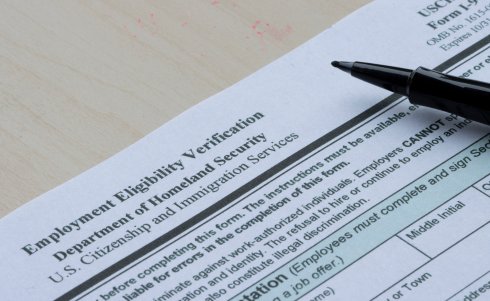
For more than three decades, Form I‑9 has been a cornerstone of U.S. employment eligibility verification. Every employer—regardless of size, industry, or location—is required to complete and retain a Form I‑9 for each employee hired after November 6, 1986. While the form itself has evolved over the years, the underlying obligation has remained constant: employers must verify identity and work authorization, maintain accurate records, and be prepared for inspection by U.S. Immigration and Customs Enforcement (ICE).
But in 2026, ICE issued updated inspection guidance that significantly changes how the agency evaluates Form I‑9 errors. These updates don’t alter the form or the law, but they do reshape the compliance landscape. Many mistakes that were once considered minor or “technical” are now treated as substantive violations, meaning they can trigger immediate fines with no opportunity for correction during an audit.
For HR leaders, compliance teams, and hiring managers, understanding these changes, and adjusting internal processes accordingly, is essential.
How ICE I‑9 Inspections Work
ICE conducts thousands of Form I‑9 inspections each year. When an employer receives a Notice of Inspection (NOI), they typically have three business days to produce their I‑9s and supporting documentation. ICE then reviews the forms for accuracy, completeness, and compliance with federal regulations.
Historically, ICE distinguished between technical or procedural violations, which employers could correct within 10 business days, or substantive violations, which were immediately subject to penalties. This distinction mattered. A missing date, an incomplete field, or a minor oversight could often be corrected during the audit window, reducing or eliminating fines.
The new guidance changes that calculus.
What’s New in ICE’s Updated Fact Sheet
ICE’s updated fact sheet expands the list of substantive violations, errors that cannot be corrected once an audit begins. These include many issues that employers previously treated as minor administrative mistakes.
Examples of errors now considered substantive:
- Missing employee date of birth in Section 1
- Missing or incomplete employer attestation information in Section 2
- Missing date of hire
- Missing document title, issuing authority, or expiration date—even if a copy of the document is on file
- Missing rehire date in Supplement B
- Improper use of the Spanish‑language Form I‑9 outside Puerto Rico
- Deficiencies in electronic I‑9 systems, such as incomplete audit trails or signature issues
These are critical as they cover all parts of the form including areas completed by the employer and employee. ICE also clarified that employers cannot rely on document copies to cure missing information. If the form itself is incomplete, the violation stands.
Why This Matters: Increased Penalties and Higher Risk
The consequences of these changes are significant. Substantive violations can result in fines ranging from hundreds to thousands of dollars per error. For employers with large workforces or high turnover, cumulative penalties can escalate quickly. Accordingly, industries at heightened risk include: the hospitality business, retail stores, construction companies, various forms of manufacturing businesses, certain healthcare providers, staffing and recruiting agencies, and federal contractors.
These sectors often rely on decentralized hiring, multiple onboarding locations, or large volumes of I‑9s, conditions that increase the likelihood of errors.
ICE’s updated guidance signals a stricter enforcement posture and a reduced tolerance for administrative mistakes. Employers can no longer assume that routine errors will be fixable during an audit.
What Employers Should Do Now
Conduct a proactive internal I‑9 audit.
Review all existing I‑9s — especially older forms completed under prior guidance — to identify and correct errors before ICE ever requests them. All covered I-9s that could be audited include terminated employees for the last three years, which underscores how critical record keeping is for I-9 compliance. Employers should work with immigration compliance counsel to ensure corrections are made properly.
Strengthen onboarding and I‑9 completion procedures.
Ensure HR staff and authorized representatives understand the new classifications and the importance of complete, accurate entries in all sections of the form. Real-time review of the completion of form I-9 is recommended as substantive violations are incorporated into sections completed by the employee as well as the employer.
Review your electronic I‑9 system.
Confirm that your system meets DHS requirements for:
- Audit trails
- Electronic signatures
- Data integrity
- Proper indexing and retrieval
Auto‑population features should be reviewed to ensure they do not create incomplete or inaccurate fields.
Retrain all I‑9 preparers.
Training should cover:
- Proper document review
- Accurate recording of hire dates and document details
- Correct use of the preparer/translator section
- Proper reverification procedures
Ensure proper use of alternative verification procedures.
If your organization uses DHS‑authorized remote verification, confirm that all eligibility requirements, such as E‑Verify participation, are consistently met.
The Bottom Line
ICE’s updated Form I‑9 inspection guidance represents a meaningful shift in enforcement. Employers now face higher stakes and less flexibility when errors occur. The organizations that invest in strong I‑9 practices today through audits, training, and system improvements will be far better positioned to withstand increased scrutiny.
In the current environment, proactive compliance is not optional. It’s essential risk management.
For more information visit: Form I-9 Inspection Under Immigration and Nationality Act § 274A | ICE