Marquee Background
Marquee Background

Offit Kurman Blogs

Immigration Law

What to Do if ICE Shows Up at Your Workplace

January 30, 2025

By Michael Freestone and Deborah H. Petito
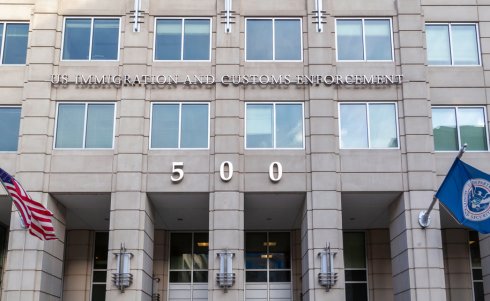
What to Do if ICE Shows Up at Your Workplace

ICE Enforcement Actions

The Trump administration has immediately followed through on campaign priorities of aggressive immigration enforcement. The agency in charge of immigration enforcement is the U.S. Immigration and Customs Enforcement agency, otherwise known as ICE. We have seen an expansion of federal deportation actions and the removal of protections for areas previously considered safe spaces from agency actions. ICE enforcement actions can now occur in places of worship, schools, and courthouses. ICE agents can and will detain large numbers of individuals in a single action to determine their immigration status. Finally, the passage of the Laken Rily Act means that convictions of relatively minor crimes, such as shoplifting, could lead to indefinite detention for immigrants.

ICE Actions and Deportation Warrants

All people living in the United States, including individuals here without status, have certain specific rights protected by the Constitution.

Key considerations of ICE enforcement actions are as follows:

  • An ICE deportation warrant is not the same as a search warrant. If the ICE warrant is the only document ICE can show to justify their presence, they cannot legally enter a premises without agreement.
  • You can and should ask for a search warrant signed by a judge and review it outside the premises. Warrants must be facially correct, including the individual’s correct name and address, as well as the Judge’s full name.

Worksite Enforcement

Given the current increase in ICE enforcement actions, it is clear that there will be additional forms of worksite actions specifically related to legal immigration compliance. These actions may be conducted by U.S. Citizenship and Immigration agents from the Fraud Detection and National Security Directorate, Department of Homeland Security (DHS) Homeland Security Investigators, and/or ICE agents. These actions are described as “worksite enforcement” and cover enforcement of various immigration laws, including but not limited to I-9 compliance, immigration fraud, and compliance under the H1B and L1 visa programs. Typically, these actions are large-scale enforcement actions with warrants, but they can also consist of a smaller team of agents following up on a business that sponsored a single individual.

Paperwork compliance is critical for employers, and ensuring I-9 compliance is recommended for all employers. A heavily recommended first step is to conduct I-9 audits. One key consideration is that worksite enforcement actions are in person, and accordingly, it is critical that employers brief team members about how to interact with agents. Finally, these actions are not necessarily entirely immigration-related, and compliance with employment laws generally will be reviewed as well.

So, what are the best practices moving forward in another age of enhanced compliance by the DHS? Our five tips would be:

  • Standardize processes for hiring and verification, including immigration compliance, to have a robust compliance program for all hires moving forward.
  • Review I-9 compliance, potentially including an audit of I-9s.
  • Consider moving to E-Verify for compliance purposes.
  • Have a plan in place for federal agents showing up. Designate a point of contact and ensure they are familiar with organizational rights and obligations. 
  • Keep informed. Keeping up to date on changes in immigration and enforcement policies is key. We have seen changes to passport issuance for transgender U.S. citizens, as well as the threat of travel bans and further disruption and delay for immigration processes.

Courthouse Enforcement

Regarding the courthouse memorandum, ICE has been told to generally avoid non-criminal courts for enforcement. Still, such guidance is not binding, and heightened vigilance at all courthouses is recommended for clients. This action is similar to the prior Trump administration’s enforcement priorities.

Detainee Locator

After apprehension by ICE, it is often exceedingly difficult for employers or loved ones to find an individual detained by ICE. Sometimes detainees may be sent to the side of state or to a different state entirely for processing. ICE does have a robust detainee locator system that can assist in finding individuals caught up in enforcement actions: https://locator.ice.gov/odls/#/search.

Resources

Please find attached a quick guide produced by the American Immigration Lawyers Association for individuals questioned or detained by ICE.

Additional Resources:

Categories: Immigration Law

Related People

Related Services

  • Posts
  • About
  • Subscribe

Firm Highlights

  • Blog Posts
    Law, Love, and Life's Battles: Facing Breast Cancer
    What happens to a marriage and a family when a breast cancer diagnosis changes everything? In this episode of Love Ends, Law Begins, hosts Fara Rodriguez and Stephanie Lehman have a deeply personal conversation about breast cancer, marriage, family, and the challenges that can come with a serious illness. This episode is especially meaningful for Fara, who shares her own recent breast cancer diagnosis and journey. She opens up about discovering a lump, receiving her diagnosis, undergoing a double mastectomy and subsequent treatments, and navigating the emotional impact of cancer while continuing to work and care for her family. Fara and Stephanie discuss how a cancer diagnosis can affect a marriage in unexpected ways—from changing family roles and creating new caregiving responsibilities to putting pressure on finances, health insurance, and household responsibilities. They explore how illness can either bring couples closer together or create additional challenges, particularly when one spouse becomes the primary caregiver or when the family is dealing with fear and uncertainty. The conversation also addresses the unique challenges of parenting during an illness, including how to talk to children about a cancer diagnosis and how divorced parents may need to adjust parenting schedules and responsibilities when one parent becomes sick. From navigating medical expenses and insurance coverage to balancing work, parenting, caregiving, and intimacy, Fara and Stephanie offer a candid look at the ways illness can reshape relationships and family dynamics. In recognition of Breast Cancer Awareness Month, this episode provides an honest and personal conversation about facing cancer while navigating marriage, family, and the many practical challenges that come with a serious diagnosis. In this episode, you'll hear about: • Fara's personal breast cancer diagnosis and journey • How a cancer diagnosis can affect a marriage • The challenges of becoming a caregiver to your spouse • How illness can bring couples closer together—or create new challenges • Talking to children about a parent's cancer diagnosis • How divorced parents can navigate parenting responsibilities when one parent becomes ill • The financial impact of illness and the loss of household income • Health insurance and medical coverage considerations • How medical expenses can create additional financial strain • The importance of support from family, friends, and caregivers • Balancing work, parenting, treatment, and recovery • How illness can affect intimacy and marital dynamics • The importance of supporting children through a parent's illness • Why communication and cooperation matter during a health crisis • Breast Cancer Awareness Month and the importance of mammograms
  • Events
    AIA Tri-State Conference
    Princeton will serve as the backdrop for three days of connection, learning, and design leadership. From keynotes to tours to the Tri-State Design Awards, this year’s conference is designed to go far beyond education sessions. Kick off the week with pre-conference intensives and individual state component Design Award celebrations, followed by three days of education, inspiration, networking, and design excellence at the 2026 AIA Tri-State Conference—featuring pre-conference intensives, three keynote speakers, 25 education sessions, curated tours, an expo, spec academies, and the AIA Tri-State Design Awards—bringing together architects and design professionals from New Jersey, New York, and Pennsylvania to connect, learn, and celebrate the best of the profession. G2. Designing Secure Practices: Cybersecurity, Data Privacy, Contractual Provisions, and Insurance Risks for Architects (4:00 PM - 5:30 PM) Architects and design professionals increasingly rely on cloud platforms, BIM software, and digital tools to manage sensitive data, creating cybersecurity and privacy risks. A single incident can trigger liability claims, regulatory obligations, reputational harm, and insurance challenges. Yet many firms underestimate how contracts, insurance, and internal practices intersect during a breach. This program offers legal and insurance perspectives on cyber risk in architecture, examining liability exposure, risky contract provisions, and mitigation strategies. A cyber insurance expert will explain policy responses, coverage gaps, coordination with professional liability, and best practices for aligning insurance with contractual risk and protecting firms from evolving cyber threats. Learning Objectives: Identify key cybersecurity and data privacy risks faced by architecture firms and explain how these risks can impact professional liability and project outcomes. Analyze common contractual provisions to determine which clauses may increase exposure to cyber incidents and propose strategies to mitigate these risks. Evaluate the scope and limitations of cyber insurance policies, including coordination with professional liability coverage, to determine how a policy would respond in a breach scenario. Develop actionable risk management strategies by integrating legal, contractual, and insurance considerations to protect sensitive client and project data.