Trademark and Copyright

Actor Matthew McConaughey Registers Sensory Trademark “Alright, Alright, Alright” in Enforcement Effort Against AI Deepfakes

January 26, 2026

By W. Drew Kastner, Edward Baxter, and Stephenie Wingyuen Yeung 楊穎苑
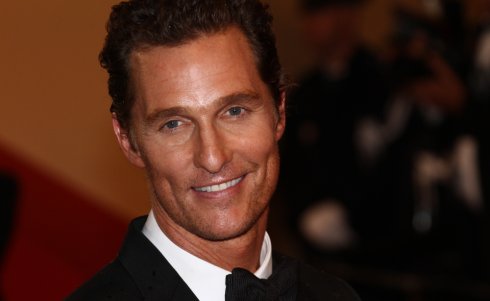
Actor Matthew McConaughey Registers Sensory Trademark “Alright, Alright, Alright” in Enforcement Effort Against AI Deepfakes

Well-known actor Matthew McConaughey has attracted headlines following the registration of a number of trademarks, not just related to brands with which he may be associated, but also those that address his pop-culture persona. Most interesting among these is McConaughey’s recent registration of the phrase "Alright, alright, alright," first uttered by the actor in the 1993 film Dazed and Confused, which has become strongly associated with the actor’s laid-back, Texas public image. McConaughey, however, has not only registered “Alright, Alright, Alright” as a trademark, but also as less common sensory marks. Sensory marks are trademarks that identify brands through senses other than just text or static logos. Well-known examples include the three-note (G-E-C) NBC Chimes, the MGM lion’s roar accompanying many well-known films, and the specific scent of Play-Doh. According to McConaughey’s legal team, the registration of these sensory marks and other recent registrations represents an attempt to enforce against the ever-increasing problem of AI-generated “deep fake” videos, in which celebrities or other well-known individuals are impersonated, in strikingly authentic fashion.

The registration of “Alright, Alright, Alright,” (Reg. Nos. 7995951 and 8070191) as sensory marks, specifically, has the potential to represent a tactical shift in celebrity rights management. By securing federal trademark protection for the specific sound and motion of his delivery of the phrase, McConaughey attempts to move beyond the patchwork of state-level "right of publicity" laws. A federal trademark registration provides nationwide constructive notice of McConaughey’s ownership and creates a legal presumption that his distinct mannerisms and delivery of the phrase serve as source identifiers for the registered Class 09 goods and Class 41 entertainment services, which constitute his on-screen performance. In the context of AI, this allows his legal team to pursue infringement claims under the Lanham Act against entities using AI voice clones or deepfakes to endorse products. Unlike a right of publicity claim, which often requires proving the appropriation of one's "likeness," a trademark claim focuses on consumer confusion; specifically, whether an AI’s use of the catchphrase falsely suggests McConaughey’s sponsorship or approval.

However, relying on trademark law to police AI has significant limitations. The primary hurdle is the "commercial use" requirement; trademark laws are designed to prevent consumer confusion in the marketplace, not to protect personal dignity. Consequently, this registration may be ineffective against non-commercial AI generations, such as artistic deepfakes, memes, or satire, which may be protected by the First Amendment or the doctrine of Fair Use. Ultimately, the scope of protection offered by these new registrations may be narrow. While McConaughey can now vigorously enforce against an AI creation saying “alright, alright, alright," this specific registration offers little recourse against an AI model mimicking his voice to say anything else. Infringers could potentially bypass this protection by simply creating AI content that avoids his registered catchphrases while still exploiting his vocal timbre and mannerisms. While this registration adds one weapon to his arsenal, it is likely a specific deterrent rather than a comprehensive shield against unauthorized digital exploitation.


Firm Highlights

  • Events
    The 2026 Economic, Tax, and Accounting Updates
    We are looking forward to the Mid-Atlantic CFO Roundtable's next event on November 13, 2026. This is a program with topics built for Finance Executives. We are extremely fortunate to have three excellent speakers: Dr. Daraius Irani, Vice President of Business and Public Engagement at Towson University; Mike Stankus, Tax Office Managing Principal at BDO; and Daniel Wahlberg, Managing Partner of Acclare Solutions. The economy is rapidly changing with various factors driving it. The November 3rd midterm elections may also have an impact. Our three expert presenters will discuss the ramifications of the election, and the current year updates to GAAP financial reporting and Federal and State income taxes. Please join us for what will surely be an informative and timely discussion. Meet Our Speakers: Daraius Irani, Ph.D. • Towson University Vice President, Business & Public Engagement Dr. Daraius Irani serves as Vice President of Business and Public Engagement at Towson University as well as the chief economist for the Regional Economic Studies Institute (RESI) at Towson University, a policy group providing economic, fiscal impact, and policy analysis to public and private entities.  Dr. Irani is often called upon to provide economic presentations to organizations across Maryland. He has appeared on numerous television programs and in local and regional print media. Dr. Irani holds a Ph.D. in economics from University of California, Santa Barbara. Dan Wahlberg • Acclare Solutions Managing Partner With over 28 years of experience, Dan Wahlberg is a recognized leader in audit and assurance for the Mid-Atlantic’s middle market business community. As a licensed CPA in Maryland and Virginia, Dan has led assurance practices at top regional firms, including serving as Baltimore Audit Managing Partner and Assurance Practice Leader at BDO USA in Baltimore and as Partner and member of the Management Committee at Hertzbach & Company P.A which merged into BDO in 2020. His expertise centers on delivering clarity, strategic guidance, and proactive solutions to middle-market businesses across Baltimore and beyond. His entrepreneurial spirit has led him to begin a new CPA firm this year with four other CPAs serving the business community. Dan holds a Bachelor of Science in Accounting from Rutgers University and began his career at PWC in New York. He is also deeply engaged in the community, previously serving as President of ACG Maryland and current Board member and as Audit Committee Member for The Associated: Jewish Federation of Baltimore.  Mike Stankus • BDO USA LLP Tax Office Managing Principal Mike Stankus is the Tax Office Managing Principal for the firm’s Baltimore office. He has more than 16 years of experience providing tax planning and preparation and management advisory services for his clients. Mike focuses on advising privately held businesses and their owners on effective growth and tax strategies. He also performs various engagements for mergers and acquisitions and complex cost accounting projects and projections. In addition, he represents various government contracting clients before the DCAA and assists with FAR compliance. Mike’s areas of concentration include working with government contractors, professional service firms, construction companies, and homebuilders.
  • Events
    AIA Tri-State Conference
    Princeton will serve as the backdrop for three days of connection, learning, and design leadership. From keynotes to tours to the Tri-State Design Awards, this year’s conference is designed to go far beyond education sessions. Kick off the week with pre-conference intensives and individual state component Design Award celebrations, followed by three days of education, inspiration, networking, and design excellence at the 2026 AIA Tri-State Conference—featuring pre-conference intensives, three keynote speakers, 25 education sessions, curated tours, an expo, spec academies, and the AIA Tri-State Design Awards—bringing together architects and design professionals from New Jersey, New York, and Pennsylvania to connect, learn, and celebrate the best of the profession. G2. Designing Secure Practices: Cybersecurity, Data Privacy, Contractual Provisions, and Insurance Risks for Architects (4:00 PM - 5:30 PM) Architects and design professionals increasingly rely on cloud platforms, BIM software, and digital tools to manage sensitive data, creating cybersecurity and privacy risks. A single incident can trigger liability claims, regulatory obligations, reputational harm, and insurance challenges. Yet many firms underestimate how contracts, insurance, and internal practices intersect during a breach. This program offers legal and insurance perspectives on cyber risk in architecture, examining liability exposure, risky contract provisions, and mitigation strategies. A cyber insurance expert will explain policy responses, coverage gaps, coordination with professional liability, and best practices for aligning insurance with contractual risk and protecting firms from evolving cyber threats. Learning Objectives: Identify key cybersecurity and data privacy risks faced by architecture firms and explain how these risks can impact professional liability and project outcomes. Analyze common contractual provisions to determine which clauses may increase exposure to cyber incidents and propose strategies to mitigate these risks. Evaluate the scope and limitations of cyber insurance policies, including coordination with professional liability coverage, to determine how a policy would respond in a breach scenario. Develop actionable risk management strategies by integrating legal, contractual, and insurance considerations to protect sensitive client and project data.





