Landlord Representation
Fair Housing Frights: Why Disability Accommodation Mistakes Are the Scariest Compliance Risks Facing Housing Providers
By Melinda McBeth
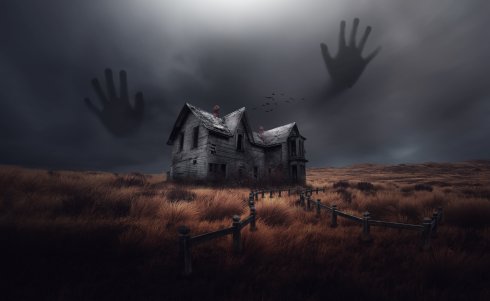
Halloween is the season of haunted houses, unexpected scares, and stories that keep you awake at night. For housing providers, the truly frightening tales are the fair housing matters that begin with a simple mistake and end with a regulatory complaint, lawsuit, or six-figure settlement.
The good news? Most fair housing horror stories are preventable.
The bad news? Many begin with well-intentioned employees, routine leasing decisions, or policies that appear perfectly reasonable on their face.
As you prepare your properties for trick-or-treaters this Halloween, it’s a good idea to check for any compliance goblins lurking in your leasing office.
What Federal Enforcers Are Hunting This Year
The Disability Accommodation Phantom
The ghost that continues to haunt the mansion is disability discrimination. Disability-related complaints still dominate fair housing enforcement, with complaints involving assistance animals, reserved parking requests, reasonable accommodations, and reasonable modifications generating a substantial portion of the claims nationwide. According to the National Fair Housing Alliance’s 2025 Fair Housing Trends Report, disability discrimination complaints accounted for 54.6 percent of the 32,321 fair housing complaints reported nationwide in 2024, making it by far the largest category of fair housing complaints.
Liability often arises not from hostility towards disabled residents or other forms of overt discrimination, but from rigid adherence to policies and procedures. The most chilling phrase in fair housing compliance may be: “That’s not our policy.”
Fair housing requires modifying policies when a reasonable accommodation is necessary and does not pose an undue burden. Most disability claims begin with a request that management either failed to recognize, evaluate, or address in a timely manner.
The Harassment Poltergeist
Harassment claims have risen significantly in recent years. NFHA reported 1,661 harassment complaints in 2024, a 9.2% increase from 2023. Harassment can arise from employee misconduct, tenant-on-tenant harassment that management fails to address, hostile housing environment allegations, or retaliation against residents who complain about discrimination. These claims remain a significant enforcement priority for both private fair housing organizations and regulators.
Many housing providers underestimate this risk because they focus heavily on screening and accommodations while overlooking employee conduct. Management staff and site teams should be provided with clear, written anti-harassment policies, regular training, and reporting procedures that encourage prompt escalation and investigation of complaints before they become legal claims.
The Retaliation Zombie
Zombies are scary because they keep coming back. Retaliation claims operate the same way. A resident files a fair housing complaint, requests an accommodation, or raises a discrimination concern. Management believes the issue is resolved.
Months later, another complaint appears alleging that subsequent actions were retaliatory. NFHA reported that retaliation complaints more than doubled in 2024, reaching the highest level ever recorded.
Housing providers must carefully document all decisions involving residents who have previously raised fair housing concerns. If adverse action is taken against a resident who previously complained of discrimination, there must be sufficient documentation to show that separate, legitimate, nondiscriminatory reasons exist to terminate or otherwise modify the tenancy.
The Accessibility Apparition
Accessibility issues often remain invisible until a complaint, inspection, or acquisition due diligence review brings them to light. Inaccessible parking, excessive thresholds, noncompliant routes, and barriers in common areas can create significant liability and expensive remediation obligations years after construction is complete.
Unlike many fair housing claims, accessibility issues often cannot be resolved through policy changes or additional training alone. Sometimes the fix requires concrete, asphalt, contractors, and significant capital expenditures.
The Monster in the Basement: The Skeleton in the File Cabinet
Every haunted house has a dark basement. Somewhere in that basement is a dusty old cabinet holding a secret nobody wants discovered. In fair housing compliance, that secret is often poor documentation.
A resident requests an assistance animal. Management reviews the request and grants it. Staff members exchange emails, talk in the hallway, and eventually decide. Management writes a letter to the resident approving their request, and hands the letter to a maintenance technician to deliver to the resident.
Everyone leaves believing the matter has been handled correctly. Six months later, a complaint arrives. The resident claims they never received a response to their request.
Now, investigators want to know: When was the request made? Who received it? When did management respond? What information was considered? What proof does management have that they provided responses?
Management remembers doing the right thing. The file tells a different story – there are no notes, no written timeline, no record of conversations. Emails are missing. Employees have moved on to other properties. What seemed like a straightforward request has become a credibility problem. The irony is that housing providers often lose sleep over making the wrong decision when the real danger is being unable to prove they made the right one.
Every accommodation and modification request should leave a clear paper trail showing what was requested, how it was evaluated, what decision was made, and why. When a complaint emerges from the shadows months or years later, investigators often find the skeleton in the file cabinet first.
Tales From the Fair Housing Crypt
With disability discrimination accounting for more than half of all reported fair housing complaints, it should come as no surprise that many of the industry’s scariest compliance stories begin with a disability accommodation or modification request.
Horror Story #1: The “No Pets Means No Pets” Disaster
A resident submits documentation requesting an emotional support animal. Management responds: “We’re sorry, but pets aren’t permitted.” The property treats the request as a pet-policy exception rather than a disability accommodation.
The result? Months of investigations, attorney involvement, significant defense costs, and potential settlement exposure.
Even as agency guidance continues to evolve, housing providers should carefully evaluate every assistance-animal request under applicable federal, state, and local law.
The monster wasn’t the animal. It was a misunderstanding of fair housing requirements.
The Lesson: Assistance animals are not pets under fair housing laws. Requests should be analyzed under reasonable-accommodation standards, not pet policies.
Horror Story #2: The Reserved Parking Space That Took Too Long
A resident with mobility limitations asks for a designated parking space closer to her unit. Management agrees that the request sounds reasonable, and the resident’s disability is readily apparent, but no one feels any urgency. The request sits in an inbox while staff discusses it internally.
Weeks pass. The resident falls while walking from a distant parking space. Shortly thereafter, a complaint arrives.
Many housing providers assume the risk lies in denying an accommodation request. In reality, unreasonable delay can be just as problematic as outright refusal.
The Lesson: Accommodation requests should be addressed promptly and through a clearly defined process.
Horror Story #3: The “Everyone Must Come to the Office” Rule
An elderly resident with a disability requests that renewal documents be emailed to him because traveling to the leasing office is difficult. Management’s responds: “We require everyone to sign in person.”
Management believes it is applying the rules equally. Unfortunately, equal treatment is not always fair housing compliance. The resident files a complaint alleging failure to provide a reasonable accommodation.
The Lesson: Consistency is important, but reasonable accommodations often require flexibility.
Horror Story #4: The Maintenance Technician Who Thought He Was Helping
A resident who uses a wheelchair stops a maintenance technician in the hallway and requests permission to install grab bars in the bathroom at her expense. The maintenance technician responds: “We don’t let residents modify units.” The request never reaches management.
Months later, after the resident contacts a fair housing organization, management learns about the situation for the first time. The complaint names the owner, not the employee.
The Lesson: Every employee who interacts with residents should receive fair housing training. Accommodation requests can arrive through maintenance, security, concierge staff, leasing personnel, or property managers.
Horror Story #5: The Invisible Accommodation Request
A resident repeatedly complains about hearing inspection notices being posted on her door. Management views the complaints as customer-service issues and responds accordingly.
Months later, management discovers the resident is visually impaired and was actually requesting notices be provided in an accessible format. What management viewed as a nuisance complaint, investigators interpreted as an ignored accommodation request.
The Lesson: Residents do not need to use magic words like “reasonable accommodation” or cite the Fair Housing Act to make a modification or accommodation request. Staff should be trained to recognize accommodation requests even when they are phrased informally.
Horror Story #6: The Retaliation Resurrection
A resident files an accommodation request for an assistance animal. The request is granted. Management believes the issue is resolved.
Several months later, after unrelated disputes arise, staff begin issuing warning notices for every minor lease violation more aggressively than they have for other residents. The resident alleges retaliation.
Just like a movie monster everyone thought was dead, the fair housing claim comes back for a sequel.
The Lesson: Accommodation requests do not merely create accommodation obligations. They also create potential retaliation exposure.
The Five Fair Housing Survival Rules
Consistency is Your Silver Bullet
Every horror movie has one thing that keeps the monsters at bay. In fair housing compliance, it’s consistency.
Most discrimination claims become difficult to defend when management treats similar applicants differently. Housing providers must apply standards consistently, document exceptions, and have objective and documented reasons for deviations. Consistency remains one of the strongest defenses available.
Train Employees Like Your Business Depends on It
In every scary movie, someone ignores the warning signs. In housing matters, that person is often the untrained employee who doesn’t recognize an accommodation request when they hear one.
Most fair housing claims begin with conversations, not policies. A single statement from a leasing consultant can become the centerpiece of an investigation. Regular training is significantly less expensive than a lawsuit.
Accommodation Requests Knock, Answer the Door
Most haunted house movies start the same way: someone hears a knock and ignores it. Accommodation requests work much the same way.
When disability accommodation requests arise, housing providers should pause, evaluate the request, engage in the interactive process, and document the analysis. Delays, assumptions, and rigid policy enforcement often create more risk than the request itself. The scariest accommodation request is the one that gets ignored.
Leave a Paper Trail Through the Haunted Forest
In horror movies, people get lost because they leave no trail behind them. In fair housing investigations, housing providers get lost when decisions are not documented.
Maintain records regarding application decisions, accommodation and modification requests, resident communications, investigations, and policy exceptions. Strong documentation helps demonstrate what happened, why it happened, and who made the decision. When investigators come calling, a well-documented file is often the best flashlight you can carry into the darkness. When regulators investigate, memories become unreliable. Documents do not.
The Most Dangerous Monsters Are the Ones You Can’t See
Perhaps the scariest fair housing lesson is this: liability does not always require bad intent. Many fair housing claims arise because of the effect of a policy rather than the motivation behind it. A well-intentioned rule, employee, or technology platform can still create significant legal exposure if it prevents equal housing opportunity or interferes with a reasonable accommodation or modification.
The absence of discriminatory intent is not a substitute for compliance. Compliance reviews should examine not only what policies say, but how those policies operate in practice.
Final Thought: Don’t Let Your Property Become a Fair Housing Nightmare
The scariest fair housing cases rarely involve cartoon villains twirling their mustaches in a leasing office. They usually involve ordinary, well-intentioned employees, ordinary, facially neutral policies, and ordinary decisions that produce extraordinary consequences.
The latest nationwide data shows that disability accommodations, harassment retaliation, national-origin discrimination, and emerging AI-related concerns continue to drive enforcement activity. With 32, 321 complaints reported in 2024, the risk is very real.
This Halloween, while residents are worrying about ghosts and goblins, housing providers should focus on a different kind of monster: the preventable fair housing violation hiding in plain sight. The good news is that, unlike most horror movies, this story has a simple ending: train your staff, follow your policies consistently, document your decisions, and treat every fair housing concern with the seriousness it deserves.