Intellectual Property
Danger Zone: Top Gun Heirs Ask Supreme Court to Rewrite the Rules on Copyright Similarity
By W. Drew Kastner, Edward Baxter, Stephenie Wingyuen Yeung 楊穎苑, and LuAnne Morrow
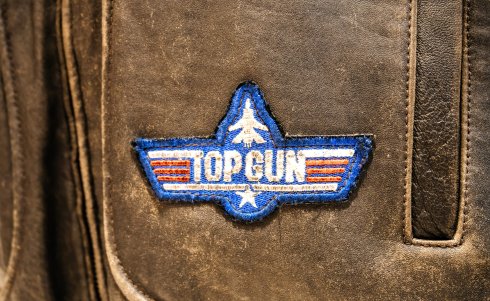
When Ehud Yonay wrote "Top Guns" for California Magazine in 1983, an 11-page account of the Navy's elite fighter pilot training program, Paramount Pictures came calling almost immediately, licensing the rights, and using the article as the springboard for the 1986 blockbuster Top Gun. After Yonay's death in 2012, his heirs attempted to exercise a powerful but often-overlooked copyright tool: statutory termination rights under 17 U.S.C. § 203, which allow an author's heirs to reclaim copyright grants made during the author's lifetime after a statutory period has elapsed. When Paramount released Top Gun: Maverick in 2022 without compensating or crediting the Yonay estate, the heirs promptly sued for copyright infringement and breach of contract. A district court disposed of the case in 2024, granting Paramount’s motion for summary judgment. The Ninth Circuit affirmed in January 2026, holding that Maverick did not infringe the article because every meaningful similarity between the two works, the shared setting, the fighter-pilot culture, aerial training sequences, etc., reflected unprotectable facts about the real Top Gun program rather than any protected original expression from Yunay’s work.
While courts ultimately resolved the § 203 claim forming the basis of the suit in the Yonay’s favor, confirming that the rights to the initial article reverted to them, the central legal battleground became "substantial similarity,” the established standard that copyright plaintiffs must satisfy to show that a defendant copied their original creative expression, as opposed to the underlying facts or ideas, which lie in the public domain. The Ninth Circuit applies a two-step approach to determine substantial similarity. First, an "extrinsic test" that dissects a work into its component parts, filters out unprotectable elements like facts and generic ideas, and compares what remains piece-by-piece. Only works that clear this analytical gauntlet proceed to an "intrinsic test,” a holistic, ordinary-observer assessment of overall similarity. The Yonays argued that the article's vivid language, innovative structure, and the distinctive way Yonay wove those elements into a coherent portrait of a fighter pilot’s life were all protectable, including under a "selection-and-arrangement" theory, which recognizes that an original combination of otherwise unprotectable elements can itself merit copyright protection. The Court disagreed; every similarity, the Court stated, either dissolved into uncopyrightable facts about the real program or evaporated into abstract narrative ideas too general to be owned (the "redemption of a hero," beauty and terror juxtaposed in aerial sequences). Thus, the Yonays' selection-and-arrangement theory failed because the narrative patterns they identified were storytelling conventions, not Yonay's original contribution.
The Yonays are appealing the Ninth Circuit’s decision and are applying for certiorari to make their case before the Supreme Court, basing their appeal on a new theory highlighting a significant circuit split. While the Ninth Circuit requires plaintiffs to clear the extrinsic-dissection test before any holistic similarity assessment, the Second, Third, Fifth, Seventh, and D.C. Circuits consider overall similarity without the threshold hurdle. Should SCOTUS grant certiorari and find for the Yonays, the result may be a sea change in the way copyright analysis is handled in one of the busiest jurisdictions for such cases. The Second and Ninth Circuits handle the heaviest copyright dockets in the country, covering the publishing and entertainment capitals. Yet, rights holders face materially different legal standards depending on which coast their lawsuit lands. The Yonays’ petition frames this as a $2 trillion problem, invoking copyright-intensive industries' contribution to the national economy, and argues that the Ninth Circuit's approach effectively strips protection from works like Yonay's, where original expression is inseparable from journalism about real events. Whether the Court grants certiorari remains to be seen, but the petition puts a consequential question about how courts measure creative similarity directly on its radar.