Intellectual Property
Common Copyright Mistakes That Can Cost Your Business Big
By Marc P. Misthal
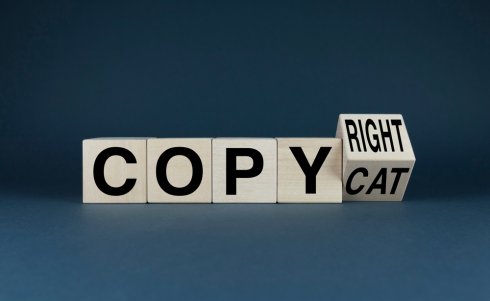
You learned everything you need to know about avoiding copyright infringement in elementary school: don’t copy. And if you do copy, you will be called a copycat. Childish, I know, but it seemed to work. Except copying continues outside of elementary school, and businesses spend time and money resolving claims of unauthorized copying, diverting their attention and resources from their core business.
The Problem
Although we may learn in elementary school not to copy, the lesson does not always take hold. What harm is there in copying? Who is going to catch us? If it’s online, it’s available for me to use, and I don’t need anyone’s permission. That thinking is one root of the problem. The notion that obtaining permission is too much of a legal slog (too expensive, too time consuming, etc.) is another reason the ‘don’t copy’ rule is ignored (generally seen in tech projects, such as the current use of others’ works to train large language models for AI).
More often than not, copiers get caught. This is especially true in the case of parties copying photographs. Photographers are well aware that their photographs are used without permission, and actively police their rights. There have been lawsuits regarding the use of photos of foods used on menus without permission. Creators have received cease and desist letters because they have used, without permission, a photograph as the background for a work they created. Photographers have sued when their images were re-posted on Instagram without permission.
Interior design and fashion companies (among others) like to post on their websites and their social media when their items or their work are featured in prominent publications. Such postings are almost always without permission. For example, a wallcovering company could post on its website photos from magazines showing its wallcoverings in houses. The owners of the homes may have consented to the company’s use of the photos, and the magazines may have consented, but that is usually not enough. The photographer must give permission because they generally own the copyright to the photo.
Posting photos to social media can also result in claims of copyright infringement if the posts are made without permission. Yes, social media is made for sharing photos. That does not mean that photos can be shared without consent. LeBron James, Gigi Hadid, Versace, Fenty, and Moschino have all been sued for copyright infringement after posting photographs on social media without permission (Gigi Hadid was sued for posting photos of herself taken by paparazzi).
News articles, too, present an issue. Reproducing news articles can give rise to copyright infringement claims. Imagine if a company had a news section on its website that reproduced news articles it thought would be of interest to its customers. That would also pose issues. Each article posted would be an infringement. If that posting was a long-running practice (say two or three years), then that company could be in for a significant payment to the owner(s) of the posted articles.
If You Copy, Then You Copied
Unauthorized reproduction of artistic works is generally known as copyright infringement. The primary defense to copyright infringement is that the original work and the infringing work are not substantially similar, or that one did not have access to the original work. But in the cases we have been discussing, that argument is generally not available, as the copies are usually identical to the original work.
Giving credit to the creator of the original work does not avoid a claim of copyright infringement. A photographer or a news organization might decide not to take action if credit is given, but the fact that you gave credit is not a legal defense.
In copyright infringement cases, it doesn’t matter that you didn’t intend to infringe. You either infringed or you didn’t. Intent enters the picture, in some situations, when damages are being assessed.
Fair use is frequently cited as a defense. While fair use is a defense to a copyright infringement claim, determining whether something constitutes a fair use usually requires determination by a court. Such a determination can take considerable time (a year or more), and it is difficult to predict how a court will decide a fair use question. The fact that the entire work is reproduced will weigh against a finding of fair use, as will the fact that the work has not been transformed into something new — the work has merely been reproduced. If the photograph or news organization has a program for licensing their works, that will also weigh against a finding of fair use.
The limited number of defenses works in favor of copyright owners.
Copyright Law Favors Copyright Owners
If there has been copyright infringement, copyright owners are entitled to recover their actual damages plus the infringers’ profits attributable to the infringement. If the copyright owner timely registered their copyright, they can seek, as an alternative to actual damages, statutory damages, which are generally set by the court and can be up to $30,000 per infringement and up to $150,000 per willful infringement. With timely registration, copyright owners can also seek to recover their reasonable attorney’s fees.
That alone is favorable to copyright owners, but recent Supreme Court decisions have decidedly tipped the scales. In one case, the Supreme Court ruled that the Copyright Act’s three-year statute of limitations only applied to when a claim had to be brought, not how far back the copyright owner could reach for damages. In another case the Supreme Court declined to rule on whether the three-year period is calculated from when the copyright owner discovers the infringement or from when the infringement occurs. Most courts calculate it from when the copyright owner discovers the infringement.
So take the wallcovering company we discussed above. They have been posting magazine covers and the pages from the magazines featuring their wallcoverings on their website for ten years. One of the photographers used by the magazines to photograph houses learns what the wallcovering company has been doing today. The photographer has three years from the date of discovery to act, and when they do, they can recover damages for every post by the company that infringed the photographer’s rights, even if the post was made ten years ago. That can add up very quickly, and result in payments to copyright owners in the thousands or millions of dollars.
What To Do?
The penalties for copyright infringement can be steep, making it essential to learn how to avoid copyright infringement exceedingly important.
Training employees to ask questions about what they are doing before they do it is a good way to start.
Provide users links to images of interest, and do not duplicate them unless you have permission. Linking is not copyright infringement.
Ensuring that employees understand the company’s policy against copying and discouraging it is another step. Train employees on what is permissible and what is not. Do not assume that they know — there are many myths and urban legends about what is permissible, and the time to learn what the law actually permits and what it does not permit is before a claim is brought, not after.
Hiring your own creators to create photos, images, articles, and the like for your company’s use, is another way to avoid this issue. Yes, there is a cost associated with this. That cost, however, is likely less than the cost of paying to resolve a claim brought by a copyright owner, both in time and in money (and your own attorney’s fees).