Labor and Employment Law Blog
Labor and Employment
Time to Review Settlement and Severance Agreement Templates
In a surprising decision that reveals the National Labor Relations Board’s (NLRB) position on perceived threats to employees’ right to organize under the National Labor Relations Act (NLRA), the Board held in McLaren Macomb, 372 NLRB No. 58 (2023), that even if an employer (with a unionized or non-unionized workplace) merely offers a severance agreement containing broad confidentiality and non-disparagement provisions, it is illegal. Note: The Board’s ruling only applies to nonmanagerial, nonsupervisory employees with Section 7 rights under the NLRA. The current Board’s view is that agreements are unlawful on their face if they contain terms with a “reasonable tendency to interfere with, restrain, or coerce employees in the exercise of their Section 7 rights” under the NLRA. As such, if an employee files a complaint, the NLRB will now review severance agreements for language that’s too “broad or coercive.” In McLaren Macomb, the NLRB found that asking an employee to agree to keep terms of an agreement confidential (even with exceptions for spouses, lawyers, and tax advisors, and as ordered by a court or agency) violated the NLRA because the former employee would be unable to discuss it with current employees, who might want to organize. The Board also decided that a non-disparagement agreement was illegally overbroad when it required the employee not to make statements that could disparage or harm the image of the “employer, its parent and affiliated entities and their officers, directors, employees, agents and representatives.” Note: This restriction has no time limitation and covers other entities and persons, not just the employer. Courts don’t have to follow the rulings of the NLRB. The courts always look to whether a non-disparagement agreement is “reasonable under the circumstances,” and I believe that a non-disparagement clause limited to the company would be reasonable as long as the non-disparagement clause doesn’t purport to last forever and cover too many entities. Would a court agree that it’s illegal to promise not to disclose the agreement’s terms? The ability to require confidentiality serves as the important public policy of encouraging settlements outside of court. That said, having your template severance and settlement agreements with employees reviewed for compliance with the Board’s rationale and holding it is not very time-consuming. I’m recommending this to my clients — tweaks would not be difficult. If you have questions, please reach out.
March 23, 2023
One Minute of Overtime
Executive Exemption
Welcome to One Minute of Overtime, where I will share insights on Labor and Employment Law topics, mostly related to minimum wage and overtime compliance issues. Compliance in this area of law is nuanced and technical, so it is critical for employers to audit and adjust their practices to remain compliant, so stop by to stay up-to-date and in-the-know. An employee is exempt pursuant to the administrative exemption, and not subject to the minimum wage and overtime requirements, if the employee is paid consistent with the salary basis test and their primary duty is managing the enterprise, or division thereof, where the employee customarily and regularly directs the work of at least two or more other full-time employees and has the authority to hire or fire or the employee’s suggestions and recommendations as to hiring, firing, etc. is given particular weight.
March 15, 2023
Labor and Employment
Adhering to Laws of Every State in Which Employees Are Working Remotely Part II
As I’ve written before, the employment laws of the states where an employer hires employees are applicable to the employment relationship. If you missed those blogs, you may access them here and here. I am listing more types of laws to consider here. If you’re bored by this topic, I promise this is my last blog on the subject. Prior wages inquiries: The employer can’t do any or all of the following under some state laws: Require, as a condition of employment, that an employee refrain from inquiring about, discussing, or disclosing information about either the employee's own wages or about any other employee's wages (also violates federal law); Seek the wage or salary history of a prospective employee from the prospective employee or a current or former employer or to require that a prospective employee's prior wage or salary history meet certain criteria; provided, however, that: If a prospective employee has voluntarily disclosed such information, a prospective employer may confirm prior wages or salary or permit a prospective employee to confirm prior wages or salary; and A prospective employer may seek or confirm a prospective employee's wage or salary history after an offer of employment with compensation has been negotiated and made to the prospective employee. Employers can’t retaliate against employees who report violations. Wage payment: Employers must pay wages earned by employees within different time periods of a termination; the definitions of “wages” and penalties for failing to pay on time vary from state to state. Medical assistance & family medical leave contributions: Employers in some locations must pay into an account set up by the state, similar to the unemployment insurance fund. Workers’ compensation and unemployment insurance premiums: Employers must pay these, in every state, for each employee performing any work in that state. Contribution to a workforce training fund program: Where a state has such a fund or similar, the employer must contribute. The list is not exclusive. There are other employment-related laws in some states that are not common, so I’ve omitted them here. Please ask if you have questions.
March 9, 2023
Labor and Employment
Adhering to Laws of Every State in Which Employees Are Working Remotely
As I’ve written before, the employment laws of the states where an employer hires employees are applicable to the employment relationship. If you missed that blog, you can access it here. I am listing more types of laws to consider. Sexual harassment policies: It may be legally required to adopt a policy against sexual harassment and provide notice of the policy at certain times. Workplace safety laws: Enough said. Non-competition agreements in an employment relationship: Severely limited or forbidden in some states and may soon be federally banned. Please look at my previous blog on this topic and the proposed legislation. Mini-COBRA laws: There are some state laws applying the COBRA requirements to employers with less than 20 employees. Voting leave: In certain cases, employers are required to provide leave to vote for a certain length of time and be paid for this. Lie detector tests: Requiring or requesting one is unlawful in some locations. Requiring the use of certain surnames: In some states, it’s illegal for employers to require employees to use, because of such individual's sex or marital status, any surname other than the one by which such individual is generally known. Veterans’ Day & Memorial Day leave: Employers in some locations must grant unpaid leave to a veteran or a member of a Department of War veteran who desires to participate in a Memorial Day exercise, parade, or service in the employee's community of residence. Volunteer emergency responders’ leave: Employers can’t take any disciplinary action against any employee of some states because they fail to report for work at the commencement of their regular working hours, where such failure is due to his responding to an emergency in their capacity as a volunteer member of a fire or ambulance department. This list is not exhaustive. I will continue the list in my next blog. I’m able to advise on employment laws applicable in other states, as needed.
March 3, 2023
Labor and Employment
Consider Labor Laws When Hiring in Other States
Please be aware that the employment laws of the states where an employer hires employees are applicable to the employment relationship. Many companies continue to hire remotely without this consideration. Some states have very complex laws favoring employees, and employers should be alert to this issue. I am mentioning some types of laws to consider so that employers can review this list when considering hires in other states. This is a rather lengthy list to be continued. Written notices: This is a commonly overlooked legal requirement. Check to be sure which legal notices must be provided in each state. Anti-discrimination laws based on protected status: There are various classifications on which an employer may not legally discriminate. These might include the classes protected by federal law or exceed them. For instance, it is illegal in Delaware to discriminate against an employee because they are a firefighter. Disability accommodations: In some states, it’s illegal for an employer to require documentation from an appropriate health care or rehabilitation professional in certain situations, such as a request to lift less than 20 pounds. Pregnancy accommodations: In some states, employers must grant reasonable accommodations requested by employees for their pregnancy or related conditions unless employers can show that these accommodations would impose an undue hardship on their business. Parental leave & sick leave: Some states’ laws grant employees parental leave, unpaid sick leave, or paid sick leave. To be continued next blog. In the meanwhile, if you have questions, please reach out.
February 24, 2023
Labor and Employment
Is an Individual with a Workers’ Compensation Injury Protected Under the ADA?
Companies operating in the logistics industry, whether it be as contractors for DHL, FedEx, Amazon, or the like, are all too familiar with the challenges of having a workforce that relies primarily on physical ability and the challenges associated with employees who suffer from injuries on the job that impact their ability to perform their job duties and potentially create unsafe working conditions. With physically demanding jobs comes the increased chance for accommodation requests under the Americans with Disabilities Act (ADA). When an employee is injured on the job, contractors are often quick to ensure they follow proper protocols for any potential workers’ compensation claims. However, they often overlook the application of the Americans with Disabilities Act, which may cover the injured worker if the employee meets the definition of disability. The ADA applies to employers with 15 or more employees. It prohibits employers from discriminating against qualified disabled individuals and requires that such employers provide reasonable accommodations that allow them to perform the essential functions of their job or to enjoy benefits and privileges of employment equal to those without a disability. An individual has a disability and is subject to protection if they have a physical or mental impairment that substantially limits major life activities. Crucially, the ADA does not require a showing of long-term effects to qualify, and short-term impairments are covered if they are considerably limiting. Often, employers mistakenly believe that employees struggling with short-term impairments due to a workplace injury do not qualify for protection under the ADA and are too focused on the initial worker’s compensation assessment to realize they also need to consider the implications of the ADA. If an employee asks for accommodation after a workplace injury, the ADA may apply, and the company must perform an individualized assessment to determine whether the individual meets the ADA definition of disabled, and if they do, assess what reasonable accommodations to grant based to help the employee perform their job duties. An accommodation request in the logistics industry can take many forms, including: requests for light duty, including limiting hours worked and weight lifted; requests for periodic unpaid leave or an alternative work schedule to attend physical therapy appointments; increased breaks; and reassignment to a less physically demanding position. While an employer is not obligated to grant the exact accommodation an employee requests, it must assess the request and engage in the interactive process with the employee to determine the employee’s limitations and needs, whether the accommodation requested is appropriate, and what other accommodations are needed. Employers’ obligations under the ADA are complex and fact specific. So complicated, in fact, that the U.S. Equal Employment Opportunity Commission’s (EEOC) guidance is seventy-six pages long. Employers must have a clear and compliant ADA policy that includes instructions for employees on pursuing an accommodation request.
February 22, 2023
One Minute of Overtime
Deductions from Salaries
Welcome to One Minute of Overtime, where I will share insights on Labor and Employment Law topics, mostly related to minimum wage and overtime compliance issues. Compliance in this area of law is nuanced and technical, so it is critical for employers to audit and adjust their practices to remain compliant, so stop by to stay up-to-date and in-the-know. An employer is permitted to withhold a portion of an exempt employee’s salary in limited circumstances, such as when the employee is absent from work for one or more full days for personal reasons other than sickness or disability; for absences of one or more full days due to sickness or disability if the deduction is made in accordance with a bona fide plan, policy or practice of providing compensation for salary lost due to illness; to offset amounts employees receive as jury or witness fees, or for military pay; for penalties imposed in good faith for infractions of safety rules of major significance; or for unpaid disciplinary suspensions of one or more full days imposed in good faith for workplace conduct rule infractions.
February 15, 2023
Labor and Employment
Secure 2.0 Act of 2022
Attorneys Sarah Sawyer and Scott Tippett discuss extensive changes to the 2019 Secure Act, collectively called the Secure 2.0 Act of 2022. The Secure 2.0 Act increases the options for employers and employees regarding retirement plans and outcomes and adds additional compliance considerations for companies. In this informative legal update, Sarah and Scott discuss: Automatic enrollment requirements Increased age for mandatory distributions for IRAs The new inclusion of student loan payments as contributions for matching purposes Tax credit for military spouses Timing considerations for implementing and complying with the Act Sarah and Scott also discuss the importance of understanding the nuances of the Act and being proactive. Listen to learn more!
February 15, 2023
Labor and Employment
New Federal Workforce Mobility Act Would Further Limit Non-Compete Agreements
Last week, politicians reintroduced the federal Workforce Mobility Act, a bipartisan bill intended to limit the use of non-compete agreements with U.S. employees. As the bill states, “economists now estimate that 1 in 5 workers is covered by a non-compete agreement.” It further finds that non-compete agreements are “blunt instruments that crudely protect employer interests and place a drag on national productivity by forcing covered workers to wither idle for long periods of time or leave the industries in which the workers have honed their skills altogether… [they] also reduce wages, restrict worker mobility, impinge on the freedom of a worker to maximize labor market potential, and slow the pace of innovation in the United States.” TheWorkforce Mobility Act would: Limit the use of non-competes to business sales and dissolution of partnerships; Require most employers to post a notice of the law for employees; Allow the Federal Trade Commission to bring an action to enforce the act according to the Federal Trade Commission Act; Direct the Department of Labor to investigate violations – confidentially - and allow it and state attorneys general to bring legal action against the employer who uses a non-compete; and Provide that employees may sue their employers or former employers to enforce the act, recovering both actual damages and attorney’s fees and costs. If this act passes, it will expose employers to a minefield of liabilities and enforcement actions. At this point, given both the proposed FTC rule banning non-competes, discussed in my previous blog, companies need to meet with their attorneys regarding protecting information, assets, and business by means of other agreements. Prediction from this litigator/ agreement drafter: if this bill passes, a great deal of litigation is coming. This bill doesn’t allow employees to agree to arbitrate any of these disputes. Employees will have little disincentive to file because they will recover their attorney’s fees and costs if they win the lawsuit. Looking forward, it will be more important than ever to craft an up-to-date agreement with employees to protect a business and its trade secrets.
February 9, 2023
Labor and Employment
New Harvard Wage Study Shows Employers Are Inflating Titles to Illegally Dodge Overtime
I am constantly reminded of employers’ mistakes in determining that their workers are exempt from overtime payments under the Fair Labor Standards Act. I recently came across a report of a new study from researchers at Harvard Business School and the University of Texas at Dallas. This study, covering 2011 – 2018, examined “title inflation,” misclassification of employees to avoid paying overtime, and the risk of U.S. Department of Labor/ USDOL suits. The report states, in part, "Our evidence indicates that firms strategically use job titles to exploit regulatory thresholds to avoid paying for overtime work … We find that [this practice] is also strongly associated with the usage of fake managerial titles and … thus can be used as a timely indicator of potential FLSA violations." The law requires that in order to classify an employee as exempt from overtime, the employee must earn a certain amount of salary, as well as perform the job duties of a non-exempt worker (for instance, managing others, professional duties based on a higher degree, and computer programming.) During the study’s time period, there was a 485% increase in managerial titles and pay that barely bumped workers over the minimum salary required to classify workers as exempt. Inflated titles are used to justify salary: researchers saw a barber called a “grooming manager” and a front desk clerk labeled as a “director of first impressions.” Overtime — or lack thereof — is prevalent in issues of wage theft. Nearly two-thirds of wage theft violations that resulted in fines involved overtime issues, according to the study's analysis of U.S. Department of Labor data from 2010 to 2021. Of all back wage fines levied by the agency, over 80% were for overtime. The USDOL has recovered millions of dollars in back pay for unpaid overtime. If just one employee blows the whistle – it costs employers dearly. Review the employee’s primary duties and then classify them correctly. If concerns arise about retention, know that the employee can retain the title (and salary); but watch hours closely to ensure overtime isn’t owed and set a policy requiring management’s permission to work overtime. Consult an experienced attorney for help to determine classification.
January 25, 2023
Contractor's Corner
The Utility of Non-Solicitation Agreements for FedEx Contractors
A restrictive covenant is an arrangement with employees that they will not engage in particular behavior after leaving your company. Non-competes[1], non-solicitations, and confidentiality provisions are all examples of restrictive covenants. Since these covenants restrict an employee's free movement in the marketplace, strict rules govern their enforceability. While determining the enforceability of these provisions is nuanced and can vary under state, federal, and local laws, a general rule of thumb is that the covenant should be no more restrictive than necessary to protect the interest of the employer's business interests. Given concerns around enforceability and whether an employee in a competitive labor market will agree to sign such restrictions, many contractors choose to refrain from utilizing restrictive covenants for employees. However, this is often a mistake and can lead to a fundamental member of a contractor's team leaving their employment with the company and taking several employees with them. A lack of understanding of the difference between a non-compete clause and a non-solicitation often results in contractors' failure to implement these safeguards. Non-compete clauses are more restrictive than non-solicitation clauses and generally prohibit employees from working with competing companies within a specific geographic area. In contrast, a non-solicitation provision provides that an employee who leaves their employment with their employer cannot encourage other employees to go with them or solicit the employees for a certain period after the employee leaves. Meaning a well-drafted non-solicitation provision does not restrict an employee from working for a competitor but prevents the employee from orchestrating a mass exodus or taking the employer's top talent. Given that non-solicitation provisions are far more limited in scope than non-competes, they are generally easier to enforce, and employers face fewer challenges when presenting them to employees. For contractors, non-solicitation agreements are vital to preventing an employee, especially a manager, from leaving to work for another contractor in the terminal and taking several of a contractor's best employees with them. Because of the challenges with finding and retaining qualified drivers, it is common for other contractors to hire another contractor's employee and encourage them to bring others along. It is also common for a manager to leave to work for another contractor or take on their own routes and attempt to take their critical drivers with them. Ultimately, a well-drafted non-solicitation agreement can be a helpful tool for contractors. However, the key to ensuring maximum benefit is to ensure that the non-solicitation provision is in a contract, not in your handbook, and drafted in an enforceable way. For more information, please feel free to contact me at sarah.sawyer@offitkurman.com. [1] The Federal Trade Commission has proposed a rule to ban all non-competes nationwide. The rule is pending, and employers should monitor the progress. [Nationwide Non-Compete Ban Makes Important Step Forward]
January 23, 2023
Labor and Employment
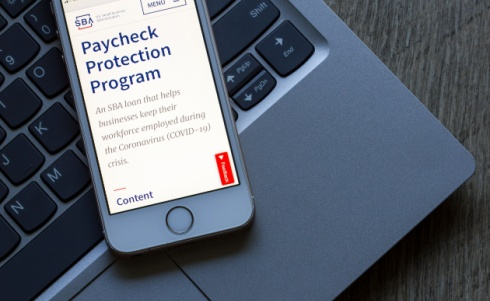
Alert: The Paycheck Protection Program Is Now Accepting First Draw and Second Draw Applications
This blog post may contain information that was accurate at the time of publication but could become outdated over time. We strive to provide relevant and timely content, but circumstances, facts, and data can change. Users are encouraged to verify the current status of any information presented and seek updated guidance where necessary. Originally posted on 1/20/2021, no content changes. The Small Business Administration (“SBA”) reopened the Paycheck Protection Program (“PPP”) for First Draw PPP loans and is now also accepting applications for Second Draw PPP loans. The PPP now allows certain eligible borrowers that previously received a PPP loan to apply for a Second Draw PPP loan with the same general loan terms as their First Draw PPP loan. Second Draw PPP loans can be used for payroll costs and benefits. Loan proceeds can also be used to pay for mortgage interest, rent, utilities, worker protection costs related to COVID-19, uninsured property damage costs caused by looting or vandalism during 2020, and certain supplier costs and expenses for operations. Loan Amount. For most borrowers, the maximum loan amount of a Second Draw PPP loan is 2.5 multiplied by the average monthly payroll costs up to $2 million. Loan amounts may be based on payroll costs for the calendar year 2019, the calendar year 2020, or the actual trailing 12-month period before the application. Qualification Requirements. To qualify for a Second Draw PPP loan, the borrower must have: Previously received a First Draw PPP Loan and will or has used the full amount only for authorized uses; Have no more than 300 employees; and Demonstrate a decline in gross receipts of 25 percent in any quarter of 2020 over the corresponding quarter or submit tax returns showing a 25 percent decline in 2020 revenue over 2019. Gross receipts include all revenue in whatever form received in accordance with the borrower’s accounting method. Eligible Entities. Eligible Second Draw PPP entities include businesses, certain non-profit organizations, housing cooperatives, veterans’ organizations, tribal businesses, self-employed individuals, sole proprietors, independent contractors, and small agricultural co-operatives. Expansion of Allowable and Forgivable Uses. The Second Draw PPP expands the scope of payroll costs to include group insurance benefit payments, covered operations expenditures, covered property damage costs, covered supplier costs, and covered worker protection expenditures. By way of further explanation, Second Draw PPP funds may be used for the following allowable and forgivable uses: Covered operations expenditures include payment for any software, cloud computing, and other human resources and accounting needs. Covered property damage costs include expenses related to property damage due to public disturbances that occurred during 2020 that are not covered by insurance. Covered supplier costs include expenditures to a supplier pursuant to a contract, purchase order, or order for goods in effect prior to taking out the loan that is essential to the recipient’s operations at the time at which the expenditure was made. Supplier costs of perishable goods can be made before or during the life of the loan. Covered worker protection expenditures include personal protective equipment and adaptive investments to help a loan recipient comply with federal health and safety guidelines or any equivalent State and local guidance related to COVID-19 during the period between March 1, 2020, and the end of the national emergency declaration. Forgiveness Covered Period. A Second Draw PPP borrower can elect a forgiveness covered period of any duration from eight to 24 weeks. Additional Loan Terms and Qualifications. Seasonal employers may calculate their maximum loan amount based on a 12-week period beginning February 15, 2019, through February 15, 2020. Entities in industries assigned to NAICS code 72 (Accommodation and Food Services) may receive loans of up to 3.5X average monthly payroll costs. Certain businesses with multiple locations that are eligible entities under the initial PPP requirements may employ not more than 300 employees per physical location. An eligible borrower may only receive one PPP second draw loan. Fees are waived for both borrowers and lenders to encourage participation. For loans of not more than $150,000, the borrower may submit a certification attesting that the borrower meets the revenue loss requirements on or before the date the borrower submits their loan forgiveness application, and non-profit and veterans organizations may utilize gross receipts to calculate their revenue loss standard. Tax Deductible Expenses. With the reopening of PPP, the SBA, in conjunction with the Treasury, also reversed prior guidance, and now there is an income tax deduction available for expenses paid with PPP loan proceeds. For most borrowers, this will result in substantial extra cash (not including PPP loan proceeds) available for business operations, to pay down loans, or to even make distributions to business owners. This article is not intended to provide legal advice as the SBA continually updates, modifies, reverses and changes its PPP loan program guidance. Moreover, all borrowers have different concerns and face different qualification issues for a PPP First Draw and/or Second Draw Loan. If you have questions or concerns regarding a PPP loan or need legal guidance, please contact the author of this article – Charles “Max” McCauley at cmccauley@offitkurman.com or 484-531-1712.
January 20, 2023
Labor and Employment
The FTC Has Issued a Proposed Rule Making Non-Competes Unlawful
On January 5th, the FTC issued a proposed rule prohibiting businesses from entering into or maintaining non-compete agreements with workers (employees or independent contractors). While non-disclosure agreements and non-solicitation (of customer and employee) agreements are generally, permitted under the proposed rule, the FTC intends to take a functional approach to enforcement. So, even restrictions that are not denominated as non-competes but effectively restrict an employee’s ability to seek or accept employment will be prohibited. Significantly, the new rule would require employers to rescind existing non-competes and actively inform workers that they are no longer in effect. The only exception contained in the proposed rule is for persons selling a business or their entire interest in a business or persons owning at least 25% of a business as to which all or substantially all of the assets are being sold. The FTC has solicited comments on the proposed rule – which may be filed through March 10th, 2023. Please reach out to me or my colleagues at Offit Kurman regarding questions about the proposed rule or any other employment matter.
January 19, 2023
Labor and Employment
Federal Trade Commission Proposes Rule Banning Non-compete Agreements Between Employers and Workers
As I mentioned in a 2022 post, the Federal Trade Commission (FTC) has been considering a rule banning non-competes for a while now; President Biden has publicly voiced his support for the ban. The current proposal is based on the FTC’s belief that non-competes violate anti-competition laws. The rule would supersede all state, local, and federal laws on this subject. The rule has a sweeping definition of a non-compete: “a contractual term … that prevents the worker from seeking or accepting employment with a person, or operating a business, after the conclusion of the worker’s employment.” The rule outlaws other provisions which are not labeled “non-competes,” too: if an agreement not to solicit the employer’s customers or not to disclose the employer’s information functions as a non-compete, it is illegal. The FTC rule also intends to forbid employee promises such as repayment of the employer’s training costs if the employee worked for less than a certain period of time, where the repayment is not “reasonably related” to the employer’s actual training costs. The proposed rule would become final 60 days after it’s published in the Federal Register. Employers would have 180 days after publication to comply. The rule states that employers would have until that time to rescind any existing non-competes (including those applicable to ex-employees). This rule would upend centuries of state common law. Many of my clients have agreements that would disappear or change drastically. Drafting agreements to protect business and confidential information would become a whole different game. If you are in Delaware and would like to attend an in-person roundtable at which I’ll speak about this topic, please reply to this email, and I will send you an invitation. If you can’t attend, I am planning to record it; contact me for a copy of my remarks.
January 18, 2023
One Minute of Overtime
Professional Exemption
Welcome to One Minute of Overtime, where I will share insights on Labor and Employment Law topics, mostly related to minimum wage and overtime compliance issues. Compliance in this area of law is nuanced and technical, so it is critical for employers to audit and adjust their practices to remain compliant, so stop by to stay up-to-date and in-the-know. An employee is exempt pursuant to the administrative exemption, and not subject to the minimum wage and overtime requirements, if the employee is paid consistent with the salary basis test (or, in some cases, a sufficient hourly rate) and their primary duty is the performance of work requiring advanced knowledge (predominantly intellectual in character) and which includes work requiring the consistent exercise of discretion and judgment where the advanced knowledge is in a field of science or learning and the advanced knowledge is customarily acquired by a prolonged course of specialized intellectual instruction.
January 18, 2023
Labor and Employment
New Federal Contractor Rule
The question of who’s an employee with protections and benefits under labor law and who is a contractor not covered by those laws has always been important for many reasons. New trends favoring more flexibility to classify workers as contractors have highlighted the issue even more. The Department of Labor has now proposed a new rule designed to favor the classification of workers as employees. Secretary of Labor Marty Walsh said, “misclassification deprives workers of their federal labor protections, including their right to be paid their full, legally earned wages.” There is a comment period (make your organization’s position known); then, the DOL reviews them and prepares to finalize the rule. The new proposal from the Department of Labor would change the current test to determine worker status, which had been greatly simplified and had the effect of permitting more workers to be classified as contractors. This proposed rule uses a six-factor test to determine the working relationship. The test is consistent with the analysis federal courts use in making the decision. The proposed DOL test considers the nature and degree of the worker’s control over the work; the worker’s opportunity for profit or loss; investments by the worker and the employer; the degree of permanence of the working relationship; the extent to which the work performed is an integral part of the employer’s business; and the degree of skill and initiative exhibited by the worker. What are the problems if workers are falsely designated as independent contractors? Businesses have to face multiple types of potential claims, including failure to pay employment taxes, failure to provide unemployment and workers’ compensation insurance, Obamacare issues, and the biggie: failure to pay overtime and provide breaks if the worker would have been entitled to overtime and break laws. So this is worth some serious consideration.
November 10, 2022
Labor and Employment
Delaware Non-Compete Update
As you may know, I provide employment law advice to our teams here at Offit Kurman, assisting our clients in company sales. In that capacity, and because I also draft restrictive covenants for businesses, I try to update my business clients on the latest news regarding non-competition clauses. The Delaware Court of Chancery recently gave us some good information regarding limits that buyers may place on sellers in terms of competing with the sold business. Many deals across the United States are written in accordance with Delaware law, so it has a wide-ranging impact. Recently the Court of Chancery clarified that non-competes which try to prevent a seller from competing with a buyer’s pre-existing business are not enforceable. Kodiak Building Partners, LLC v. Adams, C.A. No. 2022-0311 (Del. Ch. Oct. 6, 2022). Such promises are only enforceable to the extent that they protect the buyer’s interest in the assets or company purchased in the deal. Even more interesting because of its larger potential effect on employment agreement non-competes is the Court’s holding that a seller’s promise in a purchase agreement not to challenge the reasonableness of a restrictive covenant means nothing. It is up to the Court to determine the reasonableness of the terms according to Delaware law. If your company wants a binding agreement, it is worthless to have a party promise that the non-compete is reasonable. I’d argue that this decision extends to employment agreement non-competes because the Court made the ruling based on public policy, which applies to all areas of law. Consult a Delaware lawyer with up-to-date non-compete knowledge to draft your sales and employment agreements. The Court continues to move in favor of allowing free competition.
November 4, 2022
Labor and Employment
New York City’s Pay Transparency Law Takes Effect November 1, 2022
In what is becoming a growing trend among local and state legislative bodies – New York City passed the Pay Transparency Law (the “Law”), otherwise known as Local Law 32 of 2022. The Law was passed in an effort to improve wage transparency, balance the bargaining power between applicants and employers and narrow the wage gap. The Law requires covered employers to list minimum and maximum potential salary amounts in job postings. What You Need to Know: Effective Date: The Law, which amended the NYC Human Rights Law and was enacted on January 15, 2022, was initially scheduled to take effect on May 15, 2022 – but was later amended to take effect on November 1, 2022. Required Information/Disclosures: Employers must state the minimum and maximum salary range for the advertised position that the employer, “in good faith,” believes at the time of the posting it would pay for the position. Open-ended salary ranges (i.e., “a maximum of $50,000” or “15/hour and up”) are not acceptable. Salary ranges should be posted for each opportunity where advertisements cover multiple positions. “Salary” refers to base annual or hourly wage. It does NOT include: (a) health, life or other insurance, (b) paid or unpaid time off, sick or vacation days or employer-funded pension plans, (c) severance pay, (d) overtime, (e) commissions, tips, bonuses, stock or the value of employer-provided meals or lodging. Covered Employers: All employers with four (4) or more employees or at least one domestic worker. Not all employees must work at the same location, as long as at least one employee works in NYC. Owners and individual employers count toward the four (4) employee minimum, as do independent contractors, part-time employees, paid interns and domestic workers. Temporary employment agencies are exempted from the Law. The Commission defines temporary agencies as businesses that recruit and hire their own employees and assign those employees to perform work at or perform services for other organizations or businesses. Covered Postings: Any advertisement for a job, promotion or transfer opportunity for a job that would be performed in NYC. An “advertisement” is any written description of an available job, promotion or transfer opportunity –regardless of how disseminated. Importantly, the Law applies not only to public advertisements but also to any internally advertised job, promotion and transfer opportunities. And the Law applies equally to temporary and part-time positions as it does to “permanent” and full-time positions. Employers are not required to post for a position they seek to fill. Geographic Scope: Positions that can or will be performed, in whole or in part, in New York City, whether from an office, in the field, or remotely from the employee’s home. Violations and Enforcement: Violation of the Law is considered an unlawful discriminatory practice. The NYC Commission on Human Rights has the authority to enforce the Law. There will be no penalty for first-time violations if the employer corrects the violation within 30 days. However, an employer’s submission of proof that the violation was corrected “shall be deemed an admission of liability for all purposes.” Future violations will subject an employer to monetary damages and civil penalties of up to $250,000. We Can Help: Should you have any questions regarding NYC’s Pay Transparency Law or any other employment matter – please feel free to reach out to Offit Kurman’s Employment Group.
November 1, 2022
Labor and Employment
Monitoring Employee Email for Unionization Activity
We’re all noticing that increased unionization is the national trend. With new Democratic-appointed National Labor Relations Board members, the Board is no longer all Republican, and employers are closely watching the effects of this political shift in favor of unionization rights. On September 30, a panel of two Republican members and one Democratic member decided that T-Mobile US, Inc. broke the National Labor Relations Act by disciplining a customer service worker for sending a union-related email following a court battle appealing its initial decision. This reversed a 2020 decision by an all-Republican panel that T-Mobile had the right to discipline the worker for using its email for non-business-related purposes. The Board found that T-Mobile had broken labor law by “selectively and disparately” using company policies to silence the pro-union worker. However, this finding was specific to the facts of this case. Other employees had been permitted to use T-Mobile’s email for non-business purposes without being disciplined. Other employees sent mass emails about non-work issues such as hockey tickets, bowling parties, and “Nacho Day” in the cafeteria—but weren’t punished, said the decision. T-Mobile appeared to be targeting the worker who was promoting unionization. Employers may still restrict workers’ email use for non-work issues, including union organizing, as long as they don’t target union communications specifically. So, if employers want to prevent unionization emails on their servers, they need to monitor the servers for other uses and shut them down, too.
October 3, 2022
Contractor's Corner
Legal Considerations When Running a FedEx Business Webinar
Sarah Sawyer hosted a webinar to discuss the Legal Considerations When Running a FedEx Business. A few aspects that were covered during the webinar are: Legal issues related to pay structures and incentives Wage deductions, the do and don’ts Business formation and structure concerns Asset protection considerations The webinar can be found here. Passcode: G17$0WjE
September 26, 2022
Labor and Employment
Preparing for Potential Union or Organizing Activity
U.S. labor unions are becoming increasingly popular among Americans after years of relative indifference by rank-and-file employees. Approval ratings for unions and unionization efforts are at the highest point since 1965, according to a recent Gallup survey. Organizing activity is bubbling up in unexpected areas like gaming and the broader technology industry and in global organizations like Starbucks and Amazon. This workplace trend created an unsettling development for all employers as they contemplate their relationships with employees heading into 2023. Offit Kurman’s Labor & Employment group offers an informative 60–90-minute virtual presentation for business owners, HR professionals and managers, providing information crucial to mitigating risk and avoiding unionization in their organizations. The presentation covers applicable labor laws and regulations governing union activity, compliance requirements, proactive strategies to identify organizing warning signs, best practices for union-related communications and how to address organizing activity before it gains steam. There is also ample time allotted for Q&A. The presentation is directed only to management-level employees, not rank-and-file employees. If you would like to schedule a presentation or receive more information, please feel free to reach out.
September 22, 2022
Contractor's Corner
Potential Changes to Federal Overtime Pay Laws Loom
Currently, under the Fair Labor Standards Act (FLSA) Motor Carrier Exemption, FedEx contractors do not have to pay drivers overtime when driving trucks over 10,000 pounds. That could change. The Guaranteeing Overtime for Truckers Act, introduced in the U.S. House of Representatives on April 14, 2022, and in the Senate on September 12, 2022, would repeal the FLSA Motor Carrier Exemption. The legislation will significantly change how contractors schedule employees and manage their fleet if passed. The U.S. Department of Transportation recently recommended eliminating the exemption to improve the supply chain, and the bipartisan bill has a coalition of support from the Owner-Operator Independent Drivers Association, the International Brotherhood of Teamsters, the Institute for Safer Trucking, the Truck Safety Coalition, Citizens for Reliable and Safe Highways and Parents Against Tired Truckers. The introduction by Senator Markey and Padilla of the Senate version of the Guaranteeing Overtime for Truckers Act gives this bill new life and continues to move the efforts of these groups forward. While these developments in no way guarantee the elimination of the Motor Carrier Exemption, it is a significant development that contractors need to be aware of and prepared to address. We will continue to provide you with updates as we receive them.
September 20, 2022
Contractor's Corner
Wage Deductions: When Can You Make Them?
While wage deductions can effectively recoup costs and losses from an employee, deductions from wages are heavily regulated, and contractors should proceed with caution when making these deductions. Under the Fair Labor Standards Act, a federal law governing most contractors nationwide, wage deductions for items considered primarily for the benefit or convenience of the employer may not reduce an employee’s pay rate below minimum wage. For example, if an employer has an agreement with an employee to deduct from the employee’s wages costs to cover any damage to an employer’s property or lost equipment, the employer’s deductions cannot bring the employee’s pay below minimum wage. Alternatively, wage deductions for items considered for the employee’s benefit and do not benefit the employer, such as a personal loan to the employee, the wage deduction can reduce the employee’s effective rate of pay below minimum wage. The same general rule applies to wage deductions and overtime compensation, not bringing the employee’s wage below time and a half. In addition to federal laws regulating wage deductions, many states have stricter rules governing what, when, and how employers may make deductions from employees’ wages. For instance, in New Jersey, employers may not require an employee to pay for their uniforms or deduct the cost of uniforms from an employee’s paycheck, and in California, employers are generally prohibited from making deductions from an employee’s wages for vehicle damage caused by an employee’s negligence. As a general rule of thumb, contractors should always get express permission from employees to make any deductions from their wages and pay close attention to their state’s laws on deductions to ensure they are not running afoul of these regulations. To merely include a deduction policy in the employee handbook without seeking permission and vetting what deductions are allowable in your state and the laws governing those deductions is wholly insufficient. Out of all of the many areas of employment law that employers must comply with, wage and hour laws have some of the steepest consequences for noncompliance. Contractors who fail to comply with wage and hour laws, such as wage deduction regulations, may have to pay double to treble damages, the employee’s attorney’s fees, and individual penalties for noncompliance. Accordingly, contractors must pay special attention to these laws before implementing any policies or procedures related to payroll deductions.
September 8, 2022
Labor and Employment
The Turning Tide: How Americans Currently View the Supreme Court
Not too shocking: about half of Americans’ ratings of the Supreme Court are now as negative as – and more politically polarized than – at any point in three decades. According to the Pew Research Center’s report published September 1, the share of Democrats or Democrat-leaning participants who say they have a favorable opinion of the Court has dropped from 67% in 2020 to 28% in August 2022. Almost half of the respondents indicated their belief that the Court has too much power. In contrast, Republican and Republican-leaning approval ratings were very similar to 2020 at over 70%. The justices were once proud to say that they are apolitical, citing the fact that many of their decisions are unanimous, 8-1, or 7-2. But the percentage of those opinions dropped from 49% in 2016 to 28% in 2022, according to the authoritative empirical SCOTUS blog. I have been to the Supreme Court twice: once in 2015 and once in 2019. Our 2015 opinion was unanimously decided, and in 2019, the Court declined to review the lower court’s decision. This indicates – from my very small sample – cohesive views. Pew’s survey was much larger. It polled 7,647 adults, including 5,681 registered voters, from Aug. 1-14, 2022, using a national, random sampling of residential addresses. What do you think? Has the 6-3 “conservative” majority been that divisive? And isn’t it sad that we now commonly refer to the “factions” as “conservative” and “liberal”?
September 7, 2022
Labor and Employment
CDC Speaks Again: How Does it Affect Employees?
New COVID guidance from the CDC throws some of what we’ve learned about safe returns to work and prevention out the window. The CDC’s recommendation is now that anyone exposed to COVID is safe to be around others by wearing a well-fitted and high-quality mask for ten days. I’d suggest that the “well-fitting and high-quality mask” is a big factor. Employers should still require that employees inform them of exposure and intent to test and, at that time, let them know the new standard and that they may report in person. Keep a stock of KN95 or other tight-fitting masks on hand. Delaware still requires employers to provide masks, and these are readily available. All persons should still seek testing for active infection when they are symptomatic or if they have a known or suspected exposure to someone with COVID. Symptomatic or infected persons should isolate promptly, and infected persons should remain in isolation for at least five days (day 0 is the day of exposure) and wear a well-fitting and high-quality mask if they must be around others. Infected persons may end isolation after five days, only when they are without a fever for at least 24 hours without the use of medication and all other symptoms have improved. They should continue to wear a mask or respirator around others at home and in public through day 10. Don’t forget: employees at high risk for severe illness and those in contact with them (such as caregiving recipients and household members) may want to minimize risk if they learn they’ve been exposed. They may still ask to quarantine while they await test results. This may either be handled by telework, isolating onsite, or taking available paid or unpaid time off. Be cognizant of reasonable accommodations for workers with disabilities; this may fall into that basket. On another note, I am really happy to announce that I was voted into Best Lawyers in America for employment law. I joined 59 of my colleagues at Offit Kurman, who were included in the listing of the top 5% of American lawyers. Sincerely, thank you for your trust in me.
August 31, 2022
Labor and Employment
Take Notice: Required Postings
Recently, I was struck yet again by the huge number of laws requiring employers to provide notice to their employees of employment-related laws. Often laws require employers to provide notices over and over, too. For instance, Washington DC has a new law banning almost all non-compete provisions (which takes effect October 1). Not only do employers with one or more employees have to be aware that they may no longer ask their employees to sign non-compete agreements, but they must also remember to provide notice 1) ninety days after the law becomes effective (so they have to track that, too); 2) seven days after hire, and 3) within 14 calendar days of a written request for the text of the law. Who knew? I had to sit down and research this – and I’m an employment lawyer. From this example alone, it’s clear that keeping up with notification requirements is a pain. And it’s extremely burdensome if the company is operating in multiple states. All the remote working has increased this administrative burden on employers. Remember, the employment laws of the state in which employees are working are those applicable to them. I suggest that management – at those employers without HR personnel – take a look at the websites of each state as a beginning point. All of the notices are usually available there in a PDF to be posted. Caution: it seems even the Departments of Labor in some states can’t keep up with their own lawmaking because I’ve noticed some missing on their own websites. It’s a good starting place and also an education in laws applicable, as you’ll see when you read the notices. And, of course, don’t forget your federal law notices, either (DOL.gov)! Post in all brick and mortar sites and email notices to remote employees. Review once per year
August 24, 2022
Labor and Employment
Affirmative Action v.2022
The argument continues on whether affirmative action is legal in the academic admissions setting. In October, the Supreme Court will hear arguments in two cases challenging university affirmative action programs. This is the first affirmative action case heard by the Court since the conservative majority was seated. Management of some major corporations believes that the implications of those decisions could be far broader than their effects on schools’ admissions. It could affect businesses’ hiring, too. The cases are brought by a group called Students for Fair Admissions against Harvard and the University of NC, arguing that the school’s affirmative action admissions policies unconstitutionally harm Asian-American and white students. The universities maintain that race is only one of many factors considered in admissions, including geography, military service, and socio-economic status. Almost 80 companies, including Meta, Apple, Lyft, Uber, Verizon, and Alphabet, filed briefs supporting the schools’ affirmative action programs. Their attorneys assert that corporate diversity, equity, and inclusion efforts “depend on university admissions programs that lead to graduates educated in racially and ethnically diverse environments.” Their position is that only by allowing universities to use affirmative action will there be enough highly qualified future workers and business leaders, especially given the increasingly global nature of the economy. The brief also states that “[E]mpirical studies confirm that diverse groups make better decisions thanks to increased creativity, sharing of ideas, and accuracy.” Do you think workers trained or educated in a racially diverse environment are better employees?
August 15, 2022
Contractor's Corner
Workplace Compliance: Avoiding Costly Mistakes
When you get down to brass tax, the fundamentals of running a successful FedEx operation are having operational trucks and employees to run the routes. Like most other businesses, employees are the organization’s lifeblood but can also be the most troublesome from a compliance perspective. This is especially true for FedEx contractors who, in managing their workforce, must work to remain in compliance with state, federal, and local laws and with FedEx requirements. One of the main struggles with maintaining workplace compliance is that there is a federal baseline related to wage and hour, discrimination, and leave laws, but states and local governments are free to require employers to provide additional benefits beyond the federal system offers. This means that states and local governments all over the country have different laws that employers must follow regarding employees. Generally speaking, the east coast states, California, and major cities have the most favorable laws and protections for employees, and southern and mid-west states have minor employee regulations and benefits. Sometimes, whether a state or local law is applicable is based on the size of the employer, meaning that small businesses, like a small FedEx contractor, would be exempt from compliance, while other state and local laws apply no matter the size of the company. Often, through speaking with other contractors and because they are on good terms with FedEx, contractors wrongly assume that they are following all relevant employment laws. However, given the patchwork of federal, state, and local laws, it is easy for contractors to overlook what they may see as nominal wage and hour violations or fail to provide employees with required federal, state, and local notices or protections. These oversights can be costly, both from a retention and an economic standpoint. For instance, many wage and hour laws, including the Fair Labor Standards Act, have expensive penalties for non-compliance, including double or treble damages and paying the employee’s attorney’s fees. Ultimately, different states have different employment laws, and compliance with these laws is an integral part of running a FedEx business. Contractors should ensure their policies and procedures meet all state, federal, and local legal requirements and that their practices align with what is required of them under their FedEx contract.
August 1, 2022
Business
Executive Playbook: Alternative Solutions for Recruiting and Retention
Recruiting and retention continues to be a challenge for employers. While employers could always pay employees more, that is not a particularly attractive solution and, in many cases, is not a solution at all. In this episode of the Executive Playbook, Mike and Russell discuss strategies that employers can implement to attract new employees and retain existing employees.
July 28, 2022
Labor and Employment
Please Release Me
I have been dealing with a lot of claims recently from unhappy clients who have either been charged with employment discrimination or threatened with suit by disgruntled former employees. What to do? One word: release. I’m begging you have your outgoing employees sign a release of all claims and promise not to sue. This requires a good form and a payment to the outgoing employee. The payment is required to create an enforceable contract: you pay them, and they release your business from claims. A lot of employers are understandably reluctant to pay severance to people they’ve let go. However, it can be a very small payment. Employees appreciate the gesture as well, and this may decrease the chances that they bad-mouth the business. (A good release also includes a promise not to disparage the business, however.) It can cover all potential claims arising up to the time of signature and can also alert employers to any potential claims (for example, a workplace accident.) A smattering of recent examples: The minority employee who charged the employer with race discrimination (the same person hired and fired the employee, obviously making it far less likely that the decision-maker was biased.) The employee who charged the employer with disability discrimination and failure to accommodate disabilities (the person never reported any disabilities, the decision maker had no knowledge of any, and the person never requested accommodations). The employee who claimed to have reported a financial discrepancy to the employer (they don’t recall this employee ever discussing financial matters), and thus, they claim that they were discharged in retaliation for whistleblowing. The list goes on; these are just a few recent examples. Don’t be afraid to let an underperforming employee go, but give them a week’s severance and get that release signed. Check with an employment attorney to be sure that your release covers all potential legal issues.
July 27, 2022