Labor and Employment Law Blog
One Minute of Overtime
Legal Test
Welcome to One Minute of Overtime, where I will share insights on Labor and Employment Law topics, mostly related to minimum wage and overtime compliance issues. Compliance in this area of law is nuanced and technical, so it is critical for employers to audit and adjust their practices to remain compliant, so stop by to stay up-to-date and in-the-know. Whether a worker is an employee, or an independent contractor is not a choice the employer gets to make. Instead, it is a legal conclusion reached based on the application of a legal test. In Maryland, the test focuses on the economic realities of the engagement.
March 20, 2024
One Minute of Overtime
Primary Duty
Welcome to One Minute of Overtime, where I will share insights on Labor and Employment Law topics, mostly related to minimum wage and overtime compliance issues. Compliance in this area of law is nuanced and technical, so it is critical for employers to audit and adjust their practices to remain compliant, so stop by to stay up-to-date and in-the-know. Most exemptions under the FLSA focus on the employee’s primary duty. This means that even where an employee may do a variety of work, the exemption analysis will focus on the principal, main, major or most important duty that the employee performs.
February 28, 2024
Labor and Employment
Employment Law Update: Delaware Supreme Court Takes a Stand on Restrictive Covenants
In Cantor Fitzgerald, L.P. v. Ainslie, C.A. No. 9436 (Del. Jan. 29, 2024), the Delaware Supreme Court signaled to its lower courts that many well-drafted restrictive covenants remain valid and enforceable. The Cantor Court unanimously reversed the Delaware Chancery Court’s ruling, which had rejected as unenforceable a financial services company’s limited partnership agreement clause under which a limited partner’s equity is forfeited if the partner violates non-competition provisions. The decision is noteworthy because the Court of Chancery has increasingly demonstrated a willingness to strike down overly broad non-compete agreements, accompanied by a growing reluctance to revise (or “blue pencil”) agreements by narrowing their terms. The Court of Chancery held that the non-compete and non-solicitation provisions contained in the limited partnership agreement, which had a worldwide geographic scope, were geographically overbroad and unenforceable. Additionally, the Court of Chancery found the definition of “Competitive Activity” overbroad due to its inclusion of “any Affiliated Entity,” reasoning that “it is highly possible that a partner could unknowingly engage in a Competitive Activity.” 2023 WL 106924, at *18. Notably, the court declined to “blue pencil” the provisions to make them more reasonable. The Court of Chancery then focused on the forfeiture-for-competition provision triggered by “Competitive Activity.” The Court of Chancery considered whether it should evaluate the forfeiture-for-competition provision (which it called a “Conditioned Payment Device”) for reasonableness or apply contractual deference under the “employee choice” doctrine. The court determined that “forfeitures do not enjoy this Court’s contractarian deference” and conducted a reasonableness analysis. Id. at *24. Although the court applied a “lenient” reasonableness test, it nonetheless determined that the Conditioned Payment Device was unreasonable and invalid, given the broad definition of “Competitive Activity,” the lack of an established legitimate business interest for the broad restrictions, and the four-year temporal scope, which extended beyond the temporal scope of the contractual non-competition and non-solicitation provisions. Id. at *26. The Supreme Court disagreed, highlighting the distinction between non-competition clauses for former employees and those for former partners. It ruled that partnership agreements could include consequences not typical in standard contracts, like penalties and forfeitures. While the Delaware Supreme Court’s decision was specific to limited partnership agreements, employers should still take note. Put another way: while employment-based non-compete clauses are still subject to a reasonableness standard, the tides in Delaware may be shifting back towards the employer-friendly interpretation of restrictive covenants, at least for now (and until there is more clarity surrounding the FTC’s final rule). Moreover, such provisions may not be enforceable in specific industries, such as law firm partnership agreements where ethics rules may be implicated due to a chilling effect on a client’s right to select counsel. Furthermore, following the Cantor ruling, the Delaware Supreme Court accepted an interlocutory appeal regarding a Chancery Court ruling in Sunder Energy, LLC, v. Jackson, C.A. No. 455, 2023 (Del. Jan. 25, 2024). This case concerns the denial of a preliminary injunction to enforce a non-compete provision in a limited liability company agreement and a refusal to engage in blue-penciling. The Delaware Supreme Court’s stance on the matter remains to be determined. Given the current state of Delaware jurisprudence on restrictive covenants, employers must carefully consider any restraints on employee mobility. They should also give similar consideration to the choice of law and forum selection provisions contained in employment agreements. Thank you for reading our legal update- please get in touch with us if you have any questions or require any assistance. Sarah Goodman can be reached at sarah.goodman@offitkurman.com or 267-338-1319, and Charles McCauley can be reached at cmccauley@offitkurman.com or 484-531-1712.
February 27, 2024
One Minute of Overtime
Exempt Employees
Welcome to One Minute of Overtime, where I will share insights on Labor and Employment Law topics, mostly related to minimum wage and overtime compliance issues. Compliance in this area of law is nuanced and technical, so it is critical for employers to audit and adjust their practices to remain compliant, so stop by to stay up-to-date and in-the-know. A frequent mistake occurs when employers misclassify employees as exempt because it is easier to pay a salary than deal with overtime and recordkeeping. By failing to track hours following misclassification an employer only increases its exposure.
January 17, 2024
One Minute of Overtime
Bona Fide Meal Break
Welcome to One Minute of Overtime, where I will share insights on Labor and Employment Law topics, mostly related to minimum wage and overtime compliance issues. Compliance in this area of law is nuanced and technical, so it is critical for employers to audit and adjust their practices to remain compliant, so stop by to stay up-to-date and in-the-know. An employer does not have to pay an employee for time spent on a bona fide meal break. However, to qualify as a bona fide meal break, the employee must be completely relieved from duty and should not be interrupted for thirty minutes or more.
November 15, 2023
Labor and Employment
SBA To Require PPP Borrowers of $2 Million or More to Provide Documentation to Support Certification of Necessity Due to Economic Uncertainty
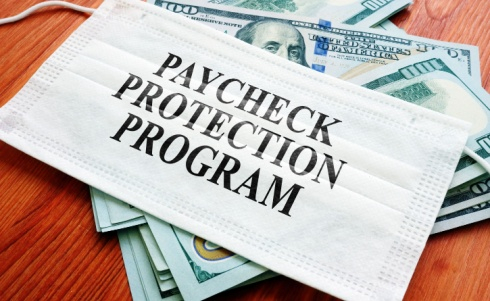
This blog post may contain information that was accurate at the time of publication but could become outdated over time. We strive to provide relevant and timely content, but circumstances, facts, and data can change. Users are encouraged to verify the current status of any information presented and seek updated guidance where necessary. Originally posted on 11/6/2020, no content changes. The U.S. Small Business Administration (“SBA”) recently posted a notice seeking comment on draft Loan Necessity Questionnaire Form 3509 (For-Profit Borrowers) and Form 3510 (Non-Profit Borrowers) to be used by the SBA to review Paycheck Protection Program (“PPP”) forgiveness applications. The SBA claims that the purpose of the necessity questionnaire is to facilitate the collection of supplemental information used by SBA loan reviewers to evaluate the good-faith certification that borrowers made on their PPP Loan Application that economic uncertainty made the loan request necessary. The completed necessity questionnaire will be due to the PPP lender within ten business days of receipt from a borrower’s lender. These necessity questionnaires present serious concerns for the 29,000 non-profit and for-profit businesses that received PPP loans in excess of $2 Million. The necessity questionnaires contain many questions requiring disclosure of confidential financial and proprietary information. It is not clear whether responses to the questionnaire will be required disclosures with a loan forgiveness application or whether the responses will be required in advance of, or without, submission of a loan forgiveness application. The necessity questionnaire has two parts, a “Business Activity Assessment” and a “Liquidity Assessment.” Business Activity Assessment A comparison of the gross revenue for the first quarters of 2019 and 2020, including supporting documentation. Borrowers must provide information about how COVID-19 has temporarily shut down, caused a reduction in operations, or resulted in additional capital outlays of a borrower. Liquidity Assessment Borrowers are required to provide documentation regarding the amount of liquidity on hand when the PPP loan application was submitted. Borrowers are required to provide documentation regarding distributions and dividends paid to owners during the covered period. Borrowers are required to provide documentation regarding all debt prepayments and capital expenditures made during the covered period. Borrowers are required to provide documentation regarding the amounts paid to owners in excess of $250,000 annualized during the covered period. If privately held, the borrower is required to provide its book value on the last day of the quarter preceding its loan application. Borrowers are required to disclose whether they received any other CARES Act benefits, excluding tax benefits. The necessity questionnaire includes certifications regarding the accuracy of responses, and alarmingly warns that false statements will result in criminal penalties. If you are a borrower with a PPP loan in excess of $2 Million, you need to consult your legal counsel immediately. The information sought will be used by the SBA to determine whether PPP borrowers were initially eligible for the PPP loans they received due to the category of business, access to capital, or ownership by a foreign entity, among other reasons. For borrowers eligible for a PPP loan, aside from the necessity issue, using hindsight to review the actual impact on the PPP borrower after receipt of PPP funds due to business closures, losses in revenue, and effects on employees is patently unfair. Further, no formal SBA guidance was available on the PPP application date. The SBA urged all businesses to apply quickly to avoid losing out on the opportunity to receive PPP funds. Given the uncertainty with how the SBA will use this information, the confidential and proprietary nature of the information sought (which may be publicly available), PPP borrowers should consult with counsel immediately and before submission of a loan forgiveness application. Borrowers may be best served by waiting as long as possible before seeking loan forgiveness (if ever) to allow for SBA and lender guidance to be issued, legal challenges and resolution, and obtain information from lenders as to how the information will be used.
November 6, 2023
Labor and Employment
Noncompete Update: Bans, New Limitations and Restrictions
Employers should remain vigilant, adapt their practices, and explore alternative measures to protect their interests in the face of shifting legal frameworks and heightened scrutiny of non-compete agreements. The Legal Intelligencer By Sarah R. Goodman In today’s rapidly changing business environment, the utilization and enforcement of noncompete agreements and restrictive covenants have become central to maintaining a competitive edge. As businesses adapt to new economic, technological, and workforce dynamics, the legal frameworks surrounding these agreements are also evolving. Notably, two federal agencies are actively working to diminish the prevalence of noncompete agreements. An increasing number of states are joining the ranks of jurisdictions that either prohibit or place significant restrictions on noncompetes, including many nonsolicitation agreements, by enacting comprehensive bans or introducing new limitations. Meanwhile, certain states, while not entirely banning noncompetes, have introduced fresh restrictions. In addition, courts are recognizing novel legal theories for challenging these agreements. Nevertheless, there are still scenarios in which employers can utilize noncompete agreements to safeguard their proprietary information and defend against unfair competition. However, there are formidable new obstacles to overcome, and the regulatory landscape may change in the near future. Recent Key Regulatory Changes On Jan. 5, 2023, the Federal Trade Commission (FTC) introduced a proposed rule aimed at banning most noncompete agreements in the United States on the basis that they constitute unfair methods of competition. The FTC’s proposal attracted significant attention and the public comment period closed on March 20. The FTC has yet to issue a final rule or provide a timeline for doing so; observers closely following the proposed ban do not anticipate a final FTC rule until April 2024 at the earliest. When (and if) the FTC issues the final rule, it will be subject to numerous court challenges by a variety of private entities, including the U.S. Chamber of Commerce. It is unclear whether the final rule will survive attack. Basis for attack include the FTC Act’s own limitations on the FTC’s authority vis-à-vis the history of Section 6(g) and unfair competition; the U.S. Supreme Court’s aversion to upholding federal agency rules when scrutinized under the “major questions” doctrine; the rule itself being an improper delegation of legislative authority under the nondelegation doctrine; and the everchanging political landscape. Despite these challenges, federal agencies are increasingly utilizing new methods to challenge noncompete agreements. This includes an increasing number of antitrust claims targeting traditional noncompetes (and not just no-poach agreements), along with intra-agency cooperation between the FTC, the U.S. Department of Labor, and the National Labor Relations Board (NLRB) to help regulate noncompetes. The NLRB’s general counsel, Jennifer Abruzzo, has taken her own stand on noncompete agreements. On May 30, Abruzzo issued a memorandum expressing her view that most post-employment, noncompete and nonsolicitation agreements violate the National Labor Relations Act (NLRA). In the memorandum, addressed to all regional directors, officers-in-charge and resident officers, Abruzzo asserted that these agreements impede the exercise of Section 7 rights under the NLRA for nonsupervisory employees. She opined that, with few exceptions, the offering, maintenance, and enforcement of such agreements likely violate Section 8(a)(1) of the NLRA. While the NLRB itself had not yet ruled on Abruzzo’s position, it could issue a ruling soon that broadly prohibits non-competition (and nonsolicitation) agreements. Jurisdiction-Specific Challenges to Noncompetes The landscape has also been altered by new state laws. Five states, namely California, Colorado, Minnesota, North Dakota and Oklahoma, have instituted comprehensive bans on virtually all noncompetes with very limited exceptions, such as for certain business sales. California has strengthened its existing noncompete ban, granting employees the ability to obtain attorney fees for successful challenges. Several other states are considering similar laws. On June 20, the New York State Legislature passed a bill banning post-employment noncompetition agreements. While Gov. Kathy Hochul has yet to sign the bill, she has until the end of the year to do so. States that do permit noncompetes are enacting broader restrictions. Over 20 states prohibit various categories of noncompetes, including laws that ban all no-poach agreements and all traditional noncompetes for employees earning less than a specific salary threshold. A growing trend is legislation requiring that employers give individuals advance notice (or a “consideration period”) before the employee can sign a restrictive covenant agreement. Employers in all states, even those without specific laws, must satisfy a common law test for enforcing a noncompete, demonstrating that it is necessary and narrowly tailored to protect a legitimate business interest, typically in terms of geographic scope and duration. Employer Response: Stay Alert and Be Proactive Employers currently using noncompete agreements should assess their current approach and formulate contingency plans for a future where noncompetes might become illegal. While it may take time for a broad noncompete ban to take effect, existing agreements may not be “grandfathered” in or exempted, necessitating alternative safeguards for proprietary information and competitive defense. It is also time to consider other options for protecting business interests. This includes bolstering confidentiality agreements to address gaps left by noncompete bans. Well-drafted confidentiality agreements, coupled with remedies for violations, can offer effective protection for proprietary information. Existing laws like the federal Defend Trade Secrets Act and state laws can serve as alternatives to noncompetes in safeguarding trade secrets. Employers should ensure they treat key proprietary information as trade secrets and consider including arbitration clauses and other provisions for securing relief in their agreements. Modifying employee compensation structures may also discourage unfair competition. For example, introducing longevity bonuses and seniority-based pay raises may deter departures of senior employees who pose a competitive threat. Improving training can also help fill gaps left by noncompete bans. When pursuing mergers, acquisitions, or other deals, account for the evolving legal landscape. Ensure that agreements provide adequate protection in the event of noncompete bans or increased restrictions. Employers should also begin utilizing noncompetes strategically, rather than applying a one-size-fits-all approach to all employees. Overly broad usage may invite scrutiny and threaten the enforceability of truly important agreements for key employees. In other words: treat noncompetes as a precise tool, not a weapon of mass destruction. Employers should remain vigilant, adapt their practices, and explore alternative measures to protect their interests in the face of shifting legal frameworks and heightened scrutiny of noncompete agreements. Reprinted with permission from the October 23, 2023, edition of The Legal Intelligencer © 2023 ALM Global Properties, LLC. All rights reserved. Further duplication without permission is prohibited, contact 877-256-2472 or asset-and-logo-licensing@alm.com.
November 3, 2023
One Minute of Overtime
Engaging Employees
Welcome to One Minute of Overtime, where I will share insights on Labor and Employment Law topics, mostly related to minimum wage and overtime compliance issues. Compliance in this area of law is nuanced and technical, so it is critical for employers to audit and adjust their practices to remain compliant, so stop by to stay up-to-date and in-the-know. There is a difference between employees “engaged to wait” and “waiting to be engaged.” Employees engaged to wait, such as a firefighter playing checkers while waiting for a call, should be paid for their time. Employees waiting to be engaged, such as a helpdesk worker who is on call, need not be paid until the employee actually gets a call.
October 26, 2023
Labor and Employment
In a 2019 Decision, the NLRB Establishes a (Not So) New Independent Contractor Test
Originally posted on 2/18/2019, content updated on 10/13/2023 In 2019, the National Labor Relations Board (NLRB) revised its independent contractor test, overturning a controversial standard established in 2014. The decision was a federal attempt to clarify the legal distinction between employees and independent contractors. Although many employers struggle to differentiate the two, one category is afforded certain rights and protections, while the other is not. Under the National Labor Relations Act (NLRA), employees are permitted to unionize; independent contractors are not. Similarly, contractors are not entitled to the same protection from unfair labor practices employees receive. Independent contractors also must pay their own income taxes, Medicare, and Social Security. Traditionally, the NLRB has used a 10-factor, common-law test to guide every determination about whether a worker should be classified as an employee or independent contractor under the NLRA. Those factors are as follows: The extent of control which, by the agreement, the master may exercise over the details of the work. Whether or not the one employed is engaged in a distinct occupation or business. The kind of occupation, with reference to whether, in the locality, the work is usually done under the direction of the employer or by a specialist without supervision. The skill required in the particular occupation. Whether the employer or the workman supplies the instrumentalities, tools, and the place of work for the person doing the work. The length of time for which the person is employed. The method of payment, whether by the time or by the job. Whether or not the work is part of the regular business of the employer. Whether or not the parties believe they are creating the relation of master and servant. Whether the principal is or is not in business. At the core of this test is the question of “entrepreneurial opportunity”: the measure of an individual’s ability to develop and manage a business on their own terms. In its decision in FedEx Home Delivery, 361 NLRB No. 55 (2014), the Board amended this long-standing system. First, the Board placed greater emphasis on “actual, not merely theoretical, entrepreneurial opportunity” and what effect an employer may have on a worker’s ability to pursue the opportunity. Second, the Board proclaimed it would start considering any evidence suggesting a company controlled a contractor’s capacity to operate an independent business. Together, these elements deemphasized the entrepreneurial opportunity question and placed a greater burden on companies to prove their workers were properly classified—that purported independent contractors were not, in fact, employees. On January 25th, 2019, the NLRB reversed its previous decision and returned to its pre-FedEx test. The news should come as a relief to employers who felt over-encumbered by the 2014 rule. Regardless, the decision does not erase the risk of a worker misclassification claim. Note that the NLRB considers the merits of every claim individually and that no single factor automatically sways the Board’s determination. If you have any questions about worker misclassification or any other Labor and Employment Law matter, please contact Richard Romeo at rromeo@offitkurman.com or 347.589.8547.
October 13, 2023
Labor and Employment
Gender Identity and Expression Are Now Protected Characteristics Under New York State Law
Originally posted on 03/12/2019, content updated on 10/11/2023 On Sunday, February 24, 2019, the Gender Expression Non-Discrimination Act (GENDA) went into effect in the state of New York. The law safeguarded transgender and gender nonconforming people from discrimination by designating gender identity and gender expression as protected characteristics under New York’s human rights and hate crimes laws. Other protected characteristics in New York include sex, sexual orientation, race, religion, and disability status. In January 2019, former Governor Andrew Cuomo signed GENDA into law, following years of advocacy from transgender activists and other LGBTQ community leaders. GENDA prohibits gender identity and expression-based discrimination in the areas of employment, housing, and public accommodations. It is not the first state law to provide such protections. Eighteen other states, as well as the District of Columbia, have similar statutes in place. As of this writing, no analogous federal law exists. Multiple studies have shown that transgender and gender-nonconforming individuals face disproportionate rates of discrimination and harassment in the workplace. According to the United States Transgender Survey, for instance, 30% of transgender and gender nonconforming workers said they had been terminated, denied a promotion, or harassed at work due to their gender identity. Employers in New York should review and, if necessary, revise their policies and employee handbooks to conform to the new law. Best practices include the following: Ask employees about their preferred pronouns and use those pronouns in every form of communication. Allow employees to use their chosen names (even if a legal name change has not been completed) in email addresses, identification cards, and other organizational documents. Ensure every employee has access to a restroom that conforms to their gender identity—and consider creating gender-neutral, single-occupancy facilities or stalls. Adopt gender-neutral language in any dress code policy, and remove any language that identifies an item of clothing with a specific gender. To ensure GENDA compliance, employers should speak to their legal advisors as soon as possible. If you have any questions about this law or any other Labor and Employment Law matter, please contact me at rromeo@offitkurman.com or 347.589.8547.
October 11, 2023
Labor and Employment
New York City Employers: Do You Know All the Labor and Employment Laws that Apply to Your Business?
Originally posted on 06/11/2019, content updated on 10/09/2023 Business owners in and around New York City have a greater number of legal obligations than do employers in almost every other region in the United States. Why? Because New York City business owners stand at the intersection of three sets of rigorous labor and employment laws. Federal Laws that Apply to Business Owners in and Around New York City Regardless of their location, size, or industry, all employers in the US must follow certain labor and employment laws. These include, but are not limited to, the following: The Occupational Safety and Health Act (OSHA), which requires employers to maintain safe working environments. Title VII of the Civil Rights Act, which protects workers from discrimination on the basis of race, color, religion, sex, age, national origin, and other specified characteristics. The Americans with Disabilities Act (ADA), which prohibits discrimination on the basis of disability and obligates employers to provide reasonable accommodations for people with disabilities. The Family Medical Leave Act (FMLA), which requires certain “covered” employers to provide employees with unpaid leave under certain qualified circumstances. Other federal labor and employment laws that may impact your business include regulations related to employee benefits, unions, family and medical leave, veterans, and more. State Laws that Apply to Business Owners in and Around New York City In addition to federal laws enforced by the Department of Labor, New York employers face a large number of state-level regulations and requirements in categories such as the following: fair employment equal pay salary history questions overtime background checks healthcare and benefits pregnancy accommodations paid family leave and other paid time off whistleblower protections smoke-free workplaces The state’s equal employment opportunity (EEO) rules are broader as well. Employers may not discriminate against victims of domestic violence, on the basis of an individual’s sexual orientation, or—as codified by the recent passage of GENDA—on the basis of gender identity and expression. Local Laws that Apply to Business Owners in and Around New York City New York City has a wide array of workplace laws, many of which reach beyond state and federal rules in areas such as the following: sexual harassment and discrimination in the workplace (read about the “Stop Sexual Harassment in NYC Act” here) paid sick leave employees’ rights to organize safe and healthy workplaces Also in place in New York City are various industry-specific regulations, creating additional requirements for fast food establishments, groceries, apparel makers, nail salons, construction firms, and other particular kinds of businesses. Navigating Your Many Legal Requirements The sheer number of laws out there can be dizzying for business owners—and this overview is far from exhaustive. Moreover, if you are located in Nassau, Suffolk, or Westchester Counties in New York, or in Bergen County in New Jersey, there may be additional laws in those particular counties to keep in mind. To stay on top of the myriad rules that apply to your business, you will need more than a simple list of what you can and cannot do. As a business owner, you need to make sure to a) comply with all applicable laws, and b) understand the nuances of and interactions between those laws. For example, you can ask a potential employment candidate about a felony conviction in New York State, but in NYC, you can only ask that question after a conditional offer of employment has been made. In either case, you may not use that felony conviction to deny the applicant the job unless that conviction relates to the job. Say you are hiring someone as a school bus driver, and they were arrested for fraud and embezzlement. As long as they will not have any access to money in their role, you might have a problem denying that person the school bus job even in light of their past conviction. This might not be the case, however, if that prior conviction was for sexual offenses against children. In any event, if the applicant is denied employment based upon that conviction, the employer must provide a written statement explaining the reasons for this denial within 30 days of the applicant’s request. These are critical concerns for any employer, especially any small to mid-sized company. A single lawsuit brought under federal, state, or local regulations can have catastrophic effects on the future of your business. Until next time, if you have any questions about the rules that apply to your business, or any other Labor and Employment Law matter, please contact me.
October 9, 2023
Labor and Employment
Employers, Know Your FLSA Basics
Originally posted on 07/5/2019, content updated on 10/05/2023 Are you aware of your obligations under the Fair Labor Standards Act (FLSA)? Do you understand the differences between the FLSA and similar state statutes? A surprisingly large number of decision-makers in established businesses are unable to sufficiently answer these questions. That can be a serious problem. Uncertainty around labor laws can expose a company to numerous legal and financial risks, including lawsuits and Department of Labor investigations that may result in the company owing back wages plus civil penalties and even attorneys’ fees. What Is the FLSA? The FLSA is a federal statute that guarantees “non-exempt” employees the right to a minimum hourly wage, as well as time-and-a-half “overtime” compensation for any hours worked in excess of 40 hours in any given week. Since its passage in 1938, the law has been amended numerous times, but some form of minimum wage and overtime provisions have generally remained in place. However, there are also many state and local minimum wage and overtime laws in place and if those laws provide greater benefits or protections to workers than does the FLSA, then in such cases, employers must comply with those more stringent state and local laws. First, under certain circumstances and in certain industries and trades, not all employees must be paid an hourly wage equal to the minimum wage. A worker who “customarily and regularly” earns a certain amount of tips each hour, and that amount varies by industry and geographic location in New York State, may be paid an hourly wage less than the New York minimum wage, so long as the employee’s total compensation is equal to or greater than what the employee would make otherwise. Second, some employees, such as executives and salespeople, may also be exempt from overtime pay under the FLSA. Employers must be careful when classifying workers as exempt or non-exempt, as the distinction is nuanced and multifaceted. Third, the FLSA is federal law. It applies to many businesses in the United States. However, employers must also follow wage and hour laws in any state and city in which they have employees—and state and local rules may hold businesses to different standards. For instance, New York’s minimum wage is higher than the federal minimum wage. In this and any other similar instances, the highest minimum wage applies. How Can You Avoid an FLSA Violation? FLSA violations can result in substantial damages for employers. Businesses that fail to properly pay their employees may face DOL penalties of tens of thousands of dollars, or even millions. To stay on the right side of the law, stick to the following practices: Properly classify every employee as exempt or non-exempt. Keep accurate records of how many hours your employees work each week. Make proper calculations for overtime. An experienced labor and employment attorney can help you understand your legal obligations, address any existing liabilities, and ensure compliance with the FLSA as well as state and city wage and hour laws. If you have questions about this or any workforce legal matter, please contact me. Until next time, if you have any questions about the rules that apply to your business, or any other Labor and Employment Law matter, please contact me.
October 5, 2023
Labor and Employment
New York’s Harassment and Discrimination Laws Just Changed—Again. Is Your Business Up to Date?
Originally posted on 09/16/2019, content updated on 10/03/2023 Less than a year after substantial changes were enacted in 2018, New York State laws concerning harassment and discrimination in the workplace are changed once again. An omnibus bill amended various provisions of the New York State Human Rights Law (NYSHRL), the General Obligations Law, the Civil Practice Law and Rules, and the New York Labor Law. Continue reading for an overview of what the new laws entail, along with their effective dates. Expanded Coverage for Employers and Workers Small businesses, take note: NYSHRL now applies to all private employers. That means every person or entity, regardless of size, must comply with state-level harassment prevention regulations, including annual harassment prevention training. The statutes also broadened the scope of worker protections. Domestic workers, such as housekeepers and gardeners, are now covered under laws prohibiting employment discrimination. Non-employees, including independent contractors, subcontractors, vendors, consultants, and other service providers, are similarly protected from any unlawful discriminatory practices—not only sexual harassment. Effective date: Already in effect as of October 11, 2019 New Sexual Harassment Prevention Policy Document Requirements Employers must now provide every employee with a written notice containing the employer’s sexual harassment prevention policy. This document must be provided at the time of hiring and once per year, during annual anti-harassment training. The policy should be available in English as well as any other language an employee identifies as their primary language. Employers need not attempt to craft such notices alone, as The New York Department of Labor (DOL) is responsible for preparing model sexual harassment prevention policy and training templates. If an employee requests a template in a certain language that is not available, the employer can provide the employee with the English-language notice. Employers will not be penalized for errors or omissions in any non-English forms created by the DOL. Effective date: Already in effect as of August 12, 2019 The End of the “Severe or Pervasive” Standard Previously, allegations of harassment or other forms of workplace discrimination needed to demonstrate “severe and pervasive” misconduct. The new laws remove this standard. Additionally, alleged harassment no longer needs to be “unwelcome.” The laws do stipulate, however, that “the harassing conduct [must] rise above the level of what a reasonable victim of discrimination with the same protected characteristic would consider petty slights or trivial inconveniences.” Effective date: Already in effect as of October 11, 2019 Faragher–Ellerth Defenses Thrown Out In New York and elsewhere, employers have often successfully avoided liability for harassment by using the so-called “Faragher–Ellerth” defense. The defense essentially reasons that employees should first report any incident internally, so that the employer can have the opportunity to resolve or remediate the issue before commencing any legal proceedings. New York’s new laws eliminate this defense. In other words, an employee no longer needs to file a complaint with their employer before taking the matter to court. Effective date: October 11, 2019 An Across-the-Board Ban on Mandatory Arbitration in Employment Agreements The New York laws enacted in 2018 prohibited employers from requiring mandatory arbitration to resolve sexual harassment claims. The amendments widened this to include all kinds of employment discrimination. Effective date: Already in effect as of October 11, 2019 Current Restrictions on NDAs Employers can no longer require, as a condition of the settlement of any employment discrimination claim, any terms or conditions which prohibit disclosure of the underlying facts and circumstances of the discrimination claim, unless such is the complainant’s preference. In that case, the complainant will have 21 days to consider that preference, and such confidentiality provisions must be memorialized in a separate writing signed by all parties. Additionally, for a period of seven days, the complainant shall have the right to revoke such confidentiality agreement, and such confidentiality agreement shall not become effective or enforceable until such revocation period has expired. Effective date: Already in effect as of October 11, 2019 Future Restrictions on NDAs Any provision in any contract between an employer and any employee or potential employee entered into after January 1, 2020, which prohibits the disclosure of factual information related to a future claim of discrimination is void and unenforceable unless such provision notifies the employee or potential employee that it does not prohibit him or her from speaking with law enforcement, the employee’s attorney, or any federal, state, or local agency that enforces employment discrimination laws. Effective date: Already in effect as of January 20, 2020 A Longer Statute of Limitations for Sexual Harassment The statute of limitations for sexual harassment claims has been extended from one year to three years after the date of the alleged harassment. The statute of limitations for all other forms of employment discrimination remains at one year. Effective date: Already in effect as of August 12, 2020 (applies to all claims filed after this date). Punitive Damages and Attorney Fees Under the amendments, the DOL and the courts can, where appropriate, in their discretion, issue an award of punitive damages in favor of an employee who prevails in an employment discrimination proceeding. Previously, New York Courts and the DOL had the discretion to award attorney fees to a prevailing party in employment discrimination proceedings. That discretion has now been removed as the amendments require the courts and the DOL to award attorney fees to a prevailing party in an employment discrimination proceeding. Note, however, in order for the employer to recover attorneys’ fees, the employer must make a separate motion to the court and must establish that the employee’s case was “frivolous”, meaning that it was commenced or continued in “bad faith” without any reasonable basis. Effective date: Already in effect as of October 11, 2019 Liberal Construction NYSHRL is “to be construed liberally for the accomplishment of the remedial purposes thereof, regardless of whether federal civil rights laws, including those laws with provisions worded comparably to the provisions of this article, have been so construed.” Exceptions and exemptions to the law “shall be construed narrowly in order to maximize deterrence of discriminatory conduct.” This language indicates that courts should interpret state harassment and discrimination laws as broadly as possible. The NYSHRL has an express purpose to protect those who have experienced harassment or other forms of discrimination. Effective date: Already in effect as of August 12, 2019 Next Steps Given that 2019 is the second consecutive year in which New York has amended the state’s harassment and discrimination laws, employers can reasonably assume that more changes will come along sooner rather than later. Future legislation will likely build on these amendments as well as GENDA; the act passed earlier this year that addresses discrimination related to gender identity and expression. With that in mind—not to mention the fast-approaching deadlines in 2019—employers should speak with legal counsel and develop proactive strategies as soon as possible. Looking for experienced, flexible guidance in navigating New York’s new laws? At Offit Kurman, we are well-equipped to adapt to the needs of businesses of all sizes. For instance, our firm makes it easy for small employers to pool together and conduct shared annual training on a cost-effective basis. Discover how we can help you and your organization, as well as the members of any association or local community you belong to. Learn more about our New York Labor and Employment Law services.
October 3, 2023
Labor and Employment
New York State Permanent Sick Leave
Originally posted on 07/24/2020, content updated on 09/29/2023 New York State enacted a permanent paid sick leave law on April 3, 2020, which took effect 180 days after the enactment, on September 30, 2020 (the “PSLL”). The PSLL adds Sec. 196-b to the N.Y. Labor Law. Under the PSLL, employees began accruing leave as of September 30, 2020, but employees could not begin to use accrued leave until January 1, 2021. Amount of Leave/Paid vs. Unpaid The amount of leave an employer is required to provide and whether it is paid or unpaid leave, varies based on the size of the employer’s workforce in any calendar year and the amount of net income in the previous tax year: Employers with four or fewer employees and net income of $1 million or less in the previous tax year are required to provide 40 hours of unpaid sick leave per calendar year. Employers with four or fewer employees and net income of greater than $1 million in the previous tax year are required to provide 40 hours of paid sick leave per calendar year. Employers with five to 99 employees must provide 40 hours of paid sick leave per calendar year. Employers with 100 or more employees must provide 56 hours of paid sick leave per calendar year. For the purposes of calculating the number of employees, a “calendar year” is defined as the 12-month period from January 1 through December 31. For the purposes of using and accruing leave, a “calendar year” means either January 1 through December 31 or any regular and consecutive 12-month period. Accrual and Frontloading: Leave must accrue at a rate of at least one hour per 30 hours worked; however, an employer may choose to provide employees with the entire amount of leave at the beginning of the year. An employer who chooses to frontload leave may not later reduce the amount of leave if the employee does not work sufficient hours to accrue the amount provided. Use of Sick Leave Reason for Leave: An employee may use sick leave for any one of the following reasons: mental or physical illness, injury or health condition of an employee or the employee’s family member (regardless of whether a diagnosis has been obtained); diagnosis, care or treatment of a mental or physical illness, injury, or health condition of, or the need for medical diagnosis of, or preventative care for, the employee or employee’s family member; or absence when an employee or employee’s family member has been the victim of domestic violence, a family offense, sexual offense, stalking or human trafficking and seeks or obtains services, including from a shelter, attorney or law enforcement, or takes “any other action to ensure the health or safety of the employee or family member or to protect those who associate or work with the employee.” Covered Family Members: A family member is defined as an employee’s child, spouse, domestic partner, parent, sibling, grandchild or grandparent or the child or parent of an employee’s spouse or domestic partner. “Parent” is defined as “a biological, foster, step- or adoptive parent, or a legal guardian of an employee, or a person who stood in loco parentis when the employee was a minor child.” Additionally, “child” is defined as a biological, adopted or foster child, a legal ward or a child of an employee standing in loco parentis. Proof of Qualifying Reason: An employer may not require the disclosure of confidential information as a condition of providing leave, such as information relating to a mental or physical illness, injury or health condition of the employee or the employee’s family member. Minimum Increment: An employer may set a reasonable minimum increment at which leave must be used; however, this increment may not exceed 4 hours. Compensation: PSLL compensation must be the greater of: (1) the employee’s regular rate of pay, or, (2) the applicable minimum wage established by N.Y. Labor Law Sec. 652. Carry Over: Unused sick leave will be carried over. However, employers with fewer than 100 employees may limit an employee’s use of sick leave to 40 hours per year, and employers with 100 or more employees may limit use to 56 hours per year. No Payout at Separation: Employers are not required to pay employees for unused sick leave upon an employee’s voluntary or involuntary separation from employment, including retirement. Interaction with Other Leave: Employer Policy: An employer that already provides a sick leave or paid time off policy that meets or exceeds the leave provided by this law need not provide additional leave as a result of this law. The employer’s policy must also satisfy the accrual, carryover and use requirements of the law. Local Paid Sick Leave Laws: This law does not prevent a city or municipality with a population of one million or more from enforcing local laws or ordinances which meet or exceed the standards or requirements of this law. The law also provides that any paid leave benefits provided by a municipal corporation existing as of the effective date of the law will remain in effect. New York City and Westchester County have existing sick leave laws. Collective Bargaining Agreements: Employers who enter into collective bargaining agreements on or after the effective date of this law must provide benefits comparable to those provided under the law. These agreements must specifically acknowledge the provisions of the law. Job Protections Retaliation: An employer may not retaliate or discriminate against or otherwise penalize any employee for requesting or using sick leave. Job Protections: An employee must be restored to his or her position with the same pay and terms and conditions of employment upon return from leave. Documentation: An employer is required to track the amount of sick leave provided to each employee and maintain this information in its payroll records for six years. Upon request by an employee, the employer must provide within three business days a summary of the amount of sick leave accrued and used by the requesting employee.
September 29, 2023
One Minute of Overtime
Time Tracking
Welcome to One Minute of Overtime, where I will share insights on Labor and Employment Law topics, mostly related to minimum wage and overtime compliance issues. Compliance in this area of law is nuanced and technical, so it is critical for employers to audit and adjust their practices to remain compliant, so stop by to stay up-to-date and in-the-know. Since proper wage payment is based on hours worked, it is critical for employers to ensure accurate time tracking. While handwritten timesheets are acceptable, it is preferable to use an electronic system or time cards. Whatever system is used, employers should make sure they understand the system's rounding convention.
September 27, 2023
Labor and Employment
U.S. Department of Labor Announces Proposed Rules Designating More Workers as Non-Exempt from Overtime
Today, the U.S. Department of Labor announced a proposal to “Define and Delimit the Exemptions for Executive, Administrative, Professional, Outside Sales, and Computer Employees” that would “restore and extend overtime protections” to millions of salaried workers if finalized. The proposal is currently publicly available on its website: https://www.dol.gov/newsroom/releases/whd/whd20230830. The Department of Labor’s proposed rule would, among other things: Increase the FLSA regulations’ standard salary level from $684 per week ($35,568 per year) to $1,059 per week ($55,068 per year). Automatically update earnings thresholds every three years to keep pace with changes in worker salaries. Increase the total annual compensation requirement for highly compensated employees from $107,432 to $143,988 per year in order to designate such workers as exempt. Revising definitions of the executive, administrative, and professional exemptions from overtime. Restore overtime protections for workers in U.S. territories. After the proposed rule is published in the Federal Register, individuals will be able to submit comments for a period of time to be determined by the Department. Employers, if so inclined, should submit comments opposing the new rules to potentially avoid these coverage exemptions. However, in the meantime, it is critical that employers correctly classify workers as exempt or non-exempt. The DOL takes no prisoners and demands double payments of unpaid overtime to all misclassified workers for three years prior to a complaint and fines employers. I have recently identified many expensive mistakes by several sophisticated employers. As always, please reach out to me if you have any questions.
September 1, 2023
One Minute of Overtime
Permitted Overtime
Welcome to One Minute of Overtime, where I will share insights on Labor and Employment Law topics, mostly related to minimum wage and overtime compliance issues. Compliance in this area of law is nuanced and technical, so it is critical for employers to audit and adjust their practices to remain compliant, so stop by to stay up-to-date and in-the-know. Employers must pay employees for all hours the employee is suffered or permitted to work. This means that employers are obligated to pay employees for work even if it was not requested. Even though an employer must pay, the employee can still be disciplined.
August 16, 2023
One Minute of Overtime
Highly-Compensated Worker Exemption
Welcome to One Minute of Overtime, where I will share insights on Labor and Employment Law topics, mostly related to minimum wage and overtime compliance issues. Compliance in this area of law is nuanced and technical, so it is critical for employers to audit and adjust their practices to remain compliant, so stop by to stay up-to-date and in-the-know. An employee qualifies for this exemption if they earn total annual compensation of $107,432 or more (including satisfying the salary basis or fee test), the employee’s primary duty includes performing office or non-manual work, and the employee customarily and regularly performs at least one of the exempt duties or responsibilities of an exempt executive, administrative, or professional employee.
July 26, 2023
Contractor's Corner
The Crucial Importance of Shareholder Agreements
When expanding your current FedEx business or embarking on a new business venture, individuals often join together to share resources instead of going at it alone. When forming a corporation that involves more than one shareholder or adding a shareholder to a single-shareholder entity, it is crucial to establish a shareholder agreement between all parties involved. Below are some reasons why creating a shareholder agreement is so important and why it’s especially essential when adding shareholders. Clarifying Roles and Responsibilities A shareholder agreement clarifies each shareholder’s roles, responsibilities, and expectations. It outlines the rights and obligations of each party, including how decisions will be made and how the company will be managed. Shareholder agreements also safeguard minority shareholders from being outvoted by the majority. Dispute Resolution Shareholder agreements make it easier to resolve potential disputes between shareholders. The agreement can establish a dispute resolution process, such as mediation or arbitration. The process will help ensure that any disagreements do not escalate into legal battles that could jeopardize the business. Protection for Minority Shareholders Minority shareholders need to protect themselves from being disadvantaged compared to the majority shareholders. Shareholder agreements can assist with this by establishing clear rules and outlining the rights of minority stakeholders. For example, it might ensure that no major decisions or changes can be made without the approval of all shareholders. Preparing for the Future Shareholder agreements can help prepare for the future. It can establish processes for adding new shareholders and outline the terms and conditions of any future sale of the company. Being prepared for future possibilities can provide a sense of control and stability that benefits everyone involved with the company. Compliance with State Laws In many states, shareholder agreements are legally required. But even in cases where it’s not required by law, it’s vital to have one in place. In some cases, not having a shareholder agreement could lead to significant disputes that could seriously impact the business. Conclusion: Shareholder agreements are intended to establish clear expectations, ensure fair treatment of minority shareholders, provide a roadmap for dispute resolution, and prepare for future possibilities. It is essential for business owners to create a well-thought-out shareholder agreement that is comprehensive, detailed, and legally binding. By doing so, business owners can protect their investments, minimize the risk of disputes, and help guarantee the company’s long-term health.
July 12, 2023
Contractor's Corner
Legalized Marijuana and DOT Regulations: What Contractors Need to Know
The legal status of marijuana in the United States has been changing rapidly over the last decade. This quick evolution has led to various questions and concerns for business owners, especially those who operate fleets of commercial trucks and employ truck drivers. Nowadays, marijuana is legalized for medical or recreational use in many states across the United States, which raises concerns about how this will impact the transportation industry. The legalization of marijuana for medical and recreational use in many states creates a bit of uncertainty for those that operate fleets of commercial trucks and employ truck drivers. The Department of Transportation (DOT) requires that drivers undergo regular drug testing, and marijuana use can cause a failed test, disqualification of a commercial driver’s license (CDL), and possible termination. Employers need to know the legal ramifications of marijuana use for commercial motor vehicle employees. It’s a good idea to review your company’s drug and alcohol policy to ensure that your policy is compliant with the DOT’s drug and alcohol testing regulations. If an employee tests positive for drug use, including marijuana, while on duty, the law stipulates that the employer must immediately remove the driver from duty. In this case, the DOT requires drivers to complete a Return-to-Duty process, including treatment plans and drug testing. After an employee meets all requirements, the DOT may allow the employee to return to work. When an employer is well informed regarding what is required under the law, they can act quickly to comply, which is crucial for safe operation and complying with timing requirements under the DOT, especially after an on-duty accident. It’s important to recognize and outline restrictions over the use of marijuana so that employees know their obligations. Employees cannot use marijuana on the job and must understand that using marijuana or CBD products is strictly prohibited under federal law for truck drivers. It’s critical to educate employees regarding the importance of abstaining from marijuana use while on duty and the potential consequences of failing a drug test. Often, employees operate under false assumptions about marijuana usage based on headlines around legalization and employee protections. While several states protect employees’ off-duty marijuana usage, they all have exemptions for federally mandated drug testing and sometimes for safety-sensitive positions. Although marijuana is legal in many states, it remains illegal under federal law, which could impact a driver’s ability to cross state lines with marijuana products. Ultimately, drug testing falls under the jurisdiction of the DOT and supersedes state laws on marijuana legalization. Therefore, business owners must follow DOT drug and alcohol testing regulations to avoid non-compliance issues and maintain a safe workplace. Conclusion: Contractors should prioritize compliance with DOT drug and alcohol testing regulations to maintain a safe workplace and avoid non-compliance issues. By ensuring your employees understand the importance of abstaining from marijuana use and educating them on the Return-to-Duty process, you can streamline your policies and minimize your legal exposure. Working with legal counsel and keeping abreast of the regulations will go a long way toward creating a safer, more informed workplace and preventing attrition based on misinformation.
July 6, 2023
One Minute of Overtime
Home Healthcare
Welcome to One Minute of Overtime, where I will share insights on Labor and Employment Law topics, mostly related to minimum wage and overtime compliance issues. Compliance in this area of law is nuanced and technical, so it is critical for employers to audit and adjust their practices to remain compliant, so stop by to stay up-to-date and in-the-know. With limited exception for companionship services, most individuals hired to provide home health care services are likely to be considered non-exempt employees. Home health care providers should take care to ensure proper classification of their workforce.
June 21, 2023
One Minute of Overtime
Computer-Related Exemptions
Welcome to One Minute of Overtime, where I will share insights on Labor and Employment Law topics, mostly related to minimum wage and overtime compliance issues. Compliance in this area of law is nuanced and technical, so it is critical for employers to audit and adjust their practices to remain compliant, so stop by to stay up-to-date and in-the-know. Computer systems analysts, computer programmers, software engineers, and other similarly skilled workers in the computer field may qualify for an FLSA exemption when both compensation requirements and job duties requirements are met. In contrast, IT help desk employees are generally non-exempt.
May 17, 2023
Labor and Employment
What You Should Know About the New Pregnant Workers Fairness Act
There’s another new federal law providing additional protections to pregnant employees. The Pregnant Workers Fairness Act (PWFA) requires employers with 15 or more employees to provide “reasonable accommodations” to a worker’s known limitations related to pregnancy, childbirth, or related medical conditions, unless the accommodation will cause the employer an “undue hardship.” It becomes effective on June 27, 2023. Beginning on that date, the U.S. Equal Employment Opportunity Commission (EEOC) will accept charges based upon violations of this law. To date, the EEOC has issued no proposed regulations, although it will do so. It offers some guidance here. Your state may already have a similar law, but even if it does, the EEOC guidance may be helpful. The PWFA adopts the familiar ADA interactive process in order to determine if the limitations may be accommodated without undue hardship. The EEOC defines “undue hardship” as “significant difficulty or expense for the employer.” The House Committee on Education and Labor Report on the PWFA provided some examples of accommodations, including the ability to sit or drink water; receive closer parking; have flexible hours; receive appropriately sized uniforms and safety apparel; receive additional break time to use the bathroom, eat, and rest; take leave or time off to recover from childbirth; and be excused from strenuous activities and/or activities that involve exposure to compounds not safe for pregnancy. It’s sometimes difficult to determine whether a request for accommodations is reasonable or an undue hardship. Don’t assume that the request is a hardship. Remember that a leave of absence may be a reasonable accommodation; consult your employment attorney, who can provide the latest court guidance on the issue.
May 3, 2023
Labor and Employment
The Power of Mediation: Mediator Settles Fox News v. Dominion Voting Systems During European River Cruise
Mediator to the rescue again! Mediator Jerry Roscoe was called in by counsel for Fox News and Dominion Voting Systems at the eleventh hour the night before the trial began. A huge amount of money and public images were at stake in the defamation trial. After attorneys failed to broker a deal over the weekend, Judge Davis had ordered the parties to attempt again to settle. At the time of the call, Mr. Roscoe was celebrating his birthday on a cruise ship sailing from Budapest to Bucharest. Notwithstanding this situation, he accepted the surprise job and reportedly estimated that he conducted as many as 50 calls with the parties from Sunday night through Tuesday afternoon (when the jury was selected and sworn in). CNN quoted Mr. Roscoe driving home the point: “Presence in the courtroom often tends to crystalize the focus of the risks and benefits of litigation. “Once the jury sits down and you’re looking at people who are going to decide your fate, it’s an awakening experience.” The moral of the story: don’t pay astronomical court and attorneys’ fees only to roll the dice with a jury in the public eye. Instead, save time, money, and reputation by agreeing to privately mediate disputes between employers and employees. Put it in writing and make sure it’s a legally enforceable agreement. Moreover, other commercial disputes include a mediation clause. Agree to settle arguments with your neighbors, even without a written agreement. I’ve mediated those, too. This is another example of the wisdom of calling a mediator. Sometimes, we perform what seems like an impossible task. Kudos to Mr. Roscoe for settling a case for one of the largest defamation awards in history.
April 27, 2023
Labor and Employment
PUMP Act Changes Protections for Working Mothers
Congress passed the bipartisan Providing Urgent Maternal Protections (PUMP) for Nursing Mothers Act as part of the omnibus budget bill for the fiscal year 2023. The PUMP Act is an extension of the Break Time for Nursing Mothers Act (the pumping break time law), which is part of the Affordable Care Act (ACA). The ACA requires employers to provide reasonable break time to nurse or pump and a private place to pump. Employers must provide “a place, other than a bathroom, that is shielded from view and free from intrusion from coworkers and the public, which may be used by an employee to express breast milk.” Also, employers must give “reasonable break time” to their employees to pump for up to one year after the birth of their child. Women whose positions were exempt from overtime were not entitled to these ACA protections; the PUMP Act applies to all working mothers. In addition, the PUMP Act outlines legal remedies if an employer has violated any aspect of the Act or retaliated against an employee for behaving according to the Act. Employees may immediately file suit if employers ignore the break time requirement or have indicated that they don’t intend to provide private space to pump or if they were fired for requesting break time or a private location to pump. As a practical solution, short of court, employees must notify their employers if they have not provided a space to pump, and the employer then has ten (10) days to provide an appropriate space. Keep in mind the specific requirements and take note that putting an employee into a room with a camera (even if it’s turned off) or a private room where she may be viewed through a window or door will not comply with the law. Pumping breaks may be unpaid time and scheduled at employees’ regular break time.
April 20, 2023
One Minute of Overtime
Fluctuating Workweek
Welcome to One Minute of Overtime, where I will share insights on Labor and Employment Law topics, mostly related to minimum wage and overtime compliance issues. Compliance in this area of law is nuanced and technical, so it is critical for employers to audit and adjust their practices to remain compliant, so stop by to stay up-to-date and in-the-know. Under the fluctuating workweek method, an employee receives a fixed weekly salary and overtime pay is based on the average hourly rate in a specific workweek. The average hourly rate will change from week to week depending on how many hours the employee actually worked and must always exceed the minimum wage. While this keeps the overtime premium to 0.5 times the hourly rate, it also prevents the employee from reducing pay below the agreed upon threshold when the employee works less than 40 hours in a week.
April 19, 2023
Labor and Employment
Post-McLaren: How Confidentiality and Non-Disparagement Provisions in Severance Agreements Interact with Section 7 Rights
Confidentiality and non-disparagement clauses are frequently included by employers when negotiating and drafting severance agreements. Several recent challenges, on both the state and federal level, have been made to these types of provisions, specifically, whether they are illegal on their face and/or unduly coercive. The National Labor Relations Board (“NLRB”) recently chimed in, holding in McLaren Macomb, 372 NLRB No. 58, that an employer violates Section 7 of the NLRA “when it proffers a severance agreement with provisions that would restrict employees’ exercise of their NLRA rights,” including agreements containing broad confidentiality and/or non-disparagement prohibitions. Thus, under McLaren, an employer violates the NLRA, which applies to both union and nonunion employees, anytime it offers a severance agreement to an employee that contains an unreasonably broad confidentiality and/or non-disparagement provision – whether the employee signs the agreement is irrelevant. The McLaren decision has sparked significant interest. On March 22, 2023, NLRB General Counsel Jennifer Abruzzo issued GC Memo 23-05 (the “GC Memo”), which addresses questions raised by the decision and provides guidance to employers. The memo confirms that confidentiality clauses that are narrowly tailored to restrict the dissemination of proprietary or trade secret information, have a limited duration, and are based on legitimate business reasons are permissible. Similarly, the memo notes that it is acceptable to restrict employee statements that are “maliciously untrue, such that they are made with knowledge of their falsity or with reckless disregard for their truth or falsity.” The memo also confirmed that the McLaren decision will apply retroactively; therefore, agreements proffered to employees prior to February 21, 2023, may be subject to challenge up to six months after the unlawful proffer if unsigned. Executed agreements containing unlawful provisions are not subject to any time bar if they do not contain an expiration date. Importantly, the GC Memo also clarified that the decision is not limited to severance agreements. The types of provisions that may interfere with Section 7 rights include noncompete clauses, non-solicitation clauses, no-poaching clauses, broad liability releases and covenants not to sue that go beyond the employer and/or employment claims, and cooperation requirements involving any current or future investigation or proceeding involving the employer as that affects the employee’s right to refrain under Section 7, such as if the employee were asked to testify against co-workers that the employee assisted with filing an unfair labor practice charge. Considering the McLaren decision and the GC Memo, employers should review and update their template agreements to mitigate or eliminate risk. This includes not only severance agreements, but also any separation or settlement agreements and other employment-related documents. Employers may also want to consider whether to take the preemptive remedial action of notifying prior recipients of agreements that overbroad confidentiality and non-disparagement restrictions will not be enforced.
April 11, 2023
Labor and Employment
Highly Paid Employee Awarded Overtime
You can’t make enough money to be exempt from overtime. In a surprising decision, the U.S. Supreme Court recently ruled that an employee who made over $215,000.00 per year was entitled to overtime payments. In Helix Energy Solutions Group v. Hewitt, the Supreme Court ruled 6-3 that Mr. Hewitt, a former employee, was eligible for overtime pay because he was paid on a daily basis, not a guaranteed salary basis. Mr. Hewitt’s daily pay varied. So, regardless of the fact that he earned $248,053 in 2015 and $218,863 in 2016, Helix Energy Solutions should have been paying him overtime, per the Court. According to the Court, “salary” as used in the Fair Labor Standards Act (FLSA) “connotes a steady and predictable stream of pay” and must be paid by the week or longer period. Why mention this decision? To highlight that the Court reads the FLSA regulations in a very technical way, and accordingly, employers must educate themselves about the requirements. Employers have to prove in court that employees are exempt from overtime. It doesn’t matter if the payment is very generous. I’ve had a number of clients investigated for violations, even when the pay was more than fair. Shock value. I want to meet the attorney who agreed that Mr. Hewitt should sue and pursue overtime payments all the way to the Supreme Court. Let me know if this raises any FLSA questions about classifying people as exempt or non-exempt and compliance with the overtime law.
April 6, 2023
Contractor's Corner
Personal Guarantees of Seller Financing in FedEx Deals
Seller financing, where the company selling the business agrees to provide the funding to the buyer for a percentage of the deal, is commonplace in the buying and selling of FedEx businesses. Seller financing can help the parties where a cash buyer needs more capital or where obtaining bank financing is challenging or is slowing down the deal. However, given the risks associated with lending to the buyer, sellers will often ask for a personal guarantee from the buyer. Typically, the promissory note is between the buying and selling entities. Meaning the buying entity is liable to the selling entity for the amount of the note, but the individual shareholder or shareholders of the buying entity are not personally responsible for the debt. This leaves the seller with little recourse should a buying entity fail to pay and become inactive. To better insulate itself, a seller may ask the shareholders of the buying entity to personally guarantee the funds, allowing the seller access to the shareholders’ personal assets should the buying entity fail to repay the loan. While seller financing can be an excellent tool for parties, before engaging in the process, buyers should take stock of their personal assets and the implications of a personal guaranty on those assests, and sellers should consider how they plan to secure the debt in case the buying entity is unsuccessful and ceases to exist.
March 30, 2023
Labor and Employment
A Dose of Education Law: Supreme Court Rules Disabled Students May Sue Under ADA After Settling with School District
As you may know, I represent students in education matters (as well as educators in some employment matters.) I help elementary and secondary students with everything from attaining special education services, accommodations, and payment for private schools when public schools aren’t serving students’ needs, provide bullying help to victims, and I defend disciplinary matters such as expulsions. For post-secondary (including graduate) students, I defend Title IX complaints, appeal disciplinary actions and school or program dismissals, and enforce my clients’ Americans with Disabilities Act (ADA) rights to accommodations (enforceable in every post-secondary program that accepts federal student loan money or federal grants). So I am, of course, interested in a recent Supreme Court case on an ADA action brought by a deaf student. Students and parents must proceed with an administrative process before seeking court relief in special education cases for failure to provide a free appropriate education under the federal Individuals with Disabilities Education Act (IDEA). Money damages are not available under the IDEA; courts may order school districts to pay for tutoring or private education as a remedy for failure to provide a proper education, however. The question arose whether, if a special education student settled a complaint against a school district for violating their ADA rights, they may sue in court for monetary damages without going through the administrative process regarding the ADA claim. Mr. Perez, a deaf man, alleges that the district provided him with aids who didn’t know sign language to translate for him and misled the family about the amount of progress he made. The unanimous Court allowed the case under the ADA for money damages to move forward even after Mr. Perez had received a settlement for his violation of IDEA claims. This decision is a game changer, as many students with disabilities will have a threat of an ADA claim hanging over the school district in addition to the threat of an administrative hearing under IDEA. In fact, Justice Gorsuch wrote that the case “holds consequences not just for Mr. Perez but for a great many children with disabilities and their parents.” The case is Perez v. Sturgis Public Schools, et al., No. 21-887, U.S. (2023). Many parents and students don’t know the extent of their rights under the ADA nor the IDEA and don’t know where to get assistance. Education specialists give legal guidance and help students navigate the process of attaining relief for students who were denied education via legal violations. Reach out if you have questions.
March 30, 2023