Business
Corporate AI Governance & Privilege: Protecting Confidentiality in the Age of Generative AI
By Greg Cragg
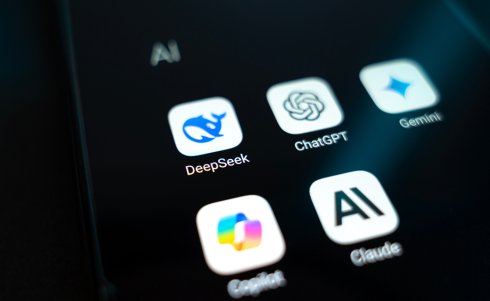
Recent AI products offer unprecedented efficiencies for corporate compliance, contract review, and legal research. However, these tools can open vulnerabilities in confidentiality and evidentiary privileges. As federal courts grapple with the discoverability and privilege status of AI-drafted documents, general counsel and corporate executives must balance technological adoption with rigorous risk management.
Recent federal rulings continually echo a repeating principle: convenience cannot supersede foundational evidentiary standards. When corporate employees or outside advisors utilize public or unsecure AI applications to draft or analyze confidential documents and sensitive information, they risk inadvertently waiving the attorney-client privilege that protects a business’s important information.
Evidentiary Vulnerabilities and Discovery Pitfalls
The core of the attorney-client privilege requires confidentiality between the client and legal counsel for the purpose of obtaining legal advice. Introducing public AI products into that confidential relationship, particularly when the vendor’s agreement permits them to retain client data or train their models on user inputs, can destroy the essential element of confidentiality.
Risk Factor |
Operational Impact |
Mitigation Strategy |
|---|---|---|
| Data Retention Policies | Commercial AI platforms often store prompt histories for model training, creating discoverable records. | Deploy enterprise-tier, zero-retention API instances with strict data privacy addendums. |
| Privilege Disqualification | AI-generated legal briefs or analyses may lack the direct attorney oversight necessary to claim work-product protection. | Ensure all AI outputs are actively reviewed, vetted, and substantially modified by licensed legal counsel. |
| Inadvertent Disclosure | Proprietary business strategies entered into unsecured prompts can leak into public model responses. | Institute robust internal employee training and implement data-loss prevention (DLP) software blocks. |
Comparison: How AI Deployment Choice Affects Confidentiality
The security exposure described above is not uniform across all AI tools. It is driven almost entirely by how an AI model is deployed and whether the vendor retains or trains on user inputs. The table below maps leading 2026 AI models against the confidentiality standard set out in this article. Deployment options, data-handling posture, and stated use cases are drawn from Dataiku’s “Comparison table of the best LLM tools for businesses.” 1 As Luca Berton’s 2026 frontier-model analysis notes, raw model quality and a deployment’s safety posture are separate axes: the highest-scoring model is not automatically the safest choice for privileged work.
Model (provider) |
Deployment options |
Data retention / training on inputs |
Privilege & confidentiality posture |
Stated best business use |
Privilege verdict |
|---|---|---|---|---|---|
| GPT-5.5 (OpenAI) | API | No training on API inputs by default | Third-party processor in the confidential loop; requires enterprise terms and human review | Complex analytics, long-document review | Conditional — with governance |
| GPT-5.4 (OpenAI) | API | No training on API inputs by default | Same posture as GPT-5.5; consumer tiers are not suitable for privileged content | General-purpose workflows, content generation | Conditional — with governance |
| DeepSeek V4 (DeepSeek) | API, self-hosted | Full data control when self-hosted; see Open Platform terms for API data handling | Self-hosted preserves confidentiality; API terms must be vetted before any client data is entered | On-prem reasoning, budget-constrained deployments | Safe self-hosted / risky via API |
| Llama 4 Maverick (Meta) | Self-hosted, cloud partners | Self-hosted deployments are not subject to vendor data-handling policies; data does not leave your own infrastructure | Strongest confidentiality posture; data never leaves the firm's control | Research, custom fine-tuning, niche verticals | Safest for privileged work |
| Grok 4.1 Fast (xAI) | API | Live X platform data access via Agent Tools API | Platform-connected data flows raise disclosure risk; not indicated for privileged material | Real-time trend monitoring, marketing intelligence | Not for privileged content |
Reading the verdict: no commercial model is categorically “privilege-safe” out of the box. Enterprise API tiers with zero-retention terms are defensible with documented governance; self-hosted AI deployments offer the strongest protection because client data never leaves the firm’s infrastructure. Platform-connected or consumer-tier tools should be treated as unsuitable for privileged and confidential material.
Developing Comprehensive Corporate AI Guidelines
To safeguard corporate privileges, organizations must move beyond informal usage policies. A robust internal AI governance framework must define approved software tools, restrict the input of personally identifiable information (PII) and trade secrets, and establish clear workflows for legal department oversight.
Furthermore, organizations must maintain a clear distinction between administrative automation and substantive legal evaluation. When outside counsel or corporate legal teams utilize generative tools, they must document human supervision to defend against future discovery challenges or privilege waiver motions brought by opposing litigants.