Intellectual Property

Danger Zone: Top Gun Heirs Ask Supreme Court to Rewrite the Rules on Copyright Similarity

August 3, 2026

By W. Drew Kastner, Edward Baxter, Stephenie Wingyuen Yeung 楊穎苑, and LuAnne Morrow
Danger Zone: Top Gun Heirs Ask Supreme Court to Rewrite the Rules on Copyright Similarity

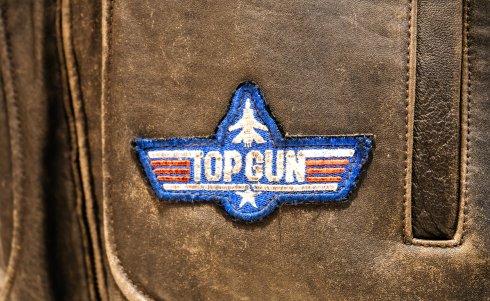
When Ehud Yonay wrote "Top Guns" for California Magazine in 1983, an 11-page account of the Navy's elite fighter pilot training program, Paramount Pictures came calling almost immediately, licensing the rights, and using the article as the springboard for the 1986 blockbuster Top Gun. After Yonay's death in 2012, his heirs attempted to exercise a powerful but often-overlooked copyright tool: statutory termination rights under 17 U.S.C. § 203, which allow an author's heirs to reclaim copyright grants made during the author's lifetime after a statutory period has elapsed. When Paramount released Top Gun: Maverick in 2022 without compensating or crediting the Yonay estate, the heirs promptly sued for copyright infringement and breach of contract. A district court disposed of the case in 2024, granting Paramount’s motion for summary judgment. The Ninth Circuit affirmed in January 2026, holding that Maverick did not infringe the article because every meaningful similarity between the two works, the shared setting, the fighter-pilot culture, aerial training sequences, etc., reflected unprotectable facts about the real Top Gun program rather than any protected original expression from Yunay’s work.

While courts ultimately resolved the § 203 claim forming the basis of the suit in the Yonay’s favor, confirming that the rights to the initial article reverted to them, the central legal battleground became "substantial similarity,” the established standard that copyright plaintiffs must satisfy to show that a defendant copied their original creative expression, as opposed to the underlying facts or ideas, which lie in the public domain. The Ninth Circuit applies a two-step approach to determine substantial similarity. First, an "extrinsic test" that dissects a work into its component parts, filters out unprotectable elements like facts and generic ideas, and compares what remains piece-by-piece. Only works that clear this analytical gauntlet proceed to an "intrinsic test,” a holistic, ordinary-observer assessment of overall similarity. The Yonays argued that the article's vivid language, innovative structure, and the distinctive way Yonay wove those elements into a coherent portrait of a fighter pilot’s life were all protectable, including under a "selection-and-arrangement" theory, which recognizes that an original combination of otherwise unprotectable elements can itself merit copyright protection. The Court disagreed; every similarity, the Court stated, either dissolved into uncopyrightable facts about the real program or evaporated into abstract narrative ideas too general to be owned (the "redemption of a hero," beauty and terror juxtaposed in aerial sequences). Thus, the Yonays' selection-and-arrangement theory failed because the narrative patterns they identified were storytelling conventions, not Yonay's original contribution.

The Yonays are appealing the Ninth Circuit’s decision and are applying for certiorari to make their case before the Supreme Court, basing their appeal on a new theory highlighting a significant circuit split. While the Ninth Circuit requires plaintiffs to clear the extrinsic-dissection test before any holistic similarity assessment, the Second, Third, Fifth, Seventh, and D.C. Circuits consider overall similarity without the threshold hurdle. Should SCOTUS grant certiorari and find for the Yonays, the result may be a sea change in the way copyright analysis is handled in one of the busiest jurisdictions for such cases. The Second and Ninth Circuits handle the heaviest copyright dockets in the country, covering the publishing and entertainment capitals. Yet, rights holders face materially different legal standards depending on which coast their lawsuit lands. The Yonays’ petition frames this as a $2 trillion problem, invoking copyright-intensive industries' contribution to the national economy, and argues that the Ninth Circuit's approach effectively strips protection from works like Yonay's, where original expression is inseparable from journalism about real events. Whether the Court grants certiorari remains to be seen, but the petition puts a consequential question about how courts measure creative similarity directly on its radar.


Firm Highlights

  • Events
    The 2026 Economic, Tax, and Accounting Updates
    We are looking forward to the Mid-Atlantic CFO Roundtable's next event on November 13, 2026. This is a program with topics built for Finance Executives. We are extremely fortunate to have three excellent speakers: Dr. Daraius Irani, Vice President of Business and Public Engagement at Towson University; Mike Stankus, Tax Office Managing Principal at BDO; and Daniel Wahlberg, Managing Partner of Acclare Solutions. The economy is rapidly changing with various factors driving it. The November 3rd midterm elections may also have an impact. Our three expert presenters will discuss the ramifications of the election, and the current year updates to GAAP financial reporting and Federal and State income taxes. Please join us for what will surely be an informative and timely discussion. Meet Our Speakers: Daraius Irani, Ph.D. • Towson University Vice President, Business & Public Engagement Dr. Daraius Irani serves as Vice President of Business and Public Engagement at Towson University as well as the chief economist for the Regional Economic Studies Institute (RESI) at Towson University, a policy group providing economic, fiscal impact, and policy analysis to public and private entities.  Dr. Irani is often called upon to provide economic presentations to organizations across Maryland. He has appeared on numerous television programs and in local and regional print media. Dr. Irani holds a Ph.D. in economics from University of California, Santa Barbara. Dan Wahlberg • Acclare Solutions Managing Partner With over 28 years of experience, Dan Wahlberg is a recognized leader in audit and assurance for the Mid-Atlantic’s middle market business community. As a licensed CPA in Maryland and Virginia, Dan has led assurance practices at top regional firms, including serving as Baltimore Audit Managing Partner and Assurance Practice Leader at BDO USA in Baltimore and as Partner and member of the Management Committee at Hertzbach & Company P.A which merged into BDO in 2020. His expertise centers on delivering clarity, strategic guidance, and proactive solutions to middle-market businesses across Baltimore and beyond. His entrepreneurial spirit has led him to begin a new CPA firm this year with four other CPAs serving the business community. Dan holds a Bachelor of Science in Accounting from Rutgers University and began his career at PWC in New York. He is also deeply engaged in the community, previously serving as President of ACG Maryland and current Board member and as Audit Committee Member for The Associated: Jewish Federation of Baltimore.  Mike Stankus • BDO USA LLP Tax Office Managing Principal Mike Stankus is the Tax Office Managing Principal for the firm’s Baltimore office. He has more than 16 years of experience providing tax planning and preparation and management advisory services for his clients. Mike focuses on advising privately held businesses and their owners on effective growth and tax strategies. He also performs various engagements for mergers and acquisitions and complex cost accounting projects and projections. In addition, he represents various government contracting clients before the DCAA and assists with FAR compliance. Mike’s areas of concentration include working with government contractors, professional service firms, construction companies, and homebuilders.
  • Events
    AIA Tri-State Conference
    Princeton will serve as the backdrop for three days of connection, learning, and design leadership. From keynotes to tours to the Tri-State Design Awards, this year’s conference is designed to go far beyond education sessions. Kick off the week with pre-conference intensives and individual state component Design Award celebrations, followed by three days of education, inspiration, networking, and design excellence at the 2026 AIA Tri-State Conference—featuring pre-conference intensives, three keynote speakers, 25 education sessions, curated tours, an expo, spec academies, and the AIA Tri-State Design Awards—bringing together architects and design professionals from New Jersey, New York, and Pennsylvania to connect, learn, and celebrate the best of the profession. G2. Designing Secure Practices: Cybersecurity, Data Privacy, Contractual Provisions, and Insurance Risks for Architects (4:00 PM - 5:30 PM) Architects and design professionals increasingly rely on cloud platforms, BIM software, and digital tools to manage sensitive data, creating cybersecurity and privacy risks. A single incident can trigger liability claims, regulatory obligations, reputational harm, and insurance challenges. Yet many firms underestimate how contracts, insurance, and internal practices intersect during a breach. This program offers legal and insurance perspectives on cyber risk in architecture, examining liability exposure, risky contract provisions, and mitigation strategies. A cyber insurance expert will explain policy responses, coverage gaps, coordination with professional liability, and best practices for aligning insurance with contractual risk and protecting firms from evolving cyber threats. Learning Objectives: Identify key cybersecurity and data privacy risks faced by architecture firms and explain how these risks can impact professional liability and project outcomes. Analyze common contractual provisions to determine which clauses may increase exposure to cyber incidents and propose strategies to mitigate these risks. Evaluate the scope and limitations of cyber insurance policies, including coordination with professional liability coverage, to determine how a policy would respond in a breach scenario. Develop actionable risk management strategies by integrating legal, contractual, and insurance considerations to protect sensitive client and project data.




