Business
Supreme Court Overturns Chevron Deference in Landmark Loper Bright Decision
By Sarah Goodman and Charles "Max" A. McCauley, III
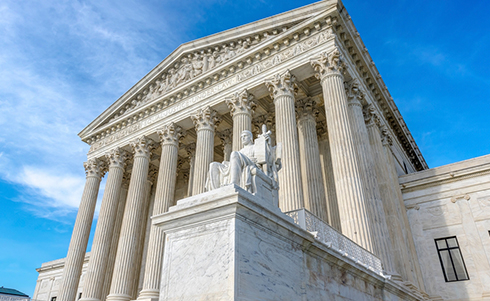
On June 28, 2024, the Supreme Court issued its decision in Loper Bright v. Raimondo and Relentless v. Department of Commerce. As expected, following oral argument, the Court overruled the Chevron deference doctrine in a 6–3 decision written by Chief Justice John Roberts.
The doctrine stems from a 1984 Supreme Court case, Chevron U.S.A., Inc. v. Natural Resources Defense Council, Inc, 467 U.S. 837 (1984), establishing a two-step analysis for judicial review of statutory interpretation. Under Chevron, if a court concluded that a statute was silent or ambiguous, it had to defer to an agency’s permissible construction of the statute. Now, under Loper Bright, courts must “exercise their independent judgment” and “may not defer to an agency interpretation of the law simply because a statute is ambiguous.”
Supreme Court Review: Chevron Doctrine's Applicability to Cases Post-Loper Bright
In Loper Bright, two sets of fishing companies challenged a rule issued by the National Marine Fisheries Service requiring vessels operating in the Atlantic herring market to pay for a government-certified observer during their fishing trips. Applying Chevron, the district court in each case rejected the companies’ challenge to the observer rule and granted summary judgment to the government. Panels of the U.S. Courts of Appeals for the D.C. Circuit and First Circuit affirmed these decisions. The U.S. Supreme Court granted certiorari in both cases on the limited question of whether Chevron should be overruled or clarified.
Supreme Court's Interpretation of APA in Loper Bright
The Loper Bright decision is premised on what the majority believes is a plain text reading of the Administrative Procedure Act (APA), which governs judicial challenges to agency actions. The Court specifically determined that the APA, which was not considered in Chevron, reflects the traditional understanding of the judiciary's role. This role requires courts to independently interpret the meaning of laws. The Court dismissed the notion of a “presumption” of agency expertise, explaining that resolving unclear laws falls within the court’s jurisdiction, not the agencies. Put another way, while courts may use an agency’s interpretation to help “inform their inquiry,” they cannot dictate how courts interpret the law.
The Loper Bright Court also rejected the idea that Chevron promotes consistency, highlighting inconsistencies in its application. Furthermore, it concluded that adherence to Chevron is not mandated by stare decisis. Chevron had proven “unworkable” because determining whether a statute is ambiguous is an indeterminate exercise. Consequently, the Court vacated and remanded the lower court’s decisions.
Supreme Court Opinion: Chief Justice Roberts and the Majority
Chief Justice Roberts delivered the opinion of the Court, in which Justices Thomas, Alito, Gorsuch, Kavanaugh, and Barrett joined. Justices Thomas and Gorsuch each filed concurring opinions. Justice Kagan filed a dissenting opinion, in which Justices Sotomayor and Jackson joined.