Commercial Litigation
When the Mammoth Gets Out: Is a Genetically Engineered Animal a Product, or Is It Livestock?
By Jake L. Ramsey
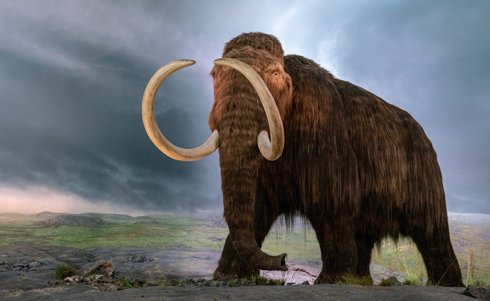
It is a little before dawn when the fence gives way. The animal that steps through it is not supposed to exist. It stands nearly 11 feet at the shoulder, wrapped in a coat of coarse, rust-colored hair, its breath rising in the cold. It weighs five tons. A quarter mile off, a rancher hears a low rumble he feels in the floorboards before he hears it in the air. By the time he reaches the window, the thing is already in his neighbor’s wheat field, then his neighbor’s fence, then his neighbor’s parked truck.
This is less far-fetched than it used to be. Colossal Biosciences, a company based in Dallas, has spent several years and a great deal of money on what it calls de-extinction, using gene editing to bring back species the earth has not seen in thousands of years. i The woolly mammoth is its most famous target. Whether or not a mammoth ever walks out of a lab, the company has already done something quieter that ought to interest lawyers. It has made us ask what body of law would govern the animal if one ever did.
Because when that mammoth flattens the fence and crosses the wheat field, the first hard question is not biological. It is legal. Who pays for the wheat, the fence, and the truck? To answer that, a court will have to decide something no court has decided before. Is a woolly mammoth livestock, or is it a product?
The Law Already Knows What to Do with Animals
The law has been sorting out liability for wayward animals for a very long time, longer than it has handled almost anything else. Cattle have wandered into neighbor’s crops since there were neighbors and crops, and the common law worked out rules for the aftermath.
The modern American version lives in the Restatement (Third) of Torts, which sorts the animal kingdom into a few practical categories. An owner of livestock that strays onto a neighbor’s land and does damage is generally strictly liable for the intrusion. There is no need to prove the rancher was careless, only that the cattle got out and the corn got eaten. An owner of a wild animal, meaning a species that has not been domesticated and tends to hurt people unless restrained, is strictly liable for the harm it causes. Everyone understands that keeping a tiger is a different proposition from keeping a cow. And an owner of an ordinary domestic animal becomes strictly liable once he knows, or has reason to know, that his particular animal has dangerous tendencies abnormal for its kind. That is the rule behind the old idea that every dog gets one free bite.ii
Underneath all of this runs a deeper legal principle. In 1868, the House of Lords decided Rylands v. Fletcher, a case that had nothing to do with animals. A mill owner built a reservoir on his land. It burst through some abandoned mine shafts and flooded his neighbor’s coal mine. The court held him liable even though he had not been negligent, and it announced a rule that has echoed through the common law ever since. A person who brings onto his land something likely to do mischief if it escapes keeps it there at his peril, and answers for the damage if it gets loose.iii
The Rylands principle appears to fit this scenario. A wooly mammoth in a wheat field is surely something extraordinary and something likely to do mischief if it escapes.
Neither Quite Animal nor Quite Product
So the law has categories, and at least one seems to fit. If the mammoth is just an exotic, dangerous beast, the wild-animal rule imposes strict liability, and the inquiry ends there. If it is closer to livestock, the trespassing-animal rule imposes strict liability for the crops and the fence. Either way the neighboring rancher recovers. Where is the difficulty?
The difficulty is that every one of these doctrines quietly assumes something that is not true of a mammoth. Each assumes the species already exists and that people have built up some working knowledge of how it behaves. Cattle stray and trample. Tigers maul. A dog that has bitten once may bite again. The categories work because generations of experience have filled them.
No one has that experience with a mammoth. No rancher has raised one. No veterinarian has treated a herd of them. No actuary has a drawer full of mammoth claims. The last person with any practical knowledge of the species died before the pyramids were built. The dangerous-propensities rule asks what is normal for the animal’s kind, and for this animal nobody alive can answer.
There is a second problem. A cow is born. A tiger is born. The mammoth was designed. Somewhere a research team chose its traits, selecting for cold tolerance, for size, for coat, editing a genome the way an engineer sets a tolerance on a drawing. The animal in the wheat field did not simply get loose. It is the output of a manufacturing process. It’s a product.
The Law Also Knows What to Do with Products
Products liability exists to hold manufacturers responsible for the things they design and sell into the stream of commerce. The logic is intuitive. The company that decides how a product will be built, and profits from selling it, is the party best placed to make it safe and to pay when it is not. The doctrine asks a familiar set of questions. Was there a design defect, meaning the thing was unreasonably dangerous as intended? Was there a manufacturing defect, meaning this particular unit came out different from its design? Was there a failure to warn, meaning the maker did not tell foreseeable users and bystanders what they needed to know to stay safe?iv
Now ask those same questions about the mammoth. If the animal is aggressive because a team selected for size and dominance, is that a design defect? If a genetic edit expressed differently in this individual than the company intended, and produced a beast more unpredictable than the blueprint promised, is that a manufacturing defect? If the company handed the animal to a preserve without warning that its containment needs went beyond anything in ordinary ranching, is that a failure to warn? None of these questions is absurd. Every one of them sounds like a products case.
This is the collision at the heart of the problem. Livestock law assumes an animal that is born and merely owned. Products law assumes an object that is designed and sold. A genetically engineered mammoth is both at once. It is born and built, owned and manufactured, alive and, in the coldly commercial sense, a product. It does not fit either box, because it was never meant to exist in a world that has only two boxes.
Who Pays for the Damage?
Line up the possible defendants. First, there is the owner, the preserve or facility that held the animal and let it escape. This is the classic livestock posture. You owned the beast, you failed to contain it, you answer for the damage. Straightforward, and probably right as far as it goes.
However, there is also the creator, the company that designed the animal, chose its traits, “manufactured” it, and put it into the stream of commerce. If the injury flowed from a characteristic the company deliberately engineered, the rancher’s lawyer will not be content to sue only the party that owned the fence. He will follow the deeper pocket back to the drawing board and argue that a company cannot design a five-ton animal, sell it, and then walk away from the predictable results of its own design choices.
Likely, courts will end up borrowing from both traditions at once. The owner answers under animal-law principles for failing to contain the creature. The creator answers under products principles for the traits it built into it. That is not a tidy rule. But tidy rules tend to be the ones the law inherits for problems it has already seen. This is a problem the law has not seen, and the first courts to face it will be improvising with borrowed tools.
The Quiet Gatekeeper: Insurance
There is one more player in this drama, and it may matter more than any court. Long before a judge rules on whether a mammoth is a product or livestock, an underwriter has to decide whether it can be insured at all, and at what price. Insurers price risk from data, and here there is none. There is no loss history and no mortality table for an animal that has been extinct for millennia. Faced with that kind of uncertainty, an insurance market does one of two things. It refuses the risk, or it prices the risk so high that the underlying activity stops making economic sense.
The mammoth may never be stopped by a statute. It may simply turn out to be uninsurable.
Living Products are Coming Either Way
It would be easy to file all of this under science fiction and move on. That would be a mistake. The mammoth is the most theatrical example of a category that is already arriving in quieter forms, and it is not only about giants. Colossal’s own roster runs well past the mammoth, to the Tasmanian tiger, the dodo, the moa, the South African bluebuck, and the dire wolf, whose pups the company says it has already produced.v Add the gene-edited cattle and hogs, the engineered salmon, and the disease-resistant crops already moving toward market, and the pattern is hard to miss. A growing catalogue of organisms are, unmistakably, designed. Each raises a gentler version of the question the mammoth asks so loudly. When a living thing is engineered by a company and sold into the world, is it an animal, a product, or some third thing the law has not yet named?
For centuries tort law has kept two sets of rules on two separate shelves. Animals are born, and the law of animals governs them. Products are made, and the law of products governs them. The whole structure rests on the assumption that living things and manufactured things are different kinds of things. Synthetic biology quietly dissolves that assumption. It produces organisms that are grown rather than assembled, that reproduce rather than roll off a line, and that were still designed as deliberately as any machine.
So when the mammoth finally puts its shoulder into that fence, or, more likely, when some engineered animal with a far less exciting name does something a court has to sort out, the judge will reach for the tools on hand. She will find two bodies of law built for two kinds of things and a defendant that is somehow both. The mammoth is a good way to notice the problem. It is not, in the end, what the problem is about. The problem is that biology is becoming an engineering discipline, and the liability rules were written for a world in which it was not.
i Colossal Biosciences, The De-Extinction Company, https://colossal.com (last visited Sept. 12, 2026).
ii Restatement (Third) of Torts: Liab. for Physical & Emotional Harm § 21 (Am. L. Inst. 2010) (intrusion by livestock or other animals); id. § 22 (wild animals); id. § 23 (abnormally dangerous domestic animals with known dangerous tendencies).
iii Rylands v. Fletcher (1868) LR 3 HL 330 (appeal taken from Eng.), aff’g Fletcher v. Rylands (1866) LR 1 Ex 265 (Blackburn, J.).
iv Restatement (Third) of Torts: Prods. Liab. § 2 (Am. L. Inst. 1998) (distinguishing manufacturing defects, design defects, and defects based on inadequate warnings).
v Colossal Biosciences, Our Species, https://colossal.com/species/ (last visited Sept. 12, 2026) (listing the woolly mammoth, thylacine, dodo, moa, bluebuck, and dire wolf); see also Colossal Biosciences, Dire Wolf, https://colossal.com/direwolf/ (last visited Sept. 12, 2026) (announcing the birth of dire wolf pups).