Marquee Background
Marquee Background

Offit Kurman Blogs

Labor and Employment

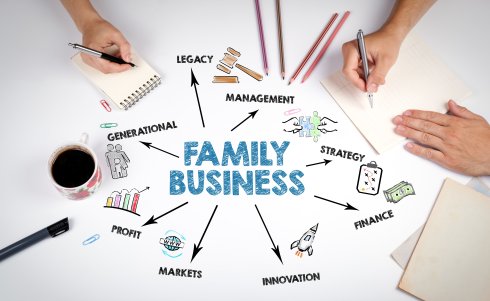
Family Offices as Employers: Seven Employment Law Issues That Can Put a Family's Wealth at Risk

November 2, 2026

By Sarah Goodman

Family Offices as Employers: Seven Employment Law Issues That Can Put a Family's Wealth at Risk

A family office exists to protect what a family has built over generations. One of the most common sources of unplanned legal exposure for these offices is not an investment decision. It is how the office handles the people who work for it.

A single-family office may employ a chief investment officer, analysts, and an executive assistant, along with a house manager, a private chef, childcare providers, drivers, and grounds staff. Federal and state employment law treats each of those roles differently. An informal arrangement that worked well for years can fall apart quickly once an employee becomes unhappy.

Family offices sit in an unusual position. They operate partly as investment firms, partly as operating businesses and partly as household employers. Many started informally, with long-tenured staff, little documentation, and HR practices built on personal trust rather than written policy. That works well until a dispute arises.

Expectations have also changed. Next-generation principals and professional COOs, general counsel, and compliance officers now running many offices expect employment practices on par with institutional employers. Regulators and plaintiffs' lawyers expect the same, and they apply the same rules to a family office that they apply to everyone else. Fortunately, most of these risks can be addressed quietly and efficiently before they turn into claims.

Below are the seven issues most often seen, along with practical steps for each.

Worker classification: employee or independent contractor

Family offices often pay household and personal staff a flat fee or on invoice and report the payments on Form 1099. That approach is simple, but it frequently does not hold up. A worker who keeps a regular schedule, takes direction from the family or the office, and receives a steady fixed payment will generally be considered an employee, regardless of how the arrangement is documented.

Misclassification exposure can include back wages, overtime, payroll taxes, penalties, and attorneys' fees, and a single claim can reach six figures before trial. Every 1099 relationship should be reviewed now. If the family or the office controls how, when, and where the work is done, the arrangement should be treated as employment and corrected proactively.

Overtime eligibility for household and office staff

Paying someone a salary, even a generous one, does not by itself make that person exempt from overtime. Exemption depends on both job duties and compensation, and most household roles, including childcare providers, housekeepers, cooks, drivers, and many house managers, do not meet the applicable duties tests.

Under federal law, household employees who do not live in the home are generally entitled to overtime for hours worked over 40 in a workweek. Live-in domestic workers are exempt from federal overtime, but several states have adopted domestic worker protections that fill that gap.

For office staff, the federal minimum salary for the executive, administrative, and professional exemptions is $684 per week ($35,568 annually), following the Department of Labor's May 2026 restoration of the 2019 thresholds. Salary is only part of the analysis, though. An executive assistant with a senior title and substantial pay may still be owed overtime if her duties do not qualify, and several states set higher thresholds. Family offices should keep accurate time records for every non-exempt employee, including long-tenured household staff.

Identifying the employing entity

It is not always clear whether a staff member works for the family office entity, for an individual family member, or for a trust or holding company that owns a residence. That uncertainty creates risk.

The answer affects payroll tax reporting, workers' compensation coverage, which state's laws apply, and who is named in a lawsuit. Getting it wrong can undermine the liability protection the family office structure was designed to provide. The employing entity for each individual should be designated in writing, and payroll, workers' compensation coverage, and offer letters should all be consistent with that designation.

Confidentiality and restrictive covenant agreements

Confidentiality is central to how a family office operates, and nondisclosure agreements are common. An agreement that is overbroad or outdated, however, may be unenforceable when it matters most and can create new risk of its own.

Federal law now limits the enforceability of pre-dispute nondisclosure and non-disparagement provisions as they relate to sexual harassment and sexual assault claims. As for noncompetes, the FTC's proposed nationwide ban has been vacated and formally abandoned, but the agency has indicated it will continue to challenge overbroad noncompetes on a case-by-case basis. Several states, including California, Minnesota, North Dakota and Oklahoma, prohibit most employee noncompetes outright. Confidentiality and restrictive covenant agreements should be reviewed under the law of each state where staff actually work, rather than relying on a single national template.

Monitoring and recording in the residence

Protecting a family's privacy sometimes requires monitoring the premises, but the law draws clear lines. Video monitoring in a private residence is often permissible. Audio recording is treated very differently. In all-party consent states such as California and Maryland, recording a conversation without everyone's consent can lead to both civil and criminal liability. Monitoring in bathrooms or staff sleeping quarters is never permissible. Family offices should adopt a written monitoring policy that explains what is recorded and where, and should obtain signed acknowledgments from staff.

Terminations

Because family office relationships are personal, terminations often happen quickly and with little documentation, which is the kind of record that supports discrimination and retaliation claims. At-will employment does not protect against those claims, and neither does a small headcount, since many state and local anti-discrimination laws apply to employers with only a few employees. Performance concerns should be documented as they arise, standards should be applied consistently, and counsel should be involved before a termination decision is communicated.

Written policies

Many small offices assume they do not need a handbook. That assumption can be costly. Clear written policies on compensation, time off, harassment reporting, confidentiality, and complaint procedures are an important defense when a claim arises, and experienced professionals considering a role with the office will expect to see them. A handbook sized to the office, with separate expectations for household staff, is a sensible starting point.

Family office employment checklist

  • Every worker is classified as an employee or contractor, with the basis documented
  • Exempt and non-exempt status is based on duties and pay, not job titles
  • Non-exempt staff, including household employees, track their hours
  • Each person has one designated employing entity, consistent with payroll and insurance
  • Workers' compensation covers household staff where required
  • NDAs and restrictive covenants have been reviewed for each state where staff work
  • A written monitoring policy is in place and acknowledged by staff
  • A handbook appropriate to the office includes a harassment reporting procedure
  • Performance issues are documented before any termination decision

Conclusion

Informal employment practices can put a family's wealth, privacy and reputation at risk, and those risks tend to surface during a dispute, when they are hardest to manage. Most of the issues above can be addressed now, at modest cost and on the family's own timeline. If your office has not recently reviewed how it hires, pays, protects, and separates from its employees, now is a good time to do so.

Related People

Related Services

  • Posts
  • About
  • Subscribe

Firm Highlights

  • Blog Posts
    Till Debt Do Us Part: The Financial Side of Marriage
    Marriage is more than a commitment to one another—it’s also a significant financial and legal agreement. So, how much do couples really understand about the financial implications of saying “I do”? In this episode of Love Ends. Law Begins., Stephanie Lehman and Fara Rodriguez explore the financial side of marriage, breaking down what couples should know about prenuptial and postnuptial agreements before and after the wedding. From defining marital versus separate property and protecting inheritances to navigating real estate, business interests, and generational wealth, Stephanie and Fara explain how thoughtful planning can help couples avoid costly disputes down the road. They also discuss when to start the prenup conversation, why these agreements are far from boilerplate, and how major life changes—like raising children, leaving a career, or building a successful business—can reshape a couple’s financial future. With candid insights drawn from decades of family law experience, this conversation challenges couples to look beyond the wedding day and understand the legal and financial commitments that come with marriage. Because planning for the unexpected isn’t about anticipating the end of a relationship. It’s about entering marriage with clarity, transparency, and a shared understanding of what comes next. In this episode, discover: What prenuptial agreements can—and cannot—address The difference between marital and separate property How inheritances, real estate, and business interests may be treated Why timing, transparency, and independent legal counsel matter How postnuptial agreements can address changing financial circumstances Why understanding the legal contract behind marriage can help couples make more informed decisions
  • Podcasts
    Art Appraisal and Market Value with David Shapiro
    How do you determine the value of a work of art—and what happens when that valuation impacts taxes, insurance, estate planning, or an artist’s legacy? On this episode of The Legal Canvas, host Caryn Keppler, trust and estates attorney at Offit Kurman, welcomes David Shapiro of David Shapiro Fine Art, a certified member of the Appraisers Association of America specializing in post-war and contemporary art, with accreditation in impressionist and modern art. David shares insights into the art appraisal process, explaining the differences between fair market value, retail replacement value, and marketable cash value. He discusses how appraisers evaluate unique works using comparable sales, provenance, condition, exhibition history, and other factors that influence value. The conversation also explores the role of art advisors in buying and selling artwork, strategies for expanding an artist’s presence in a global market, and the complexities of valuing large collections for estate and tax purposes. David explains how a work’s history and the story behind it can influence its market performance—and why thoughtful planning and organization are essential to preserving an artist’s legacy. In this episode, you’ll learn about: The differences between art appraisal methods and why the type of valuation matters. What collectors need to know about appraisals for insurance, charitable donations, and tax purposes. How provenance, condition, and comparable sales influence an artwork’s value. How art advisors help collectors navigate auctions, negotiate terms, and maximize sale opportunities. Why artists should cultivate relationships and exhibition opportunities across multiple markets. How blockage discounts can affect the valuation of large artist estates. Why documenting an artwork’s history can make a meaningful difference in its market performance. Whether you’re an artist, collector, estate planning professional, or art enthusiast, this episode offers valuable insight into the intersection of art, valuation, and legacy planning.  Listen to The Legal Canvas for more conversations exploring the intersection of estate planning, taxes, and the creative arts.
  • Events
    AIA Tri-State Conference
    Princeton will serve as the backdrop for three days of connection, learning, and design leadership. From keynotes to tours to the Tri-State Design Awards, this year’s conference is designed to go far beyond education sessions. Kick off the week with pre-conference intensives and individual state component Design Award celebrations, followed by three days of education, inspiration, networking, and design excellence at the 2026 AIA Tri-State Conference—featuring pre-conference intensives, three keynote speakers, 25 education sessions, curated tours, an expo, spec academies, and the AIA Tri-State Design Awards—bringing together architects and design professionals from New Jersey, New York, and Pennsylvania to connect, learn, and celebrate the best of the profession. G2. Designing Secure Practices: Cybersecurity, Data Privacy, Contractual Provisions, and Insurance Risks for Architects (4:00 PM - 5:30 PM) Architects and design professionals increasingly rely on cloud platforms, BIM software, and digital tools to manage sensitive data, creating cybersecurity and privacy risks. A single incident can trigger liability claims, regulatory obligations, reputational harm, and insurance challenges. Yet many firms underestimate how contracts, insurance, and internal practices intersect during a breach. This program offers legal and insurance perspectives on cyber risk in architecture, examining liability exposure, risky contract provisions, and mitigation strategies. A cyber insurance expert will explain policy responses, coverage gaps, coordination with professional liability, and best practices for aligning insurance with contractual risk and protecting firms from evolving cyber threats. Learning Objectives: Identify key cybersecurity and data privacy risks faced by architecture firms and explain how these risks can impact professional liability and project outcomes. Analyze common contractual provisions to determine which clauses may increase exposure to cyber incidents and propose strategies to mitigate these risks. Evaluate the scope and limitations of cyber insurance policies, including coordination with professional liability coverage, to determine how a policy would respond in a breach scenario. Develop actionable risk management strategies by integrating legal, contractual, and insurance considerations to protect sensitive client and project data.
  • Events
    The 2026 Economic, Tax, and Accounting Updates
    We are looking forward to the Mid-Atlantic CFO Roundtable's next event on November 13, 2026. This is a program with topics built for Finance Executives. We are extremely fortunate to have three excellent speakers: Dr. Daraius Irani, Vice President of Business and Public Engagement at Towson University; Mike Stankus, Tax Office Managing Principal at BDO; and Daniel Wahlberg, Managing Partner of Acclare Solutions. The economy is rapidly changing with various factors driving it. The November 3rd midterm elections may also have an impact. Our three expert presenters will discuss the ramifications of the election, and the current year updates to GAAP financial reporting and Federal and State income taxes. Please join us for what will surely be an informative and timely discussion. Meet Our Speakers: Daraius Irani, Ph.D. • Towson University Vice President, Business & Public Engagement Dr. Daraius Irani serves as Vice President of Business and Public Engagement at Towson University as well as the chief economist for the Regional Economic Studies Institute (RESI) at Towson University, a policy group providing economic, fiscal impact, and policy analysis to public and private entities.  Dr. Irani is often called upon to provide economic presentations to organizations across Maryland. He has appeared on numerous television programs and in local and regional print media. Dr. Irani holds a Ph.D. in economics from University of California, Santa Barbara. Dan Wahlberg • Acclare Solutions Managing Partner With over 28 years of experience, Dan Wahlberg is a recognized leader in audit and assurance for the Mid-Atlantic’s middle market business community. As a licensed CPA in Maryland and Virginia, Dan has led assurance practices at top regional firms, including serving as Baltimore Audit Managing Partner and Assurance Practice Leader at BDO USA in Baltimore and as Partner and member of the Management Committee at Hertzbach & Company P.A which merged into BDO in 2020. His expertise centers on delivering clarity, strategic guidance, and proactive solutions to middle-market businesses across Baltimore and beyond. His entrepreneurial spirit has led him to begin a new CPA firm this year with four other CPAs serving the business community. Dan holds a Bachelor of Science in Accounting from Rutgers University and began his career at PWC in New York. He is also deeply engaged in the community, previously serving as President of ACG Maryland and current Board member and as Audit Committee Member for The Associated: Jewish Federation of Baltimore.  Mike Stankus • BDO USA LLP Tax Office Managing Principal Mike Stankus is the Tax Office Managing Principal for the firm’s Baltimore office. He has more than 16 years of experience providing tax planning and preparation and management advisory services for his clients. Mike focuses on advising privately held businesses and their owners on effective growth and tax strategies. He also performs various engagements for mergers and acquisitions and complex cost accounting projects and projections. In addition, he represents various government contracting clients before the DCAA and assists with FAR compliance. Mike’s areas of concentration include working with government contractors, professional service firms, construction companies, and homebuilders.