Michael Freestone

Principal

Immigration Law

What is an H1B and Who Should Know About It?

February 5, 2025

By Michael Freestone

What is an H1B and Who Should Know About It?

H1B – Specialty Occupation

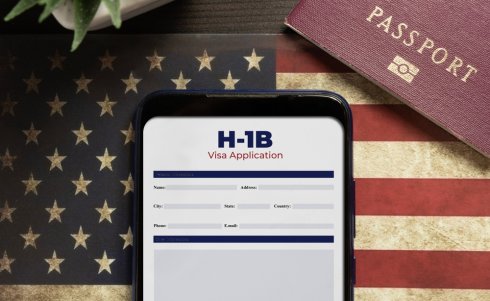
The H-1B nonimmigrant visa allows companies and other employers in the United States to temporarily employ foreign workers for up to six years in occupations that require the theoretical and practical application of a body of highly specialized knowledge and a bachelor’s degree or higher in the specific specialty, or its equivalent. H-1B specialty occupations may include fields such as architecture, engineering, mathematics, physical sciences, social sciences, medicine and health, education, business specialties, accounting, law, theology, and the arts.

Who Needs to Know About H1B visas?

The H1B is a very popular visa category as it can be very useful for a large number of potential applicants. So, who can benefit from this flexible employment-based visa?

  • Students completing their studies in F1 status who are graduating with a bachelor’s or advanced degree are designed to be the typical H1B applicants. Specific provisions exist to assist the transition from OPT to H1B.
  • Students who have multiple years of OPT ahead of them should also look carefully at the H1B visa as it is still a lottery, and they should maximize their attempts to make the lottery;
  • Individuals with other nonimmigrant visas that don’t allow for employment (H4 dependents, etc.) or are running out of validity period (L1B, etc.).
  • Professionals who are working in a status that ties them to a specific employer such as L1 visa holders or E visa holders.
  • Professionals who are abroad – there is no geographic limit on H1B lottery submissions.
  • Individuals who need a visa status that provides “dual intent” to allow them to easily pursue an employment-based green card in the United States.

H1B Cap and the Lottery

The number of new H1B Nonimmigrant visas is limited by law to 65,000 a year, and they must be submitted before April 1 for jobs that begin October 1 of that same year. In addition, there are an extra 20,000 H1B visas available for beneficiaries who hold a US master’s degree. When there is anticipated demand for more than the 85,000 available H1B visas, the USCIS is required to conduct a lottery for the selection of H1B visas. The current H1B lottery takes place in multiple stages. Initially a lottery for H1B applicants who hold US master’s degrees is conducted. Then, the remaining US master’s degree applicants are added to the larger applicant pool, and a lottery for the remaining 65,000 available visas is conducted. Finally, a lottery is conducted in the summer for any unused H1B visas. This process is conducted electronically, and selected applicants are informed very quickly if they have made the H1B Cap.

Cap Exempt Employers

H-1B workers who are petitioned for or employed at an institution of higher education or its affiliated or related nonprofit entities, a nonprofit research organization, or a government research organization are not subject to the H1B cap. These H1B petitions may be filed at any time and are not subject to the lottery rules.

Key Aspects of H1B Petitions

Employers should be informed about all the aspects of H1B nonimmigrant workers as regulations cover their placement, pay, and qualifications. As discussed, H1B workers must hold at least a bachelor’s degree, and they must also be employed in a position that at least requires the equivalent of a bachelor’s degree. The definition of specialty occupation is complex and requires careful review.

Dependents of H1B visa holders can also obtain H4 status. However, H4 status does not by itself allow for work authorization. Only the spouses of H1B visa holders with an approved Immigrant Worker Petition that is subject to backlogs in obtaining permanent residence can apply for work authorization in H4 status.

Fees

H1B Petitions require filing fees to be paid to the Department of Homeland Security. The US immigration service is fee-based and relies entirely on these fees to provide its services. The fees for H1B petitions are complex and they can be significant. Below, please find the current breakdown of H1B petition filing fees; there is also an optional additional premium processing fee should that service be available for the H1B Cap. Below is a list of the current fees with a higher range provided for employers that have more than 25 employees:

  • H1B Registration fee, to participate in the lottery: $210
  • Base Nonimmigrant petition filing fee: $460 - $780
  • Asylum program fee: $300 - $600
  • Fraud prevention and detection fee for all new H1B Petitions: $500
  • AICWA Fee (Imposed by the American Competitiveness and Workforce Improvement Act of 1998):
  • $750 – for employers with 1 to 25 full-time employees
  • $1500 – for employers with 26 or more full-time equivalent employees
  • Public Law 114-113 Fee, only applicable for employers with 50 or more employees and more than 50% of employees are working under H1B or L1 status: $4,000
  • Premium Processing Fee, guarantees a response from USCIS on a petition in 15 days: $2,805

The Labor Condition Application

H1B petitions must be accompanied by a certified Labor Condition Application from the Department of Labor. This application includes certain attestations, a violation of which can result in fines, bars on sponsoring nonimmigrant or immigrant petitions, and other sanctions to the employer. The application requires the employer to attest that it will comply with the following labor requirements:

  • The employer/agent will pay the H-1B worker a wage that no less than the wage paid to similarly qualified workers or, if greater, the prevailing wage for the position in the geographic area in which the H-1B worker will be working.
  • The employer/agent will provide working conditions that will not adversely affect other similarly employed workers.
  • At the time of the labor condition application, there is no strike or lockout at the place of employment.
  • Notice of the filing of the labor condition application with the DOL has been given to the union bargaining representative or has been posted at the place of employment.

Prevailing Wages

Pursuant to the Labor Condition Application, the H1B employer must offer to pay the actual wage or the prevailing wage level for the H1B occupational classification in the proposed area of employment, whichever is greater, based on the best information available. For example, a prevailing wage for a computer engineer could be a lower figure in a specific region, but if all similarly placed employees in the company are paid a higher figure that wage must be offered to the H1B worker.  Accordingly, the prevailing wage must equal the average of the rate of wages paid to other workers similarly employed in the area of intended employment. Employers must be careful in identifying the specific wage ranges and areas of employment.

Material Changes Matter

US Citizenship and Immigration Services and Department of Labor regulations of H1B workers are strict and complex, with fines and penalties abound for the unwary. H1B employers must abide by the material terms of the H1B petition that they submit. Changes to job title, job duties, job location, salary, benefits, and any other material changes can have significant consequences. For example, H1B workers cannot be “benched,” and significant penalties can be incurred for violations.

Compliance

The H1B program has been subject to significant oversight in recent years, and that trend is only set to continue. Current regulations have increased the statutory authority for work site visits and compliance with the terms of H1B vias and the Labor Condition Application. Employers and H1B workers need to be aware that compliance is a key part of the H1B program and should be prepared for potential site visits.

Categories: Immigration Law

Related People

Related Services

  • Biography
  • Publications & News
  • Blog Posts
  • Featured Works

Firm Highlights

  • Events
    MACFO's Inside Successful CEO & CFO Partnerships
    Please join us on September 18 for an event that’s sure to be a home run! ***We will lead off by interviewing our Spotlight Speaker Series guest, Baltimore Orioles CFO, Darline Llamas Llopis.*** After, we will ask ourselves, what separates great companies from good ones? We believe that more often than not, it is the strength of the partnership between the CEO and CFO that matters, so we are bringing you three CEO/CFO leadership teams to learn from. The Associated: Jewish Federation of Baltimore – Andrew Cushnir and Sam Klein Canusa Paper & Packaging – Mike Walter and Vince Salamone Secom, LLC – Toni Toomey and Mourad Awad Join us for an exclusive executive briefing – three tandem presentations followed by a panel discussion - featuring CEOs and CFOs from different but leading organizations as they share candid insights into building trust, navigating difficult decisions, driving strategic growth, and leading through today's business challenges. You'll hear firsthand how these executive teams navigate conflict, align on priorities, and build high-performing organizations. Whether you're a CFO, controller, finance executive, or an aspiring business leader, you'll leave with practical ideas and fresh perspectives you can apply immediately. Meet Our Speakers: Darline Llamas Llopis • Orioles  Chief Financial Officer Darline Llamas Llopis is in her second season with the Orioles as Chief Financial Officer (CFO). Prior to joining the Orioles, Llamas Llopis spent four seasons with the Miami Dolphins, Hard Rock Stadium, and the F1 Miami Grand Prix as Vice President of Finance and Retail. In this capacity, she managed the finance, accounting, payroll, account payables, procurement and merchandise operations for the team and race. She also previously served for four years as the Director of Finance and Controller at the Los Angeles Rams. Llamas Llopis started her career in public accounting with Ernst & Young and PricewaterhouseCoopers as a member of the Commercial Real Estate practice.  Llamas Llopis completed her MBA at UCLA Anderson School of Management and received her Master of Accountancy from the University of Southern California (USC) where she also graduated cum laude with an undergraduate degree in business. She is a member of the American Institute of Certified Public Accountants (CPA) and is an active CPA. She resides in Baltimore with her husband, Devin, and their son, Santiago. Andrew Cushnir • The Associated: Jewish Federation of Baltimore   President & Chief Executive Officer Andrew Cushnir is the President and Chief Executive Officer of The Associated, having started in the role in May 2024. He is the eighth person to serve in this role since The Associated’s founding over 100 years ago. Andrew brings a wealth of experience and a profound dedication to strengthening and enriching the Jewish community. His journey within the Jewish Federation system began as a passionate lay leader and volunteer before he transitioned into serving as a professional. He worked for the Jewish Federation of Los Angeles for twenty years, including in the roles of Chief Planning and Program Officer and Chief Development Officer. During this time, Andrew played a crucial role in reshaping the allocation process and fostering a culture of collaboration and partnership and he also led all annual, project, and emergency fundraising, as well as planned giving efforts. As a member of the Federation’s executive team, he also addressed complex community and organizational issues. Andrew and his wife Sharon Spira-Cushnir, a seasoned nonprofit human services executive, are the proud parents of two children in their early 20s. Sam Klein • The Associated: Jewish Federation of Baltimore  Chief Financial Officer Sam Klein is a seasoned nonprofit finance executive with nearly two decades of experience leading financial strategy, operations, budgeting, and organizational transformation for mission-driven institutions. As Chief Financial Officer of The Associated: Jewish Federation of Baltimore, he oversees the organization's financial operations, investment stewardship, budgeting processes, risk management, and long-term financial planning, helping advance the Federation's mission of strengthening and supporting Jewish life in Baltimore, Israel, and around the world. Throughout his career, Sam has been recognized for his ability to align financial stewardship with organizational mission, drive process improvements, implement technology solutions, and build high-performing teams. His expertise includes nonprofit finance, strategic planning, budgeting and forecasting, investment oversight, financial reporting, compliance, operational excellence, and organizational growth. Sam earned a Master of Business Administration in Finance from the Johns Hopkins Carey Business School and a Bachelor of Science in Finance and Marketing from Syracuse University. Mike Walter • Canusa's Paper & Packaging Chief Executive Officer As Chief Executive Officer of Canusa Paper & Packaging (CPP), Mike Walter leads one of the world's leading independent international brokerages of containerboard and packaging papers. Mike recently celebrated his 20th anniversary with Canusa and has overseen a doubling of the business in the past five years. Mike’s first role at Canusa was an intern before moving into a risk management role. Progressive promotions over the years led Mike to serve as Canusa's Chief Operating Officer and General Counsel, as well as General Counsel for its affiliate, Canusa Hershman before becoming the CPP CEO on January 1st, 2025. Mike graduated with a B.S. in Commerce & Engineering from Drexel University before earning his J.D. at the University of Baltimore’s School of Law. Vince Salamone • Canusa's Paper & Packaging Chief Financial Officer Vince Salamone serves as Chief Financial Officer of Canusa Paper & Packaging, overseeing the company's global financial strategy and overall operations, risk management, and other shared services. Since joining Canusa in 2018, Vince has advanced from Corporate Controller to CFO. Prior to Canusa, Vince held senior accounting and financial reporting roles at modular space leader Algeco Scotsman and supply chain real estate operator Realterm, bringing extensive expertise in finance and corporate accounting. He began his career with Deloitte, providing assurance services to clients in aerospace and defense, software, and manufacturing throughout the Mid-Atlantic. Vince attended the University of Maryland and Towson University, earning his B.S. in Accounting in 2012 and his CPA license in 2014. Toni Toomey • Secom, LLC Chief Executive Officer As Chief Executive Officer of Secom, LLC, Toni Toomey leads the company's external vision, culture, and strategic growth. A Howard County native, Toni brings an entrepreneurial spirit and a people-first philosophy to one of Maryland's leading commercial security firms — championing internal promotion and a culture of integrity. Toni serves on the Board of Directors for Maryland Tech Council, the Howard County Chamber, as well as the Steering Committee for the Maryland Rural Tech Network. Mourad Awad • Secom, LLC Chief Financial Officer As Chief Financial Officer of Secom, LLC, Mourad Awad architects the company’s financial strategy, performance, and value creation. A leader, by example, Mourad believes in empowering people and fostering communication. With 20+ years of leadership across private equity, federal contracting, construction, and infrastructure services, Mourad brings a strategic approach to partnering with Toni – CEO to turn vision into precision execution, delivering exceptional value to Secom customers and sustainable growth for SECOM.  Thank You to Our Sponsors