Michael Freestone

Principal

Labor and Employment

ICE’s Updated Form I‑9 Inspection Guidance: What Employers Need to Know

May 5, 2026

By Michael Freestone

ICE’s Updated Form I‑9 Inspection Guidance: What Employers Need to Know

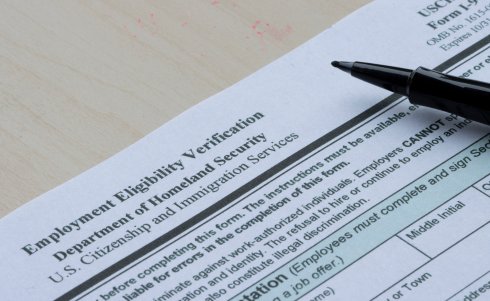
For more than three decades, Form I‑9 has been a cornerstone of U.S. employment eligibility verification. Every employer—regardless of size, industry, or location—is required to complete and retain a Form I‑9 for each employee hired after November 6, 1986. While the form itself has evolved over the years, the underlying obligation has remained constant: employers must verify identity and work authorization, maintain accurate records, and be prepared for inspection by U.S. Immigration and Customs Enforcement (ICE).

But in 2026, ICE issued updated inspection guidance that significantly changes how the agency evaluates Form I‑9 errors. These updates don’t alter the form or the law, but they do reshape the compliance landscape. Many mistakes that were once considered minor or “technical” are now treated as substantive violations, meaning they can trigger immediate fines with no opportunity for correction during an audit.

For HR leaders, compliance teams, and hiring managers, understanding these changes, and adjusting internal processes accordingly, is essential.

How ICE I‑9 Inspections Work

ICE conducts thousands of Form I‑9 inspections each year. When an employer receives a Notice of Inspection (NOI), they typically have three business days to produce their I‑9s and supporting documentation. ICE then reviews the forms for accuracy, completeness, and compliance with federal regulations.

Historically, ICE distinguished between technical or procedural violations, which employers could correct within 10 business days, or substantive violations, which were immediately subject to penalties. This distinction mattered. A missing date, an incomplete field, or a minor oversight could often be corrected during the audit window, reducing or eliminating fines.

The new guidance changes that calculus.

What’s New in ICE’s Updated Fact Sheet

ICE’s updated fact sheet expands the list of substantive violations, errors that cannot be corrected once an audit begins. These include many issues that employers previously treated as minor administrative mistakes.

Examples of errors now considered substantive:

  • Missing employee date of birth in Section 1
  • Missing or incomplete employer attestation information in Section 2
  • Missing date of hire
  • Missing document title, issuing authority, or expiration date—even if a copy of the document is on file
  • Missing rehire date in Supplement B
  • Improper use of the Spanish‑language Form I‑9 outside Puerto Rico
  • Deficiencies in electronic I‑9 systems, such as incomplete audit trails or signature issues

These are critical as they cover all parts of the form including areas completed by the employer and employee. ICE also clarified that employers cannot rely on document copies to cure missing information. If the form itself is incomplete, the violation stands.

Why This Matters: Increased Penalties and Higher Risk

The consequences of these changes are significant. Substantive violations can result in fines ranging from hundreds to thousands of dollars per error. For employers with large workforces or high turnover, cumulative penalties can escalate quickly. Accordingly, industries at heightened risk include: the hospitality business, retail stores, construction companies, various forms of manufacturing businesses, certain healthcare providers, staffing and recruiting agencies, and federal contractors.

These sectors often rely on decentralized hiring, multiple onboarding locations, or large volumes of I‑9s, conditions that increase the likelihood of errors.

ICE’s updated guidance signals a stricter enforcement posture and a reduced tolerance for administrative mistakes. Employers can no longer assume that routine errors will be fixable during an audit.

What Employers Should Do Now

Conduct a proactive internal I‑9 audit.
Review all existing I‑9s — especially older forms completed under prior guidance — to identify and correct errors before ICE ever requests them. All covered I-9s that could be audited include terminated employees for the last three years, which underscores how critical record keeping is for I-9 compliance. Employers should work with immigration compliance counsel to ensure corrections are made properly.

Strengthen onboarding and I‑9 completion procedures.
Ensure HR staff and authorized representatives understand the new classifications and the importance of complete, accurate entries in all sections of the form. Real-time review of the completion of form I-9 is recommended as substantive violations are incorporated into sections completed by the employee as well as the employer.

Review your electronic I‑9 system.
Confirm that your system meets DHS requirements for:

  • Audit trails
  • Electronic signatures
  • Data integrity
  • Proper indexing and retrieval

Auto‑population features should be reviewed to ensure they do not create incomplete or inaccurate fields.

Retrain all I‑9 preparers.
Training should cover:

  • Proper document review
  • Accurate recording of hire dates and document details
  • Correct use of the preparer/translator section
  • Proper reverification procedures

Ensure proper use of alternative verification procedures.
If your organization uses DHS‑authorized remote verification, confirm that all eligibility requirements, such as E‑Verify participation, are consistently met.

The Bottom Line

ICE’s updated Form I‑9 inspection guidance represents a meaningful shift in enforcement. Employers now face higher stakes and less flexibility when errors occur. The organizations that invest in strong I‑9 practices today through audits, training, and system improvements will be far better positioned to withstand increased scrutiny.

In the current environment, proactive compliance is not optional. It’s essential risk management.

For more information visit: Form I-9 Inspection Under Immigration and Nationality Act § 274A | ICE


Related People

  • Biography
  • Publications & News
  • Blog Posts
  • Featured Works

Firm Highlights

  • Events
    MACFO's Inside Successful CEO & CFO Partnerships
    Please join us on September 18 for an event that’s sure to be a home run! ***We will lead off by interviewing our Spotlight Speaker Series guest, Baltimore Orioles CFO, Darline Llamas Llopis.*** After, we will ask ourselves, what separates great companies from good ones? We believe that more often than not, it is the strength of the partnership between the CEO and CFO that matters, so we are bringing you three CEO/CFO leadership teams to learn from. The Associated: Jewish Federation of Baltimore – Andrew Cushnir and Sam Klein Canusa Paper & Packaging – Mike Walter and Vince Salamone Secom, LLC – Toni Toomey and Mourad Awad Join us for an exclusive executive briefing – three tandem presentations followed by a panel discussion - featuring CEOs and CFOs from different but leading organizations as they share candid insights into building trust, navigating difficult decisions, driving strategic growth, and leading through today's business challenges. You'll hear firsthand how these executive teams navigate conflict, align on priorities, and build high-performing organizations. Whether you're a CFO, controller, finance executive, or an aspiring business leader, you'll leave with practical ideas and fresh perspectives you can apply immediately. Meet Our Speakers: Darline Llamas Llopis • Orioles  Chief Financial Officer Darline Llamas Llopis is in her second season with the Orioles as Chief Financial Officer (CFO). Prior to joining the Orioles, Llamas Llopis spent four seasons with the Miami Dolphins, Hard Rock Stadium, and the F1 Miami Grand Prix as Vice President of Finance and Retail. In this capacity, she managed the finance, accounting, payroll, account payables, procurement and merchandise operations for the team and race. She also previously served for four years as the Director of Finance and Controller at the Los Angeles Rams. Llamas Llopis started her career in public accounting with Ernst & Young and PricewaterhouseCoopers as a member of the Commercial Real Estate practice.  Llamas Llopis completed her MBA at UCLA Anderson School of Management and received her Master of Accountancy from the University of Southern California (USC) where she also graduated cum laude with an undergraduate degree in business. She is a member of the American Institute of Certified Public Accountants (CPA) and is an active CPA. She resides in Baltimore with her husband, Devin, and their son, Santiago. Andrew Cushnir • The Associated: Jewish Federation of Baltimore   President & Chief Executive Officer Andrew Cushnir is the President and Chief Executive Officer of The Associated, having started in the role in May 2024. He is the eighth person to serve in this role since The Associated’s founding over 100 years ago. Andrew brings a wealth of experience and a profound dedication to strengthening and enriching the Jewish community. His journey within the Jewish Federation system began as a passionate lay leader and volunteer before he transitioned into serving as a professional. He worked for the Jewish Federation of Los Angeles for twenty years, including in the roles of Chief Planning and Program Officer and Chief Development Officer. During this time, Andrew played a crucial role in reshaping the allocation process and fostering a culture of collaboration and partnership and he also led all annual, project, and emergency fundraising, as well as planned giving efforts. As a member of the Federation’s executive team, he also addressed complex community and organizational issues. Andrew and his wife Sharon Spira-Cushnir, a seasoned nonprofit human services executive, are the proud parents of two children in their early 20s. Sam Klein • The Associated: Jewish Federation of Baltimore  Chief Financial Officer Sam Klein is a seasoned nonprofit finance executive with nearly two decades of experience leading financial strategy, operations, budgeting, and organizational transformation for mission-driven institutions. As Chief Financial Officer of The Associated: Jewish Federation of Baltimore, he oversees the organization's financial operations, investment stewardship, budgeting processes, risk management, and long-term financial planning, helping advance the Federation's mission of strengthening and supporting Jewish life in Baltimore, Israel, and around the world. Throughout his career, Sam has been recognized for his ability to align financial stewardship with organizational mission, drive process improvements, implement technology solutions, and build high-performing teams. His expertise includes nonprofit finance, strategic planning, budgeting and forecasting, investment oversight, financial reporting, compliance, operational excellence, and organizational growth. Sam earned a Master of Business Administration in Finance from the Johns Hopkins Carey Business School and a Bachelor of Science in Finance and Marketing from Syracuse University. Mike Walter • Canusa's Paper & Packaging Chief Executive Officer As Chief Executive Officer of Canusa Paper & Packaging (CPP), Mike Walter leads one of the world's leading independent international brokerages of containerboard and packaging papers. Mike recently celebrated his 20th anniversary with Canusa and has overseen a doubling of the business in the past five years. Mike’s first role at Canusa was an intern before moving into a risk management role. Progressive promotions over the years led Mike to serve as Canusa's Chief Operating Officer and General Counsel, as well as General Counsel for its affiliate, Canusa Hershman before becoming the CPP CEO on January 1st, 2025. Mike graduated with a B.S. in Commerce & Engineering from Drexel University before earning his J.D. at the University of Baltimore’s School of Law. Vince Salamone • Canusa's Paper & Packaging Chief Financial Officer Vince Salamone serves as Chief Financial Officer of Canusa Paper & Packaging, overseeing the company's global financial strategy and overall operations, risk management, and other shared services. Since joining Canusa in 2018, Vince has advanced from Corporate Controller to CFO. Prior to Canusa, Vince held senior accounting and financial reporting roles at modular space leader Algeco Scotsman and supply chain real estate operator Realterm, bringing extensive expertise in finance and corporate accounting. He began his career with Deloitte, providing assurance services to clients in aerospace and defense, software, and manufacturing throughout the Mid-Atlantic. Vince attended the University of Maryland and Towson University, earning his B.S. in Accounting in 2012 and his CPA license in 2014. Toni Toomey • Secom, LLC Chief Executive Officer As Chief Executive Officer of Secom, LLC, Toni Toomey leads the company's external vision, culture, and strategic growth. A Howard County native, Toni brings an entrepreneurial spirit and a people-first philosophy to one of Maryland's leading commercial security firms — championing internal promotion and a culture of integrity. Toni serves on the Board of Directors for Maryland Tech Council, the Howard County Chamber, as well as the Steering Committee for the Maryland Rural Tech Network. Mourad Awad • Secom, LLC Chief Financial Officer As Chief Financial Officer of Secom, LLC, Mourad Awad architects the company’s financial strategy, performance, and value creation. A leader, by example, Mourad believes in empowering people and fostering communication. With 20+ years of leadership across private equity, federal contracting, construction, and infrastructure services, Mourad brings a strategic approach to partnering with Toni – CEO to turn vision into precision execution, delivering exceptional value to Secom customers and sustainable growth for SECOM.  Thank You to Our Sponsors