Labor and Employment

Power, Proof, and Perception in the Blake Lively–Justin Baldoni Litigation

January 16, 2026

By Sarah Goodman
Power, Proof, and Perception in the Blake Lively–Justin Baldoni Litigation

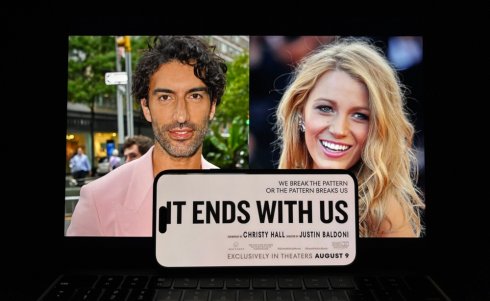
This blog provides an update on the ongoing litigation involving Blake Lively and Justin Baldoni. If the original blog explored how this case began, this chapter is about what it has become.

Some lawsuits resolve disputes, and there are lawsuits that reveal systems. The litigation between Blake Lively and Justin Baldoni belongs squarely in the latter category. What began as a conflict arising out of the production of It Ends With Us has become a slow-moving but oddly illuminating seminar on how modern employment law operates when the workplace is glamorous, the parties are famous, and the stakes extend well beyond liability.

At a distance, this case is often flattened into a familiar cultural shorthand. Two celebrities. Competing narratives. A public eager to assign heroes and villains before the pleadings have even settled. Up close, however, the litigation is far more interesting and far less cinematic. It is not about grand gestures or dramatic revelations. It is about burden shifting, evidentiary texture, and the unromantic mechanics of proving what the law actually requires rather than what public opinion might prefer.

Lively’s claims are rooted in doctrinally orthodox territory. Hostile work environment and retaliation are not exotic causes of action, even in Hollywood. What complicates matters is not the legal framework but the context in which it must be applied. Film sets are workplaces that market intimacy, emotional exposure, and creative vulnerability as professional virtues. That does not exempt them from employment law, but it does make line-drawing more delicate. Conduct that might be clearly inappropriate in a corporate office can appear, at least superficially, normalized when wrapped in the language of art and collaboration. Juries are asked to navigate that ambiguity without losing sight of the legal question, which is not whether the environment was intense or uncomfortable, but whether it crossed a legally cognizable threshold.

This is where the case becomes less about personalities and more about proof. Severity and pervasiveness are not abstract concepts. They are constructed through accumulation. Frequency. Context. Reaction. Silence or objection. Response or indifference. The text messages and communications that have emerged through discovery are legally interesting not because they are personal, but because they are contemporaneous. They are the breadcrumbs juries are trained to follow when reconstructing intent and impact long after the moment has passed.

Baldoni’s defense strategy reflects a sophisticated understanding of those dynamics. His posture has not been limited to denial. Instead, it has focused on reframing. Recharacterizing interactions as misread. Suggesting that objections were unclear or retrospective. Implicitly arguing that what the plaintiff experienced as coercive or hostile was, in fact, part of a fraught but mutual creative process. This is not an argument that misconduct never occurs. It is an argument that ambiguity exists, and in civil litigation, ambiguity can be a powerful ally.

The brief countersuit, though procedurally unsuccessful, fits neatly within that strategy. Its real value was never doctrinal. It was narrative. It signaled resistance rather than retreat and attempted to reposition reputational harm as a two-way street. Courts can dispatch weak claims with relative ease. Jurors, however, carry impressions with them long after motions are denied. Litigation is as much about what lingers as what survives.

The retaliation component of the case may ultimately prove more consequential than the underlying harassment claims. Retaliation law is less concerned with tone and more with timing. It asks whether adverse consequences followed protected activity and whether those consequences can be explained without resort to post hoc rationalization. In industries where decisions are informal and documentation is sparse, that inquiry can quickly become uncomfortable. Silence, in these cases, is rarely neutral.

Hovering over all of this is the court’s increasingly difficult task of managing relevance in an era of celebrity saturation. Discovery disputes over third-party anonymity and sealing are not merely procedural housekeeping. They reflect a more profound anxiety about what happens when litigation escapes the courtroom and becomes cultural content. The law presumes openness for good reason, but it was not designed for cases where relevance is routinely conflated with notoriety. Judges are left to perform a delicate balancing act while everyone else watches for entertainment.

What makes this case compelling is not the promise of a dramatic verdict, but the way it exposes the friction between legal standards and human storytelling. Employment law is intentionally unsentimental. It reduces experience to elements and burdens and asks factfinders to be disciplined in their empathy. Celebrity culture, by contrast, thrives on immediacy, identification, and moral clarity. When the two collide, neither emerges entirely intact.

By the time this case reaches a jury, if it does, much will already have been decided in quieter ways. In discovery conferences. In evidentiary rulings. In how jurors are primed to interpret ambiguity. And perhaps in how the industry itself recalibrates its tolerance for informality masquerading as creativity.

This lawsuit will not end Hollywood’s reckoning with power or fix the uneasy relationship between art and accountability. The law is not built for that kind of closure. What it can do, and what this case is already doing, is force a conversation about what workplaces owe their employees, even when the workplace happens to come with a red carpet.

What is perhaps most striking about this litigation is how little of it turns on dramatic moments and how much of it turns on endurance. Employment cases of this kind rarely win with a single revelation. They win through accumulation. Through patience. Through the unglamorous discipline of discovery, motion practice, and evidentiary framing. In that sense, the Blake Lively and Justin Baldoni case is an unusually pure illustration of how civil law actually functions when stripped of narrative shortcuts.

The public tends to assume that credibility is something a party either has or lacks. Courts know better. Credibility is constructed incrementally through consistency, corroboration, and the absence of convenient revision. It is shaped as much by what parties do when no one is watching as by what they say once litigation begins. That is why contemporaneous documentation looms so large here, and why informal industries often find themselves at a disadvantage once formality is imposed retroactively by a lawsuit.

Film production culture has long relied on trust, improvisation, and professional intimacy as operating norms. Those norms are not inherently unlawful, but they are legally fragile. They assume good faith, mutual understanding, and aligned incentives. Litigation, by contrast, assumes none of those things. It assumes conflict, misinterpretation, and self-interest. When a dispute moves from the set to the courtroom, the cultural currency of collaboration is abruptly converted into the legal currency of proof. Not all industries make that exchange gracefully.

This case also illustrates the quiet but significant role of institutions that never appear in the caption. Insurers, production companies, distributors, and financiers are watching closely, not for moral lessons but for risk signals. They are asking whether existing safeguards are sufficient, whether reporting mechanisms function in practice, and whether informal authority structures create exposure that contracts alone cannot neutralize. These are not abstract questions. They affect underwriting decisions, contractual provisions, and the degree of oversight studios are willing to impose on creative leads who have historically operated with broad discretion.

There is, too, a cautionary tale here about the limits of reputational self-help through litigation. Aggressive narrative counteroffensives may satisfy an immediate impulse to respond, but they also lengthen disputes and deepen entanglement. The longer litigation persists, the less control any party has over how they are perceived. The law does not reward eloquence. It rewards coherence. And it is remarkably indifferent to whether a party feels misunderstood.

For lawyers, this case is a reminder that celebrity does not simplify litigation. It complicates it. Famous clients are scrutinized differently by jurors, judges, and adversaries alike. Their communications are read with suspicion. Their motives are interrogated. Their silence is rarely interpreted as restraint. Representing them requires not just technical competence but also strategic restraint and a tolerance for ambiguity, which can be difficult to maintain under public pressure.

For workplaces, particularly creative ones, the lesson is not that informality must disappear, but that it must be bounded. Clarity, documentation, and meaningful response mechanisms are not bureaucratic intrusions. They are legal insulation. They protect not only employees but also leadership by ensuring that disputes are addressed early, internally, and with a record that reflects intent rather than reconstruction.

And for observers tempted to treat this case as entertainment, it offers a quieter but more durable insight. The law is not a referendum on character. It is a method for resolving disputes under conditions of uncertainty. It does not promise catharsis. It promises a process. When we mistake one for the other, we misunderstand both.

As this case continues its methodical progress toward trial, it will likely generate more headlines, more commentary, and more attempts to distill it into a morality play. That impulse is understandable. It is also misleading. The real work of this litigation is happening in places that do not trend. In conference rooms. In discovery disputes. In evidentiary rulings that shape what a jury will ultimately be allowed to hear.

That is where outcomes are decided. Quietly. Incrementally. Without a soundtrack.

Again, while the original blog examined the origins of this case, this chapter focuses on how the matter has evolved and what it has now become. Not a scandal, but a study. Not a spectacle, but a process. And for anyone interested in how the law actually mediates power, creativity, and accountability, it is a study worth paying attention to.


Resources

Related People

Related Services

  • Overview
  • People
  • Labor and Employment Law Blog
  • Publications & News
  • Events

Firm Highlights

  • Podcasts
    The College Prep Most Parents Skip with Candace Dellacona and Kimberly Lau
    When the "Cornell 7" case made national headlines this fall, many parents found themselves asking a question they never expected to face: what actually happens when something goes wrong on campus? We spend so much time preparing our kids to get into college and succeed once they get there, but how often do we prepare them for what happens next if a report is made, by them or about them? In this episode of The Sandwich Generation Survival Guide, host Candace Dellacona is joined by her colleague Kimberly Lau, who represents both complainants and respondents in Title IX matters such as the case capturing the latest headlines. Together, they break down what Title IX is, who it protects, what happens when a college receives a report, and what students and parents should know before their child ever needs it. Kimberly explains why Title IX reaches far beyond athletics, what it generally means when a student is contacted by the campus Title IX office, and what a family should do first, whether their child is reporting something that happened to them, is the subject of a complaint, or simply got caught up in a situation they never expected. She also walks through how privacy rules affect what a school can share with parents, who can sit in on meetings, how investigations, hearings, and decisions typically unfold, and why preserving evidence and knowing your school's policies early can make all the difference. Whatever the outcome of the case making headlines, it has put a spotlight on how campus processes work, and on how much families often don't know until they're in the middle of one. If you are sending a freshman off to campus, welcoming a student home for the holidays, or simply want to be the kind of parent your child feels safe calling when things go wrong, this conversation offers clear, practical guidance you can use now. As Candace puts it, calling home right away is not a sign that your child has failed at being an adult. It is knowing where to turn. This episode is for general informational purposes only and is not legal advice. Every situation is different, so please consult an attorney about your specific circumstances. Learn more about Kimberly Lau and her practice at Offit Kurman: https://www.offitkurman.com/kimberly-lau Connect with Kimberly on LinkedIn: https://www.linkedin.com/in/kimberlylauesq/ Follow and subscribe to The Sandwich Generation Survival Guide wherever you listen to podcasts. New conversations are released on the first and third Tuesdays of every month. If this episode resonates with you, leave a five-star rating or review and share it with another sandwich generation caregiver!
  • Events
    The 2026 Economic, Tax, and Accounting Updates
    We are looking forward to the Mid-Atlantic CFO Roundtable's next event on November 13, 2026. This is a program with topics built for Finance Executives. We are extremely fortunate to have three excellent speakers: Dr. Daraius Irani, Vice President of Business and Public Engagement at Towson University; Mike Stankus, Tax Office Managing Principal at BDO; and Daniel Wahlberg, Managing Partner of Acclare Solutions. The economy is rapidly changing with various factors driving it. The November 3rd midterm elections may also have an impact. Our three expert presenters will discuss the ramifications of the election, and the current year updates to GAAP financial reporting and Federal and State income taxes. Please join us for what will surely be an informative and timely discussion. Meet Our Speakers: Daraius Irani, Ph.D. • Towson University Vice President, Business & Public Engagement Dr. Daraius Irani serves as Vice President of Business and Public Engagement at Towson University as well as the chief economist for the Regional Economic Studies Institute (RESI) at Towson University, a policy group providing economic, fiscal impact, and policy analysis to public and private entities.  Dr. Irani is often called upon to provide economic presentations to organizations across Maryland. He has appeared on numerous television programs and in local and regional print media. Dr. Irani holds a Ph.D. in economics from University of California, Santa Barbara. Dan Wahlberg • Acclare Solutions Managing Partner With over 28 years of experience, Dan Wahlberg is a recognized leader in audit and assurance for the Mid-Atlantic’s middle market business community. As a licensed CPA in Maryland and Virginia, Dan has led assurance practices at top regional firms, including serving as Baltimore Audit Managing Partner and Assurance Practice Leader at BDO USA in Baltimore and as Partner and member of the Management Committee at Hertzbach & Company P.A which merged into BDO in 2020. His expertise centers on delivering clarity, strategic guidance, and proactive solutions to middle-market businesses across Baltimore and beyond. His entrepreneurial spirit has led him to begin a new CPA firm this year with four other CPAs serving the business community. Dan holds a Bachelor of Science in Accounting from Rutgers University and began his career at PWC in New York. He is also deeply engaged in the community, previously serving as President of ACG Maryland and current Board member and as Audit Committee Member for The Associated: Jewish Federation of Baltimore.  Mike Stankus • BDO USA LLP Tax Office Managing Principal Mike Stankus is the Tax Office Managing Principal for the firm’s Baltimore office. He has more than 16 years of experience providing tax planning and preparation and management advisory services for his clients. Mike focuses on advising privately held businesses and their owners on effective growth and tax strategies. He also performs various engagements for mergers and acquisitions and complex cost accounting projects and projections. In addition, he represents various government contracting clients before the DCAA and assists with FAR compliance. Mike’s areas of concentration include working with government contractors, professional service firms, construction companies, and homebuilders.
  • Blog Posts
    Powering the Future Maximizing Energy Storage Value with David Braun
    In this episode of the MSSIA Insight Podcast, host Matthew Karmel, Chair of Offit Kurman’s Environmental & Sustainability Practice, sits down with David Braun, Chief Commercial Officer at Intelligent Generation, to explore how distributed energy storage is creating new opportunities for businesses, developers, and the broader energy grid.With more than 35 years of experience in the energy and utility sector, David shares how battery storage can help commercial and industrial customers earn revenue, reduce energy costs, and improve power reliability. The conversation explores revenue stacking, including how batteries can generate value through wholesale energy markets, reduce capacity and transmission charges, store excess solar energy, and provide backup power during outages or disruptions.Matthew and David also discuss the evolving energy storage landscape across New Jersey, Pennsylvania, and Delaware, highlighting differences in state policies, utility programs, and opportunities for virtual power plants. David explains how industry collaboration through MSSIA can help advance effective energy policies and accelerate project development.Looking ahead, David shares his perspective on the future of distributed energy storage, the transition toward a more interconnected and resilient grid, and the importance of accurately modeling battery economics to demonstrate project value and support investment decisions. In this episode, you’ll learn about: How battery storage can help businesses earn revenue, save money, and protect operations. What revenue stacking means and how multiple battery applications create economic value. How rising capacity and transmission charges are influencing energy storage opportunities in PJM. The differences in energy storage policies and incentives across New Jersey, Pennsylvania, and Delaware. The role of virtual power plants in supporting grid reliability and managing energy demand. Why accurate financial modeling, customer load profiles, and utility rate structures are critical to evaluating battery projects. How MSSIA supports industry collaboration and policy advocacy across the Mid-Atlantic. Whether you're a solar or storage developer, investor, contractor, attorney, or clean energy professional, this episode offers practical insights into the economics, policy considerations, and emerging opportunities shaping the distributed energy storage market. About the MSSIA Insight Podcast Powered by Offit Kurman and presented in partnership with the Mid-Atlantic Solar & Storage Industries Association (MSSIA), the MSSIA Insight Podcast explores the legal, regulatory, and business developments shaping the solar and energy storage industries across New Jersey, Pennsylvania, and Delaware. Hosted by Matthew Karmel, the podcast features conversations with industry leaders and subject matter experts, delivering actionable insights to help clean energy professionals navigate an evolving industry. New episodes are released every other month.   Join our next policy committee call as a guest to see firsthand the impact we're driving: https://forms.gle/8WqmDvdJUKBh35Qw7
  • Events
    AIA Tri-State Conference
    Princeton will serve as the backdrop for three days of connection, learning, and design leadership. From keynotes to tours to the Tri-State Design Awards, this year’s conference is designed to go far beyond education sessions. Kick off the week with pre-conference intensives and individual state component Design Award celebrations, followed by three days of education, inspiration, networking, and design excellence at the 2026 AIA Tri-State Conference—featuring pre-conference intensives, three keynote speakers, 25 education sessions, curated tours, an expo, spec academies, and the AIA Tri-State Design Awards—bringing together architects and design professionals from New Jersey, New York, and Pennsylvania to connect, learn, and celebrate the best of the profession. G2. Designing Secure Practices: Cybersecurity, Data Privacy, Contractual Provisions, and Insurance Risks for Architects (4:00 PM - 5:30 PM) Architects and design professionals increasingly rely on cloud platforms, BIM software, and digital tools to manage sensitive data, creating cybersecurity and privacy risks. A single incident can trigger liability claims, regulatory obligations, reputational harm, and insurance challenges. Yet many firms underestimate how contracts, insurance, and internal practices intersect during a breach. This program offers legal and insurance perspectives on cyber risk in architecture, examining liability exposure, risky contract provisions, and mitigation strategies. A cyber insurance expert will explain policy responses, coverage gaps, coordination with professional liability, and best practices for aligning insurance with contractual risk and protecting firms from evolving cyber threats. Learning Objectives: Identify key cybersecurity and data privacy risks faced by architecture firms and explain how these risks can impact professional liability and project outcomes. Analyze common contractual provisions to determine which clauses may increase exposure to cyber incidents and propose strategies to mitigate these risks. Evaluate the scope and limitations of cyber insurance policies, including coordination with professional liability coverage, to determine how a policy would respond in a breach scenario. Develop actionable risk management strategies by integrating legal, contractual, and insurance considerations to protect sensitive client and project data.