Offit Kurman Blogs
Landlord Representation
HUD’s Assistance Animal Reset: Where is Federal Enforcement Heading?
If there is one fair housing topic that has generated a disproportionate amount of litigation, complaints, training questions, and frustration over the past decade, it is assistance animals. For years, housing providers operated under HUD guidance that recognized both trained service animals and untrained emotional support animals (ESAs) as qualifying for reasonable accommodation under the Fair Housing Act (FHA). However, that framework has now been disrupted. HUD's May 22, 2026, enforcement memorandum represents the most significant federal policy shift on assistance animals in a decade. But perhaps even more importantly, it signals where HUD appears to be headed next. Looking Back: HUD’s Trajectory Before May 2026 To understand the significance of HUD's recent actions, it is helpful to review the prior trajectory. In 2013, HUD issued guidance clarifying that untrained assistance animals (specifically, ESAs) should be treated as reasonable accommodations under the Fair Housing Act, even though ESAs were not recognized under the Americans with Disabilities Act (ADA). In 2020, HUD issued detailed guidance on how to evaluate assistance animal requests. This guidance became the primary resource used by housing providers, disability advocates, attorneys, and fair housing investigators. That guidance expressly recognized that assistance animals were not limited to trained service animals and could include emotional support animals that provided therapeutic benefit to a person with a disability. In direct response to HUD’s guidance, housing providers revised policies, created accommodation procedures, waived animal fees, and trained staff based on HUD’s framework. By 2024, the prevalence of quick and cheap online certifications for animals to be considered ESAs exploded. Fraud and misuse escalated, and it became increasingly difficult to verify the authenticity of a resident’s request for a reasonable accommodation to allow an ESA, which created ambiguity for both landlords and tenants. Then, in September 2025, HUD abruptly rescinded its prior 2013 and 2020 guidance documents. While the agency did not replace those materials with a new substantive framework, the rescission served as an early indicator that HUD was reconsidering its position on assistance animals and the applicability of ESA-related accommodations. HUD’s New 2026 Enforcement Standard In May 2026, HUD's Office of Fair Housing and Equal Opportunity (FHEO) announced that it would immediately change how it investigates and prosecutes animal-related accommodation complaints. According to the new memorandum, HUD will pursue FHA enforcement actions only when the animal has been “individually trained to perform work or perform tasks directly related to the complainant’s disability.” HUD explicitly adopted the ADA analysis that the assistance animal must be a trained service animal; however, HUD clarified that, unlike the ADA, the animal need not necessarily be a dog. In a shocking overhaul of prior guidance, HUD indicated that it is unreasonable to require a housing provider to waive pet policies for an untrained ESA. Source: AS-Trainor-Enforcement-Guidance-Assessing-Requests-for-the-use-of-an-animal-as-a-reasonable-accommodation-under-the-fair-housing-act.pdf This is not a reinterpretation of past guidance. It is a substantial policy shift that narrows the scope of consideration when an animal-related reasonable accommodation request is received. Indeed, the agency expressly stated that comfort, companionship, emotional support, and similar therapeutic benefits do not constitute disability-related work or tasks. This shift means that untrained emotional support animals no longer fall within HUD’s enforcement priorities. Source: AS-Trainor-Enforcement-Guidance-Assessing-Requests-for-the-use-of-an-animal-as-a-reasonable-accommodation-under-the-fair-housing-act.pdf Looking Ahead: What HUD Appears Likely to Do Next The May 2026 memorandum may ultimately be remembered not for what it did immediately, but for what it foreshadowed. HUD has publicly announced its intention to engage in formal notice-and-comment rulemaking regarding assistance animals under the Fair Housing Act. The agency specifically indicated that it is considering regulatory changes that would align the FHA assistance-animal framework with the ADA’s service-animal model. If HUD follows through, the rulemaking process would represent the first significant regulatory overhaul of these standards in decades. While predicting agency action is always risky, HUD’s direction appears clear. This administration has repeatedly emphasized concerns regarding fraudulent ESA documentation, inconsistent standards, and the growing number of fair housing complaints involving emotional support animals. FHEO made a point of appending to its memo two examples of no reasonable cause determinations issued in April 2026 for complaints involving untrained ESAs. Whether the proposed regulation survives public comment, litigation challenges, and eventual judicial review remains to be seen. What About DOJ? Housing providers should be cautious about assuming that the Department of Justice (DOJ) will immediately mirror HUD's new position. Historically, DOJ has continued pursuing FHA disability-discrimination cases involving assistance animals and accommodation requests. In August 2024, DOJ entered a significant settlement involving allegations that a cooperative housing provider refused to accommodate a resident's emotional support animals and retaliated after she sought assistance. The resulting consent decree included substantial monetary relief and ongoing compliance obligations. Source: Southern District of New York | U.S. Attorney’s Office Obtains Settlement Of Fair Housing Act Case Compensating Discrimination Victim Threatened With Eviction For Maintaining Support Animals | United States Department of Justice More broadly, DOJ continues to emphasize accommodations for ESAs in housing and pursue disability-discrimination enforcement cases (including those involving ESAs). Although DOJ may eventually align more closely with HUD's regulatory direction, we have not yet seen any comprehensive DOJ announcement signaling a wholesale abandonment of ESA-related FHA enforcement. A Local and Regional Focus Matters More Than Ever HUD's enforcement priorities, guidance, and interpretation of the regulation have changed. However, the Fair Housing Act itself has not changed. Congress has not amended the statute, and HUD has not yet completed the formal rulemaking process required to create binding regulations. Complainants remain able to bring private lawsuits, and courts across the country remain free to interpret the FHA differently. In other words, reduced HUD enforcement risk does not necessarily mean reduced litigation risk. The greatest mistake a housing provider can make right now is adopting a nationwide policy based solely on HUD's memorandum. Many state and local fair housing laws contain stricter disability protections than federal law. State agencies, local human rights commissions, and fair housing organizations are not bound by HUD's internal memorandum and may continue pursuing ESA-related claims. This means a policy that presents relatively little risk in one jurisdiction could create substantial exposure in another. For multifamily operators, developers, and housing providers, the best approach is to analyze assistance-animal requests through both a federal and local-law lens and on a case-by-case basis. HUD has made its position increasingly clear. The agency appears committed to aligning FHA assistance-animal standards with the ADA's trained-service-animal model. But until rulemaking is complete and courts weigh in, housing providers should focus less on what HUD hopes the law will become and more on what the law requires today in the jurisdictions where they operate.
July 7, 2026
Property Management Playbook
Offit Kurman's Landlord Representation group is launching a new video series: the Property Management Playbook. Hosted by Billy Cannon alongside colleagues Brian Dorwin, Jennifer Jean-Gilles, and Gwen Roye-Harrison, this series digs into the real-world scenarios property management clients face every day. Topics include handling argumentative tenants, maintenance best practices, and fair housing dos and don'ts. Watch the full series to get practical guidance straight from Offit Kurman's landlord representation attorneys.
July 1, 2026
Landlord Representation
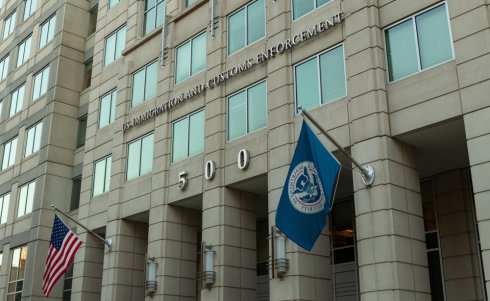
Navigating ICE and Law Enforcement: A Guide for Landlords and Property Managers
As immigration enforcement efforts evolve, landlords and property managers must prepare to respond appropriately when interacting with Immigration and Customs Enforcement (ICE) or other law enforcement agencies. Understanding legal obligations, protecting tenant privacy, and establishing clear policies are important to ensuring compliance while minimizing legal and operational risks. Establishing Policies and Procedures One of the most important steps property managers can take is to develop a written policy outlining how to respond to law enforcement during interactions. Having a clear plan in place ensures that all staff members—whether property managers, leasing professionals, or maintenance teams—understand their role in these situations. A well-documented policy helps: Protect tenant privacy and confidentiality. Ensure legal compliance with federal, state and local laws. Maintain consistency in responses to law enforcement inquiries. Because property management staff frequently changes, a written policy ensures continuity in handling these situations, reducing the likelihood of errors or inconsistencies. Understanding Law Enforcement Agencies and Documentation When law enforcement officers arrive at a property, they may be from different agencies, including ICE, the Department of Homeland Security (DHS) or the Department of Justice (DOJ). Each agency may present different types of legal documents, and it is critical to understand the distinctions: Criminal Warrants – Issued by a judge, these warrants may grant law enforcement the right to access a property or obtain specific information. Civil (Administrative) Warrants – Issued by immigration officers rather than a judge, these do not automatically grant access to private property. I-9 Audits – Requests for employment eligibility documentation; typically, businesses have three days to respond. It is essential not to assume that any document presented requires immediate action. Instead, property managers should take the time to review the warrant, confirm its validity and consult legal counsel as needed. Protecting Tenant Confidentiality and Managing Risk Tenant privacy must be safeguarded during interactions with law enforcement. Property managers should follow these steps when responding to a request for information or access: Request a Copy of the Warrant – Always obtain a physical or digital copy before taking any action. Verify the Warrant’s Scope – Determine whether it is a criminal or administrative warrant and whether it grants law enforcement the right to enter the property. Follow Internal Protocols – Staff should notify the designated corporate or legal contact before responding to the request. Minimize the Disclosure of Information – Only provide what is legally required. Avoid Immediate Compliance – Taking a moment to review the request and consult legal counsel can prevent unnecessary disclosures. Centralizing Decision-Making A key part of risk management is ensuring that decisions regarding law enforcement interactions are made at a corporate or senior management level rather than on-site. Best practices include: Designating a specific contact within corporate or ownership to handle law enforcement inquiries. Training staff to refer all law enforcement requests to the designated corporate/legal contact. Establishing a clear chain of command so that no one makes a rushed or uninformed decision under pressure. Fair Housing Considerations In some jurisdictions, immigration or citizenship status is a protected class under fair housing laws. Locations such as Washington, D.C., Montgomery County, MD, and Prince George’s County, MD, have legal protections prohibiting landlords from inquiring about a tenant’s immigration status during the leasing process. Property managers should be mindful of these laws when handling law enforcement requests related to immigration enforcement. What to Tell Tenants Property managers should be cautious about providing legal advice to tenants. If tenants ask what to do in the event of an ICE visit, the best response is to direct them to legal aid organizations or immigration attorneys. Providing legal guidance could lead to liability if tenants misinterpret the information. Key Takeaways A clear, written policy helps your team respond consistently and appropriately when law enforcement arrives. Centralizing decision-making ensures that requests are escalated to the correct legal or corporate representative, reducing the risk of rushed or uninformed decisions. It’s also important to distinguish between different types of warrants—criminal warrants typically require immediate action, while administrative ones do not. Taking time to verify documents can help prevent legal missteps. Property managers should also be mindful of fair housing laws, which may prohibit asking tenants about their immigration status. And instead of offering legal advice, direct tenants to reputable legal resources. With immigration enforcement policies constantly evolving, staying proactive is key. Property managers can comply with the law by setting clear guidelines, training staff, and consulting legal counsel when necessary while protecting their businesses and tenants.
March 27, 2025