Offit Kurman Blogs
Labor and Employment
AI in Predictive Analytics for Employee Performance: Risk vs. Reward
Employers are increasingly deploying artificial intelligence (AI) and data-driven tools in performance management in an effort to promote consistency and reduce human bias. Yet these systems inherit the limitations of the data that fuels them, and workplace performance data is rarely neutral. Importantly, AI models are only as reliable as the information on which they are trained, and when that information reflects historical inequities or includes data correlated with protected characteristics, AI-driven performance metrics may perpetuate patterns that have long disadvantaged certain groups of employees. Performance data also frequently lacks critical context. Metrics such as output volume, response times, or client feedback often fail to account for legitimate sources of variation, including disability accommodations, intermittent or protected leave, caregiving responsibilities, or differences in job assignments. AI systems generally struggle to recognize these nuances, even though performance evaluations commonly inform high-stakes decisions involving promotions, compensation, and terminations. When adverse employment actions are grounded in incomplete or misleading data, employers may find it difficult to defend those decisions, particularly where they have a disparate impact on members of protected classes. The takeaway for employers is not to abandon AI, but to deploy it thoughtfully and lawfully. Employers should routinely audit performance data for bias, understand how AI tools weigh and interpret inputs, and train managers to assess AI-generated insights critically rather than accept them at face value. And always remember: human oversight remains essential.
June 16, 2026
Labor and Employment
Responsible AI in HR Starts with Transparency and Trust
Artificial intelligence (AI) is increasingly positioned as a tool to help businesses better understand workforce trends, predict retention risk, and improve performance. Yet from the employee perspective, these same tools can feel intrusive. AI systems often pull sensitive data directly from HRIS platforms including, personal information, performance metrics, engagement signals, communications, and behavioral indicators. Without clear communication, employees may be left wondering what data is being collected, how it is being interpreted, and whether it could be used against them. In this context, transparency is essential: employees should understand not only what data is gathered, but why it is necessary and how it benefits both the business and the workforce. Employers, meanwhile, face their own set of risks. Many AI-driven workforce tools rely on third-party vendors, raising important questions about data ownership, retention, and security. Is employee data being stored indefinitely? Is it being used to train models beyond the scope of the employer’s relationship with the vendor? These concerns make careful contract review critical, particularly around data usage rights, confidentiality, and security safeguards. A practical guiding principle is data minimization: if data is not essential to achieving a clear business purpose, it should not be collected. Excessive data collection can increase legal and regulatory exposure without delivering proportional value. Ultimately, the issue of AI-driven employee monitoring extends beyond compliance to governance, risk management, and organizational trust. When employees believe they are being surveilled without sufficient guardrails and transparency, morale can erode and retention risks can grow. Businesses that use AI responsibly limit data collection and communicate openly with employees are better positioned to maintain employee confidence and foster a culture where technology supports, rather than undermines the workforce.
April 16, 2026
Labor and Employment
Employer Use of AI Wage-Setting Tools: Risks, Bias Concerns, and Employer Responsibilities
As employers increasingly adopt artificial intelligence to streamline compensation decisions, the promise of efficiency must be carefully balanced against significant legal and ethical risks. AI‑driven wage‑setting tools can help analyze market data, standardize pay ranges, and reduce human error, but only when the underlying data and algorithms are reliable. When these systems rely on incomplete, outdated, or biased inputs, they may unintentionally replicate or even worsen existing disparities. For example, algorithms trained on historical pay data can reinforce gender‑ or race‑based wage gaps, regardless of an employer’s intent. Lawmakers are also signaling that wage‑setting algorithms will not operate in a regulatory vacuum. Over the last year, legislators in California, Colorado, Georgia, and Illinois have introduced bills to curb discriminatory or opaque uses of AI in compensation decisions. Several states, including Georgia, Illinois, Maryland, and New York, are renewing or expanding these efforts in 2026. Many of these proposals reflect a growing concern that businesses may rely on personal data unrelated to job duties – such as biometric characteristics, behavioral patterns, or even parental status – to generate so‑called “optimized” pay rates. Employers should remember that AI does not shield them from longstanding legal obligations. Anti‑discrimination statutes, equal pay laws, and wage‑and‑hour requirements apply regardless of whether a human or an algorithm drives the recommendation. With state activity accelerating, employers should take a proactive approach to assessing their exposure and strengthening internal controls over wage decisions. Regular pay‑equity audits, careful review of the data inputs and assumptions behind AI tools, and meaningful human involvement in all compensation decisions are essential steps to ensure employers can meet emerging legal standards and maintain fair, compliant pay practices. By reinforcing these safeguards now, organizations will be better positioned to adapt as regulatory requirements continue to evolve.
February 23, 2026
Labor and Employment
Cannabis in the Workplace: From Stigma to Acceptance
The recent federal policy shift, marked by Executive Order 14370: Increasing Medical Marijuana and Cannabidiol Research, reflects not only a legal development but also a broader cultural transformation. Cannabis is increasingly viewed less as a dangerous narcotic and more like alcohol — a substance that, while legal in many contexts, still requires responsible use. This evolving perception influences employee attitudes and expectations, making it critical for employers to reassess how they approach cannabis in the workplace. While cannabis remains classified as illegal under federal law, many employer obligations are driven by state and local law, where legalization and employee protections continue to develop. For employers not subject to federal contractor requirements or safety-sensitive regulations, the challenge lies in addressing impairment without overreaching into lawful off-duty conduct. This is where the alcohol analogy becomes especially useful. Most organizations do not prohibit employees from having a glass of wine at home; they prohibit being intoxicated at work. A similar framework can apply to cannabis. Rather than banning all use, employers can focus on what truly matters: performance, safety, and productivity. Policies can prohibit use during work hours, impairment on the job, and conduct that compromises workplace safety, while respecting employees’ lawful off-duty choices. However, employees should understand that while cannabis may be legal and more socially accepted, being impaired at work is never acceptable. Employers should review their drug and alcohol policies to ensure they reflect both legal requirements and company values. Consider whether a zero-tolerance approach aligns with your operational needs, or whether a policy modeled on alcohol use – prohibiting on-duty use and impairment – makes more sense. Managers should be trained to recognize signs of impairment and respond consistently and objectively. Because cannabis laws vary widely by jurisdiction, consulting legal counsel before implementing changes remains essential. Thoughtful policy design allows employers to manage risk effectively while acknowledging the reality of a rapidly changing legal and cultural landscape.
January 15, 2026
Labor and Employment
Union Types Explained: How They Impact Employer Strategy
When employers receive notice that employees have filed a petition with the National Labor Relations Board (NLRB) to unionize, one question becomes immediately important: What type of union are we dealing with? Employees might be joining a well-established, nationally affiliated union such as the Communication Workers of America or the International Brotherhood of Teamsters. Or, as has been the trend in recent years, they could affiliate with an independent union of their own creation. The answer can shape negotiation strategy, resource planning, and long‑term labor relations management. Understanding the Two Models Well-established, national unions provide robust infrastructure support: assistance with election procedures, contract negotiation expertise, legal representation, strike funds, and training programs. These organizations bring decades of collective bargaining experience and established relationships with labor attorneys. Independent unions, by contrast, operate with greater autonomy. Examples such as the Amazon Labor Union – prior to its affiliation with the Teamsters – demonstrate how workers maintain more direct control over internal operations and strategic decisions. Members avoid contributing high percentages of their dues to national overhead costs, keeping resources concentrated at the local level. At the bargaining table, both union types pursue the same fundamental goal: negotiating over wages, benefits, and working conditions. Key Differences that Impact Employers Once employees vote to unionize, the process moves into collective bargaining, and national and independent unions bring different expertise and resources to this process. National unions bring professional negotiators with extensive experience and established bargaining strategies. Employers face well-prepared adversaries but ones that may be more predictable. Independent unions may initially lack professional negotiating experience, leading to longer, more unpredictable sessions, but they may be more flexible and creative when responding to employer proposals during negotiations. In addition, more established unions may provide strike funds, legal support, and public relations resources that enable sustained labor disputes. On the other hand, independent unions operate with limited resources but often generate strong member commitment and community support that resonates locally. A third key difference is that national unions feature formal procedures and hierarchical structures, offering employers clear points of contact but potentially resulting in bureaucratic delays. Independent unions often use direct democracy, facilitating faster problem-solving but potentially complicating negotiations when leadership must repeatedly seek membership approval. Whether facing a well-established, national union with decades of experience or an independent union born from your workplace, success requires thorough preparation, legal compliance, and commitment to constructive dialogue.
December 18, 2025
Labor and Employment
The Warning Signs Managers Miss: How to Build a More Transparent Workplace
It's not uncommon for employers to be caught off guard by union organizing. Managers frequently describe the experience the same way: “I had no idea.” By the time a representation petition is filed with the National Labor Relations Board (NLRB), the campaign may have been underway for weeks or even months, quietly, strategically, and largely unnoticed. Understanding why management often misses the warning signs and how to build a more transparent workplace culture is critical for maintaining trust among employees. Even well-intentioned and attentive managers can overlook early warning signs of organizing activity. A lack of complaints is often mistaken for employee satisfaction, but silence can just as easily signal dissatisfaction, especially when workers feel their concerns won’t be heard or addressed. Communication gaps also play a major role: frontline supervisors are typically the first to notice shifts in morale or group dynamics, yet they may not report these patterns upward or may fail to recognize their importance. Finally, over time, routine dissatisfaction about scheduling, workload, or management style can become so familiar that it fades into the background, even as it quietly fuels collective frustration. The most effective way to avoid being caught off guard by organizing activity is to create a workplace culture where employees feel genuinely heard, respected, and valued. This requires intentional, ongoing effort. First, open and consistent communication is essential, providing employees with regular opportunities to share feedback, raise concerns, and see that their input leads to meaningful action. Second, supervisors should be trained to recognize shifts in morale and to respond effectively, since they are often the first to sense when issues are brewing. Employers can also benefit from conducting periodic check-ins, such as engagement surveys or small-group discussions, to identify recurring themes of employee dissatisfaction. When management understands the root causes of dissatisfaction and addresses them early, employees are less likely to seek outside representation. It's important to remember that employees have a legally protected right to organize and engage in concerted activity under the National Labor Relations Act. The goal isn't to suppress organizing, but to address the underlying workplace issues that may lead employees to seek union representation in the first place. By staying attentive, transparent, and proactive, employers can work towards fostering a cohesive, engaged workplace and avoiding the all-too-common refrain: “I had no idea."
October 22, 2025
Labor and Employment
Pregnancy and Lactation in the Workplace: Employer Duties Under Federal Law
August is the most popular birth month in the U.S., meaning many employees will return from parental leave this fall and winter with new postpartum needs. Two key federal laws – the PUMP Act and the Pregnant Workers Fairness Act (PWFA) – shape the legal obligations employers must provide to nursing employees and others with pregnancy-related conditions. Understanding these laws is essential for compliance and creating a supportive workplace for new parents. PUMP Act The Providing Urgent Maternal Protections for Nursing Mothers Act (“PUMP Act”), 29 U.S.C. § 218d, signed into law in December 2022, expands protections under the Fair Labor Standards Act (FLSA) for employees who need to express breast milk at work. The PUMP Act requires that employers provide reasonable break time, whenever needed, for an employee to express breast milk for her nursing child during the first year after birth and prohibits denying a covered employee a necessary pumping break. The law also requires employers to provide a space, other than a bathroom, that is shielded from view and free from intrusion by coworkers and the public. These protections apply to nearly all FLSA-covered employees; however, certain employees of airlines, railroads, and motorcoach carriers are exempt from the law, and employers with fewer than 50 employees are not subject to the break time and space requirements if compliance would impose an undue hardship. Even so, employees who are exempt under federal law may still be entitled to protections under state or local laws. The PWFA The Pregnant Workers Fairness Act, 42 U.S.C. §§ 2000gg to 2000gg-6, effective June 27, 2023, requires covered employers to provide reasonable accommodations for known limitations related to pregnancy, childbirth, or related medical conditions, unless doing so would cause undue hardship. Examples of reasonable accommodations under the PWFA include modified work schedules to allow for pumping, additional breaks beyond those required by the PUMP Act, and temporary changes in duties to reduce postpartum physical strain. The PWFA covers private and public sector employers with 15 or more employees, Congress, federal agencies, employment agencies, and labor organizations. 42 U.S.C. § 2000gg(2). Employers can take several proactive measures to comply with the PUMP Act and PWFA while supporting pregnant, nursing, and postpartum employees. Employers should start by reviewing and updating workplace policies to ensure they reflect the requirements of both laws, including clear procedures for requesting accommodations and designating appropriate lactation spaces that meet the PUMP Act standards for privacy and accessibility. Employers should also have processes in place to ensure that managers, supervisors, and HR personnel understand how to promptly respond when an employee raises a pregnancy- or postpartum-related need or accommodation request. Finally, maintaining open communication with employees returning from parental leave by proactively providing information on their rights and the resources available to them can help prevent misunderstandings, reduce legal risk, and foster a more supportive and inclusive workplace culture.
August 22, 2025
Labor and Employment
Virginia Expands Non-Compete Restrictions for Employers
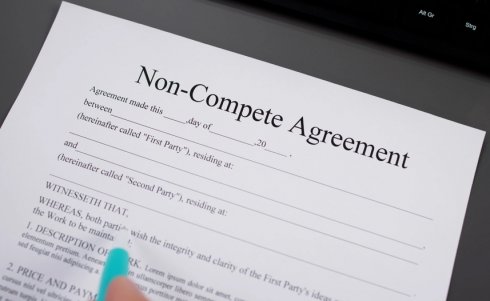
Virginia Governor Glenn Youngkin has signed Senate Bill 1218 into law, amending the state’s non-compete statute. Effective July 1, 2025, the updated law will broaden restrictions on non-compete agreements in Virginia. Previously, the law only protected “low-wage employees,” or those earning less than the average weekly wage in Virginia. Under the new amendment, employers will also be prohibited from entering into non-compete agreements with “non-exempt employees.” These are workers who are entitled to overtime pay under the Fair Labor Standards Act. Under the new amendment, all non-exempt employees – regardless of their income level – will be covered by the Commonwealth’s prohibition on non-compete agreements. However, the amendment is not retroactive. Therefore, employers who have entered into non-compete agreements with non-exempt employees prior to July 1, 2025, will remain valid; any such agreements executed on or after July 1, 2025, will be prohibited by law. Moving forward, employers will need to ensure accurate classification of workers as either exempt or non-exempt under federal standards to avoid liability under the new amendment. Employers should review their policies on non-competes, particularly as applied to offer letters, severance agreements, and employee handbooks to ensure compliance with the amendment.
May 27, 2025