Family Law
High-Risk Protection Reform: Rethinking Orders of Protection in High-Risk Domestic Violence Cases
By Bettina Hindin
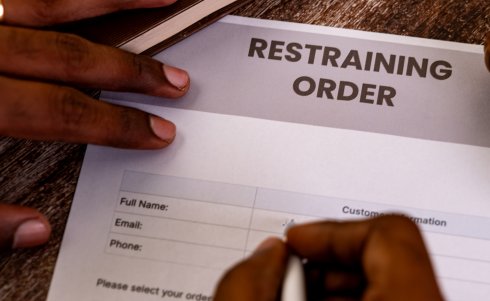
Every day, judges in New York issue Temporary Orders of Protection to help prevent domestic violence. These orders play a crucial role. They can remove an abuser from the home, prohibit contact, require surrender of firearms when permitted, and give law enforcement clear authority to act if the order is violated.
Just as paper cannot refuse ink, the order itself cannot stop physical violence. The order can ban violent acts and punish violations, but it cannot physically stop someone determined to cause harm.
This is not meant as a criticism of courts or judges. It simply shows that orders of protection should be the first step in keeping victims safe, not the last. Unfortunately, that is often the case. The order is issued, but the abuse continues – because it cannot be stopped without putting the offender in jail. And on many occasions, the offender does more than just continue the abuse.
Most domestic violence homicides come with warning signs. These can include increasing control, stalking, threats to kill, strangulation, access to guns, prior assaults, and violations of court orders. The period immediately after separation or a court action is especially dangerous, as abusers may feel they are losing control.
The main question, therefore, is not whether New York should continue issuing orders of protection — they are clearly needed. The real issue is whether a Temporary Order of Protection in high-risk cases should automatically trigger additional protective measures.
This issue is not theoretical.
In April of this year, Tomeka Kamwani, a 41-year-old New Jersey nurse and mother of four, reportedly obtained a temporary restraining order after her former fiancé followed her to a friend’s residence. According to her family, he repeatedly violated the order. Court records reported by NJ.com indicate that he was subsequently charged with burglary, terroristic threats, criminal mischief, and simple assault after allegedly breaking into her home and assaulting her. A request to detain him pending trial was denied. Weeks later, according to her family, he entered her home, shot her three times, and then killed himself while two of her children were present. See Matt Gray, N.J. Nurse Killed by Ex-Fiancé in Murder-Suicide Weeks After Getting Restraining Order, Family Says, NJ.com (Apr. 2, 2026), republished by Yahoo News; Shawnette Wilson, Vigil Held for Swedesboro Nurse and Mother of Four Killed in Suspected Domestic Violence, FOX 29 Philadelphia (Apr. 3, 2026).
In another case in April of this year, Victoria Alexander, also a New Jersey nurse, was killed at her workplace in Egg Harbor Township. Prosecutors report that her estranged husband blocked her car, left suicide notes, pursued her into her workplace, shot her multiple times, and then took his own life. The Atlantic County Prosecutor described the incident as “a tragic and deliberate act of domestic violence.” See Stephen Sorace, New Jersey Nurse Gunned Down at Work by Estranged Husband in Murder-Suicide: Police, Fox News (Apr. 14, 2026); EHT Nurse Killed in “Tragic and Deliberate Act of Domestic Violence,”, BreakingAC (Apr. 14, 2026).
Despite differences in location and procedure, both cases reveal a common failure: warning signs were evident before the fatal incidents.
New York’s Strong but Reactive Framework
New York law gives Family Court and Criminal Court substantial authority to protect victims of domestic violence. Article 8 of the Family Court Act authorizes orders of protection that may include stay-away directives, no-contact provisions, and other restrictions to prevent further abuse. Courts may consider prior abuse, threats, substance abuse, access to weapons, and related risk factors when determining appropriate conditions. See N.Y. Fam. Ct. Act § 842 (McKinney 2026).
It is also important to distinguish a Temporary Order of Protection from a Temporary Restraining Order. A Temporary Restraining Order, or TRO, is generally a civil litigation tool used to preserve property, assets, contractual rights, or the status quo while a lawsuit is pending. In New York, TROs may arise in Supreme Court commercial or matrimonial matters, Surrogate’s Court estate disputes, federal intellectual-property or business cases, and certain civil matters involving property or contractual interference. By contrast, a Temporary Order of Protection, or TOP, is directed at personal safety and behavior. It is issued by courts with authority over family offenses, criminal charges, or matrimonial proceedings, most commonly Family Court, Criminal Court, and Supreme Court when connected to a divorce action.
For the public, the difference is practical: a TRO may freeze a bank account, stop a sale, or preserve business rights, whereas a TOP is the court order meant to protect a person from abuse, threats, stalking, harassment, or violence. That distinction matters because the article’s focus is not ordinary civil restraint; it is whether personal-safety orders in high-risk domestic violence cases provide sufficient immediate protection beyond the paper order itself.
New York has also strengthened firearm surrender provisions. Family Court Act § 842 -a requires an inquiry into firearm access when a temporary order is issued and authorizes the suspension, surrender, seizure, and related protections in specified circumstances. Criminal Procedure Law § 530.14 provides parallel firearm-surrender authority in criminal cases. See N.Y. Fam. Ct. Act § 842-a (McKinney 2026); N.Y. Crim. Proc. Law § 530.14 (McKinney 2026). These provisions are not symbolic; they recognize that domestic violence can become lethal quickly when threats, weapons, and separation converge.
The case law underscores both the power and the limits of orders of protection. In People v. Wood, 95 N.Y.2d 509, 511–12, 742 N.E.2d 114, 115–16, 719 N.Y.S.2d 639, 640–41 (2000), the Court of Appeals described New York’s parallel civil and criminal protective-order statutes as designed to “stem the tide of domestic abuse between people locked in destructive relationships.” Id. at 516, 742 N.E.2d at 119, 719 N.Y.S.2d at 644. The decision arose in a double-jeopardy context, but its premise remains important: orders of protection constitute a broader public response to domestic abuse, not simply private paperwork between litigants. These laws matter and have saved lives. But they are not enough if the legal system treats issuing an order as the last step. A court order tells someone what not to do, but it does not track their actions, verify that guns are removed, coordinate agencies, assist with emergency moves, or ensure that safety plans continue.
For many people, the risk of arrest is enough to stop them. But for the most dangerous offenders, this is not always true. Sometimes, the first time they violate the order is the last warning before a tragedy occurs.
The Warning Signs Are Known
Research shows that requesting an order of protection often indicates that the danger is higher, not that the order does not work. The warning signs are clear, but the main problem is the lack of an automatic, coordinated response when these signs appear.
Those indicators include:
- Threats to kill the victim, children, others, or the offender himself
- Prior strangulation or attempted strangulation
- Access to firearms or other deadly weapons
- Stalking, surveillance, or obsessive jealousy
- Escalating violence, forced sexual conduct, or violence during pregnancy
- Recent or anticipated separation
- Repeated violations of prior orders of protection
- Statements suggesting the offender has “nothing left to lose”
When several risk factors are present, the danger is real and predictable, not merely a possibility. These situations require more than a written warning.
Lessons from Australia
Australia offers useful models because several jurisdictions treat high-risk domestic violence as a continuing public-safety emergency, not merely a court case. Victoria’s Multi-Agency Risk Assessment and Management Framework (MARAM) provides a shared structure for identifying, assessing, and managing family violence risk across agencies. It emphasizes coordinated safety planning, information sharing, and keeping perpetrators “in view” rather than placing the burden of safety solely on victims. See State Gov’t of Victoria, Family Violence Multi-Agency Risk Assessment and Management Framework (updated July 27, 2023).
New South Wales offers another example through Safer Pathway. Its Domestic Violence Safety Assessment Tool evaluates threats to victim-survivors’ life, health, and safety. Cases deemed to pose a serious threat may be referred to Safety Action Meetings, where police and government and non-government service providers share relevant information and develop coordinated steps to reduce risk. See N.S.W. Dep’t of Communities & Justice, General Information About Safer Pathway (Oct. 6, 2023); N.S.W. Dep’t of Communities & Justice, Domestic Violence Safety Assessment Tool (Apr. 29, 2026).
No system can promise complete safety, but these approaches are based on the right idea: high-risk cases need a team response that goes beyond just giving an order.
A New York High-Risk Protection Protocol
New York should improve its system by establishing a statewide High-Risk Domestic Violence Protection Protocol. This protocol should not depend on the decisions of individual courts, prosecutors, police, or service providers. Instead, it should activate automatically when a Temporary Order of Protection is issued and there are clear signs of serious danger.
At minimum, the protocol should include:
- Mandatory lethality assessment at the time emergency relief is considered, including the victim’s perception of danger
- Automatic referral of serious-threat cases to a multidisciplinary high-risk team
- Immediate firearm verification, including confirmation of surrender and access to unregistered weapons, ammunition, and third-party firearms
- Emergency practical protection, including relocation, secure communications, transportation, workplace and school safety planning, and technology-stalking assessment
- Continuing judicial review to confirm service, firearm compliance, violations, changes in risk, and implementation of the protection plan
- Carefully limited information sharing with confidentiality, due process, privilege, medical privacy, and record-security safeguards in place
The aim is not to take away judicial discretion or weaken due process. People must still receive notice, a meaningful opportunity to be heard, decisions tailored to their situation, fair conditions, set time limits, and regular reviews. But due process does not mean courts and agencies should ignore real evidence of deadly risk.
The Required Shift: From Paper Protection to Real Protection
This reform is both urgent and about changing how we think. New York should look beyond just past violations and focus on taking action to prevent deadly harm to those who need protection.
A Temporary Order of Protection remains important. However, when there are clear signs of possible homicide, it should prompt risk assessment, teamwork, firearm checks, safety planning, and continued oversight.
A written order by itself cannot stop violence. But if the legal system treats a high-risk protection order as an urgent warning rather than the last resort, it could help prevent future harm. New York should adopt this approach.