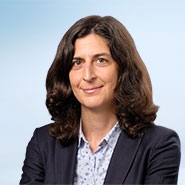
Albena Petrakov

Principal

Bankruptcy

2025 WRAPPED

December 30, 2025

By Albena Petrakov

2025 WRAPPED

2025 is nearly in the books, but before we turn the page, we’re taking a step back to reflect on some overlooked lessons from the bankruptcy courts. We’ve combed through the year’s rulings and selected three cases that merit a closer look, along with practical takeaways you can apply going forward.

Bankruptcy Remote Structures, In re 301 W N. Ave., LLC, 666 B.R. 583 (Bankr. N.D. Ill. 2025)

301 W North Avenue, LLC is a Delaware limited liability company. Its primary asset is a mixed-use real estate development known as the North Park Pointe Apartments, located at 301 West North Avenue in Chicago, Illinois (“301 West North Property”). The debtor borrowed $26 million secured by the 301 West North Property. The lender required the debtor to be a bankruptcy-remote entity and to have an independent director. The independent director was sourced through CT Corporation Staffing, Inc. (“CTCS”). As part of the financing, the debtor entered into a limited liability company agreement (the “LLC Agreement”) and appointed the independent manager identified by CTCS. The LLC Agreement governed the duties of the managers and the actions requiring the manager’s consent, including the filing of a bankruptcy petition. 301 W. North Avenue LLC ultimately defaulted on the loan and filed for bankruptcy without the consent of an independent manager. The debtor asserted that the consent was not necessary because lender-mandated terms imposed constituted provisions eliminating its right to file bankruptcy, and as such, violated public policy and unenforceable. In its analysis of whether the filing was properly authorized, the Court ruled that the LLC Agreement and appointment of the independent director were enforceable.

In 301 W North Avenue, the debtor’s LLC agreement required unanimous consent of the managers, including the independent manager, to file for bankruptcy. The independent manager was neither consulted nor consented. The court dismissed the case: no authority, no case. At the same time, the court distinguished disfavored “golden share” vetoes held by creditors, considered void as against public policy, from fiduciary-based consent structures, which are enforceable when drafted to protect the entity and its stakeholders — not just the lender.

Takeaway: If a lender has the right to appoint an independent director for a limited liability company, and the operating agreement creates a structure in which a director’s fiduciary duties are respected and that complies with applicable statutes, the agreement is enforceable.

Treatment of SAFEs In Bankruptcy Proceedings, In re Rhodium Encore, 2025 WL 2501132 (Bkrtcy.S.D.Tex.)

SAFEs (Simple Agreement for Future Equity) are financial instruments commonly used in startup financing as an alternative to convertible notes.

In a first reported decision, the Bankruptcy Court for the Southern District of Texas found that SAFE notes in that case gave their holders not a mere equity interest but a contingent claim, and they could recover ahead of common stockholders. The Court emphasized that the contractual language mandated this outcome and followed Delaware’s objective theory of contracts, i.e., a contract's construction should be that which an objective, reasonable third party would understand. The SAFEs were not shares of stock but contracts that required the company to return the purchase price received from SAFE holders upon certain triggering events. This right to payment contingent on future events fits the Bankruptcy Code definition of a “claim” under 11 U.S.C. § 101(5)(A). The notes also explicitly created a liquidation priority for cash-out amounts. The relevant provision stated that the cash-out amount was junior to creditor claims but senior to common stock.

Takeaway: If your SAFE has cash out on dissolution/liquidity, you likely hold a contingent claim that ranks ahead of common but behind creditors. When drafting a SAFE note, if the economic deal is equity-only risk, remove cash-out rights, or subordinate expressly to common; if investor protection is essential, state the cash-out priority unambiguously and ensure charter and cap table modeling reflect it.

SPAC Redemptions,  In re Indus. Hum. Cap., Inc., No. 23-11014-LMI, 2025 WL 3534176, at *1 (Bankr. S.D. Fla. Dec. 9, 2025)

The court addressed whether funds held in a SPAC trust account were property of the bankruptcy estate. Industrial Human Capital (“IHC”), a SPAC[1], raised $116.7 million in its IPO and deposited the proceeds into a trust account managed by Continental Stock Transfer & Trust Company (“CSTTC”) under a Trust Agreement. The Trust Agreement provided for CSTTC to manage, supervise, and administer the Trust Account. Although the parties to the Trust Agreement are IHC andCSTTC, the named beneficiaries of the Trust Agreement are IHC and the purchasers of the shares issued through the IPO, identified as the “Public Stockholders.”

IHC did not find suitable acquisition targets, and investors asked for redemption, which the company made. Against the advice of counsel that payment to creditors should be made first, IHC CEO authorized  CSTTC to release the funds to investors. Then, creditors put the company in an involuntary Chapter 7 proceeding, and a trustee was appointed. The trustee filed lawsuits to claw back the payments.

Although the agreement named the public stockholders as beneficiaries, the court emphasized that the funds originated from the sale of IHC’s stock and were therefore property of IHC and, upon bankruptcy, property of the estate. The investors’ argument that the funds were held in trust for their benefit was rejected because the trust did not alter the fundamental nature of the funds as proceeds of stock sales belonging to the debtor.

Takeaway: SPAC trust funds remain property of the debtor’s estate in bankruptcy, even if held in a trust account for redemption purposes. The existence of a trust agreement and redemption rights does not override the fact that IPO proceeds are corporate assets. Investors should understand that redemption rights do not insulate funds from clawback or estate claims in insolvency proceedings.


[1] As the Court explained, a SPAC, also known as a blank check company, is a company that is formed for the sole purpose of acquiring, usually through merger, another company. In addition to funds contributed to fund the cost of forming the SPAC, the SPAC then raises funds from investors, which are placed in trust until the target is identified. Generally, there is a time limit to find the target; after the expiration of that time, the funds are subject to return by the original investors.

Categories: Bankruptcy

Related People

  • Biography
  • Representative Matters
  • Publications & News
  • Blog Posts
  • Featured Works

Firm Highlights

  • Events
    MACFO's Inside Successful CEO & CFO Partnerships
    Please join us on September 18 for an event that’s sure to be a home run! ***We will lead off by interviewing our Spotlight Speaker Series guest, Baltimore Orioles CFO, Darline Llamas Llopis.*** After, we will ask ourselves, what separates great companies from good ones? We believe that more often than not, it is the strength of the partnership between the CEO and CFO that matters, so we are bringing you three CEO/CFO leadership teams to learn from. The Associated: Jewish Federation of Baltimore – Andrew Cushnir and Sam Klein Canusa Paper & Packaging – Mike Walter and Vince Salamone Secom, LLC – Toni Toomey and Mourad Awad Join us for an exclusive executive briefing – three tandem presentations followed by a panel discussion - featuring CEOs and CFOs from different but leading organizations as they share candid insights into building trust, navigating difficult decisions, driving strategic growth, and leading through today's business challenges. You'll hear firsthand how these executive teams navigate conflict, align on priorities, and build high-performing organizations. Whether you're a CFO, controller, finance executive, or an aspiring business leader, you'll leave with practical ideas and fresh perspectives you can apply immediately. Meet Our Speakers: Darline Llamas Llopis • Orioles  Chief Financial Officer Darline Llamas Llopis is in her second season with the Orioles as Chief Financial Officer (CFO). Prior to joining the Orioles, Llamas Llopis spent four seasons with the Miami Dolphins, Hard Rock Stadium, and the F1 Miami Grand Prix as Vice President of Finance and Retail. In this capacity, she managed the finance, accounting, payroll, account payables, procurement and merchandise operations for the team and race. She also previously served for four years as the Director of Finance and Controller at the Los Angeles Rams. Llamas Llopis started her career in public accounting with Ernst & Young and PricewaterhouseCoopers as a member of the Commercial Real Estate practice.  Llamas Llopis completed her MBA at UCLA Anderson School of Management and received her Master of Accountancy from the University of Southern California (USC) where she also graduated cum laude with an undergraduate degree in business. She is a member of the American Institute of Certified Public Accountants (CPA) and is an active CPA. She resides in Baltimore with her husband, Devin, and their son, Santiago. Andrew Cushnir • The Associated: Jewish Federation of Baltimore   President & Chief Executive Officer Andrew Cushnir is the President and Chief Executive Officer of The Associated, having started in the role in May 2024. He is the eighth person to serve in this role since The Associated’s founding over 100 years ago. Andrew brings a wealth of experience and a profound dedication to strengthening and enriching the Jewish community. His journey within the Jewish Federation system began as a passionate lay leader and volunteer before he transitioned into serving as a professional. He worked for the Jewish Federation of Los Angeles for twenty years, including in the roles of Chief Planning and Program Officer and Chief Development Officer. During this time, Andrew played a crucial role in reshaping the allocation process and fostering a culture of collaboration and partnership and he also led all annual, project, and emergency fundraising, as well as planned giving efforts. As a member of the Federation’s executive team, he also addressed complex community and organizational issues. Andrew and his wife Sharon Spira-Cushnir, a seasoned nonprofit human services executive, are the proud parents of two children in their early 20s. Sam Klein • The Associated: Jewish Federation of Baltimore  Chief Financial Officer Sam Klein is a seasoned nonprofit finance executive with nearly two decades of experience leading financial strategy, operations, budgeting, and organizational transformation for mission-driven institutions. As Chief Financial Officer of The Associated: Jewish Federation of Baltimore, he oversees the organization's financial operations, investment stewardship, budgeting processes, risk management, and long-term financial planning, helping advance the Federation's mission of strengthening and supporting Jewish life in Baltimore, Israel, and around the world. Throughout his career, Sam has been recognized for his ability to align financial stewardship with organizational mission, drive process improvements, implement technology solutions, and build high-performing teams. His expertise includes nonprofit finance, strategic planning, budgeting and forecasting, investment oversight, financial reporting, compliance, operational excellence, and organizational growth. Sam earned a Master of Business Administration in Finance from the Johns Hopkins Carey Business School and a Bachelor of Science in Finance and Marketing from Syracuse University. Mike Walter • Canusa's Paper & Packaging Chief Executive Officer As Chief Executive Officer of Canusa Paper & Packaging (CPP), Mike Walter leads one of the world's leading independent international brokerages of containerboard and packaging papers. Mike recently celebrated his 20th anniversary with Canusa and has overseen a doubling of the business in the past five years. Mike’s first role at Canusa was an intern before moving into a risk management role. Progressive promotions over the years led Mike to serve as Canusa's Chief Operating Officer and General Counsel, as well as General Counsel for its affiliate, Canusa Hershman before becoming the CPP CEO on January 1st, 2025. Mike graduated with a B.S. in Commerce & Engineering from Drexel University before earning his J.D. at the University of Baltimore’s School of Law. Vince Salamone • Canusa's Paper & Packaging Chief Financial Officer Vince Salamone serves as Chief Financial Officer of Canusa Paper & Packaging, overseeing the company's global financial strategy and overall operations, risk management, and other shared services. Since joining Canusa in 2018, Vince has advanced from Corporate Controller to CFO. Prior to Canusa, Vince held senior accounting and financial reporting roles at modular space leader Algeco Scotsman and supply chain real estate operator Realterm, bringing extensive expertise in finance and corporate accounting. He began his career with Deloitte, providing assurance services to clients in aerospace and defense, software, and manufacturing throughout the Mid-Atlantic. Vince attended the University of Maryland and Towson University, earning his B.S. in Accounting in 2012 and his CPA license in 2014. Toni Toomey • Secom, LLC Chief Executive Officer As Chief Executive Officer of Secom, LLC, Toni Toomey leads the company's external vision, culture, and strategic growth. A Howard County native, Toni brings an entrepreneurial spirit and a people-first philosophy to one of Maryland's leading commercial security firms — championing internal promotion and a culture of integrity. Toni serves on the Board of Directors for Maryland Tech Council, the Howard County Chamber, as well as the Steering Committee for the Maryland Rural Tech Network. Mourad Awad • Secom, LLC Chief Financial Officer As Chief Financial Officer of Secom, LLC, Mourad Awad architects the company’s financial strategy, performance, and value creation. A leader, by example, Mourad believes in empowering people and fostering communication. With 20+ years of leadership across private equity, federal contracting, construction, and infrastructure services, Mourad brings a strategic approach to partnering with Toni – CEO to turn vision into precision execution, delivering exceptional value to Secom customers and sustainable growth for SECOM.  Thank You to Our Sponsors