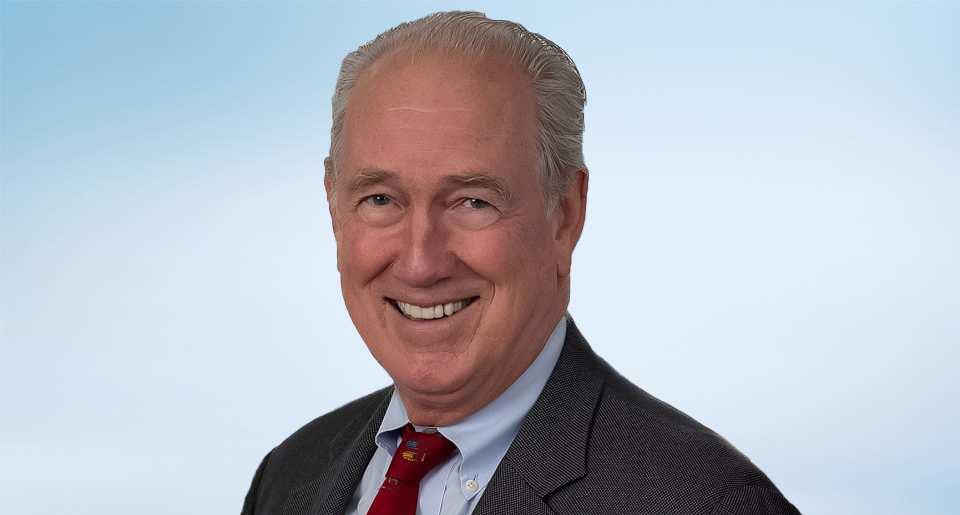
Portrait of Samuel Abernethy

Samuel Abernethy

Retired Counsel

Samuel (“Sam”) Abernethy is both a litigator and corporate lawyer, who concentrates on the financial services industry, particularly commodities, derivatives and securities. He's advised registrants in compliance matters and represents litigants in private litigations (as well as arbitrations and mediations) and regulatory disciplinary matters, including investigations. He also advised clients in corporate governance matters, shareholder/member rights and employment issues.

Sam’s practice has involved him in an in-depth way with markets and trading, especially in the futures and derivatives markets. He has served as a receiver, arbitrator and expert in commodities and derivatives related matters and disputes. He began his legal career with Curtis, Mallet-Prevost, Colt & Mosle, and later became Vice-President and General Counsel of Comex, Inc. and then Senior Vice-President and General Counsel of the Coffee, Sugar & Cocoa Exchange, Inc. (now ICE, Inc.).

Sam frequently speaks on relevant topics and has served as a panelist in several New York City Bar Association programs on futures and derivatives law, including “Hot Topics” program on Exchange-Traded and OTC derivatives, and in several Futures Industry Association Law & Compliance Division programs at annual conferences. He has also spoken on various New York State Bar Association programs.

    Education

    • (A.B.)
    • Fordham University School of Law (J.D.)

    State Bar Admissions

    • New York

    Professional Affiliations

    • Executive Committee, New York State Bar Association, Member
    • House of Delegates, New York State Bar Association, Delegate
    • Electronic Communications Committee, New York State Bar Association, Member and Chair
    • Special Committee on Pleading Standards in Federal Litigation, New York State Bar Association, Chair
    • Special Committee on Electronic Discovery and Case Management in Federal Litigation, New York State Bar Association, Chair
    • Business Law Section, New York State Bar Association, Member
    • Derivatives & Structured Products Law Committee, New York State Bar Association, Member and Chair
    • Diversity and Leadership Development Committee, New York State Bar Association, Member and Chair
    • Youth Outreach Committee, New York State Bar Association, Member
    • Task Force on Gun Violence, New York State Bar Association, Member
    • Futures and Derivatives Committee, New York City Bar Association, Member
    • Futures and Derivatives Committee of the Business Law Section, American Bar Association, Member
    • New York City Committee of the Law Firm Access to Justice Campaign Committee of Legal Services of Hudson Valley, Inc., Member
    • St. Andrew’s Society of the State of New York, President and Board Member
    • Burns Society of the City of New York, Board Member

    Recognitions

    • AV Preeminent®, Martindale-Hubbell

Firm Highlights

  • Podcasts
    Art Appraisal and Market Value with David Shapiro
    How do you determine the value of a work of art—and what happens when that valuation impacts taxes, insurance, estate planning, or an artist’s legacy? On this episode of The Legal Canvas, host Caryn Keppler, trust and estates attorney at Offit Kurman, welcomes David Shapiro of David Shapiro Fine Art, a certified member of the Appraisers Association of America specializing in post-war and contemporary art, with accreditation in impressionist and modern art. David shares insights into the art appraisal process, explaining the differences between fair market value, retail replacement value, and marketable cash value. He discusses how appraisers evaluate unique works using comparable sales, provenance, condition, exhibition history, and other factors that influence value. The conversation also explores the role of art advisors in buying and selling artwork, strategies for expanding an artist’s presence in a global market, and the complexities of valuing large collections for estate and tax purposes. David explains how a work’s history and the story behind it can influence its market performance—and why thoughtful planning and organization are essential to preserving an artist’s legacy. In this episode, you’ll learn about: The differences between art appraisal methods and why the type of valuation matters. What collectors need to know about appraisals for insurance, charitable donations, and tax purposes. How provenance, condition, and comparable sales influence an artwork’s value. How art advisors help collectors navigate auctions, negotiate terms, and maximize sale opportunities. Why artists should cultivate relationships and exhibition opportunities across multiple markets. How blockage discounts can affect the valuation of large artist estates. Why documenting an artwork’s history can make a meaningful difference in its market performance. Whether you’re an artist, collector, estate planning professional, or art enthusiast, this episode offers valuable insight into the intersection of art, valuation, and legacy planning.  Listen to The Legal Canvas for more conversations exploring the intersection of estate planning, taxes, and the creative arts.
  • Events
    The 2026 Economic, Tax, and Accounting Updates
    We are looking forward to the Mid-Atlantic CFO Roundtable's next event on November 13, 2026. This is a program with topics built for Finance Executives. We are extremely fortunate to have three excellent speakers: Dr. Daraius Irani, Vice President of Business and Public Engagement at Towson University; Mike Stankus, Tax Office Managing Principal at BDO; and Daniel Wahlberg, Managing Partner of Acclare Solutions. The economy is rapidly changing with various factors driving it. The November 3rd midterm elections may also have an impact. Our three expert presenters will discuss the ramifications of the election, and the current year updates to GAAP financial reporting and Federal and State income taxes. Please join us for what will surely be an informative and timely discussion. Meet Our Speakers: Daraius Irani, Ph.D. • Towson University Vice President, Business & Public Engagement Dr. Daraius Irani serves as Vice President of Business and Public Engagement at Towson University as well as the chief economist for the Regional Economic Studies Institute (RESI) at Towson University, a policy group providing economic, fiscal impact, and policy analysis to public and private entities.  Dr. Irani is often called upon to provide economic presentations to organizations across Maryland. He has appeared on numerous television programs and in local and regional print media. Dr. Irani holds a Ph.D. in economics from University of California, Santa Barbara. Dan Wahlberg • Acclare Solutions Managing Partner With over 28 years of experience, Dan Wahlberg is a recognized leader in audit and assurance for the Mid-Atlantic’s middle market business community. As a licensed CPA in Maryland and Virginia, Dan has led assurance practices at top regional firms, including serving as Baltimore Audit Managing Partner and Assurance Practice Leader at BDO USA in Baltimore and as Partner and member of the Management Committee at Hertzbach & Company P.A which merged into BDO in 2020. His expertise centers on delivering clarity, strategic guidance, and proactive solutions to middle-market businesses across Baltimore and beyond. His entrepreneurial spirit has led him to begin a new CPA firm this year with four other CPAs serving the business community. Dan holds a Bachelor of Science in Accounting from Rutgers University and began his career at PWC in New York. He is also deeply engaged in the community, previously serving as President of ACG Maryland and current Board member and as Audit Committee Member for The Associated: Jewish Federation of Baltimore.  Mike Stankus • BDO USA LLP Tax Office Managing Principal Mike Stankus is the Tax Office Managing Principal for the firm’s Baltimore office. He has more than 16 years of experience providing tax planning and preparation and management advisory services for his clients. Mike focuses on advising privately held businesses and their owners on effective growth and tax strategies. He also performs various engagements for mergers and acquisitions and complex cost accounting projects and projections. In addition, he represents various government contracting clients before the DCAA and assists with FAR compliance. Mike’s areas of concentration include working with government contractors, professional service firms, construction companies, and homebuilders.
  • Events
    AIA Tri-State Conference
    Princeton will serve as the backdrop for three days of connection, learning, and design leadership. From keynotes to tours to the Tri-State Design Awards, this year’s conference is designed to go far beyond education sessions. Kick off the week with pre-conference intensives and individual state component Design Award celebrations, followed by three days of education, inspiration, networking, and design excellence at the 2026 AIA Tri-State Conference—featuring pre-conference intensives, three keynote speakers, 25 education sessions, curated tours, an expo, spec academies, and the AIA Tri-State Design Awards—bringing together architects and design professionals from New Jersey, New York, and Pennsylvania to connect, learn, and celebrate the best of the profession. G2. Designing Secure Practices: Cybersecurity, Data Privacy, Contractual Provisions, and Insurance Risks for Architects (4:00 PM - 5:30 PM) Architects and design professionals increasingly rely on cloud platforms, BIM software, and digital tools to manage sensitive data, creating cybersecurity and privacy risks. A single incident can trigger liability claims, regulatory obligations, reputational harm, and insurance challenges. Yet many firms underestimate how contracts, insurance, and internal practices intersect during a breach. This program offers legal and insurance perspectives on cyber risk in architecture, examining liability exposure, risky contract provisions, and mitigation strategies. A cyber insurance expert will explain policy responses, coverage gaps, coordination with professional liability, and best practices for aligning insurance with contractual risk and protecting firms from evolving cyber threats. Learning Objectives: Identify key cybersecurity and data privacy risks faced by architecture firms and explain how these risks can impact professional liability and project outcomes. Analyze common contractual provisions to determine which clauses may increase exposure to cyber incidents and propose strategies to mitigate these risks. Evaluate the scope and limitations of cyber insurance policies, including coordination with professional liability coverage, to determine how a policy would respond in a breach scenario. Develop actionable risk management strategies by integrating legal, contractual, and insurance considerations to protect sensitive client and project data.