Real Estate

NYDEC Expands its Jurisdiction over Wetlands

February 21, 2025

By Matthew Karmel

NYDEC Expands its Jurisdiction over Wetlands

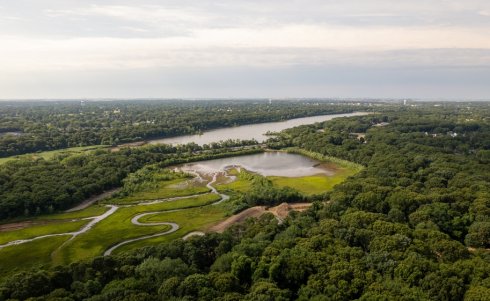
Expansive changes to New York’s Freshwater Wetlands Permitting Program took effect on January 1, 2025, increasing regulated freshwater wetlands. The changes came after the New York State Department of Environmental Conservation (NYDEC) enacted new regulations which amended its Freshwater Wetlands Jurisdiction and Classification rules. The updated rules are expected to protect an additional one million acres of wetlands by 2028. The changes come after New York’s legislature modified the Freshwater Wetlands Act (the “FWA”) in 2022 to make several changes to the way the Freshwater Wetlands Program is to be administered for those in need of Freshwater Permit prior to conducting certain activities in a protected wetland or adjacent area. Such activities include, but are not limited to, the excavation or grading of soil, the modification or construction of buildings, septic systems, bulkheads, dikes or dams, and the application of pesticides in wetlands.

NYDEC announced that the changes provide increased protections for wetlands that will help the New York adapt to increased flooding risk associated with the changing climate and conserve critically important natural resources, including threatened and endangered species and the wetlands that they inhabit. These environmental benefits result from NYDEC expanding the areas that are subject to its regulations and the requirement to obtain jurisdictional determinations and/or Freshwater Wetland permits for projects located in such areas.

The newly enacted regulations take effect in two stages. The first, which became active on January 1, 2025, expands the areas that fall within the definition of “Wetlands of Unusual Importance.” This includes wetlands in urban and flood-prone areas, wetlands inhabited by rare plants or animals, wetlands important to water quality, and vernal pools. The second stage begins on January 1, 2028, and reduces the size of wetland areas that trigger NYDEC’s jurisdiction from 12.4 acres to 7.4 acres. Individuals in New York can be assured that this expansion in jurisdiction will increase the number of permits needed under the FWA.

Another significant change is that property owners must now apply to NYDEC for a jurisdictional determination to ascertain:

  • whether their land contains either state-regulated freshwater wetlands or state-regulated adjacent areas (a “parcel jurisdictional determination”) and/or
  • whether a proposed activity on a parcel subject to NYSDEC freshwater wetlands regulation requires a permit (a “project jurisdictional determination”).

Simply, the new regulations not only require significantly more project developers to work with the DEC to determine if their project impacts freshwater wetlands but also require landowners who are planning activity on their property to obtain a determination from NYDEC as to whether freshwater wetlands are located on any portion of their property.

In order to allow for a more just transition for permittees, certain projects are exempt from the new requirements until either January 1, 2027 or July 1, 2028, depending on the type of project. The revised regulations become applicable on January 1, 2027, for “minor” projects (as defined in 6 NYCRR § 621.4) or on July 1, 2028, for “major” projects, provided that such projects had achieved certain developmental thresholds before January 1, 2025.

In addition to the finalized 2025 regulations, in order to ease the enhanced permitting burdens, DEC has published a statewide draft general permit for public comment (GP-0-25-003). This can be found on DEC’s Freshwater Wetlands General Permit website, for various activities in State-regulated freshwater wetlands (the “Permit”).  The General Permit is proposed to be issued for the following:

  • Repair, replacement, or removal of existing structures and facilities.
  • Construction or modification of various residential, commercial, industrial, or public structures.
  • Temporary installation of access roads and laydown areas.
  • Cutting trees and vegetation.
  • Drilling test wells.
  • Routine beach maintenance and replenishment.

The comment period runs until January 27, 2025.

Considering these changes to the Freshwater Wetland Program, it is imperative that new or expanding project applicants work with experienced wetland permitting attorneys in order to avoid project delays and/or assessment penalties.


Categories: Real Estate
  • Overview
  • People
  • Real Estate Law and Transactions Law Blog
  • Publications & News

Firm Highlights

  • Events
    AIA Tri-State Conference
    Princeton will serve as the backdrop for three days of connection, learning, and design leadership. From keynotes to tours to the Tri-State Design Awards, this year’s conference is designed to go far beyond education sessions. Kick off the week with pre-conference intensives and individual state component Design Award celebrations, followed by three days of education, inspiration, networking, and design excellence at the 2026 AIA Tri-State Conference—featuring pre-conference intensives, three keynote speakers, 25 education sessions, curated tours, an expo, spec academies, and the AIA Tri-State Design Awards—bringing together architects and design professionals from New Jersey, New York, and Pennsylvania to connect, learn, and celebrate the best of the profession. G2. Designing Secure Practices: Cybersecurity, Data Privacy, Contractual Provisions, and Insurance Risks for Architects (4:00 PM - 5:30 PM) Architects and design professionals increasingly rely on cloud platforms, BIM software, and digital tools to manage sensitive data, creating cybersecurity and privacy risks. A single incident can trigger liability claims, regulatory obligations, reputational harm, and insurance challenges. Yet many firms underestimate how contracts, insurance, and internal practices intersect during a breach. This program offers legal and insurance perspectives on cyber risk in architecture, examining liability exposure, risky contract provisions, and mitigation strategies. A cyber insurance expert will explain policy responses, coverage gaps, coordination with professional liability, and best practices for aligning insurance with contractual risk and protecting firms from evolving cyber threats. Learning Objectives: Identify key cybersecurity and data privacy risks faced by architecture firms and explain how these risks can impact professional liability and project outcomes. Analyze common contractual provisions to determine which clauses may increase exposure to cyber incidents and propose strategies to mitigate these risks. Evaluate the scope and limitations of cyber insurance policies, including coordination with professional liability coverage, to determine how a policy would respond in a breach scenario. Develop actionable risk management strategies by integrating legal, contractual, and insurance considerations to protect sensitive client and project data.
  • Events
    The 2026 Economic, Tax, and Accounting Updates
    We are looking forward to the Mid-Atlantic CFO Roundtable's next event on November 13, 2026. This is a program with topics built for Finance Executives. We are extremely fortunate to have three excellent speakers: Dr. Daraius Irani, Vice President of Business and Public Engagement at Towson University; Mike Stankus, Tax Office Managing Principal at BDO; and Daniel Wahlberg, Managing Partner of Acclare Solutions. The economy is rapidly changing with various factors driving it. The November 3rd midterm elections may also have an impact. Our three expert presenters will discuss the ramifications of the election, and the current year updates to GAAP financial reporting and Federal and State income taxes. Please join us for what will surely be an informative and timely discussion. Meet Our Speakers: Daraius Irani, Ph.D. • Towson University Vice President, Business & Public Engagement Dr. Daraius Irani serves as Vice President of Business and Public Engagement at Towson University as well as the chief economist for the Regional Economic Studies Institute (RESI) at Towson University, a policy group providing economic, fiscal impact, and policy analysis to public and private entities.  Dr. Irani is often called upon to provide economic presentations to organizations across Maryland. He has appeared on numerous television programs and in local and regional print media. Dr. Irani holds a Ph.D. in economics from University of California, Santa Barbara. Dan Wahlberg • Acclare Solutions Managing Partner With over 28 years of experience, Dan Wahlberg is a recognized leader in audit and assurance for the Mid-Atlantic’s middle market business community. As a licensed CPA in Maryland and Virginia, Dan has led assurance practices at top regional firms, including serving as Baltimore Audit Managing Partner and Assurance Practice Leader at BDO USA in Baltimore and as Partner and member of the Management Committee at Hertzbach & Company P.A which merged into BDO in 2020. His expertise centers on delivering clarity, strategic guidance, and proactive solutions to middle-market businesses across Baltimore and beyond. His entrepreneurial spirit has led him to begin a new CPA firm this year with four other CPAs serving the business community. Dan holds a Bachelor of Science in Accounting from Rutgers University and began his career at PWC in New York. He is also deeply engaged in the community, previously serving as President of ACG Maryland and current Board member and as Audit Committee Member for The Associated: Jewish Federation of Baltimore.  Mike Stankus • BDO USA LLP Tax Office Managing Principal Mike Stankus is the Tax Office Managing Principal for the firm’s Baltimore office. He has more than 16 years of experience providing tax planning and preparation and management advisory services for his clients. Mike focuses on advising privately held businesses and their owners on effective growth and tax strategies. He also performs various engagements for mergers and acquisitions and complex cost accounting projects and projections. In addition, he represents various government contracting clients before the DCAA and assists with FAR compliance. Mike’s areas of concentration include working with government contractors, professional service firms, construction companies, and homebuilders.