Marquee Background
Marquee Background

Offit Kurman Blogs

Commercial Litigation

Virginia Sees Surge in Civil Lawsuits in 2024: How to Avoid Collection and Eviction Litigation

February 7, 2025

By Anders Sleight

Virginia Sees Surge in Civil Lawsuits in 2024: How to Avoid Collection and Eviction Litigation

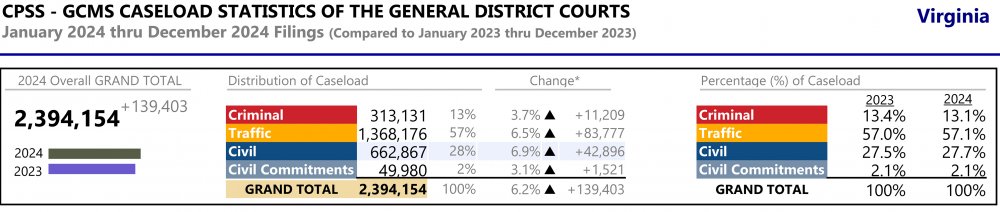
Civil lawsuit filings in Virginia's General District Courts increased more than 6% in 2024. The biggest increase? Warrants in debt (collection lawsuits) increased by 27%. A warrant in debt is a civil lawsuit to pursue recovery of money damages, usually due to unpaid debts and accounts receivable. Except for personal injury or wrongful death claims, Warrants in Debt are limited to a maximum recovery of $25,000. By contrast, unlawful detainer filings decreased by 8%. An unlawful detainer is an eviction lawsuit to pursue and obtain possession of real property (real estate) and unpaid rental charges, if applicable. There is no limit to the rental charges that can be pursued in an unlawful detainer filing.

Virginia’s Circuit Court civil filings increased modestly by 4% compared to 2023. Virginia Circuit Courts generally hear civil and commercial claims involving controversies of more than $25,000, along with family law, probate and estate claims, and real estate title claims, among other matters. Full data on 2024 legal filings from the Supreme Court of Virginia can be found here: 2024 Virginia General District Court filing data & 2024 Virginia Circuit Court filing data.

Landlords, tenants, property managers, lenders, creditors, and consumers in Virginia can take proactive steps to prevent costly litigation. Understanding your rights and obligations can minimize financial risks and avoid lawsuits related to unpaid debts or evictions.

Establish Clear Agreements

For landlords and creditors, well-drafted lease and loan agreements help prevent disputes. These should clearly define:

  • Payment terms, due dates, and penalties for nonpayment.
  • Responsibilities for property maintenance (landlords) and interest rates (creditors).
  • Legal remedies in case of default.

Tenants and consumers should carefully review contracts before signing and seek clarification on any unclear terms.

Maintain Open Communication

Early communication can prevent minor issues from escalating. If you are a tenant, customer, or consumer behind on payments, consider:

  • Informing landlords or creditors of financial difficulties.
  • Requesting a payment plan, forbearance, or temporary extension.
  • Keep records of all communications and agreements.
  • Landlords and creditors should consider offering reasonable repayment options where feasible, as these are more efficient than litigation.

Follow Legal Collection and Eviction Procedures

Virginia law requires strict compliance with applicable eviction and collection procedures before pursuing eviction or debt collection lawsuits:

  • Landlords must issue a proper notice of lease violation to tenants depending on the grounds sought for eviction.
  • Creditors generally should send a formal demand letter before pursuing legal action.

Utilize Mediation and Alternative Solutions

Mediation can be a cost-effective way to resolve disputes without court involvement. Courts often encourage, but normally do not mandate, negotiations between parties to explore mutually beneficial solutions.

Understand the Legal Process and Consequences

If legal action becomes necessary:

  • Landlords must file an Unlawful Detainer for eviction, attend a court hearing, and obtain a Writ of Eviction if a judgment is granted.
  • Creditors must file a warrant in debt or other applicable lawsuits and obtain a court judgment before pursuing wage garnishment or other collection means.
  • Tenants and consumers should respond promptly to court notices to avoid default judgments.

Seek Legal Guidance When Needed

Landlords, tenants, creditors, and debtors facing complex legal issues should consult an attorney to ensure compliance with Virginia law and protect their rights. By taking these proactive steps, all parties can reduce the risk of eviction and collection lawsuits, fostering more stable financial and housing relationships.

Related People

Related Services

  • Posts
  • About
  • Subscribe

Firm Highlights

  • Events
    AIA Tri-State Conference
    Princeton will serve as the backdrop for three days of connection, learning, and design leadership. From keynotes to tours to the Tri-State Design Awards, this year’s conference is designed to go far beyond education sessions. Kick off the week with pre-conference intensives and individual state component Design Award celebrations, followed by three days of education, inspiration, networking, and design excellence at the 2026 AIA Tri-State Conference—featuring pre-conference intensives, three keynote speakers, 25 education sessions, curated tours, an expo, spec academies, and the AIA Tri-State Design Awards—bringing together architects and design professionals from New Jersey, New York, and Pennsylvania to connect, learn, and celebrate the best of the profession. G2. Designing Secure Practices: Cybersecurity, Data Privacy, Contractual Provisions, and Insurance Risks for Architects (4:00 PM - 5:30 PM) Architects and design professionals increasingly rely on cloud platforms, BIM software, and digital tools to manage sensitive data, creating cybersecurity and privacy risks. A single incident can trigger liability claims, regulatory obligations, reputational harm, and insurance challenges. Yet many firms underestimate how contracts, insurance, and internal practices intersect during a breach. This program offers legal and insurance perspectives on cyber risk in architecture, examining liability exposure, risky contract provisions, and mitigation strategies. A cyber insurance expert will explain policy responses, coverage gaps, coordination with professional liability, and best practices for aligning insurance with contractual risk and protecting firms from evolving cyber threats. Learning Objectives: Identify key cybersecurity and data privacy risks faced by architecture firms and explain how these risks can impact professional liability and project outcomes. Analyze common contractual provisions to determine which clauses may increase exposure to cyber incidents and propose strategies to mitigate these risks. Evaluate the scope and limitations of cyber insurance policies, including coordination with professional liability coverage, to determine how a policy would respond in a breach scenario. Develop actionable risk management strategies by integrating legal, contractual, and insurance considerations to protect sensitive client and project data.
  • Blog Posts
    Law, Love, and Life's Battles: Facing Breast Cancer
    What happens to a marriage and a family when a breast cancer diagnosis changes everything? In this episode of Love Ends, Law Begins, hosts Fara Rodriguez and Stephanie Lehman have a deeply personal conversation about breast cancer, marriage, family, and the challenges that can come with a serious illness. This episode is especially meaningful for Fara, who shares her own recent breast cancer diagnosis and journey. She opens up about discovering a lump, receiving her diagnosis, undergoing a double mastectomy and subsequent treatments, and navigating the emotional impact of cancer while continuing to work and care for her family. Fara and Stephanie discuss how a cancer diagnosis can affect a marriage in unexpected ways—from changing family roles and creating new caregiving responsibilities to putting pressure on finances, health insurance, and household responsibilities. They explore how illness can either bring couples closer together or create additional challenges, particularly when one spouse becomes the primary caregiver or when the family is dealing with fear and uncertainty. The conversation also addresses the unique challenges of parenting during an illness, including how to talk to children about a cancer diagnosis and how divorced parents may need to adjust parenting schedules and responsibilities when one parent becomes sick. From navigating medical expenses and insurance coverage to balancing work, parenting, caregiving, and intimacy, Fara and Stephanie offer a candid look at the ways illness can reshape relationships and family dynamics. In recognition of Breast Cancer Awareness Month, this episode provides an honest and personal conversation about facing cancer while navigating marriage, family, and the many practical challenges that come with a serious diagnosis. In this episode, you'll hear about: • Fara's personal breast cancer diagnosis and journey • How a cancer diagnosis can affect a marriage • The challenges of becoming a caregiver to your spouse • How illness can bring couples closer together—or create new challenges • Talking to children about a parent's cancer diagnosis • How divorced parents can navigate parenting responsibilities when one parent becomes ill • The financial impact of illness and the loss of household income • Health insurance and medical coverage considerations • How medical expenses can create additional financial strain • The importance of support from family, friends, and caregivers • Balancing work, parenting, treatment, and recovery • How illness can affect intimacy and marital dynamics • The importance of supporting children through a parent's illness • Why communication and cooperation matter during a health crisis • Breast Cancer Awareness Month and the importance of mammograms