
Feasting on the Lessons of Il Mulino’s Intellectual Property Battle
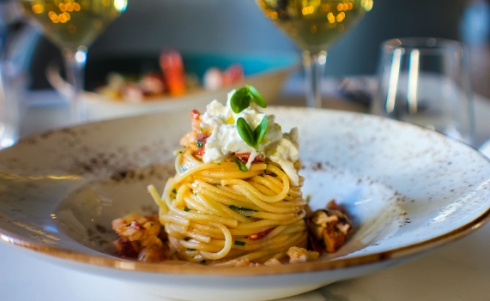
When thinking about restaurants, most people think of a savory meal in a pleasant setting. I think about that, too, but more often than not, my thoughts turn to a restaurant’s intellectual property and what can be protected (a danger of the trade, I suppose). Restaurant names can be protected as trademarks, recipes as trade secrets, and the plating of an entrée may be protected by a design patent. A recent case involving the well-known Italian restaurant Il Mulino touches on many of these aspects of protection. Still, perhaps most interestingly, that case found that the look of the restaurant’s interior, its trade dress, is protectable.
According to the court, this case is the latest in a long-running dispute over intellectual property relating to the Il Mulino restaurants. Defendants had been involved in opening and operating Il Mulino restaurants, an enterprise that involved various entities; one entity owned the intellectual property and licensed it to various locations. In 2020, some of the Il Mulino entities filed for bankruptcy. As a result of the bankruptcy, plaintiffs acquired those entities, including the entity that owned the intellectual property. The defendants opened Il Mulino Tribeca in 2018, and the location closed in September 2023. On September 15, 2023, the defendants opened a new Italian restaurant in the same space as Il Mulino Tribeca. The lawsuit was filed in November, with plaintiffs seeking to preliminarily enjoin the defendants from using proprietary recipes, certain restaurant names, the trade dress of Il Mulino Tribeca, a former Il Mulino location, and certain property from Il Mulino Tribeca in their new restaurant. Each claim warrants review, particularly the trade dress claim.
The Trade Dress of Il Mulino Tribeca
The court explained that the Plaintiffs defined the trade dress of Il Mulino Tribeca as consisting of the following elements:
- an art collection of black and white photographs arranged in a perfectly symmetrical design, covering almost one entire interior wall of the restaurant;
- custom artwork commissioned for Il Mulino Tribeca’s back wall that evokes the restaurant’s Tribeca home by referring to its location “Below Canal St[reet]”; (3) white-washed brick and high ceilings painted matte black; and
- unique, hand-blown glass pendants hanging near the entrance of the restaurant.
All of the above appear in the Defendants’ new restaurant.
The court found that the above definition was sufficiently precise and that the claimed trade dress was not functional. According to the court, “Il Mulino Tribeca’s décor plainly does not affect a customer’s “use or purpose” of the restaurant nor the cost or quality thereof. A customer could just as easily enjoy veal parmigiana in the absence of glass pendants or white-washed brick.” The court also pointed out that the trade dress analysis focuses on the trade dress as a whole, not particular elements that may be used by competitors. Finding that the trade dress was also inherently distinctive since it did not convey any information about the restaurant’s services or cuisine, the court concluded that the claimed trade dress was entitled to protection.
Since the trade dress was entitled to protection, the court next determined whether there was a likelihood of consumer confusion. The court found that there was a likelihood of confusion even though the claimed trade dress was weak because there was little evidence that consumers associated the trade dress with Il Mulino. In reaching its finding, the court pointed out that the trade dress in the two restaurants was very similar (not surprising since the new restaurant opened in the exact location as the old restaurant and since social media posts for the new restaurant used images that seemed to draw on social media posts for Il Mulino Tribeca); that both restaurants were Italian; and that defendants seemed to be trying to capitalize on the reputation of Il Mulino. On that basis, the court found a likelihood of consumer confusion and preliminarily enjoined the defendants’ use of the claimed trade dress.
Infringement of the IL MULINO Trademark
The plaintiffs did not fare so well on their other claims. They claimed that the new restaurant’s name, Il Giglio, infringed on the IL MULINO trademark. Apparently, a prior restaurant affiliated with Il Mulino had operated under the name Il Giglio, but the court did not think consumers would associate the new Il Giglio with the old one. Likewise, the court pointed out that Il Mulino and the new Il Giglio used different fonts for their names and that “Mulino” and “Giglio” sound different and have different meanings.
Proprietary Recipes
The court seemed prepared to protect any of the plaintiffs’ proprietary recipes that the defendants might be using. However, in the court’s eyes, plaintiffs did not present sufficient evidence that the defendants were doing so—the claims were based mostly on the review of a menu and photos of similar-looking preparations of entrees. The court pointed out that neither party presented witnesses at the preliminary injunction hearing, and the plaintiffs did not seek expedited discovery before moving for a preliminary injunction. As a result, the evidence relating to the improper use of the plaintiffs’ proprietary recipes was insufficient.
Interestingly, the court raised the possibility of a confusion-based theory as to the plating of dishes (particularly Il Mulino’s branzino) but did not pursue it since plaintiffs failed to develop it.
Personal Property
Finally, the court declined to enjoin the defendants’ use of certain personal property allegedly belonging to plaintiffs, such as tableware and tens of thousands of dollars of alcohol. According to the court, this personal property was not part of the trade dress, and plaintiffs could be compensated for the use of this property if its use was not enjoined.
The court’s decision is a good example of the many different types of intellectual property a restaurant may have and how willing a court will be to protect that intellectual property. If you have questions about protecting your restaurant’s intellectual property or about someone who might be using your restaurant’s intellectual property without authorization, contact me or one of my intellectual property colleagues at Offit Kurman.