Intellectual Property
Navigating Trademark Complexities: Meta’s Brazilian Setback
By Laura J. Winston

Meta Platforms Inc., the behemoth that owns Facebook, Instagram, Threads and others, recently faced a court in Brazil that prohibited the company from using the Meta trademark in the country. A digital transformation consultancy has held a registered trademark for Meta in Brazil since 1990, resulting in Meta Platforms being blocked from using the trademark.
The refusal in Brazil demonstrates the challenges inherent in global branding. For one thing, searching for the availability of trademarks worldwide is prohibitively expensive for many businesses. Of course, Meta is a deep-pocketed company that likely researched the availability of this trademark far and wide before announcing their decision to change their name from Facebook in October 2021. However, for reasons unknown, the company went forward with the rebrand, even though this obstacle existed in one of the largest countries in the world. Of course, we do not know what Meta’s team of lawyers advised, but regardless, the company finds itself in an unfortunate situation, unable to use META in Brazil.
This scenario is not limited to international borders; it can also occur within the United States. A trademark registration, which can be obtained if a business uses a trademark in more than one state, provides nationwide rights and protections against later users.
But what happens when one company adopts a brand that is already used in a part of the United States? The junior user may need to select one trademark to use in one part of the country and a different one for the rest of the country. Such is the case with the ice cream brand Dreyer’s, which people in the eastern half of the U.S. know as Edy’s. When Dreyer’s came along, there was already a well-known brand of ice cream sold in supermarkets called Breyers.
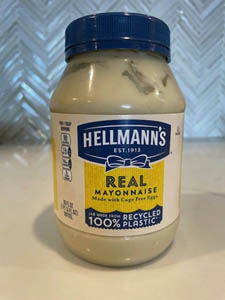
Photo courtesy of Laura Winston

Photo courtesy of Laura Winston
Another instance is Hellmann’s mayonnaise, known as Best Foods mayonnaise west of the Rocky Mountains. The U.S. Patent and Trademark Office may grant what is known as a “concurrent use registration,” which carves out the territories in which each party has the rights derived from mark registration. This is an exception that challenges the principle that a trademark registration provides nationwide rights.
Whether your business is going global or you are considering expanding within the United States, it is best to consult with an attorney who can advise you about the best ways to protect and expand your trademark rights. If you have any questions, please feel free to reach out.