Marquee Background
Marquee Background

Offit Kurman Blogs

Real Estate

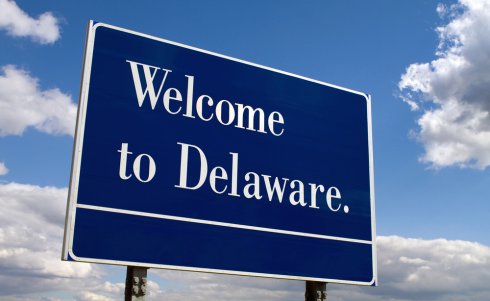
Five Reasons Delaware Reigns Supreme for Business Formation

October 20, 2025

By James A. Landon
Five Reasons Delaware Reigns Supreme for Business Formation

Why is the majority of Fortune 500 companies incorporated in the state of Delaware? Why are more than 75% of all new initial public offerings in the United States done by companies incorporated in Delaware? Why is Delaware able to generate more than 25% of its general fund revenue from the incorporation business? And, why have other states been unable to steal this business away from Delaware? 

Here are the top five reasons to form an artificial entity in Delaware.

  • The Delaware court system is well established and highly respected. The Delaware Court of Chancery specializes in corporate issues and uses judges instead of juries. This means that in every litigation, a judge with a lot of expertise in complex corporate law matters will preside, and the opinions are relatively consistent. In addition, Delaware has historically and consistently been ranked one of the top judiciaries in the country. 
  • Delaware offers a lot of flexibility for structuring a business entity. Delaware’s corporate statutes are highly flexible with respect to corporate governance, allowing significant freedom in determining the composition, powers, and management structure of the board of directors. The Delaware limited liability company statute creates even more flexibility. If a structure can be imagined, chances are it can be accomplished with a Delaware LLC. 
  • Delaware offers greater privacy. Delaware entities do not need to disclose officer or director names on the formation documents. Delaware LLCs do not need to disclose the names of its members. This creates a certain level of privacy, if needed or desired. 
  • Investors prefer Delaware entities. Venture Capital investors, investment banks and other lending institutions typically prefer Delaware entities above all other states because of the reasons stated herein.
  • Bi-partisan political consensus. When it comes to corporate law in Delaware, the politicians understand its importance, and Delaware’s importance. The bi-partisan political consensus in Delaware, therefore, attempts to keep the Delaware entities’ statutes modern and up-to-date, and to rely on Delaware’s corporate law specialists for advice on how to do this.
Categories: Real Estate

Related People

  • Posts
  • About
  • Subscribe

Firm Highlights

  • Events
    AIA Tri-State Conference
    Princeton will serve as the backdrop for three days of connection, learning, and design leadership. From keynotes to tours to the Tri-State Design Awards, this year’s conference is designed to go far beyond education sessions. Kick off the week with pre-conference intensives and individual state component Design Award celebrations, followed by three days of education, inspiration, networking, and design excellence at the 2026 AIA Tri-State Conference—featuring pre-conference intensives, three keynote speakers, 25 education sessions, curated tours, an expo, spec academies, and the AIA Tri-State Design Awards—bringing together architects and design professionals from New Jersey, New York, and Pennsylvania to connect, learn, and celebrate the best of the profession. G2. Designing Secure Practices: Cybersecurity, Data Privacy, Contractual Provisions, and Insurance Risks for Architects (4:00 PM - 5:30 PM) Architects and design professionals increasingly rely on cloud platforms, BIM software, and digital tools to manage sensitive data, creating cybersecurity and privacy risks. A single incident can trigger liability claims, regulatory obligations, reputational harm, and insurance challenges. Yet many firms underestimate how contracts, insurance, and internal practices intersect during a breach. This program offers legal and insurance perspectives on cyber risk in architecture, examining liability exposure, risky contract provisions, and mitigation strategies. A cyber insurance expert will explain policy responses, coverage gaps, coordination with professional liability, and best practices for aligning insurance with contractual risk and protecting firms from evolving cyber threats. Learning Objectives: Identify key cybersecurity and data privacy risks faced by architecture firms and explain how these risks can impact professional liability and project outcomes. Analyze common contractual provisions to determine which clauses may increase exposure to cyber incidents and propose strategies to mitigate these risks. Evaluate the scope and limitations of cyber insurance policies, including coordination with professional liability coverage, to determine how a policy would respond in a breach scenario. Develop actionable risk management strategies by integrating legal, contractual, and insurance considerations to protect sensitive client and project data.