Intellectual Property
USPTO Issues Final Rule Requiring U.S.-Registered Patent Practitioner Representation for Foreign Applicants and Patent Owners
By Kristi Nicholes and Christopher Halliday
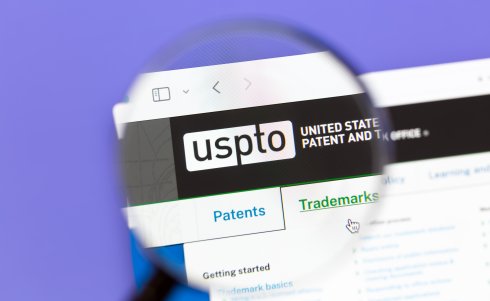
The United States Patent and Trademark Office (USPTO) has issued a Final Rule, published March 20, 2026, requiring all foreign-domiciled patent applicants, inventors, and patent owners to be represented by a U.S.-registered patent attorney (a lawyer who has passed the patent bar exam) or patent agent (a non-lawyer who has passed the patent bar exam) for all submissions made to the Office. U.S.-domiciled applicants, inventors, and patent owners may still proceed pro se.
Beginning July 20, 2026, the USPTO will enforce a major procedural change that affects any patent application listing even one inventor, applicant, or owner whose domicile is outside the United States. If any named party is foreign-domiciled — even if others are U.S.-based — the entire application will now require representation by a U.S.-registered patent attorney or patent agent.
Foreign law firms and companies with global R&D teams, cross-border collaborations, foreign subsidiaries, international research fellows, or joint development partners must ensure that a registered U.S. practitioner is engaged from the start. Many organizations will be surprised to learn that “foreign” is defined not by citizenship, but by where an inventor or entity legally resides or operates their principal place of business. A single foreign-domiciled contributor on a project can trigger the new representation requirement.
The rule is designed to curb fraud, increase filing accuracy, and harmonize U.S. practice with nearly all major foreign patent offices — and it represents one of the most significant shifts in U.S. patent procedure in a decade. It parallels (but is distinct from) the USPTO’s 2019 trademark rule requiring U.S. counsel for foreign trademark applicants, reflecting a broader USPTO effort to reduce fraudulent pro se filings and strengthen enforcement.
Key Features of the Final Rule
Mandatory U.S.-Registered Practitioner Representation
Foreign-domiciled applicants and owners, defined by domicile rather than citizenship, must be represented by a registered practitioner in good standing before the USPTO. Domicile includes a natural person’s permanent legal residence and a juristic entity’s principal place of business. The requirement applies broadly to new applications as well as to amendments, Information Disclosure Statement (IDS) submissions, Application Data Sheet (ADS) filings, petitions, priority and benefit claims, and micro-entity certifications. Only registered practitioners who have passed the USPTO examination may represent others in patent matters.
Filing Date vs. Substantive Requirements
A foreign-domiciled inventor may still obtain a filing date without practitioner representation, but key components of the application, such as priority claims, ADS information, micro-entity filings, and other required papers, will not be accepted until a U.S. practitioner is appointed. This creates an important procedural distinction between patent and trademark practice.
Enforcement Mechanisms
The USPTO will enforce the rule through several mechanisms. Unsigned or improperly signed filings will not be entered into the record, and the Office may issue Notices of Non-Compliant Representation requiring the applicant to appoint a practitioner within a specified period. Fraud mitigation is a central driver of the rule, as requiring registered practitioners allows the USPTO to pursue misconduct even if an application is later abandoned.
Efficiency and Resource Allocation
The rule also reflects a focus on efficiency and resource allocation. By reducing the number of procedurally defective filings submitted by foreign pro se applicants, the USPTO aims to decrease the examiner time spent correcting errors and to lessen the burden on the Office of Patent Application Processing.
Why the USPTO Implemented This Rule
The USPTO has identified several reasons for implementing this change. First, the rule promotes global harmonization, as most major intellectual property offices, including those in Europe, Japan, China, and Korea, already require foreign applicants to be represented by locally authorized practitioners. Second, it addresses a growing trend of fraud and misrepresentation, including false micro-entity certifications, inaccurate inventor or owner listings, and filings submitted through unregulated intermediaries overseas. Because registered practitioners are subject to ethical rules, reporting obligations, and disciplinary oversight, the USPTO gains enforcement leverage that is not available when dealing with foreign pro se filers. Third, the rule is intended to improve accuracy and efficiency, as pro se filings often require correction, clarification, or substantial examiner intervention, and representation at the outset improves application quality and reduces delays.
Comparison With the 2019 USPTO Trademark Counsel Rule
The USPTO’s 2026 patent rule closely mirrors the 2019 trademark counsel requirement in purpose, as both are designed to reduce fraudulent filings, improve compliance with U.S. legal and procedural standards, ensure accuracy in submissions, and eliminate foreign pro se participation. However, the rules diverge in key ways. The trademark rule requires representation by a U.S.-licensed attorney (though, as a practical matter, it remains advisable to engage counsel with meaningful trademark experience), while the patent rule imposes a more specialized requirement of a USPTO-registered patent attorney or agent. They also differ procedurally: trademark applications generally will not be accepted without proper counsel, whereas patent applications may still receive a filing date but will be considered incomplete until compliant representation is secured. The scope of who qualifies as “foreign” is broader in the patent context, applying if any applicant, inventor, or owner is foreign-domiciled, compared to trademarks, which focus on the domicile of the owner alone. Finally, while both rules address fraud, the patent rule more directly targets specific abuses, such as false micro-entity claims, improper priority assertions, and fraudulent correspondence filings, reflecting a documented rise in these issues in foreign-originating applications.
Practical Implications for Foreign Applicants and Patent Owners
Foreign-domiciled individuals and entities should take proactive steps to ensure compliance. They should retain a U.S.-registered patent practitioner as early as possible, particularly if they plan to file U.S. patent applications in or after July 2026. They should also review existing portfolios for upcoming deadlines that will require practitioner signatures, ensure that ADS filings, micro-entity certifications, petitions, and follow-on submissions are properly executed by a registered practitioner, and anticipate USPTO notices requiring representation in applications that were filed before the rule’s effective date.