Category: Franchise Law
Clear ResultsBusiness
Virginia Reshapes Franchising with Ban on Post-Term Non-Competes
Franchisors with Virginia locations should prepare to revise their franchise agreements and Virginia-specific disclosure materials. Beginning July 1, 2026, Virginia law will prohibit most post-termination non-compete provisions in covered franchise agreements and will require those agreements to be governed by Virginia law. For franchisees, the amendments create greater post-exit flexibility and reduce the ability of franchisors to rely on out-of-state governing-law clauses to avoid Virginia’s statutory protections. The practical message is straightforward: franchisors should review Virginia-facing templates, renewal and amendment practices, confidentiality and trade secret protections, and enforcement strategies well before making any new offer, sale, renewal, extension, or amendment for a Virginia location on or after the effective date. Implications for Virginia Franchisors and Franchisees These changes matter immediately for drafting and compliance. A franchisor that continues to use a standard national form for Virginia deals without modification risks including provisions that will no longer be permitted once the new law takes effect. Agreements entered into before July 1, 2026, are not automatically displaced, but renewals, extensions, and amendments on or after that date may trigger the new requirements, making it especially important to review not only new-deal documents but also legacy agreements that may soon come back into circulation. Public commentary following the legislation has also noted guidance issued on April 14, 2026, by the Virginia State Corporation Commission’s Division of Securities and Retail Franchising regarding updates to franchise disclosure materials and Virginia addenda, underscoring that compliance will require attention not just to contracts but also to disclosure practice. How Virginia’s New Franchise Non-Compete Law Affects Franchise Agreements The amendments to Virginia’s Retail Franchising Act, enacted through House Bill 69 and the companion Senate Bill 240, apply to franchises that require or contemplate a place of business in Virginia, a concept broad enough to reach more than traditional brick-and-mortar outlets and potentially many service concepts operating in the Commonwealth. Effective July 1, 2026, the law makes it unlawful to offer or enter into a covered franchise agreement that restricts the franchisee’s right to engage in the business of offering, selling, or distributing goods or services at retail after termination or expiration of the franchise agreement. Just as significantly, covered franchise agreements must now be governed by Virginia law, preventing franchisors from selecting another state’s law in an effort to sidestep Virginia’s franchisee protections. Virginia Franchise Non-Compete Exceptions The statute includes a narrow exception when a franchisee voluntarily sells the franchise at a mutually agreed price, whether to a third party or back to the franchisor. In that setting, the franchisor or the buyer may require the selling franchisee to agree to a non-compete that is binding for up to two years after the sale. Outside that sale context, however, post-term non-compete restrictions in covered Virginia franchise agreements are no longer permitted. The law is also expressly prospective: contracts entered into, extended, or modified on or before June 30, 2026, remain unaffected, but activity on or after July 1, 2026, may bring an agreement within the amended statute’s reach. The Business Impact of Virginia’s Franchise Non-Compete Ban and Compliance Steps for Franchisors Taken together, the amendments materially rebalance franchise relationships for Virginia locations in favor of franchisees by eliminating most post-termination non-competes and requiring Virginia law to govern covered agreements. That governing-law requirement may prove especially consequential, because it reduces the usefulness of contract provisions that previously might have directed disputes toward more franchisor-friendly legal standards. It also means that franchisors evaluating renewals, transfers, terminations, and system enforcement in Virginia will need to assess those decisions against Virginia’s franchise-specific statutory framework. For franchisors, the likely response will be to strengthen other forms of system protection that do not depend on a post-term non-compete. Confidentiality provisions, trade secret controls, non-solicitation language where appropriate, access limits on customer data, tighter operational safeguards, and clearer brand-transition requirements may all take on greater importance. The statute does not prevent a franchisor from pursuing monetary remedies when a franchisee breaches contractual obligations during the term, so careful drafting around in-term defaults, de-branding obligations, liquidated damages, and post-termination transition steps may become more important than ever. The new law may also influence how franchisors think about renewal rights in Virginia. If a former franchisee cannot be restricted from competing after expiration in most circumstances, franchisors may revisit whether renewal should remain automatic or broadly available, and whether Virginia-specific renewal provisions should be adjusted to reflect the changed competitive landscape. For franchisees, by contrast, the law creates additional bargaining leverage and a more realistic ability to continue in business after the franchise relationship ends, provided they do so without violating enforceable contractual duties that survive termination. More broadly, Virginia’s action may be an early indication of where franchise regulation is heading in other jurisdictions. Franchisors operating nationally may therefore want to treat these amendments not as an isolated state-law issue, but as a signal to review their broader contract architecture and protective covenants across the system. For now, however, the immediate takeaway is clear: any franchisor with Virginia-facing agreements or pending registration materials should act promptly to align its documents, disclosures, and operational protections with the Commonwealth’s new rules before July 1, 2026.
May 18, 2026
Business
Maryland Franchise Reform Act Passes
The Maryland General Assembly has enacted, by overwhelming majorities, the Franchise Reform Act (Senate Bill 415 & House Bill 730), marking the first significant changes to the Maryland Franchise Registration & Disclosure Law (the “Maryland Franchise Law”) since its enactment in 1981. Governor Moore is expected to sign the legislation into law shortly, and it will become effective on October 1, 2026. The House sponsor and primary driver of the legislation, Delegate Marc Korman, introduced the bill resulting from numerous constituents who had raised concerns about the franchise registration process in Maryland, concerns shared by franchisors nationwide. However, while part of the law will encourage streamlining the Maryland franchise sales registration process, it also provides changes that will be helpful to Maryland franchisees and Maryland-based franchisors. Having focused my practice on franchise law in Maryland for more than 25 years, I was privileged to be asked by Delegate Korman to work closely with him and his staff on the drafting and revising of the legislation, which included conducting workgroup focus meetings with members of the Maryland State Bar Association (“MSBA”) to gather feedback, and testifying on behalf of the MSBA in favor of the legislation multiple times throughout 2025 and 2026. The Maryland Franchise Law protects people considering the purchase of a franchise from being misled or under-informed when deciding whether to buy. The law requires franchisors to prepare a prospectus (called a “Franchise Disclosure Document” or an “FDD”) detailing a wide variety of information and submit it to the Securities Commissioner, who is an officer with the Maryland Office of the Attorney General (the “OAG”), and obtain that agency’s approval to sell franchises in Maryland. That approval, called registration, must be renewed each year in which the franchisor continues to sell franchises to Maryland residents or for the operation of the franchised business in Maryland (collectively, “Maryland Franchises”). Until now, the law has solely addressed the franchise sales process, rather than the ongoing relationship between the franchisor and the franchisee. The Maryland Franchise Reform Act does the following: For the Benefit of Franchisors Generally Following the bill’s initial introduction and passage by the House of Delegates during the 2025 session, the Securities Commissioner established a pilot program intended to expedite franchise registration renewals. The approved law requires the Securities Commissioner to continue the pilot program and to report to the legislature in 2031 on the program’s results, as well providing data on other aspects of the registration process, and an analysis of how Maryland’s exemptions from registration for experienced franchisors compares with those of other states that require registration before sale of a franchise. For the Benefit of Maryland Franchisors The law limits private parties who can sue a franchisor for violation of the Maryland Franchise Law solely to Maryland franchisees. This will eliminate the ability of out-of-state franchisees to use the statute as a weapon in disputes with franchisors that are or were headquartered in Maryland, which has been a deterrent to franchising from Maryland as compared to nearby states. For the Benefit of Franchisees Consistent with the Maryland Franchise Law’s purpose, parts of the law will benefit franchisees. Specifically: For the first time, the Maryland Franchise Law addresses the imbalance of power between franchisees and franchisors within the ongoing relationship, by prohibiting a franchisor from restricting or inhibiting Maryland franchisees from associating with other franchisees within their brand for the franchisees’ common benefit “for any lawful purpose” — which could include collectively raising grievances with the franchisor for the franchisees’ mutual benefit. Maryland franchisees will have the right to sue in Maryland courts for injunctive relief and damage suffered, if the franchisor violates this prohibition. This provision is similar to “free association” laws passed in several other states, including California and Illinois. The time during which a franchisee may bring a private claim for violation of the law’s registration or disclosure provisions has changed in a manner that benefits certain franchisees. Franchisees will now have until the earlier of four years from buying the franchise rights or two years after the date the franchise opened to the public. The limitations period was three years from the date the franchise rights were purchased, regardless of when the franchised business opened. The advantage will be for retail franchises that often take two years or more from buying the franchise to open due to challenges in securing an acceptable site and constructing the franchise, since those owners then will have time after opening to determine the viability of their investment and whether the franchisor violated the Maryland Franchise Law in selling the franchise. For franchises that open within a short time of purchasing the rights, the judgment of the MSBA and the legislature was that two years from opening is sufficient for a franchisee to make that determination and commence a lawsuit.
April 30, 2026
Franchise Law
Understanding the FDD and Franchise Agreement Before You Invest
Franchise Agreements Are Binding and Often One-Sided Franchise Agreements are typically drafted by the franchisor and presented on a “take it or leave it” basis. These contracts often impose strict controls over how you operate your business — from approved vendors and marketing strategies to pricing, hours of operation, and technology platforms. They also frequently include provisions that: Limit your ability to exit the business without penalties Impose personal guarantees and long-term non-competes Allow the franchisor to raise fees or change system rules unilaterally Require extensive marketing spend and recurring royalty payments, regardless of profitability Once signed, these agreements are legally binding, and courts generally enforce them as written. That’s why it’s critical to understand every term, especially the financial and operational obligations that can continue even if your business underperforms. The FDD Reveals More Than You Think—If You Know Where to Look Federal law requires all franchisors to provide an FDD at least 14 days before you commit to purchasing a franchise. This document includes 23 mandatory items covering everything from fees and restrictions to litigation history and franchisee turnover. Key areas to focus on include: Item Seven (Estimated Initial Investment): Are the start-up costs realistic? Do they include real estate, equipment, training, and working capital Item 19 (Financial Performance Representations): Does the franchisor provide actual revenue or profit data? If not, you’ll need to speak directly with current and former franchisees to assess performance Item 20 (System Growth and Turnover): How many outlets have closed, transferred, or terminated in the past three years? A high rate of turnover may signal problems in the system Location, Location, Location: Real Estate Considerations Matter For brick-and-mortar franchises, securing the appropriate location is mission-critical. But many prospective franchisees underestimate just how complex and time-consuming the real estate process can be. Questions to ask include: Will the franchisor assist with site selection and lease negotiations Does your market have sufficient demand for the service you're offering Have you accounted for construction costs, permitting delays, or the need for tenant improvements Before signing a lease, make sure your site is approved by the franchisor, zoned appropriately, and competitively situated within your target market. Poor location decisions can be fatal, even with a strong brand behind you. Due Diligence Is Not Optional — It’s Essential Even if a franchise system seems successful from the outside, the only way to know whether it’s viable for you is through diligent research. This includes: Contacting five to seven current and former franchisees in similar markets to ask about actual revenue, marketing effectiveness, franchisor support, and break-even timelines Building a financial model that includes royalties, fees, payroll, rent, and realistic revenue assumptions Consulting experienced franchise counsel to identify red flags or possible negotiation points (such as non-compete terms, marketing obligations, or transfer fees) Understand the Fine Print: Non-Competes and Post-Termination Restrictions One of the most overlooked — but potentially harmful — aspects of franchise agreements is the restrictive covenants that survive after your business ends. Most franchise agreements include: In-term and post-term non-compete clauses that prevent you from operating a similar business for up to two years within a certain geographic radius Non-solicitation provisions that restrict contact with former clients, employees, or vendors Injunctive relief and fee-shifting clauses that give the franchisor significant enforcement rights if they believe you’ve violated these obligations These provisions can limit your ability to earn a living in your field if things don’t work out. You must understand exactly what you are agreeing to before committing to the franchise. Franchise Investment Is a Long-Term Commitment Most franchise agreements last between five and 10 years, and renewal isn’t guaranteed. Even if renewal is offered, it often requires signing a new agreement that may include higher fees or stricter obligations. If your situation changes, selling or transferring your franchise may trigger high administrative fees or require franchisor approval. Some agreements even prohibit termination unless certain financial benchmarks are met. No Guarantees of Success Finally, it’s important to remember — buying a franchise is not a guarantee of success. Many franchisors explicitly disclaim responsibility for your profitability, and even those that provide financial data often include broad disclaimers. You bear the operational risk, and in many cases, personal financial risk. Bottom Line: Don’t Buy Blind The decision to invest in a franchise should be driven by facts — not hope, hype, or brand appeal. Review the FDD and Franchise Agreement in full. Speak to other franchisees. Build your own financial model. And don’t move forward until you’ve consulted an attorney who specializes in franchise law. The costs of skipping this step — both financial and emotional — can be far greater than you think.
August 5, 2025
Franchise Law
SBA Franchise Directory Reinstated: Key 2025 Updates for Franchisors and Franchisees
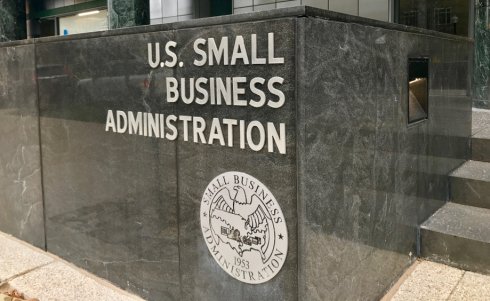
The U.S. Small Business Administration reinstated the Small Business Administration (SBA) Franchise Directory on June 1, 2025, reversing the 2023 decision to sunset the program. The Directory has long been the primary reference that SBA-certified lenders consult to determine if a franchisee of a brand is eligible for SBA-guaranteed financing. SBA guaranteed loans are intended to finance independently owned small businesses. For a franchisee to qualify as the owner of such a business, the franchisor must not unduly control the day-to-day operations, such that the person applying as a franchisee is really a passive investor. Under the updated framework, franchised brands will no longer need to sign the SBA Franchise Addendum (Form 2462), or an addendum specific to franchisees receiving SBA-guaranteed loans that the franchisor had negotiated with SBA. Instead, each brand must execute and submit to the SBA a new Certification that expressly affirms compliance with the eligibility conditions for Directory listing. See SBA Franchise Directory. By issuing the Certification, the franchisor will have agreed not to enforce any provision in its contracts with an SBA-financed franchisee that is inconsistent with the certification. Any brand that is not yet listed in the Directory may submit its current FDD and signed Certification at any time for review by the SBA. Brands already in the Directory may maintain their status by filing certifications along with their current FDDs on or before July 31, 2025. Until then, lenders may continue to close loans using the familiar SBA addendum, but SBA records will flag each brand as “Certification Pending.” On August 1, 2025, any brand that has not submitted a certification will be removed from the Directory, and its franchisees will become ineligible for SBA-backed financing until the brand is re-listed. There is no fee for a directory listing and certifications may be submitted to the SBA at no cost. One aspect of the certification that is particularly worth highlighting: “[The] Franchise Agreement does not prevent the Franchisee from having meaningful oversight over the operations of the business. Meaningful oversight includes the authority to: (i.) Approve the annual budget; (ii.) Have control over the bank accounts; AND (iii.) Have oversight over the employees operating the business (who must be employees of the Franchisee). A Franchise Agreement does not prevent a Franchisee from having meaningful oversight over the operations of its business by requiring the Franchisee to comply with quality, marketing, and operations standards that govern the Franchisee’s use of the Franchisor’s system of operations.” Therefore, companies that market as “franchises” which are primarily passive investment opportunities, are likely to face more scrutiny from SBA regulators concerned that the borrower actually operates the small business seeking funding. Such companies may need to consider making changes to their business model if SBA guaranteed loans are important to their growth strategy. For franchisees, if you are likely to seek an SBA guaranteed loan to finance your business, or you expect that a purchaser of your franchise might use such a loan to buy you out, then you should make sure that the franchisor has registered with the Directory. If it has not, you may want to ask, “Why not?”
June 18, 2025
Franchise Law
Maryland Franchise Reform Act Introduced
On January 31, 2025, Delegate Marc Korman of Montgomery County introduced Maryland House of Delegates Bill 992, entitled the Franchise Reform Act, which would make the first significant changes to the Maryland Franchise Registration & Disclosure Law (the “Maryland Franchise Law”) since its enactment in 1981. Delegate Korman told me that he introduced the bill because several of his constituents had raised concerns about the franchising process in Maryland. He told me that, in preparing the bill over the past year, he did a deep dive into this law, consulting with the franchise regulators in the Maryland Attorney General’s Office, with me and with others who are familiar with this law. The Maryland Franchise Law is designed to protect people considering the purchase of a franchise from being misled or under-informed when deciding whether to buy. The law requires franchisors to prepare a prospectus (called a “Franchise Disclosure Document” or an “FDD”) detailing a wide variety of information and submit it to the Securities Commissioner, who is an officer with the Maryland Office of the Attorney General (the “OAG”) and obtain that agency’s approval to sell franchises in Maryland. That approval, called registration, must be renewed each year in which the franchisor continues to sell franchises to Maryland residents or for operation of the franchised business in Maryland (collectively, “Maryland Franchises”). The current law mostly addresses the franchise sales process rather than the ongoing relationship between the franchisor and the franchisee. The bill would do the following: For the Benefit of Franchisors Generally: The bill would establish a pilot program, to be run by the Securities Commissioner, that is intended to expedite franchise registration renewals. Maryland registration renewal delays have frustrated many franchisors from throughout the United States. For the Benefit of Maryland Franchisors: Based on the author’s communications with Delegate Korman since the bill’s introduction, he will submit an amendment to the bill that will limit the private parties who can sue a franchisor for violation of the Maryland Franchise Law solely to Maryland Franchisees. This will eliminate the ability of out-of-state franchisees to use the statute as a weapon in disputes with franchisors that are or were headquartered in Maryland – which was a deterrent to franchising from Maryland as compared to nearby states. This expected amendment is a key to making this a balanced and fair bill. For the Benefit of Franchisees: Given the Maryland Franchise Law’s purpose, parts of the bill will benefit franchisees. Specifically: For the first time, the Maryland Franchise Law will address the imbalance of power between franchisees and franchisors within the ongoing relationship, by prohibiting a franchisor from restricting or inhibiting Maryland Franchisees from associating with other franchisees within their brand for the franchisees’ common benefit “for any lawful purpose” – which could include collectively raising grievances with the franchisor for the franchisees’ mutual benefit. Maryland Franchisees will have a right to sue for injunctive relief and damages, in Maryland, if the franchisor violates this prohibition. This provision is similar to “free association” laws passed in several other states, including California and Illinois. The time period in which a franchisee may bring a private claim for violation of the law will be extended until the later of five years from buying the franchise rights or two years after the date of the initial commencement of operations of the franchise. This is a significant relaxation of the time restriction, which had been three years from the date the franchise rights were purchased (regardless of when the franchised business opened). This seems to be an overaggressive change for private rights of action, as we would prefer to see the time period be the later of three years from buying the franchise rights or three years after commencing operations. The Securities Commissioner will be directed to increase the dollar amount of the exemption from full registration review that exists for franchisors with significant “net equity” to account for inflation since that exemption was established in the 1990s. This will allow the Securities Commissioner to substantively review many more FDDs, which may increase compliance by medium-sized franchisors with the disclosure requirements. The time period for the Securities Commissioner to bring claims for violation of the Maryland Franchise Law also will be extended to five years from a violation, giving that office greater ability to protect franchisees who were misled into buying a franchise. (Of note, the amendments concerning private rights of action will not inhibit the Securities Commissioner’s enforcement ability, including the potential that it could sue a Maryland-based franchisor whose misrepresentations harm a substantial number of franchisees outside of Maryland.) The bill will be heard by the House of Delegates Economic Matters Committee in Annapolis on the afternoon of February 19, 2025, and the author has been invited to testify on the bill and plans to do so favorably, with the amendments discussed above. We plan to keep a close watch on the activity surrounding the bill and provide additional information.
February 14, 2025
Franchise Law
Virginia Bill That Would Ban Franchise Non-Competes Advances in State Senate
Virginia Senate Bill 798, introduced by former in-home senior care franchisee Sen. Chris Head, was passed unanimously by the Virginia Senate on January 17, 2025. The bill would amend Virginia's Retail Franchising Law to require franchise agreements for a Virginia location to be governed by the laws of Virginia. It would make it illegal to offer or enter into such a franchise agreement “that restricts the right of a franchisee to engage in the business of offering, selling, or distributing goods or services at retail after termination or expiration of the franchise agreement.” It will be heard in a Virginia House of Delegates Labor & Commerce Committee, likely sometime during February 2025. Why it Matters: Covenants not to compete are hallmarks of franchising. Some argue that they are necessary to protect a franchisor’s confidential and proprietary information from misuse by former franchisees to the detriment of both the franchisor and its remaining franchisees. Many franchisees think such provisions restrict their ability to hold a franchisor accountable, since the non-compete traps franchisees in the relationship with little recourse to advocate for their benefit. Very few states have outlawed post-termination or expiration covenants not to compete in franchise agreements. California is well-known for its law that makes non-competes unlawful in most contracts, including employment and franchise agreements, unless the covenant is given in the context of selling a business as a going concern. Illinois restricts the ability of a franchisor to enforce a non-compete following the expiration of a franchise agreement unless the franchisor has offered the franchisee the right to renew. Indiana restricts the duration and scope of acceptable post-relationship non-competes. But to this author’s knowledge, no state’s law, even California’s, is as far-reaching in restricting post-relationship competitive restrictions in franchise relationships as the Virginia bill. What to Do if the Bill Passes: If a franchisee seeks to break away from the franchisor during the term of the franchise agreement, the franchisor did not violate applicable franchise sales law, that the franchisee has the option to rescind the franchise, and the franchisor fulfilled its material obligations under the franchise agreement, then the franchisor should have a claim for lost future profits for the franchisee abandoning the franchise without cause. If Virginia passes this bill into law, it will be important for franchisors selling in Virginia to ensure that their standard franchise agreement clearly states that the franchisor has the right to collect such damages. As to the expiration of the franchise, traditionally, most franchisees have had the option to continue the franchise relationship at expiration if they sign the franchisor’s “then-current form of franchise agreement.” The problem has been that franchise agreements have often become more one-sided for the franchisor, particularly as a system matures, and if there is a non-compete applicable upon non-renewal then the franchisee has little ability to negotiate more favorable terms at “renewal.” The bill, if enacted, would dramatically change that dynamic at expiration. One provision that franchisors might consider adding to their agreements is an option for the franchisor to purchase the business as a going concern at expiration, if the franchisee does not accept the franchisor’s offer of a new agreement at least 90 days prior to expiration. The provision would require the franchisor to pay the fair market value of the franchised business, including goodwill attributable to local use of the trademarks, and also require the franchisee to agree to provisions that are customary in a business purchase and sale agreement. Covenants not to compete, after sale of a business for value, are customary and should be enforceable following such an arms-length sale, notwithstanding the language of the Virginia bill. Another approach that may be helpful to franchisors is to define all customer information collected or obtained by the Franchisee during the franchise relationship as proprietary to the franchise system and forbid the use of that information subsequent to the end of the franchise relationship. Such a provision should state that the Franchisee has a license to use the customer data during the relationship, and that license (and the local goodwill with those customers) is an asset that the Franchised Business that the Franchisee may sell to a new franchisee as part of an approved transfer. Such a provision, particularly with franchisees who are new to the system and the industry, may enable the franchisor to stop a former franchisee from using the customer data under trade secret laws, notwithstanding the bill discussed above. Such a restriction would make it less attractive for the franchisee to leave the system. However, such a provision could also have negative ramifications for the franchisor if it is sued by a franchisee’s customer. The details of each such provision, and others to protect truly proprietary and unique assets of a franchise system, require careful consideration and customized drafting. However, if Virginia enacts this bill into law, then it would join a select group of states that have tilted the playing field in favor of veteran franchisees, and franchisors will need to consult with experienced counsel who understands the ramifications of contract provisions.
January 31, 2025
Franchise Law
Franchise Sales Likely to Get New Level of Regulation Over Third-Party Sellers
A bill passed by the California Senate on May 22, 2024, Senate Bill No. 919 (“Bill 919”), will address a gap in the regulation of franchise sales – namely, a lack of transparency regarding the role and background of independent franchisee recruiters, often known as “franchise brokers.” This bill, which has the rare support of both the International Franchise Association (the “IFA”) and franchisee advocate groups such as the American Association of Franchisees and Dealers (“AAFD”), now heads to the California General Assembly for approval. It appears to have a strong chance to become law this year and to influence franchise sales regulation nationally. Historically, franchise laws have focused on requiring affirmative disclosures by franchisors so that franchisee prospects can obtain information about the franchise system to better understand the business opportunity that they are evaluating. While the vast majority of franchise registration states require franchisors to submit information about their third-party brokers in franchise seller disclosure forms, those provisions pre-dated the growth of franchise seller networks such as FranNet, FranChoice and The Entrepreneur’s Source (among many others). Such intermediary companies, which usually identify themselves as consultants to prospective franchisees, are a major source of new franchisees to many growing systems and play an important role in franchise sales. Because those companies have many franchises in their “inventory” (sometimes hundreds) and therefore only occasional contact with each franchisor, they don’t fit the model of a broker regularly engaged in selling for a relatively small group of brands who the franchisor would recognize as its regularly used franchise seller. To date, only two states (New York and Washington), have historically required brokers to register themselves as franchise sellers. If passed, Bill 919 would require third-party franchise sellers, including the large networks with dozens of individual representatives, to register with the State of California. The fee for a franchise seller filing an initial registration application is $250, with a $150 annual renewal fee and $50 fee to amend a registration upon a material change to the application information. More notably, Bill 919 adds a requirement for third-party franchise sellers to provide a disclosure document to prospective franchise buyers. The broker would be required to disclose some of the categories of information that franchisors must supply in their Franchise Disclosure Document (“FDD”). Specifically, brokers must submit a Uniform Third-Party Franchise Seller Disclosure Form and a Uniform Third-Party Franchise Seller Disclosure Document (“FSDD”) along with their registration application. In addition to registering the FSDD with the state, franchise sellers must also present this document to a prospective franchisee prior to engaging with them about a franchise opportunity. The FSDD must include the following information: A cover page containing standardized and general language that is not specific to a particular broker and will include, at a minimum, the following information: A description of the types of franchise sellers A seller’s role in the sales process The services a seller might provide Methods of compensation for a seller’s services Examples of questions a prospective franchisee might ask a seller General information about the specific seller’s legal and trade names, state and year of formation, principal address, owners and key personnel, and contact information The franchise seller’s professional experience during the last five years Administrative, civil, or criminal actions against the seller within the last five years alleging fraud, unfair or deceptive practices, or similar violations (which aligns with the types of matters disclosed in Item 3 of a franchisor’s FDD) The industries a seller represents and the number of brands within each industry A description of services provided by the seller How the seller is actually compensated, including how the amount of compensation is calculated Whether a broker network/organization or franchise sales organization may receive additional consideration The name and contact information for every franchisee that the seller sold a franchise to anywhere in the United States during the last calendar year, including the number of units sold to each franchisee With respect to enforcement, Bill 919 creates a cause of action that allows franchisees to sue for damages and rescission if the seller violates the law with respect to a franchise sale. Additionally, the California commissioner can issue a stop order prohibiting a franchise seller from offering or selling franchises in the state if it finds that a seller has failed to comply with any applicable provisions of law or rules issued by the commissioner. The new rules and penalties have the same scope as a franchise sale under the California Franchise Investment Laws. So, they will apply to franchise sellers who are based in California, but also to anyone “consulting with” a prospective franchisee who is a resident of or has a principal place of business in California, or if the franchised business will be in California. Any franchise broker that wishes to sell franchises that will be located in California, or to prospects located in California, will need to register. The bill exempts California licensed real estate brokers and securities brokers-dealers. Since none of the mandatory disclosure items are limited to California sellers or California franchisees, Bill 919 also may be a template for the regulation of franchise sellers on a nationwide level, particularly in those other states that require pre-sale registration of franchise offerings. If passed, Bill 919 will go into effect on July 1, 2025.
July 29, 2024
Franchise Law
How to Bring a Franchise Brand to the US
Originally posted 2/3/2015. No content changes. What’s the best way for a successful franchisor outside the U.S. to launch its brand within the U.S.? Here is one suggested approach: Start small. Begin with a test. See what works and what doesn’t work. What are the costs? What are the best sources of supply? Who are the competitors and what do they offer? What prices make sense? What local talent can join the venture and bring U.S. industry expertise? A test will allow the brand owner to modify the system to meet the challenges of the market and then to offer a proven concept when prospective franchisees come into the picture. Form a wholly owned subsidiary in the U.S. to run the test. This will not require franchise law compliance because the U.S. operation is not a franchise. A wholly-owned subsidiary gives the brand owner full control and limits taxes and other liabilities to the U.S. entity. Form the subsidiary as a corporation in the state in which the company’s U.S. headquarters will be located. There is little or no advantage to incorporating in Delaware when the company has no plans to raise capital or go public. Apply for federal trademark registration. The trademark can be owned either by the brand owner abroad or by the U.S. subsidiary. Of course, the mark itself must be available and must make sense in the U.S. market. The experience from the test will facilitate preparation of the operating manual and training program as well as the franchise agreement and franchise disclosure document. The franchise offering will be made by a company to be formed when the documents are close to completion. Just before launching franchise sales, form a new company to be the franchisor. This can be either a corporation or a limited liability company. This entity shields the operating company from the liabilities of the franchise business and usually avoids the need to disclose financial information about the parent company. Have your outside accounting firm prepare an audit of the opening balance sheet of the franchisor entity. This will be required for registration in New York and possibly one or more other states. If you avoid these states, you can phase in the audits over three years. Don’t grant master franchise rights. If you do, the brand owner abroad that grants master franchise rights in the U.S. may be obligated to comply with the federal and state franchise laws and may risk potential liability for violation of those laws by the master franchisee. You can read a more detailed explanation of this process in a paper I recently wrote for offshore franchisors considering U.S. expansion. A number of companies based in various countries that have successfully expanded their franchise brands into the U.S. Here are a few examples: Australia Action Coach – business coaching – www.actioncoachfranchise.com Bark Busters – home dog training – www.barkbusters.com Cartridge World – printer cartridges – www.cartridgeworld.com Canada Proshred – mobile shredding – www.proshred.com Yogen Fruz – frozen yogurt – www.yogenfruz.com Denmark BoConcept – furniture stores – www.boconcept.com England The Body Shop – beauty products – www.thebodyshop.com Germany Engel & Voelkers – real estate brokerage – www.evusa.com Japan Beard Pappa’s – cream puffs – www.muginohointl.com Kumon – after-school enrichment – www.kumonfranchise.com Tom Pitegoff, Tom.Pitegoff@offitkurman.com
November 15, 2023
Franchise Law
SBA-Backed Franchise Lending
Originally posted on October 24, 2018 content updated on November 13, 2023 This blog post may contain information that was accurate at the time of publication but could become outdated over time. We strive to provide relevant and timely content, but circumstances, facts, and data can change. Users are encouraged to verify the current status of any information presented and seek updated guidance where necessary. The U.S. Small Business Association’s loan guaranty program has undergone several changes over the years. The January 1, 2018,rule supersedes changes described in my past blog postings in December 2014 and 2016. A franchisor that wants its franchisees to be able to obtain SBA-backed loans to finance their franchised businesses must be listed on the SBA Franchise Directory.The directory, which is maintained on the SBA’s website, shows to franchisees and lending banks the franchise systems that qualify for SBA-backed lending. To be listed on the SBA Franchise Directory, a franchisor must submit to the SBA its franchise agreement, its franchise disclosure document (FDD), and any other documents the franchisor requires the franchisee to sign. The SBA then undertakes an affiliation review (explained below) and an eligibility determination. If the franchisor uses the SBA Addendum (SBA Form 2462), the SBA will only undertake an eligibility review and will not conduct an affiliation review. For each listed franchise system, the SBA Franchise Directory indicates whether an addendum is needed, and whether that will be the SBA Addendum or an SBA Negotiated Addendum. Franchisors that are already listed on the SBA Franchise Directory and are not using the standard SBA Addendum must recertify with the SBA each year. As used by the SBA, the term “affiliation” relates to the question of whether the borrower is an independent small business. A lack of affiliation is a condition to being eligible for SBA-backed loans. If affiliation exists, the franchisee is not an independent small business as defined in the SBA’s regulations. Affiliation exists when the franchise agreement gives the franchisor excessive control. In order to qualify for the SBA loan program, the applicant must have the right to profit from its efforts and must bear a risk of loss commensurate with the concept of ownership of an independent business. The SBA Addendum establishes the lack of affiliation by stating the following: Change of Ownership The franchisor may exercise an option or right of first refusal to purchase a partial interest in the franchisee’s business only if the proposed transferee is not one of the current owners of the business or a family member of a current owner. If the franchisor’s consent is required for any transfer (full or partial), the franchisor will not unreasonably withhold its consent. Once a transfer takes place, the transferor cannot be liable for the actions of the transferee. Forced Sale of Assets If the franchisor has an option to purchase the assets of the franchised business upon the franchisee’s default or termination of the franchise agreement and the parties are unable to agree on the value of the assets, the value will be determined by an appraiser agreed upon by the parties. If the franchisee owns the real estate where the franchised business operates, the franchisee will not be required to sell the real estate upon default or termination, but the franchisee may be required to lease the real estate for the remainder of the term of the franchise agreement (excluding additional renewals) for fair market value. Covenants If the franchisee owns the real estate where the franchised business operates, the franchisor must not record against the real estate any restrictions on the use of the property. If any such restrictions are recorded against the franchisee’s real estate, they must be removed in order for the franchisee to obtain SBA-assisted financing. Employment The franchisor will not hire, fire or schedule the franchisee’s employees. For temporary personnel franchises, the temporary employees will be employed by the franchisee, not the franchisor. The SBA Addendum is a form that calls for blanks to be filled in. The text of the addendum may not be altered. Franchisors listed on the SBA Directory that do not use the standard SBA Addendum or who are using an SBA Negotiated Addendum and who do not want to begin using the SBA Addendum, must submit to the SBA each year the “Annual Franchisor Certification” stating that the terms of the franchise agreement have not substantively changed and that no changes have been made to the SBA Negotiated Addendum. If there has been a change, the franchisor must resubmit its franchise documents to the SBA for review. The annual certification requirement ends only if the franchisor begins using the standard SBA Addendum. The opportunity to avoid an annual SBA affiliation review is one reason, then, for a franchisor to use the standard SBA Addendum even if the franchisor’s standard franchise agreement already contains the provisions of the SBA Addendum. If a franchisor is willing to use the standard SBA Addendum, it might actually make sense for the franchisor to change its standard terms to include the provisions of the SBA Addendum. For one thing, some franchisees may be unhappy with the fact that only those franchisees who seek SBA-backed loans receive the benefits of the SBA Addendum. Other franchisees will certainly learn about franchise agreement terms offered to some but not all franchisees, and this difference might cause discord. In addition, including the terms of the SBA Addendum in a franchisor’s standard franchise agreement can reinforce a franchisor’s position that the franchisor is not a joint employer of the franchisee’s employees and that the franchisor is not liable for the franchisee’s negligence or wrongdoing. After all, as the SBA sees it, these provisions prove that the franchisee bears a risk of loss commensurate with the concept of ownership of an independent business. Before the SBA established the SBA Franchise Directory, a company called FRANdata maintained the Franchise Registry, the forerunner to the SBA Franchise Directory. FRANdata continues to maintain its Franchise Registry. While being listed on FRANdata’s Franchise Registry is not required in order for a franchise brand to be eligible for SBA financing, FRANdata does offer assistance to franchisors and more information to prospective lenders than a listing on the SBA Franchise Directory. As a private company, FRANdata charges a fee to franchisors for its services. Tom Pitegoff, Tom.Pitegoff@offitkurman.com
November 13, 2023
Franchise Law
Structuring a Multi-unit Franchise
Originally posted 7/25/2017, no content changes. A multi-unit franchise owner can structure its operations in a number of ways, but one approach in particular often makes a lot of sense: a developer entity that acts as the parent company for the individual franchise locations. First some background. Many franchisors seek out franchisees who want to open three or more units. One approach is to sign a development agreement in which the developer commits to open an agreed-upon number of franchise units in a defined territory over a specified period. In exchange, the franchisor agrees not to open a company-owned unit or to grant a franchise to anyone else in that territory while the development agreement remains in effect. In most franchise systems, the developer opens each franchise under a separate franchise agreement. The multi-unit developer typically signs the development agreement and the first franchise agreement at the same time. Each subsequent franchise is then opened pursuant to a separate franchise agreement. The development agreement typically ends when the developer signs the franchise agreement for the last franchised unit promised in the development schedule. Territorial exclusivity in the development agreement ends, but the more limited territorial protection in the individual franchise agreements remains in effect. One approach: form a developer entity One approach that can work well for a typical multi-unit franchisee is to form a limited liability company (“LLC”) to sign the development agreement and act as the parent company for each individual unit entity. For illustration purposes, let’s call this parent company the “Developer LLC.” Each franchise would be owned and operated by a separate “Franchisee LLC” under its own franchise agreement, and the Developer LLC would be the sole member of each Franchisee LLC. From a tax point of view, each LLC would be a pass-through entity so the profits or losses of each Franchisee LLC would become the profits or losses of the Developer LLC and, in turn, of its member or members. This structure has several advantages over using a single franchisee entity. Benefits for the Developer LLC include the following: It limits the Developer LLC’s liability with respect to each franchised unit to the amount invested in that unit. The Developer LLC’s operating agreement can facilitate investment in the Developer LLC by new members. The operating agreement of each Franchisee LLC can facilitate investment into that particular franchise by new members. For example, a Franchisee LLC might want to give its operations manager for that specific unit an ownership interest in that entity in order to reward and motivate the manager. The Developer LLC can employ people to provide common services to all or some of the unit franchises, so that they are not bound to a specific unit. The Developer LLC can more easily sell off or close down one or more of the Franchisee LLC units. Each Franchisee LLC can more easily report its revenues separately and accurately. This structure also has benefits for the franchisor: The franchisor can easily track the performance of each franchise unit individually, as financials and tax records are prepared separately for each Franchisee LLC business. It simplifies the franchisor’s right of first refusal on the sale of a Franchisee LLC business. It facilitates the termination or nonrenewal of one franchise agreement without terminating others. Variations and related considerations To facilitate the use of individual franchisee entities, franchise agreements commonly contain provisions that require the franchisee entity to state in its organizational documents that its activities are confined solely to owning and operating the franchised business. Franchisors commonly require the owners of a franchisee entity to sign personal guarantees of the franchisee’s obligations. If the owner is a Development LLC, the franchisor may want guarantees both from the Development LLC and from its owners. Variations are common. For example, if the developer is an individual who plans to open just three units without bringing in other investors, the simplest approach would be for that person to sign the development agreement individually rather than forming an entity to be the developer. He or she could be the sole member of each Franchisee LLC. The developer would have rights and obligations vis-à-vis the franchisor, but with little legal risk to third parties such as a landlord, suppliers or customers. Unlike a franchised unit, the developer in this case has no operating business. Of course, many multi-unit owners acquire their locations over time without signing a development agreement. The structural suggestions presented here apply equally well to a multi-unit franchisee who lacks a development agreement. Franchisors should also keep the entity issue in mind when signing up new franchisees, regardless of whether they are part of a development group or operated by a single-unit owner. Before each new agreement is signed, the franchisor should verify that the entity has actually been formed and that its name is correct. Entity searches are easily done on state websites. If the search yields no result, the franchisor should ask the prospective franchisee for evidence that the entity was formed. Franchisors should also be sure that no franchisee entity uses the franchisor’s trademark as part of the entity’s name. Use of the trademark could make ownership confusing to third parties, even to the extent that the franchisor might be sued or investigated together with the franchisee for the franchisee’s wrongful acts. A franchisee’s use of the franchisor’s trademark in the franchisee’s company name would also require the franchisor to go to the trouble of ensuring that the franchisee changes its company name upon a termination or nonrenewal. To avoid this, most franchise agreements prohibit the franchisee from using the franchisor’s trademark as part of the franchisee entity’s name. Structuring a multi-unit franchise takes thought and planning. Doing so is worthwhile. A well-structured system allocates risks appropriately and facilitates growth and system change over time. An earlier version of this piece was published in Modern Restaurant Management. Read it here. Tom Pitegoff, Tom.Pitegoff@offitkurman.com
November 6, 2023
Franchise Law
When are Parent Company Financial Disclosures Required?
Originally posted 5/22/2017, no content changes. A franchisor selling franchises in the U.S. must disclose its audited financial statements in Item 21 of the franchise disclosure document (FDD). Sometimes, parent company financials are used instead of the franchisor’s financials. This is easily done when the parent company is a public company that already has audited financials. But most franchisors are not public companies. They are not likely to have parent company audited financials and would prefer not to incur the added expense of auditing a group of companies rather than just the franchisor entity. Audits are expensive. The franchisor may also want to shield its parent company from liability to franchisees. The FTC Rule requires parent company financial disclosures in certain cases. Specifically, the FTC Rule requires disclosure of the financial statements of “any parent that commits to perform post-sale obligations for the franchisor or guarantees the franchisor’s obligations.” So if the franchisor wants to avoid disclosing parent company financials and to protect the parent company from the liabilities of the franchise company subsidiary, the simplest approach is to be sure that the parent company does not perform any post-sale obligations of the franchisor to the franchisee. In other words, a franchisor should ensure that either the franchisor itself or an affiliated company, and not the parent company, performs any post-sale obligations of the franchisor. These obligations might be, for example, a requirement to supply specified equipment, goods, inventory or services to franchisees. An affiliate other than a parent company is permitted to provide goods or services to franchisees without triggering an added obligation to disclose financials. FAQ 4 of the FTC’s frequently asked questions states that if the franchisor “is obligated to provide goods and services and the parent assumes that responsibility, or the franchisor arranges for the parent to provide goods and services directly to franchisees on its behalf, then the parent’s financials must be disclosed.” FAQ 30 qualifies this requirement. It states that “if a franchisor’s parent is the sole supplier of a good or service without which a franchise cannot be operated,” the parent company’s financials must be disclosed in Item 21. “To the extent that a prospective franchisee is asked to rely on a parent to perform post-sale contractual obligations or relies on a parent’s guarantee, the financial stability of the parent becomes a material fact that should be disclosed.” Statement of Basis and Purpose, 72 Fed. Reg. 15444, 15511 (Mar. 30, 2007) In other words, parent company financials are not required when the franchisee may optionally purchase the goods or services either from the parent company or other sources. But parent company financials are also not required when an affiliate is the supplier and the affiliate does not guaranty the obligations of the franchisor. For this reason, many franchisors will have a holding company that owns both a supply company and a franchisor entity (as well as an operating company that owns the “company” outlets). These are affiliated companies or sister companies. The requirement of audited financials is one reason that many new franchisors form a new entity to be the franchisor, rather than the company that has been operating the business through company-owned locations. The first FDD can include an audit of the newly-formed franchisor’s opening balance sheet. Or the balance sheet may be unaudited in most states (but not New York) in the first year. If the franchisor prefers not to disclose its own financials, the franchisor has the option of including financial statements of any affiliate if the affiliate “absolutely and unconditionally guarantees to assume the duties and obligations of the franchisor under the franchise agreement.” (See Item 21 of the FTC Rule.) In most cases, though, the franchisor does not want to disclose the financials of its affiliate or of its parent company. Avoiding disclosure of affiliate company financial statements does not mean that no financial disclosures of affiliates are required. Item 8 (restrictions on sources of products and services) requires disclosure of required purchases from the franchisor or its affiliates. This includes disclosure of the total revenue, revenues from all required purchases, and the percentage of total revenues that the franchisee or its affiliates receive from required purchases. This can result in a required disclosure along these lines: “In 2016 [the most recent fiscal year], our affiliate ABC LLC received $_____ based on sales to our franchisees, which represented ___% of the total 2016 revenues of ABC LLC or $_______ based on the company’s internal books and records.” This is a meaningful disclosure. But it is far less of a disclosure than audited financial statements of the affiliate. Aside from the financials, other affiliate disclosures are required in Items 1 (the franchisor and any parents, predecessors and affiliates), 3 (litigation) and 4 (bankruptcy). Items 5 (initial fees), 6 (other fees) and 7 (estimated initial investment) require disclosure of payments that must be made to affiliates. Item 20 (outlets and franchisee information) requires disclosures of the numbers of “company” outlets, which may actually be those of an affiliate. Tom Pitegoff, Tom.Pitegoff@offitkurman.com
October 20, 2023
Franchise Law
Testing a New Franchise Concept
Originally posted 3/16/2017, no content changes. One of the toughest challenges an aspiring franchisor may face is selling its first franchise. Who would take the risk of buying a franchise from a franchise company that has no franchisees? For a few successful business owners, the idea of franchising may come from one or more customers who love the business concept and initiate the idea of buying a franchise even before the owner has taken the first step to prepare a franchise offering. But this rarely happens. Here’s another suggestion: If the aspiring franchisor has a successful business unit (a store or a restaurant, for example) that is operated well by a trusted manager, that manager might be a good candidate to buy the business at that location and become the company’s first franchisee. The manager will already know the business inside out, having successfully managed the business as an employee. The transaction would entail the sale of the existing business at a single location in which the buyer undertakes to continue operating as a franchisee of the seller. The buyer’s newly-formed company would sign a franchise agreement as part of the purchase of the business. To enhance the appeal of the transaction, the franchisor may extend credit for a portion of the purchase price or may waive the payment of any initial fee and give a grace period on the payment of any ongoing royalty or marketing fee. The idea is to maximize the fledgling franchisee’s chances of success. The franchisee’s success is crucial. This franchisee will be the first validator of the system for subsequent franchise buyers. With only one franchisee, the franchisor is unlikely to include financial performance representations in Item 19 of its franchise disclosure document (FDD). And without providing numbers in Item 19, the franchisor may not discuss numbers orally. Only an existing franchisee can do that. But what about the legal requirements of franchise registration and disclosure, which may include the requirement to prepare and disclose audited financial statements and much more? Is there a way that the aspiring franchisor can avoid the cost, the time and effort of preparing a detailed FDD and possibly registering it with the state? This answer is yes. There are ways to start small and test the concept before the franchisor is ready to prepare a disclosure document and to register the offering. The Federal Trade Commission’s trade regulation rule on franchising (the FTC Rule) excludes from the definition of a franchise the grant of the right to use a trademark where the license is the only one of its general nature and type to be granted by the licensor. So a single license should not trigger the federal requirement to prepare a disclosure document. State laws will usually not be a concern if the outlet is located in a nonregistration state, although the business opportunity laws may pose an issue. What if the outlet is located in a registration state? A few states (Indiana, Minnesota, New York and Washington) exempt the isolated sale of a franchise. New York’s single sale exemption calls for some explanation. The exemption applies when (i) the franchisor makes an offer to no more than two persons, (ii) the franchisor does not grant the franchisee the right to offer subfranchises, (iii) no commission or other remuneration is paid for soliciting the prospective franchisee, and (iv) the franchisor is domiciled in the state or has filed with the NY Department of Law its consent to service of process. (N.Y. Gen. Bus. Law §684(3)(c).) The single sale exemption in New York only applies by its terms to the state’s registration requirement. What about the disclosure requirement? Does this exemption save the franchisor from the time and expense if preparing a detailed FDD? Fortunately, the exemption does apply to both the registration and disclosure requirements. A franchisor’s obligation to provide disclosure arises under New York law when the franchise is subject to registration. Section 683(8) of the NY General Business Law states that “[a] franchise which is subject to registration under this article shall not be sold without first providing to the prospective franchisee, a copy of the offering prospectus, together with a copy of all proposed agreements relating to the sale of the franchise ….” This exemption will not extend beyond the first franchise sale in New York or any other state. Unless another exemption applies, the franchisor will be required to prepare a franchise disclosure document and possibly register the offering before selling its second franchise. That would be the time to form a new franchisor entity, open a bank account in the name of the franchisor entity and prepare an audit of the franchisor’s opening balance sheet. The licensor of the test franchise might be the operating company that owns the trademark. The test franchise agreement should allow the franchisor to assign the agreement to its affiliates so that the brand owner may assign the agreement to the newly-formed franchisor. In any event, the contact information for the first franchised business should be listed in the first FDD. Another approach that works for some companies in nonregistration states is to use the minimal payment exemption under the FTC Rule. A franchise sale is exempt from the FTC Rule if less than $570 is paid to the franchisor or an affiliate at any time before the franchisee’s business has been in operation for six months. Another exemption under the FTC Rule that can facilitate the first franchise sale without the need for an FDD is the insider exemption. In order to benefit from the insider exemption under the FTC Rule, one of the owners of the franchisor company must become a franchisee. This exemption applies when, within 60 days of the sale, the purchaser (or a person who owns at least 50% of the purchaser) has been for at least two years, an owner of at least a 25% interest in the franchisor. A few states also exempt insider sales (California, Rhode Island, South Dakota and Washington). Tom Pitegoff, Tom.Pitegoff@offitkurman.com
October 13, 2023
Franchise Law
Correcting an Accidental Franchisor Violation
Originally posted 10/31/2016, no content changes. What's a franchise? Franchise registration and disclosure laws define a "franchise" more broadly than people generally realize. A company may be franchising without knowing it. The "license" agreement may have been drafted, for example, by an attorney who has limited knowledge about franchise law. Hence the popular topic (at least among franchise lawyers) of the "inadvertent" or "accidental" franchisor. A business owner who has run a successful "test" of licensing its business may decide that the next step is to set up a franchise system, not realizing that the test was already a franchise sold in violation of one or more franchise laws. The violation would consist of the licensor's failure to prepare a franchise disclosure document ("FDD") as required by the Federal Trade Commission's trade regulation rule on franchising (the "FTC Rule") and to deliver the FDD to the prospective franchise buyer at least two weeks before the franchise buyer signs an agreement or makes a payment to the franchisor. If a state franchise law applies, the violation may also consist of the licensor's failure to register the offering with the state. Or a business may have granted several "licenses" without knowing about the federal and state requirements. How can a noncompliant franchisor get back on track to roll out a program to sell franchises in multiple states in compliance with the franchise laws? Here is one approach: Form a new company that will be the franchisor entity. Set it up as a commonly-owned affiliate of the company that owns the brand. This provides limited liability and allows the brand owner to avoid the need to obtain and disclose audited financials of its non-franchise business. Only the franchisor entity will disclose its financial statements, beginning with an opening balance sheet. An affiliate is preferable to a subsidiary because Item 21 of the FDD calls for disclosure of the financials of the franchisor and "any parent that commits to perform post-sale obligations for the franchisor…." Prepare a franchise agreement and any other documents that a new franchisee would sign, as well as a detailed FDD. Then offer rescission to the existing licensees while at the same time delivering to them the FDD of the newly-formed franchisor and an offer to replace the license agreement with a franchise agreement with no initial fee. Many licensees would likely sign the new franchise agreement to replace the prior license agreement. If there are one or more holdouts, the brand owner can assign the holdout's license agreement to the brand owner's newly-formed franchisor affiliate. Unless the license agreement provides otherwise, that assignment would not require the licensee's consent. This approach should remedy the problem in the states that do not have franchise sales laws in addition to the FTC Rule or in states that require a simple filing with no review. But the picture is more complicated in a handful of states that require franchise registration after a careful review by a state examiner. Registration States In Item 1 of the FDD, the franchisor must disclose the business experience of "any affiliates that offer franchises" including the length of time each has offered franchises for the type of business that the franchisee will operate. In other words, the franchisor will need to disclose the initial test "license" or the accidental franchises. If one or more of the accidental franchisees is located in the examiner's state, the examiner is certain to raise the issue of a possible violation. The best way to deal with this issue is to self-report. Tell the examiner up front that the company recently learned of this issue and wants to cooperate so that the company can begin to sell franchises in compliance with the state's franchise law. It may be best for franchise counsel to telephone the examiner on a no-name basis before even submitting the filing. Proactively self-reporting the violation and pointing out mitigating factors is far superior to becoming a target of an investigation. Before reporting violation, of course, the company should be sure that no exemptions apply. Mitigating factors may include reliance on the advice of counsel who did not recognize the relationship as a franchise and the fact that no franchisee has complained or lost money as a result of the franchise purchase. Catching the problem early is helpful because franchisees are likely to be optimistic while still in the "honeymoon" phase of the business. A happy franchisee is not likely to rescind the agreement. New York New York has a very specific provision dealing with this situation. Section 691(2) of the New York General Business Law states that a person may not file or maintain a lawsuit against a franchisor for violation of the New York Franchise Sales Act if that person receives a rescission offer from the franchisor and does not accept such offer within 30 days after the franchisee receives it. At least 10 business days before making the rescission offer, the franchisor must submit the offering documents to the Department of Law (the state Attorney General's Office). If the New York Department of Law is satisfied that the violation was inadvertent and caused no damage to franchisees, the New York Department of law might impose a fine and require the franchisor to sign an assurance of discontinuance ("AOD"). Must the franchisor disclose the AOD in Item 3 of the FDD? The short answer is no. In Item 3, a franchisor must disclose, among other things, any pending administrative, criminal or material civil action alleging a franchise law violation against the franchisor or any of its affiliates. The franchisor must also disclose any currently effective injunctive or restrictive order or decree resulting from a pending or concluded action brought by a public agency relating to the franchise. An AOD does not result from a civil action or proceeding. For this reason, it is not appropriate to disclose the AOD in Item 3 of the FDD. An AOD is a creature of New York Executive Law Section 63(15), which provides in part as follows: "In any case where the attorney general has authority to institute a civil action or proceeding in connection with the enforcement of a law of this state, in lieu thereof he may accept an assurance of discontinuance of any act or practice in violation of such law from any person engaged or who has engaged in such act or practice." An AOD entered into pursuant to New York Executive Law Section 63(15) should not be disclosed in Item 3 because the AOD is not an injunction or restrictive order or decree resulting from an action brought by a public agency. The AOD is signed "in lieu" of an action. On the other hand, if the Attorney General's Office actually prosecutes a case against the franchisor for a willful violation that causes harm to a number of franchise buyers, then the franchisor will have to disclose the action and any resulting judgment in Item 3. Tom Pitegoff, Tom.Pitegoff@offitkurman.com
October 2, 2023
Franchise Law
Notice of Rights Enhances Trade Secret Protection
In order to access the full range of remedies the Defending Trade Secrets Act of 2016 (DTSA) offers, a trade secret owner must notify employees and contractors of certain rights they have under the DTSA. The DTSA allows a trade secret owner to seek damages and injunctive relief in federal court against someone who misappropriates the company’s trade secrets. The trade secret must be related to a product or service used or intended for use in interstate or foreign commerce. The action must be brought within three years after the misappropriation was discovered or reasonably should have been discovered. And the misappropriation must have occurred after the date of the DTSA enactment, May 11, 2016. If trade secrets are misappropriated willfully and maliciously, the court may award (i) exemplary damages equal to twice the amount of the actual loss and (ii) attorneys’ fees. But a trade secret owner can forfeit the right to recover exemplary damages and attorneys’ fees by neglecting to follow one simple requirement. The trade secret owner must notify employees and contractors that they are protected against liability for disclosing trade secrets in certain circumstances. This notice applies to agreements entered into or updated after the date the DTSA went into effect. In other words, franchisors and other trade secret owners should update their documents now. The notice might look something like this: Nothing in this Agreement is intended to prohibit you from exercising your rights under the Defending Trade Secrets Act of 2016. You have the right to disclose our trade secrets in each of the following circumstances without incurring criminal or civil liability: You may disclose our trade secrets (i) in confidence to a federal, state or local government entity, or to an attorney, solely for the purpose of reporting a suspected violation of law or in an investigation of a suspected violation of law, or (ii) in a legal proceeding under seal. You may disclose our trade secrets in a complaint or other document filed in a lawsuit or other proceeding as long as the filing is made under seal. This includes a lawsuit you may file for retaliation by us for your reporting a suspected violation of law to a government entity. You may not otherwise disclose any trade secret or confidential information except pursuant to a court order. Who must receive this notice? The trade secret owner must give the notice to its employees. But the term “employee” has a broad meaning in the DTSA. In addition to actual employees, the term “employee” includes “any individual performing work as a contractor or consultant for an employer”. Franchisees are independent contractors While it is not clear what the statute means by “a contractor or consultant for an employer”, it is plausible that a court might view a franchisee as one who requires notice under this provision. For this reason, franchisors should provide notice both to their employees and franchisees, and to other contractors who may have access to trade secrets. Where should the notice appear? It should appear in any contract with an employee or contractor “that governs the use of a trade secret or other confidential information.” This might include the franchise agreement and any confidentiality agreement or other agreement with a confidentiality provision. Alternatively, it can appear in the trade secret owner’s policy document provided to employees that sets forth the employer’s reporting policy for a suspected violation of law as long as the employer provides a cross reference to that policy document. In other words, existing agreements need not be amended as long as the policy statements referred to in those agreements are updated to include this notice. This means that trade secret owners, including franchisors, should update their employee manuals, and franchisors should also update their franchise operations manuals. New franchise agreements and confidentiality agreements should also contain the required notice, or at least a cross reference to the document that does contain the notice. The enactment of the DTSA is a positive development. It will likely lead to a more uniform law of trade secrets throughout the U.S. In addition, the ease of bringing an action in federal court or removing an action from state court to federal court can meaningfully affect the outcome of the case to the benefit of the franchisor or other trade secret owner. But to get the maximum benefit from the DTSA, trade secret owners should be sure to give the required notice to their employees, franchisees and other contractors.
September 27, 2023
Franchise Law
Suspending Franchise Sales
In several states that require franchise registration, franchisors should suspend franchise sales while an amendment or renewal application is pending with the state. Franchisors commonly suspend franchise sales pending registration in most states that require franchise registration. But California and New York each offers a unique and very different approach than a blackout or suspension of sales. California takes an approach that is eminently practical. In California, a franchisor may deliver to a prospect the franchise disclosure document (“FDD”) as filed with state for renewal or amendment together with a written statement that the filing has been made but it has not been reviewed by the examiner and is not effective, and that the franchisor will deliver to the prospect an effective FDD showing any further revisions at least 14 days before any agreement is signed or any consideration is paid. (Cal. Corp. Code §31107.) This approach seems to be one that would not be objectionable in any registration state even if it is not part of the laws of the other state. How could anyone object to a disclosure of filed materials while the actual sale is being suspended until the registration is effective and the franchisor makes a new disclosure after the amendment or renewal is effective and waits the required 14 days? New York also does not require franchisors to completely stop all sales while an amendment to the franchise registration is pending. But New York’s approach is impractical, leading franchisors generally to suspend sales during the time that an amendment is pending. In New York, after a material event occurs or an amendment is submitted to the Attorney General’s Office and is awaiting review and registration, a franchisor may deliver its registered FDD (not the one that is pending) to a prospective franchisee and notify the prospect in writing that an amendment application is (or is about to be) pending and that the franchisor will deliver to the prospect a copy of the amended FDD when it has been accepted for registration. The franchisor can close the sale while the amendment is pending, but the franchisor must hold any funds paid in trust in a separate bank account until ten business days following the date the prospect receives the registered amended FDD. The new franchisee has the right to rescind the sale at any time up to the end of that ten business day period. If that happens, the franchisor must promptly refund the money held in trust. (NYCRR, Title 13, Chapter VII, Section 200.3(i)(3).) Few if any franchisors will want to close the sale while the amendment is pending and thereby run the risk of rescission. Also, because the prescribed procedure calls for the use of the registered FDD and not the revised version that is pending approval, the franchisor will not be able to use the latest version of a revised franchise agreement or to disclose new material information until after the franchise sale has taken place. Incidentally, New York makes no distinction between an amendment and an annual update to a franchise registration. The annual update is also an “amendment”. Also unlike other states, New York views its franchise requirements expansively, so that franchisors based in New York must comply with the New York franchise laws even when they sell franchises outside the state. A New York based franchisor should suspend franchise sales everywhere, even in nonregistration states, whenever an amendment to its franchise registration is pending in New York. On the other hand, if the franchisor is based outside of New York, the suspension required in New York only applies to sales to prospective franchisees in New York. Franchisors based in states other than New York and selling to prospective franchisees in nonregistration states may use a revised FDD as soon as it is completed. But when selling to prospective franchisees in most registration states, the franchisor should stop selling franchises as soon as a renewal or amendment is filed. Franchise sales can resume after the renewal or amendment is effective in those states. But when an event occurs that might affect a prospective buyer’s decision to purchase the franchise, it may be advisable to suspend sales even before the FDD has been revised and submitted to any states. Upon the occurrence of such a material event, most registration states require a prompt amendment filing and a suspension of sales until the amended FDD is registered. In states that do not regulate franchise sales, it is a good idea to suspend sales between the time that a material event occurs and the time that the revised FDD is completed. In states that do not require franchise registration, franchise sales are governed only by the Federal Trade Commission’s trade regulation rule on franchising (the “FTC Rule”). The FTC Rule requires the franchisor to prepare an updated FDD within 120 days after the end of the franchisor’s fiscal year. The FTC Rule also requires quarterly updates of the FDD whenever there is a material change to the disclosures in the FDD. Even though the FTC Rule does not require a franchisor to suspend sales upon the occurrence of a material event, it may nevertheless be a good idea to do so. The sale of a franchise when the franchisor knows of a material event but has not disclosed it can give rise to a claim of misrepresentation or fraud under state laws. Franchisor management should be sensitive to the need to amend the FDD. Someone in the organization should be familiar with the contents of the FDD and also be tuned into the most sensitive developments within the company. If a merger or buyout of the company is planned, or if a bankruptcy event or dispute or other threat begins to materialize and is not yet public, the franchisor may not be ready to amend the FDD. But at some point, it may be advisable to suspend franchise sales until the announcement is made and the FDD is amended.
September 19, 2023
Franchise Law
What’s a Biz Op?
What’s a business opportunity or, as we often say, a “biz op”? The Federal Trade Commission (FTC) regulates biz op sales under its authority to regulate unfair or deceptive trade practices. The FTC’s definition of a business opportunity differs from the definitions under the laws of the 26 states that regulate biz ops, and the states themselves have varying definitions. These laws impose anti-fraud obligations on the sellers of biz ops, and some require registration and disclosure. This post covers the FTC biz op rule (16 CFR Part 437). A separate post will address state biz op laws. The FTC began regulating the sale of biz ops throughout the U.S. in 1979 with the issuance of a trade regulation rule on franchising and business opportunities. In 1995, the FTC began a regulatory review of the 1979 rule. That review led to a new FTC franchise rule in 2007 and a separate new FTC business opportunity rule in 2012 in light of the significant differences between franchises and biz ops. The FTC staff report of November 8, 2010, noted that “franchises typically are expensive and involve complex contractual licensing relationships, while business opportunity sales are often less costly, involving simple purchase agreements that pose less of a financial risk to purchasers.” Accordingly, biz op offerings are subject to less imposing and costly compliance requirements. A “business opportunity” under the FTC rule means a commercial arrangement in which (i) the seller solicits a prospective purchaser to enter into a new business; (ii) the prospective purchaser makes a required payment; and (iii) the seller represents, expressly or by implication, orally or in writing, that the seller or its designee will do any one of the following: provide locations for the use or operation of equipment, displays, vending machines or similar devices owned, leased or paid for by the purchaser; or provide outlets, accounts or customers for the purchaser’s goods or services; or buy back the goods or services that the purchaser makes or provides. Unlike the FTC franchise rule, the required payment under the FTC biz op rule does not exclude purchases for less than $500. But like the franchise rule, payments for reasonable amounts of inventory at bona fide wholesale prices are not counted toward the required payment for a business opportunity. Franchises are exempted from the FTC’s biz op rule. The FTC business opportunity rule requires the biz op seller to provide to each prospective purchaser a one-page disclosure document at least seven calendar days before a prospective purchaser may sign any documents or pay any money to the seller. The disclosure document includes yes and no answers to the following questions: Has the seller or any of its affiliates or key personnel been the subject of a civil or criminal action involving misrepresentation, fraud, securities law violation or unfair or deceptive practices within the past 10 years? If yes, the seller must attach a list and brief descriptions of all such legal actions. Does the seller offer a cancellation or refund policy? If yes, the seller must attach a statement describing the policy. Has the seller or its salesperson discussed how much money a purchaser can earn or purchasers have earned? Have they stated or implied that purchasers can earn a specific level of sales, income or profit? If yes, the seller must attach an earning claims statement, as explained below. A biz op seller has the option to make an earnings claim or not. An earnings claim includes, among other things: “(1) any chart, table, or mathematical calculation that demonstrates possible results based upon a combination of variables; and (2) any statements from which a prospective purchaser can reasonably infer that he or she will earn a minimum level of income (e.g., “earn enough to buy a Porsche,” “earn a six-figure income,” or “earn your investment back within one year”).” (14 CFR §437.1(f).) The seller must have a reasonable basis for any earnings claim it makes, and the seller must have written materials that substantiate the claim at the time it is made. The seller must make the written substantiation available upon request to the prospective purchaser. The earnings claim itself must state the beginning and ending dates when the represented earnings were achieved and the number and percentage of all purchasers who achieved at least the stated level of earnings during the indicated period. The disclosure document must also include the names and telephone numbers of all people who have purchased the business opportunity within the last three years. If there are more than 10, the disclosure document may optionally include the 10 that are nearest to the prospective purchaser’s location. The purchaser signs and dates a duplicate copy of the disclosure document and sends it to the seller to evidence the disclosure. There is no federal filing requirement for biz ops, just as there is none for franchises.
September 4, 2023
Franchise Law
What’s an Exclusive Territory?
The extent of a franchisee’s territorial rights is the subject of Item 12 of the franchise disclosure document (FDD). One of the questions franchisors must address in Item 12 is whether the territory is exclusive. If the territory is not exclusive, the Federal Trade Commission’s trade regulation rule on franchising (the FTC Rule) requires that Item 12 contain this statement: You will not receive an exclusive territory. You may face competition from other franchisees, from outlets that we own, or from other channels of distribution or competitive brands that we control. So what does “exclusive territory” mean? Not surprisingly, an “exclusive territory” means a geographic area within which “the franchisor promises not to establish either a company-owned or franchised outlet selling the same or similar goods or services under the same or similar trademarks or service marks,” as stated in FAQ 25 of the FTC’s “frequently asked questions”. So far so good. But the definition became complicated on October 16, 2012, when the FTC Staff issued FAQ 37, modifying the definition of an exclusive territory. FAQ 37 addresses the case in which the franchisor reserves the right to open franchised or company outlets in “non-traditional venues” like airports, arenas, hospitals, hotels, malls, military installations, national parks, schools, stadiums and theme parks. In FAQ 37, the FTC staff states that the franchisor’s reservation of the right to open franchised or company outlets in non-traditional venues is not just an exception to the grant of territorial exclusivity. Instead, it renders the entire territory nonexclusive. Non-traditional venues v. alternative channels of distribution The FTC staff distinguishes “non-traditional venues” from “alternative channels of distribution”. The FTC Rule specifically requires franchisors to disclose in Item 12 whether the franchisor or an affiliate reserves the right to sell in the franchisee’s otherwise “exclusive territory” through alternative channels of distribution “such as the Internet, catalog sales, telemarketing, or other direct marketing, to make sales within the franchisee’s territory using the franchisor’s principal trademarks.” FAQ 25 indicates that such a reservation of right does not change the fact that the grant is exclusive. The FTC staff views non-traditional venues like airports, arenas, hospitals, hotels, malls, military installations, national parks, schools, stadiums and theme parks as something different than “alternative channels of distribution”. The distinction is based on the fact that non-traditional venues are physically located in the franchisee’s territory. The FTC staff distinguishes sales from a physical location from sales via the Internet or mail order that may originate from a location outside the territory. Accordingly, a franchisor that reserves the right to sell through “non-traditional venues” must state in Item 12 that it does not provide an exclusive territory and that the franchisee may face competition from the franchisor and other franchisees. Donut holes do not compete This interpretation of non-traditional venues does not reflect market realities. Another way to look at non-traditional venues (but not the way the FTC Rule views it) is that they are donut holes in the otherwise exclusive territory of the donut. Non-traditional venues typically redraw the territory to look more like a glazed donut with a hole in the middle than a jelly donut without one. The donut hole is the non-traditional venue. Sales via the Internet or mail order can compete in fact with a store in any physical location. By contrast, sales in non-traditional venues typically do not compete with stores outside of those locations, even those in close geographic proximity. These venues typically constitute a separate market. An airport, hospital, hotel, military installation, park, school, stadium or theme park is distinct from the surrounding geographic area. The people in those venues are there for a reason. They are a captive market for the outlets in those venues. People located in a non-traditional venue do not commonly leave the venue to shop or eat elsewhere while they are awaiting their scheduled flight or attending classes, or in the middle of a sports event or a visit to a theme park. They are in the venue for a specific reason. They are a captive market. Similarly, a person who lives outside of an airport, hospital, school, stadium or a theme park does not enter that venue in order to shop or eat at a particular franchised store or restaurant. Non-traditional venues are often distinct islands within a larger geographic territory that otherwise can be exclusive to the franchisee within the meaning described in FAQ 25. Outside of these non-traditional venues but within the boundaries of the franchisee’s territory, the franchisor can indeed promise that it will not “establish either a company-owned or franchised outlet selling the same or similar goods or services under the same or similar trademarks or service marks.” The franchised and company outlets in the non-traditional venues may pose no competition whatsoever to the franchisee. On the contrary, they may enhance the brand for the benefit of all franchisees. Non-traditional venues are usually defined as such for the very reason that they do not compete with locations in the rest of the territory. Counter-intuitive disclosure The FTC Rule requires that franchisors who reserve rights in non-traditional venues state in Item 12 that the franchisee may face competition from the franchisor or other franchisees. The problem is that this statement may be untrue. The franchisor may not actually compete with the franchisee in the exclusive territory. They do not make the actual territory granted nonexclusive. Yet the FTC Rule does allow franchisors who reserve the right to make Internet or mail order sales to say that the franchisees receive exclusive territories, even though Internet and mail order sales may actually compete with the businesses of franchisees. Unfortunately, the disclosure requirements regarding territorial exclusivity in Item 12 are far from intuitive. They do not advance the plain language goal of franchise disclosure regulation generally. It’s probably too late, but it might have been better to define a non-traditional venue as one that constitutes a captive geographic market that does not compete with the market in the surrounding areas. This would have allowed franchisors to disclose that the territory granted is exclusive notwithstanding a reservation of rights in non-traditional venues. On the positive side, the approach required by FAQ 37 is uniform, so that no franchisor will be at a disadvantage vis-à-vis its competition by disclosing that the territory is non-exclusive when it feels and functions as an exclusive territory. The competition must make the same disclosure.
August 23, 2023
Franchise Law
Some Multi-Unit Franchisees are Public Companies
While most of the private equity and public offering activity of franchise companies focuses on franchise brands and systems, every now and then a large, multi-unit franchisee will go public or seek private equity financing. Public company franchisees may trade at lower multiples than those of franchisors because the franchisees do not control the brand. But publicly-traded multi-unit franchisees can nevertheless be significant companies in their own right. Publicly-traded franchisees include the following companies: Carrols Restaurant Group trades on Nasdaq. It owns and operates approximately 675 Burger King franchises. Burger King, the franchisor, has an ownership interest of approximately 28% in the company. Diversified Restaurant Holdings is a Nasdaq company.It owns and operates Buffalo Wild Wings franchises as well as its own brand, Bagger Dave’s Burger Tavern restaurants. Arcos Dorados Holdings trades on the NYSE. It is an Argentina company that owns and operates more than 1,800 McDonald’s restaurants in 20 Latin American countries. Meritage Hospitality Group trades over-the-counter.It owns and operates more than 120 Wendy’s and Twisted Rooster restaurants. HMS Host operates franchises and affiliate-owned brands in airports and highway rest stops.It is owned by Autogril SpA, a public company in Italy, with worldwide operations. Private equity firms also have multi-unit franchisee holdings, including the following: Sun Capital owns Heartland Automotive Services, Inc., the largest Jiffy Lube franchisee Sentinel Capital owns Border Foods, a Taco Bell franchisee; Sterling Investment Partners owns Southern California Pizza Company, a Pizza Hut franchisee with more than 220 locations. Other notable large multi-unit franchisees are privately held: NPC International operates more than 1,250 Pizza Hut franchises and 140 Wendy’s franchises. NPC was acquired by an entity controlled by Olympus Growth Fund V, L.P. and certain affiliates in December 2011. At the time of the acquisition, NPC obtained debt financing that is registered with the SEC. Morgan’s Foods Inc., the owner of 68 KFC, Taco Bell and Pizza Hut Express franchises, was a public company until it was acquired in May 2014 by Apex Restaurant Management Inc. for roughly $20 million.Apex is one of the largest franchisees of Yum! Brands (KFC, Pizza Hut and Taco Bell) and Long John Silver’s restaurants. Falcon Holdings, LLC operates approximately 100 Church’s Chicken restaurants.It is privately held.
August 9, 2023
Franchise Law
Franchising for the Greater Good
Nonprofit organizations and franchised businesses operate in separate worlds. But sometimes those worlds meet in a way that can be mutually beneficial. When the franchise benefits the mission of the nonprofit, the organization might consider forming a separate entity that will become a franchisee. The arrangement is sometimes referred to as “social franchising”. Starting any new business is a risk. Even a franchise business. Not every nonprofit organization will be willing to expose a portion of its assets to business risk. But in some cases, and with proper legal advice, the arrangement can work. Here’s how it’s done: The nonprofit should form and contribute the initial financing to a new for-profit entity, typically a limited liability company, that will sign the franchise agreement and become the franchisee. The separate entity protects the nonprofit from the liabilities of the franchised business. It also protects the organization’s nonprofit status. Because the franchisee is wholly-owned by the nonprofit, the net profits go to the nonprofit to further its mission. The franchise entity’s business income is taxed as such. In fact, its local tax payments help support the community. The nonprofit need not be expert in the franchisor’s line of business. The franchisor will provide a business system in a package with training and support. But the nonprofit should find an experienced and ambitious manager to operate the business. Having the right management will benefit both the nonprofit and the franchisor. The franchisor will likely benefit from the positive publicity that comes with its association with a good cause. Customers will appreciate the fact that their dollars will benefit a social mission. The franchisor may also benefit by finding a franchisee with deep community ties and an excellent reputation, which can help build the franchisee’s business and help the franchisor move into a new market. The franchisor can discount or waive its initial franchise fee for entities owned by nonprofits, similar to the way many franchisors give discounts to veterans. But the franchisor should not lower its standards in awarding the franchise. The franchisee prospect should meet the same qualifications that the franchisor requires of for-profit franchisee candidates. The franchisee’s management should have the requisite experience, aptitude, ambition and team compatibility, and the entity must be adequately financed. In addition, the franchisor should be satisfied the nonprofit is committed to taking the risk of starting the new business. Beyond that, the mission and culture of the nonprofit organization should be one that the franchisor is proud to support. Here are some examples of franchising to nonprofits taken from articles in the QSR Magazine, New York Times, Entrepreneur Magazine, NonProfit Times, Wall Street Journal, Franchise World, and Franchise Times: Ben & Jerry’s was the trail blazer when it began working with select nonprofits in its “PartnerShops” program for youth-development and job training nonprofit organizations in 1987. Subway began working with nonprofits in 1996, opening franchises in school cafeterias and hospitals, some of which are owned by the institutions. The YWCA of Greater Pittsburgh opened a Nathan’s Famous restaurant within its facility in 2010. Affordable Homes of South Texas, which constructs homes for low-income families, opened a Blimpie shop in Weslaco, Texas, in 2013. The Dale Rogers Training Center owns a Papa Murphy’s franchise in Oklahoma City to train and employ people with disabilities. CMARC, a nonprofit in Woburn, Massachusetts, that provides job opportunities for disabled people in its community, bought a Money Mailer franchise in 2008. Money Mailer is a direct mail marketing company. It helps the local businesses market, which creates more job openings. And the fact that CMARC was already working with the local businesses made it easy to introduce the Money Mailer program to those businesses. Beaver County Rehabilitation Center (BCRC) Inc., in New Brighton, Pennsylvania, owns a Candy Bouquet franchise to “teach work with work”. Washington Vocational Services bought an Auntie Anne’s pretzel franchise in an outlet mall near Seattle in 2005. Share Our Strength, a charity based in Washington, D.C., that fights childhood hunger around the world, opened a Wine Styles shop in Washington, D.C., in 2007. The wine connection enabled the organization and its for-profit subsidiary to host fund raising events together featuring great wines, thereby appealing to the nonprofit’s donors.
July 21, 2023
Franchise Law
COVID-19 and State Franchise Renewals
Originally posted on June 12, 2020, content updated on June 12, 2023. This blog post may contain information that was accurate at the time of publication but could become outdated over time. We strive to provide relevant and timely content, but circumstances, facts, and data can change. Users are encouraged to verify the current status of any information presented and seek updated guidance where necessary. The COVID-19 pandemic disrupted the work of state franchise regulators as well as the franchisors they regulate and the franchise buyers who benefit from state regulation. The pandemic also affected accounting firms, sometimes delaying the completion of audited financials, resulting in late renewal filings. Several states took positive steps to ease their filing rules as a result of COVID-19. It’s worthwhile to reflect on these changes so that we can do even better in the face of future calamities, whether that means a recurrence of the pandemic before a vaccine is available or the outbreak of a different pandemic. Extended deadlines Some states extended their franchise renewal filing deadlines. As a result, franchisors that missed their renewal deadlines were not required to submit new initial applications for franchise registration. This would have increased their filing fees. At the time, the fee for an initial registration in New York, for example, was $750, while the renewal fee was $150. In the State of Washington, the initial fee was $600, while the renewal fee was $100. Of course, these extensions did not allow franchisors to sell franchises during the period in which the franchise registration had lapsed. California On March 22, 2020, the California Commissioner of Business Oversight issued a notice stating that, through June 30, 2020, the Department of Business Oversight would waive the additional $225 filing fee for franchise renewals that are filed after the registration has lapsed. At the time, the initial registration fee in California was $675, and the renewal fee was $450. Hawaii The Hawaii Department of Commerce and Consumer Affairs, which normally requires renewal filings within three months after the end of each year, at that time extended the deadline from March 31, 2020, to April 30, 2020. Illinois At that time, the Illinois Attorney General’s Office issued a notice stating that a franchisor whose registration was due to expire between April 1, 2020, and June 1, 2020, was automatically granted an extension of 60 days from its anniversary date to file a franchise renewal application without penalty. Indiana The Indiana Securities Commissioner announced on April 7, 2020, that “any franchise registration that was set to expire between March 16, 2020, and May 31, 2020, was automatically extended to June 30, 2020.” Maryland The Securities Commissioner of Maryland issued an order on March 17, 2020, stating that a franchisor whose registration was due to expire during the Coronavirus State of Emergency was granted an extension of that registration “for a period of time equal to 30 days after the date the Governor of Maryland declared the end of the Coronavirus State of Emergency.” Minnesota The Minnesota Commerce Department issued a Guidance notice on March 30, 2020, stating that the deadline for franchisors whose annual reports were due by April 30, 2020, was extended to June 30, 2020. New York New York law normally requires franchisors to file updated Franchise Disclosure Documents (FDDs) no later than four months after the end of each fiscal year. In a notice dated March 24, 2020, as revised on May 12, 2020, the Office of the Attorney General granted a filing deadline extension. Any registration renewal or amendment that was due between March 1, 2020, and June 6, 2020 (the “Relief Period”) was extended for 90 days from the end of the Relief Period. Virginia On March 17, 2020, the Virginia State Corporation Commission extended the renewal deadline for franchises whose registration was due to expire while the Judicial Emergency Declaration by the Supreme Court of Virginia remained in effect. The initial 21-day extension was extended on April 2, 2020, “to remain in effect during the pendency of the Judicial Emergency Declaration or any similar subsequent declaration, declaration extension or order of the Supreme Court of Virginia or such other time period as may be subsequently ordered by the Commission.” Washington The Washington Department of Financial Institutions issued a notice on April 8, 2020, stating that “applicants may pay the renewal fee of $100 to complete an application for franchise registration … for any offering that was previously registered and that expired, or that will expire, between March 1, 2020, through June 30, 2020, until further notice.” Electronic filings Paper and CD ROM filings can be a challenge when filers work from their homes. Online filings are usually the easiest and always the fastest way to file. For some states, franchise filings continue to be accepted electronically. Minnesota, Rhode Island and Wisconsin, for example, offer electronic filing. Indiana required franchise applications to be made electronically since January 1, 2020. California’s DocQNet self-service portal existed long before the pandemic, but in its notice of March 22, 2020, the California Commissioner of Business Oversight stated that “the Department is strongly urging” that all franchise filings be submitted electronically during the COVID-19 pandemic. In its notice of April 8, 2020, the Washington Department of Financial Institutions reminded filers that all franchise filings are now required to be submitted online through the Department’s electronic filing system. Hawaii also encouraged franchisors to file online using the state’s securities portal. New York never offered electronic franchise filings until New York City became the epicenter of the COVID-19 pandemic. But while New York’s COVID-19 notice required that all franchise filings “be submitted by email in addition to the required paper and/or CD filings,” the email submission must also contain a copy of the check that must still be mailed to the Department of Law. Remote Notarization and E-Signatures A few states required the franchisor’s certification to be signed by an officer of the franchisor before a notary public. It may have been impossible during a pandemic to find a notary or an officer willing to sign before a notary when almost everyone was sheltered in place. For this reason, Washington waived notary requirements “while social distancing directives remain in effect.” New York and Hawaii temporarily suspended the requirement that the notary be physically present at the signing. In other words, audio-visual technology was adequate. Of course, this worked only when the signing officer and the notary were present in the same state. California went a step further by announcing that it would accept documents “filed on DocQNet that are signed electronically using e-signature software, such as DocuSign, in which case notarization of signatures will not be required.” Final Thoughts Extending deadlines is a useful tool when special circumstances affect large numbers of filers. But electronic filings and e-signatures are helpful to everyone with or without a pandemic. We can hope that states that do not offer online filings may now see the need to move quickly and institute online alternatives to paper and CD-ROM requirements, and that more states allow e-signatures as an alternative to in-person notarization requirements.
June 12, 2023
Franchise Law
SBA Exiting Regulation of Franchise Relationships as Part of Effort to Increase Availability of Its Small Business Loan Programs
The U.S. Small Business Administration (SBA) is amending various regulations governing SBA's 7(a) Loan Program and 504 Loan Program, including streamlining determinations of loan applicants’ eligibility as small business owners. As part of the amended regulations, the SBA is removing the provisions relating to affiliation based on franchise and license agreements, along with all other provisions evaluating affiliation based on factors other than actual or indirect (or “beneficial”) ownership. Because of that removal, the SBA is eliminating the SBA Franchise Registry as of May 11, 2023. As stated by the SBA, “These revisions remove the principle of control of one entity over another from consideration of affiliation; therefore, the mere fact that an applicant may be a franchisee is not in itself a reason that would render the applicant ineligible for an SBA loan, and thus there is no longer a compelling reason to maintain the SBA Franchise Directory". In addition, the SBA will not require franchisors and franchisees to sign any sort of standard or pre-negotiated franchise agreement addendum to obtain an SBA-guaranteed loan. Instead, as is a requirement for all SBA guarantees of loans, lenders must examine the franchised business for affiliation based on ownership. The SBA announcement described the following as an example: “(W)hen lending to a Franchised business, the SBA Lender must determine who owns the applicant business and any businesses the applicant owns in accordance with these regulations. However, neither the SBA Lender nor SBA will review the applicant Franchised business for affiliation with other entities beyond ownership; the applicant business will not be considered affiliated with the Franchisor or other Franchised businesses except by ownership.” What Does This Mean for Franchising? As to regulation of the franchise relationship, this marks a major retrenchment of SBA’s involvement in that area, having required franchise agreement changes as a condition of lending for several decades. However, readers should note that the Federal Trade Commission is scrutinizing franchise relationships due to a large volume of complaints it has received from franchisees in the process of considering updates to its long-standing Franchise Sales Rule. During March 2023, the FTC issued a “Solicitation for Public Comments on Provisions of Franchise Agreements and Franchisor Business Practices” that may be a preliminary step towards FTC issuing rules restricting franchise agreement terms and/or franchisor business practices that it perceives to be “unfair” to franchisees. In addition, the FTC is accepting comments on extending its proposed rule banning non-competition agreements in employment agreements to include franchise relationships. Finally, bills have been introduced in several state legislatures to substantively regulate aspects of franchise relationships. In terms of franchisee financing, this change may streamline obtaining an SBA-guaranteed loan. However, as the SBA noted in issuing its new regulations, to obtain an SBA guarantee a lender must determine whether the applicant meets all eligibility and other SBA Loan Program Requirements, including: certifying that the applicant does not have the ability to obtain some or all of the requested loan funds on reasonable terms from non-government sources, ensuring that applicants are U.S. citizens or Legal Permanent Residents, obtaining personal and corporate guaranties, confirming that the applicant business has the ability to repay the loan through cash flow of the business, and has eligible uses of proceeds, verifying financial information, obtaining proper collateral and lien position, determining whether there is a direct or indirect impact on historic properties (and) compliance with environmental policies and procedures, and closing the loan in accordance with SBA program requirements. This is a reminder that obtaining an SBA loan is still not the easiest way to finance. Also, we anticipate that, for the development of new franchise locations, lenders may require heightened business plan verification and support from franchisors, especially for emerging franchise systems and for applicants that are new to the system (even for larger franchisors). It may be more important than ever for franchisors to have a package of unit-level financial performance information to provide to lenders.
March 14, 2023
Franchise Law
"Not So Fast" – Maryland Gas Station Operator Obtains Injunction Stopping Franchise Termination
On May 25, 2022, the U.S. District Court in Greenbelt, Maryland issued a preliminary injunction ordering PMIG 1025, LLC and Petroleum Marketing Group, Inc. ("PMG") to continue its franchise relationship with the operators of the “Airport Shell” retail gas station and convenience store near Baltimore Washington International Airport during the pendency of the operators' case that PMG did not have good cause to end their petroleum franchise relationship under the U.S. Petroleum Marketing Practice Act (the "PMPA"). The Court, through highly respected veteran jurist Paul W. Grimm, ruled that the operators had a reasonable chance of prevailing on the merits of their claims that PMG improperly terminated the Franchise Agreement for the operation of Airport Shell. The Court further found that the harm to the plaintiffs without an injunction issuing, namely losing control over their business, was greater than the potential harm to the defendants with such an injunction. The PMPA, which begins in Title 15 of the U.S. Code at Section 2801, protects franchisees by limiting the circumstances under which a petroleum franchisor may terminate or “fail to renew” a motor fuel franchise. Mac's Shell Serv., Inc. v. Shell Oil Prods. Co. LLC, 559 U.S. 175, 177 (2010) (citing 15 U.S.C. §2802). The PMPA provides protections against termination or non-renewal to motor fuel dealers that are superior to the typical provisions of the franchise and lease agreements between petroleum sellers and operators, or indeed between typical business format franchisors and their franchisees. The particular factual circumstances of the BWI Airport Shell case are quite complicated, as the site at issue is subject to a master lease with the Maryland Aviation Administration. However, the essence of the dispute is whether PMG acted in good faith (meaning “subjective good faith” based on an “honest evaluation of the franchisor’s own business needs”) and in the ordinary course of its business in demanding substantial rent increases and property improvements as a condition of continuing the franchise, or whether it imposed those conditions as pretext or "poison pill" to force out the operator and begin operating the location through employees. This is a scenario familiar to business format franchising, particularly where the franchisor also controls the real estate on which the franchised business operates. The injunction issued is just for the operators' case, as it proceeds through the U.S. district court to trial before a federal jury (likely in the summer of 2023). However, it is notable that to demonstrate its legal right to end the franchise relationship, PMG will be required to prove that the increased rent and burdens it demanded as a condition of franchise renewal were "the result of determinations made by the franchisor in good faith and in the normal course of business, and . . . franchisor's insistence upon such changes or additions [were not] for the purpose of preventing the renewal of the franchise relationship." While the PMPA does not apply to non-petroleum business format franchises, veteran business format franchisees being confronted with commercially unreasonable demands to renew their franchise should consider whether decisions under that law, used by analogy, can help their cause. The case decision described is Fursyth Petroleum Foundation Inc., et al., Plaintiffs v. PMIG 1025, LLC, et al., U.S. District Court, D. Maryland, Southern Division. Case No. PWG 21-cv-2433 (Dated May 25, 2022).
July 27, 2022
Business
The Terrifying New York Definition of a Franchise
As Published in the New York Business Law Journal Licensing is big business. Brand owners may license selected product lines, create brand extensions, enter new markets or simply enhance their brands through licensing. But few brand owners know that the New York Franchise Sales Act (“NYFSA”), by its terms, regulates licensors who provide no marketing assistance and impose no requirements other than quality control. The definition of a “franchise” under the NYFSA is extremely broad.[1] It covers far more business arrangements than anyone would reasonably consider to be a franchise. This anomaly puts New York franchise law in “left field” as the late Rupert Barkoff noted in his excellent article published in the New York Law Journal on May 1, 2012.[2] This is an understatement. The NYFSA, which has not been revised since it went into effect in 1981, is not even in the same ballpark as similar legislation in other jurisdictions. Barkoff called this anomalous New York definition of a franchise “terrifying.” In order to sell franchises anywhere in the U.S., a franchisor must prepare a detailed franchise disclosure document that includes audited financial statements. A franchisor located in New York, or a franchisor that intends to sell franchises to buyers in New York, must register the offering with the state Attorney General’s Office before the franchisor may lawfully sell franchises from or in the state. The franchisor must then make the required disclosures to each prospective franchisee and wait 10 business days (or 14 calendar days in the other dozen or so states that regulate franchise sales) before entering into the agreement or accepting any payment. Failure to comply with the NYFSA can result in enforcement action by the New York State Attorney General’s Office and private actions by franchisees for rescission, damages, injunctive or declaratory relief, attorneys’ fees, and costs. Willful violation of the NYFSA can lead to punitive damages and criminal liability. Not only can a simple trademark license agreement be a franchise in New York. A marketing consulting agreement can also be a franchise. So can a distribution arrangement where the distributor must pay an initial fee to the supplier to gain the right to distribute in a specific market or territory. To put this another way, outside of the business arrangement that we all know as a franchise is a large “gray” area in which the arrangement is at risk of being a franchise under New York law. In short, the NYFSA is a trap for the unwary. Most people would not think of consulting with a franchise lawyer before entering into a trademark license agreement or a marketing agreement. Yet failure to comply with the NYFSA can give ammunition to an aggrieved licensee in a dispute with its licensor or result in prosecution of the licensor by the New York State Attorney General’s office. The broad definition of a franchise cries out for change in the law. A Two-Prong Definition Impedes Business in New York The definition of a franchise under most franchise sales laws contains three elements: a fee, a trademark and a marketing plan prescribed in substantial part by the franchisor. The franchise sales laws of Maryland and Virginia are typical examples.[3] These definitions, unlike the New York definition, are also similar to the definition of a franchise under the Federal Trade Commission’s trade regulation rule on franchising (the “FTC Rule”), which also contains three elements.[4] The New York definition of a franchise has just two elements.[5] One element is either a trademark or a marketing plan prescribed in substantial part by the franchisor. The second element is a fee. Each of the franchise sales laws, of course, has various exemptions and exclusions from the definition of a franchise.[6] Both prongs of the NYFSA’s definition of a franchise raise issues. Starting with the first prong, what does it mean to grant “the right to engage in the business of offering, selling, or distributing goods or services under a marketing plan or system prescribed in substantial part by a franchisor” without a trademark? A marketing consultant may provide a marketing plan to a client to enable that client to launch a business. Certainly, the client will pay a fee. Is this a franchise? When does such an arrangement constitute a “grant” of the “right” to engage in a business? The statute is not at all clear on what type of arrangement this prong of the definition is intended to cover. The second prong is easier to understand but is extremely broad. The plain language of the statute covers many license and distribution arrangements that would not be considered franchises in other states. Any trademark license granting someone a right to engage in a business in consideration for a royalty would fall within the definition of a franchise under the NYFSA. So would a distribution arrangement with no grant of trademark rights in which the distributor pays a one-time fee to the supplier to purchase the distribution rights. These are not the types of business arrangements that anyone unfamiliar with New York law would expect to be franchises. For licensors who receive proper legal advice, this broad definition is an impediment to doing business in the state of New York or with a person located in New York. The proper advice in many of these cases is that the broad scope of the New York law creates risk and imposes a degree of uncertainty. This advice would discourage some from locating their business in the state. Why would a licensor choose to be subject to the extensive franchise registration and disclosure requirements in New York when the company can avoid these requirements by locating in or licensing into any other state? Why would a consultant based in New York or working with a New York client provide a marketing plan to enable the client to launch a business? For Traditional Franchisors, New York’s Broad Definition of a Franchise is a Non-Issue Companies that offer traditional franchises have no issue with the broad definition of a franchise under the NYFSA. Franchisors know that they must prepare franchise disclosure documents in accordance with the FTC Rule and, when necessary, also in accordance with the requirements of the NYFSA and the franchise laws of other states. Franchisors register their franchise offerings in New York as they do in other states and they make the required disclosures to prospective franchisees. The broad definition of a franchise under the NYFSA also does not adversely affect franchisees or prospective franchisees in traditional franchise arrangements. They receive the required disclosures from their franchisors regardless of the law’s overly broad definition of a franchise. The “terrifying” aspects of the New York definition apply only to those who would not be considered franchisors under the FTC Rule or the franchise sales laws of any other state. Narrowing New York’s broad definition of a “franchise” to conform to the definition in other states would have no effect on franchisors or franchisees as those terms are commonly understood. Does the Broad Definition Serve a Useful Purpose? In practice, relatively few litigants raise the issue of noncompliance with the NYFSA against trademark licensors or marketing consultants. The Attorney General’s Office seldom prosecutes business arrangements that are not commonly understood to be franchises. The reason may be that these business arrangements do not require the protections that the NYFSA affords to prospective franchisees. Maybe we should view trademark licensors and certain marketing consultants in New York as we do drivers who speed on a highway. Drivers often speed. Only a small number are prosecuted. But speeding is dangerous. A simple trademark license agreement or marketing consulting agreement is not. The sparse enforcement of the NYFSA does not change the fact that the threat is always there. An enforcer can arbitrarily decide at any time to enforce it. Why should a licensor or consultant have to run this risk? The fact that the Attorney General’s Office does not apply the law to arrangements that are not commonly understood to be franchises also indicates that the Attorney General’s Office may not view the broad definition as a necessity. Cutting back the definition so that it conforms to the laws of other states would not significantly change the enforcement activity at the Attorney General’s Office. Nor would it change the way private litigants behave. A revised NYFSA could eliminate the registration and disclosure requirement for businesses that lie in the “gray” area of the New York definition today while retaining the Attorney General’s broad anti-fraud jurisdiction for these businesses. If necessary, the state might even consider enacting a “business opportunity” law, as roughly half of the states have done, which would regulate some business arrangements in the “gray” area but have far less onerous registration and disclosure requirements than a franchise law. The broad definition of a franchise has been a part of the NYFSA since it became effective in 1981. New York was the last state to enact a franchise sales law, and that law has never been amended. One commentator noted in 2012 that the NYFSA “was crafted to attack a vast criminal invasion of the franchise arena which transpired in the 1960s and 70s (including significant organized crime involvement) and to safeguard New York’s reputation as the financial capital of the world.”[7] In other words, the NYFSA was written expansively in order to give the Attorney General broad latitude to prosecute bad actors who might run off with initial franchise investments of would-be franchise buyers. The same author noted in 2020 that on its 40th anniversary, the NYFSA “achieved its intended purpose – the eradication of massive fraud and criminality that had permeated the then-nascent franchise arena.”[8] Even if there was a need for a franchise law with such broad application in 1981, there is no such need today. Undoubtedly, the FTC Rule, which went into effect in 1979, also played an important role in cleaning up an industry that was riddled with fraud, as did the franchise laws of other states, which were all enacted in the 1970s before the FTC Rule became effective. Time for Change Most business owners want to comply with applicable laws. If by chance or good fortune a business owner based in New York or planning to do business in New York happens to consult with a franchise lawyer before entering into a trademark license agreement or a market consulting agreement, that business owner might be advised either to seek a discretionary exemption or to locate the business outside the state of New York and to consider not entering into the contract with anyone who is located in New York. This sounds extreme because it is. Franchising is a respected way of doing business. Franchising is also an important part of the U.S. economy.[9] With some careful revising, the NYFSA can make franchising a far more important part of the New York economy than it is today. The broad definition of a franchise under the NYFSA today is the single most important reason to change this law. It is high time for New York State to change its definition of a “franchise” to conform more closely with the franchise sales laws of other states. [1] N.Y. General Business Law (GBL) Article 33, Section 681.3 defines a franchise as follows: "Franchise" means a contract or agreement, either expressed or implied, whether oral or written, between two or more persons by which: (a) A franchisee is granted the right to engage in the business of offering, selling, or distributing goods or services under a marketing plan or system prescribed in substantial part by a franchisor, and the franchisee is required to pay, directly or indirectly, a franchise fee, or (b) A franchisee is granted the right to engage in the business of offering, selling, or distributing goods or services substantially associated with the franchisor's trademark, service mark, trade name, logotype, advertising, or other commercial symbol designating the franchisor or its affiliate, and the franchisee is required to pay, directly or indirectly, a franchisee fee. [2] “New York Franchise Act: Out in Left Field,” by Rupert M. Barkoff, NYLJ 5/1/2012. [3] Section 14-201(e)(1) of the Maryland Business Regulation Code provides as follows: “Franchise” means an expressed or implied, oral or written agreement in which: (i) a purchaser is granted the right to engage in the business of offering, selling, or distributing goods or services under a marketing plan or system prescribed in substantial part by the franchisor; (ii) the operation of the business under the marketing plan or system is associated substantially with the trademark, service mark, trade name, logotype, advertising, or other commercial symbol that designates the franchisor or its affiliate; and (iii) the purchaser must pay, directly or indirectly, a franchise fee. Section 13.1-559(A) of the Code of Virginia (the Retail Franchising Act) defines a “franchise” as follows: "Franchise" means a written contract or agreement between two or more persons, by which: 1. A franchisee is granted the right to engage in the business of offering, selling or distributing goods or services at retail under a marketing plan or system prescribed in substantial part by a franchisor; 2. The operation of the franchisee's business pursuant to such plan or system is substantially associated with the franchisor's trademark, service mark, trade name, logotype, advertising or other commercial symbol designating the franchisor or its affiliate; and 3. The franchisee is required to pay, directly or indirectly, a franchise fee of $500 or more. [4] 16 CFR Section 436.1(h) provides as follows: Franchise means any continuing commercial relationship or arrangement, whatever it may be called, in which the terms of the offer or contract specify, or the franchise seller promises or represents, orally or in writing, that: (1) The franchisee will obtain the right to operate a business that is identified or associated with the franchisor’s trademark, or to offer, sell, or distribute goods, services, or commodities that are identified or associated with the franchisor’s trademark; (2) The franchisor will exert or has authority to exert a significant degree of control over the franchisee’s method of operation, or provide significant assistance in the franchisee’s method of operation; and (3) As a condition of obtaining or commencing operation of the franchise, the franchisee makes a required payment or commits to make a required payment to the franchisor or its affiliate. [5] Note 1 supra. [6] See Exemptions and Exclusions Under Federal and State Franchise Registration and Disclosure Laws, Leslie D. Curran and Beata Krakus, Editors (ABA Forum on Franchising, 2017). [7] “In Defense of the New York Franchise Act,” by David Kaufmann, NYLJ June 26, 2012. [8] “New York Franchise Act Turns 40 – A Look Back,” by David Kaufmann, NYLJ June 25, 2020. [9] See, e.g., https://www.franchise.org/franchise-information/franchise-business-outlook/franchise-business-economic-outlook-2020
April 6, 2021