Intellectual Property
Upcycling, Customization, and Trademark Infringement
By Marc P. Misthal
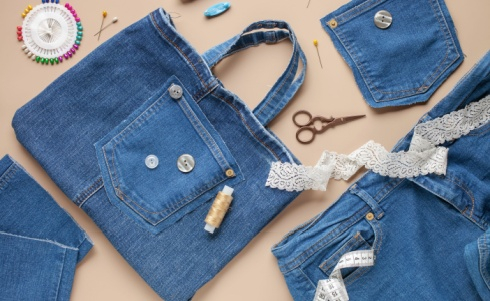
With its potential environmental and sustainability benefits, upcycling is a popular trend. Likewise, product customization, allowing consumers to express their own style, is also popular. As illustrated by two cases involving watches, both can give rise to claims of trademark infringement and counterfeiting.
Rolex Watch USA, Inc. v. BecekerTime, L.L.C.
BeckerTime is a seller of decades-old preowned watches containing Rolex parts. BeckerTime identifies such watches as “Genuine Rolex,” but they include both Rolex and non-Rolex parts. Before taking action, Rolex purchased two watches from BeckerTime. BeckerTime added diamonds as hour markers to the refinished watch dials by drilling holes in the dials and inserting aftermarket diamonds or other stones and settings in the holes. As part of the refurbishment process, BeckerTime strips the dial down to bare metal, and once the refurbishment is complete, it reapplies Rolex’s trademarks. When selling the modified watches, BeckerTime lists a retail price with a comparison price labeled as “New MSRP (if all factory)”— even though Rolex does not and has never sold a similar watch.
Additionally, BeckerTime adds various non-Rolex parts (such as bezels with added diamonds, bands, or straps). BeckerTime issues an “Authenticity Guarantee” for each watch it sells and has held itself out as a “Certified PreOwned Watch Dealer” with a “Rolex Certified Master Watchmaker” even though Rolex has not certified BeckerTime or its watchmaker. Moreover, the parts added by BeckerTime are integral to the function of the watches and do not bear any markings indicating that BeckerTime is the source of the watches.
To be sure, BeckerTime did indicate on its website that the replacement parts were not genuine Rolex parts, that the alterations it makes would void any Rolex warranty, and that BeckerTime is not affiliated with Rolex. That was not enough to stave off legal action.
Rolex sued BeckerTime for trademark counterfeiting and trademark infringement in September 2020. After a bench trial, the court found that BeckerTime infringed Rolex’s trademark by counterfeiting Rolex watches and issued an injunction precluding BeckerTime from using Rolex’s trademark in specific ways. Both parties appealed, and the court of appeals largely upheld the injunction.
The court of appeals explained that “BeckerTime does more than recondition or repair vintage Rolex watches.” According to the court of appeals, BeckerTime sold watches that were materially different from those sold by Rolex; the watches could not be called genuine Rolex watches. The court of appeals also pointed out that customers were confused as to whether the watches were entirely genuine Rolex and that BeckerTime had received complaints about the quality of the watches. As a result, the court of appeals affirmed the injunction, although it did instruct the lower court to clarify one point.
Hamilton Intern. Ltd. v. Vortic LLC
Like the BeckerTime case, this case also involved watches. The outcome was very different.
Robert Thomas Custer founded Vortic and endeavored to make a watch that would be entirely made in America. After learning that no active company in the U.S. made watch movements, Vortic began salvaging and restoring parts from antique American-made pocket watches manufactured in the late 1800s and early 1900s. The parts, which included antique parts from watches bearing Hamilton’s trademark, were then encased in new wristwatches. One of the watches Vortic made was named “The Lancaster,” after the city where the Hamilton Watch Company was originally based. The Lancaster features restored antique pocket watch movements and front dials made by Hamilton. The front dial bears the HAMILTON trademark. The watch strap, case, and various internal parts were either manufactured by Vortic or came from modern U.S. sources. The back of the watch has a glass cover through which the watch parts, some of which bear the HAMILTON trademark, can be seen. The cover is surrounded by a metal ring with Vortic’s name and serial number for the watch, as well as the watch’s name. Buyers received the watch in a wooden box with Vortic’s name and a booklet that displayed the Vortic logo and explained its manufacture and restoration process. The box also included an authentication card with Vortic’s name and serial number, which was signed by the watchmaker. Vortic’s advertisements emphasized the antique and authentic nature of the watch’s parts.
In July 2017, Hamilton sued for trademark infringement and counterfeiting. After a bench trial, the court ruled in favor of Vortic, finding that there was no likelihood of customer confusion. Hamilton appealed, and the court of appeals affirmed the lower court’s ruling. The court of appeals pointed out that Vortic took genuine parts from Hamilton watches, refurbished and repaired them, and modified them into a wristwatch and that consumers would view the watch as an antique pocket watch modified into a wristwatch rather than as an entirely new product. Further, the court of appeals explained that Vortic took many steps to disclose that it was not affiliated with Hamilton and that its watch used refurbished original parts. This could be seen in advertisements, the marks on the watch itself, and the fact that the watches themselves are presented to consumers as restored antique pocket watch parts modified into a wristwatch. The court of appeals contrasted this with other cases (including cases brought by Rolex) where there was no disclosure of the changes made to the watch and pointed out that there was no evidence of consumer confusion in the record.
So, What Is Permitted?
Anyone seeking to reuse a previously manufactured product or parts from a previously manufactured product should make sure to disclose to consumers exactly what has been done. Further, it is important to make clear that there is no affiliation between the upcycler/customizer and the original manufacturer. These seem to be the key differences between the Rolex decision and the Vortic decision. However, strict compliance with those requirements does not mean that reusing a previously manufactured product cannot give rise to a claim for trademark infringement. One thing that does seem settled is that customization of a product purchased by a consumer is permitted so long as the customized product is intended for the consumer’s own use and not for resale (in the BeckerTime case, it appears that BeckerTime was customizing watches for sale, rather than in response to consumer requests).
If you are contemplating reusing someone else’s products or are concerned that a third party reusing your products will result in consumer confusion, please feel free to contact me.