Blog Posts
Intellectual Property
Trademarks 101: What Business Advisors Need to Understand When Guiding Clients
As a business advisor, your role often involves helping clients make strategic decisions that affect their growth and risk profile. One area that frequently intersects with broader advisory issues is trademark law. While business advisors do not typically manage trademark filings or enforcement, understanding the fundamentals helps you identify when trademark considerations should be part of the conversation with your clients and when to involve legal professionals. Why Trademarks Matter in Advisory Contexts Trademarks are critical to brand identity and business value. They influence marketing strategies, product launches, and even transaction structures. For example, if a client is investing heavily in a new brand or entering new markets, trademark clearance and protection should be addressed early. Similarly, during mergers or acquisitions, trademark ownership and registration status can significantly affect valuation and deal terms. Recognizing Existing Rights and Risks Clients often assume they need to “get a trademark” or have formal registration to have trademark rights, but rights can arise through the use of a trademark in commerce – simply by selling products or rendering services under a trademark. Business advisors should be aware of this so they can flag potential issues — such as whether a client may already have rights in a brand name or whether a brand might risk infringing on someone else’s trademark. These are signals to recommend a legal review. Advantages of Trademark Registration Even though your clients have trademark rights from using a trademark, federal registration conveys many benefits, including nationwide rights, presumptive ownership, and easier enforcement on platforms like Amazon or TikTok Shop. It also enables recording with U.S. Customs to block counterfeit imports. Advisors should understand these benefits so they can guide clients to consider trademark registration when investing in brand development, expanding geographically, or entering online marketplaces. Trademark Risks in Broader Business Decisions Trademark conflicts can derail product launches or lead to costly litigation. When advising on branding, domain acquisitions, or marketing campaigns, advisors should ensure that trademark clearance is part of the planning process, typically by recommending a qualified trademark attorney. In M&A transactions, confirming trademark status and chain of custody is a key part of due diligence. Monitoring and Enforcement Trademark owners can lose or weaken their rights if they do not take steps to prevent third parties from infringing (whether willful or innocent) and from cybersquatting. Valuable brands should be monitored for these activities. But advisors should be aware that enforcement strategies can affect brand reputation. While cease-and-desist letters are common, tone matters; overly aggressive enforcement can lead to public backlash or legal counterclaims. This is another area where legal counsel should take the lead, but advisors can help clients weigh business risks and reputational considerations. Key Takeaways for Advisors For advisors, the most important takeaway is that trademarks should be viewed as a strategic asset, not just a legal technicality. Your clients are well-served if you can recognize when trademark issues intersect with business decisions and guide your clients toward qualified trademark counsel when warranted. By doing so, you can help clients protect their brands, avoid costly disputes, and strengthen the long-term value of their businesses.
January 26, 2026
Intellectual Property
Trademark Registration Misconceptions: What Brand Owners Should Know
Many business owners view trademark registration as a smart investment—and they’re right. A federal registration gives you valuable legal advantages, including nationwide priority, a presumption of ownership, and stronger tools to protect your brand. But registering a trademark doesn’t give you absolute control. Whether you can prevent someone else from using a similar name or logo often depends on a few key questions: Who used the trademark first? If another party has prior rights, their use may be protected. Are they using it for the same or related goods/services? If you're operating in unrelated industries, another party’s use may not be infringing. Understanding these factors can help you protect your brand more effectively and avoid common trademark misconceptions. Trademark Protection Is Limited to Specific Goods and Services A trademark registration does not prevent others from using a similar or identical name, logo, or slogan in unrelated industries. Trademark law is designed to prevent consumer confusion—not to grant brand owners exclusive control over a word or phrase in all contexts. Your trademark rights are fundamentally tied to the goods and services that you sell under your brand name, logo, or other source indicator (i.e., trademark). You can register a trademark to use in connection with the sale of specific goods and services, not for everything. A perfect, real-world example of this can be found at the corner of Broadway and W 68th Street in New York City, where for several years, a LOWE’S® hardware store sat directly across from a LOEWS® movie theater. Despite the nearly identical pronunciation and similar spelling, both brands coexisted peacefully—and legally—because they operate in entirely different industries. Even though the names are similar, consumers are not likely to confuse a home improvement store with a movie theater or think that there is any shared ownership. The goods and services they offer are so different that consumers would not likely assume the two businesses are affiliated. (The Lowe’s eventually closed, but it was likely due to the lack of need for a big-box home improvement store in the heart of Manhattan rather than any trademark conflict.) If two businesses operate in distinct industries with different audiences and purposes, similar names can often legally coexist. “I Had It First”: Why First Use Still Matters When two companies are trading in related commercial spaces (i.e., selling similar goods or services to one another) under the same or similar trademarks, U.S. trademark law will generally favor the party that was using it first. That’s why, before applying for federal registration, your trademark attorney will typically conduct a search to identify existing registrations, pending applications for registration, and unregistered (or “common law”) uses of the mark. The term "common law" refers to trademark rights that arise through the actual use of the mark in commerce, even without formal registration. Suppose you're opening a bakery in North Carolina called “Maple & Bean.” A common law search reveals a small café in Vermont that has used that name locally for years but never registered it. If you and your trademark attorney agree that the reward outweighs the risk and there are no other conflicts, the USPTO may grant you a trademark registration. But even with that registration, the Vermont café would retain the right to use the name in its existing geographic area because it used it first. Your registration would, however, generally allow you to prevent others from using the same or a confusingly similar name for related goods or services going forward. However, it wouldn’t give you the right to stop someone from using “Bean & Maple” for products in unrelated industries, like glassblowing tools or HVAC systems. In short, trademark protection is both industry-specific and use-based. Registration strengthens your rights but doesn’t erase earlier uses—or give you absolute authority over all uses. Conclusion A federal trademark registration is a valuable asset, but its scope is not unlimited. Trademark rights are determined by both first use and the specific goods and services involved, making enforcement a fact-specific analysis. Understanding these nuances can help businesses manage their trademark rights effectively and avoid common misconceptions about registration.
April 2, 2025
Intellectual Property
It’s a Plaintiff, it’s a Baby, it’s SUPERBABIES!
Able to cancel 4 trademark registrations in a single filing, a comic book company called Superbabies Limited has done what once seemed impossible: They have achieved the cancellation of trademark registrations for SUPER HERO and SUPER HEROES, registered since as far back as 1967 and jointly owned by comic behemoths Marvel and DC Comics. Superbabies claimed that SUPER HERO and SUPER HEROES are generic, and also that Marvel and DC had abandoned any trademark rights by failing to use the terms as trademarks. Although Marvel and DC entered an appearance in the Trademark Trial and Appeal Board (TTAB) proceeding, they never answered the petition for cancellation, leading Superbabies to file a motion for a default judgment. The TTAB, noting that Marvel and DC Comics did not contest the motion, ordered the cancellation and faster than Spiderman can scale a skyscraper, the registrations were canceled the same day. It's safe to say that Marvel and DC did not miss two deadlines by accident. Rather than bring out the Avengers to fight this tooth and nail, it is likely that they realized they couldn't win and instead opted for truth (that the marks are generic), justice (SUPER HERO and SUPER HEROES should be free for all to use), and the American way (allowing the judicial process to make the determination). Superbabies' Petition for Cancellation is fun. The first allegation is: "We live in a world of superheroes. For the better part of a century, superheroes and the superhero genre have ruled the imagination and inspired millions to achieve greatness." From there, it contains snippets of comics, including Marvel and DC comics, in which the heroes and villains alike make use of the legal system to achieve their means. It goes on to demonstrate why Superbabies believes that SUPER HERO and SUPER HEROES are generic. When Marvel and DC saw this, they probably realized that this was the sixth Infinity Stone and that their claim of trademark ownership had turned to dust.
September 27, 2024
Intellectual Property
Navigating Trademark Complexities: Meta’s Brazilian Setback
Meta Platforms Inc., the behemoth that owns Facebook, Instagram, Threads and others, recently faced a court in Brazil that prohibited the company from using the Meta trademark in the country. A digital transformation consultancy has held a registered trademark for Meta in Brazil since 1990, resulting in Meta Platforms being blocked from using the trademark. The refusal in Brazil demonstrates the challenges inherent in global branding. For one thing, searching for the availability of trademarks worldwide is prohibitively expensive for many businesses. Of course, Meta is a deep-pocketed company that likely researched the availability of this trademark far and wide before announcing their decision to change their name from Facebook in October 2021. However, for reasons unknown, the company went forward with the rebrand, even though this obstacle existed in one of the largest countries in the world. Of course, we do not know what Meta’s team of lawyers advised, but regardless, the company finds itself in an unfortunate situation, unable to use META in Brazil. This scenario is not limited to international borders; it can also occur within the United States. A trademark registration, which can be obtained if a business uses a trademark in more than one state, provides nationwide rights and protections against later users. But what happens when one company adopts a brand that is already used in a part of the United States? The junior user may need to select one trademark to use in one part of the country and a different one for the rest of the country. Such is the case with the ice cream brand Dreyer’s, which people in the eastern half of the U.S. know as Edy’s. When Dreyer’s came along, there was already a well-known brand of ice cream sold in supermarkets called Breyers. Photo courtesy of Laura Winston Photo courtesy of Laura Winston Another instance is Hellmann’s mayonnaise, known as Best Foods mayonnaise west of the Rocky Mountains. The U.S. Patent and Trademark Office may grant what is known as a “concurrent use registration,” which carves out the territories in which each party has the rights derived from mark registration. This is an exception that challenges the principle that a trademark registration provides nationwide rights. Whether your business is going global or you are considering expanding within the United States, it is best to consult with an attorney who can advise you about the best ways to protect and expand your trademark rights. If you have any questions, please feel free to reach out.
April 4, 2024
Intellectual Property
From Palette to Protection: When Does Color Function as a Trademark?
Back when my daughter was in third grade, parents were invited to her classroom to talk about their jobs. I talked about trademarks and brands, discussing products they would appreciate, like HOT WHEELS miniature cars and AMERICAN GIRL dolls. At one point, I told the students that a color can be a trademark and that Mattel claims the right to the color pink as a trademark associated with their BARBIE products. A little girl named Emma spoke up and said, “That doesn’t seem fair that just one company can use a color.” What Emma didn’t know was that she isolated the same issue that the US Supreme Court had considered back in the 1990s when the Court held, in a case involving green-gold dry cleaning machine pads, that a company could claim color as a trademark, but only after years of exclusive use and evidence that the public associates the color with a single source. (By the way, Emma is now in law school.) So what does it take to be able to claim that a color is exclusively for use by one source? First, to be clear, even when a company is able to claim color as a trademark, its rights will only be limited to the goods or services for which the color is used or closely related goods/services. So while Tiffany could stop another jewelry company from using its robin’s-egg blue color, Tiffany would not be able to prevent, say, an HVAC installation company from using this shade. To be eligible for trademark protection, a color must be: Non-functional: The color should not serve a functional purpose related to the product or service. In other words, it should be purely aesthetic. Recognized by the public: The color must have gained recognition and distinctiveness in the minds of consumers. Examples in Advertising: UPS’s Iconic Brown One of the most famous examples of a company successfully using color as a trademark is United Parcel Service (UPS). Instant Recognition: UPS’s brown delivery trucks are instantly recognizable, and the color has become synonymous with the brand’s reliable package delivery services. Consistent Branding: UPS consistently uses brown in its advertising, packaging, and uniforms. This uniformity reinforces the brand’s image and helps it stand out in a crowded market. Promotional Campaigns: “What Can Brown Do For You?” UPS has run advertising campaigns centered around its brown color, emphasizing the reliability and trustworthiness associated with the color brown. Challenges and Legal Considerations While companies like UPS have successfully used color as a trademark, it’s important to note that securing trademark protection for a color can be challenging. Courts often require extensive evidence of distinctiveness and consumer recognition. Additionally, competitors may challenge the validity of color trademarks, arguing that the color is functional or not sufficiently distinctive. Conclusion Color can be a powerful tool for branding and marketing, and some companies, like UPS, have effectively incorporated it into their trademark strategy. However, the legal requirements for securing and defending a color trademark are rigorous. Businesses considering color as a trademark should seek legal counsel to navigate the complexities of trademark law and protect their unique brand identity. If you would like to discuss trademark protection for colors, please reach out to me.
September 26, 2023
Intellectual Property
Chew on This – SCOTUS Rules that Dog Toy Parodying Jack Daniel’s Can’t Hide Behind First Amendment
On June 8, the US Supreme Court ruled unanimously in favor of Jack Daniel’s in Jack Daniel’s Properties, Inc. v. VIP Products LLC, overturning the decision of the 9th Circuit Court of Appeals. Justice Elena Kagan wrote the opinion, holding that VIP Products’ sale of a dog chew toy in the shape of a Jack Daniel’s bottle, which also has a label replacing “Jack Daniel’s” with “Bad Spaniels” and other parodying of the Jack Daniel’s label in a manner referring to dog defecation, was not sufficiently protected under the First Amendment to avoid liability for trademark infringement or dilution. The SCOTUS decision was not a complete victory for Jack Daniel’s. Having held that the “Bad Spaniel’s” chew toy was not protected from claims of trademark infringement and dilution, Justice Kagan sent the case back down to the US District Court for a determination of whether there is a likelihood of confusion and whether “Bad Spaniels” dilutes Jack Daniel’s trademarks. VIP Products’ position was that its “Bad Spaniels” chew toy was an expressive work that conveyed a humorous message and that, therefore, the First Amendment protects the use from a claim of trademark infringement. However, VIP Products had also claimed that “Bad Spaniels” and other parodying elements were trademarks owned by VIP Products. This contributed to VIP Products’ downfall: because VIP Products was using “a trademark to designate the source of its own goods—in other words, … used a trademark as a trademark,” as Justice Kagan put it, VIP Products was not entitled to special First Amendment protection. In making this ruling, Justice Kagan made a point of saying more than once that the parody aspect of the “Bad Spaniels” toy could factor into an analysis of the likelihood of confusion. In other words, where such content is a parody, consumers are less likely to be confused into thinking that the parodic products come from the same source as the product being parodied. SCOTUS also knocked down the 9th Circuit’s holding that there was no trademark dilution. Under federal trademark dilution law, owners of famous trademarks can sue users of identical and very similar trademarks even where there is no likelihood of confusion. The 9th Circuit said VIP Products’ use was “noncommercial” because it was a parody and conveyed a humorous message. Justice Kagan disagreed, finding that the 9th Circuit’s view was too expansive and noting that there are limitations in the dilution law where the parodying content is used as a source identifier of the accused product. What can we take away from this decision? This is by no means an absolute bar on selling items that may constitute a parody of a brand, even a famous one. However, creators of such products would do well to avoid treating the parodying elements as trademarks and avoid any content or action that could mislead the public into thinking there is a source connection between the parodied product and the parodying one.
June 13, 2023
Intellectual Property
Does the First Amendment Protect the Use of Parody for Commercial Purposes?
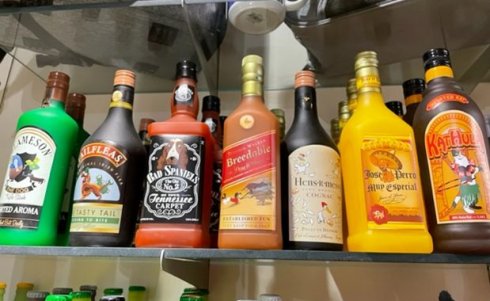
The US Supreme Court Will Decide On March 22, the US Supreme Court will hear arguments in Jack Daniel's Properties, Inc. v. VIP Products LLC. In a case that pits trademark rights against free speech claims, Jack Daniel's has sued VIP Products for trademark infringement due to VIP Products' sale of a dog chew toy in the shape of a Jack Daniel's bottle with a label replacing "Jack Daniel's" with "Bad Spaniels" and engaging in other parodying of the Jack Daniel's label in a manner referring to dog defecation. VIP Products takes the position that its parody should be protected under the First Amendment Freedom of Speech Clause. Jack Daniel's view is that a company selling a commercial product that makes humorous use of the Jack Daniel's brand should not be entitled to First Amendment protection. I discovered in a store in Colorado that "Bad Spaniels" is just one of a line of dog toys parodying liquor brands. Although it may be that Jack Daniel's is the only brand worked up enough about this to bring a lawsuit (and take it all the way to the Supreme Court), several third parties have filed briefs in support of Jack Daniel's position, including Campbell Soup Company, Nike, and several trade associations. The Supreme Court's decision will likely issue in June.
February 23, 2023
Intellectual Property
USPTO Shortens Time for Response to Office Actions
On December 3, 2022, the US Patent and Trademark Office (USPTO) is making a big change to the requirements to respond to rejections or requirements for further information. Background: When a business files an application for trademark registration in the US, it is (eventually) examined, and the examining attorney will either approve the application or issue an Office Action. The Office Action is a letter that will either refuse to accept the application (because of a prior similar registration or other ground for refusal) or require amendments to a part of the application (such as the description of goods) before the application can be accepted. Throughout recorded history, the USPTO has given the applicant six months to respond to the Office Action. Big Change: For Office Actions issued on or after December 3, the USPTO will require a response within three months of the date of issue of the Office Action. It is possible to extend this time for an additional three months with payment of a fee. The fee will need to be paid before the 3-month deadline; it will not be automatic and cannot be paid after the fact. What this means for applicants: Your attorney handling the application will notify you when an Office Action issues and will let you know the deadline to respond or request the extension. It will be important to review the issues with your attorney and make a plan for responding without delay. Additional considerations: For now, this change only applies to Office Actions issued in pending applications. For Office Actions that might issue in response to a post-registration renewal or declaration of use, the same change will take effect on October 7, 2023. For more information about this rule change or any issues related to trademark protection or registration, please contact Laura Winston.
October 17, 2022
Intellectual Property
Trademark Law v. The First Amendment – the Saga Continues
In recent years, the US Supreme Court found that two provisions of the US trademark law that date back to the 1940s were unconstitutional because they violated the free speech provisions of the First Amendment. In Matal v. Tam, it was the law prohibiting registration of disparaging trademarks, and in In re Brunetti, it was the law prohibiting registration of immoral or scandalous trademarks. Now the Court of Appeals for the Federal Circuit has reached a similar conclusion in a less obvious case. In In re Elster, decided on February 24, an attorney applied to register the trademark TRUMP TOO SMALL for “T-shirts.” Registration was refused based on a provision that prohibits trademark registration of a name identifying a particular living individual without that individual’s consent (and another ground not ultimately considered on appeal). Elster appealed to the Trademark Trial and Appeal Board (TTAB), which upheld the refusal. Elster then appealed to the Federal Circuit. The federal government argued that the government interest in protecting state-law privacy and publicity rights outweighed Elster’s First Amendment rights. The court noted that Trump, as a public figure, had no right of privacy-protecting him from criticism in the absence of knowingly publishing false information or doing so with reckless disregard for the truth. The court also said, “The right of publicity does not support a government restriction on the use of a mark because the mark is critical of a public official without his or her consent.” The court ultimately concluded that the free speech provisions of the first amendment outweighed the government interest and that “[t]he statute leaves the [US Patent and Trademark Office] no discretion to exempt trademarks that advance parody, criticism, commentary on matters of public importance, artistic transformation, or any other First Amendment interests. It effectively grants all public figures the power to restrict trademarks constituting First Amendment expression before they occur.” And so the court reversed the TTAB’s decision and found the trademark TRUMP TOO SMALL to be registrable. In reaching its decision, the court made clear that it was not concluding that the relevant section of the trademark law is overbroad, saying it was leaving that question for another day. Rather, it was saying that the application of the law to Elster’s trademark was in violation of his First Amendment rights. Still, this leaves the door open for other trademark applicants for such marks that are parody or critical commentary to raise the overbreadth challenge in the future. Are you considering adoption of a trademark that includes the name of a living individual? For guidance on the evolving state of the law as it applies to your situation, contact Laura Winston at lwinston@offitkurman.com or 347-589-8536.
March 17, 2022
Intellectual Property
New Year, New Trademark Law – Petitions for Expungement and Reexamination of Trademark Registrations
Petitions for Expungement and Reexamination of Trademark Registrations The Trademark Modernization Act took effect on December 18, 2021, and now it is easier and less expensive to cancel unused registered trademarks. Any party can bring an expungement or reexamination proceeding to remove a trademark from the register. An expungement proceeding is when a party believes that a trademark has never been used in commerce. The proceeding must be brought when the registration is between 3 and 10 years old (although until December 27, 2023, the proceeding can be brought against any registration more than three years old). A reexamination proceeding is for when a party believes that a trademark was not in use at the time an application based on use was filed or when use is claimed in an application originally based on intent to use. The proceeding must be brought before the 5th anniversary of the registration. Below are answers to questions some may have about these new proceedings. How do expungement and reexamination differ from a trademark cancellation action? These new, simplified proceedings will be brought before Trademark Examining Attorneys instead of the judges of the Trademark Trial and Appeal Board. A cancellation action, which is similar to a lawsuit in federal court, has discovery, a trial, and the possibility of motions. Expungement and reexamination will be much more streamlined – the petitioner files a petition setting forth the information to demonstrate non-use. The registrant then has the opportunity to file a response including evidence of use or excusable non-use. The Examining Attorney then reaches a decision based on the petition and response. If the Examining Attorney orders that the registration be canceled, the registrant has the opportunity to file a request for reconsideration and appeal. The costs for expungement and reexamination will be considerably lower than a start-to-finish cancellation proceeding. The filing fee for expungement or re-exam is $400 per class of goods or services, which is less than the $600/class fee for a cancellation action. More significantly, the legal costs for handling the proceeding will be significantly less than for a cancellation action. If there’s no discovery, how does the petitioner show that the mark was not used? The petitioner is required to submit the results of a “reasonable investigation.” This will vary based on the goods or services, relevant industry and customary channels of trade for the goods or services. Generally speaking, a thorough use investigation conducted by an experienced private investigator will likely be appropriate Why would I want to file a petition for expungement or reexamination of a third party’s registration? There are various reasons to file for expungement or reexamination, but the most common reason is likely to be that a party wants to adopt a new trademark that cannot be registered because of prior registration. How can I avoid a petition for expungement or reexamination being filed against a trademark registration I own? If you are selling the goods or rendering the services covered by your trademark, it is unlikely that someone will file a petition for expungement or reexamination against your registration. It will be helpful to make sure that you are actively demonstrating your use and showing your products and services on your website and on social media as may be appropriate for your business and industry. If you have any questions about the use of your trademarks, please feel free to contact me. I was able to get my registration without using the trademark. Can someone petition for expungement or reexamination against my registration? Trademark owners from most countries outside of the US can register trademarks in the US if they are registered in the owner’s home country. If this is your situation, your registration will be vulnerable to an expungement proceeding after three years (and before ten years) if it has never been used. The best way to avoid expungement will be to sell your goods or render your services in the US. Need assistance in navigating the new expungement and reexamination proceedings or guidance on protecting, enforcing or defending trademarks pursuant to these amendments? Please contact Laura Winston at lwinston@offitkurman.com or 347-589-8536.
January 14, 2022
Intellectual Property
Trademark Trial and Appeal Board Finds Reckless Disregard for the Truth Equals Fraud, Cancels Trademark Registration
The U.S. trademark law provides that a trademark registration may be canceled if it was obtained fraudulently. A registration may also be canceled if the registrant commits fraud in post-registration filings, including a Section 15 Declaration of Incontestability. Often filed in combination with the Section 8 Declaration of Use due in the 6th year of a registration, the Section 15 Declaration of Incontestability may be filed if the registrant has been using a registered mark continuously for the previous five years. However, certain other conditions are met, including that there are no pending proceedings, such as a lawsuit in federal court or a cancellation action before the US Patent and Trademark Office (USPTO) or Trademark Trial and Appeal Board (TTAB). This was the issue in Chutter, Inc. v. Great Management Group, LLC and Chutter, Inc. v. Great Concepts, LLC, 2021 USPQ2d 1001 (TTAB 2021). In 2010, when Great Concepts was submitting a combined Section 8 and 15 Declaration of Use and Incontestability for its trademark DANTANNA’S, the attorney for Great Concepts signed the declaration. He was aware that there were pending proceedings involving the trademark registration but, he later admitted, he did not read the declaration before signing it, and he was not familiar with the requirements of the Section 15 declaration. Years later, Chutter, Inc. filed a cancellation action against the registration, claiming that the Section 15 Declaration was fraudulently filed. In its decision, the TTAB noted that fraud requires an intent to deceive; false statements made with a reasonable and honest belief that they are true do not result in a finding of fraud. The TTAB went on to find that the attorney who signed the declaration acted with reckless disregard and held that this reckless disregard rises to the level of intent to deceive needed to find fraud. Moreover, although the trademark law allows for the opportunity in certain circumstances to correct misstatements once they are discovered, the attorney who signed the declaration did not take any corrective steps once he discovered that he had made false statements in the declaration. “By failing to ascertain and understand the import of the document he was signing, far from conscientiously fulfilling his duties as counsel, [the attorney] acted in reckless disregard for the truth; nor did he take any action to remedy the error once it was brought to his attention.” Stating that the attorney’s reckless disregard was “the legal equivalent of finding that Defendant Great Concepts had specific intent to deceive the USPTO”, the TTAB granted the petition to cancel the DANTANNA’S registration. Why does this decision matter to trademark owners? It’s a reminder to review carefully the statements in the documents you are signing and to ask questions if you do not understand something and speak up if something does not sound right. Although there is generally a high bar to a finding of fraud leading to the cancellation of a trademark registration, this case shows that a lack of attention to reviewing and understanding the statements being made in trademark declarations can constitute “willful blindness” that rises to the level of reckless disregard and cancellation of one’s trademark registration could be the result.
October 14, 2021
Intellectual Property
Not Forgetting Trademarks: Protecting your NFT Brand
To Read Part One of our NFT series, click here »» This latest installment in Offit Kurman’s NFT series looks at protecting NFT’s under trademark law. As of July 21, 2021, a search of the US Patent and Trademark Office (USPTO) database shows that 407 trademark applications have been filed that list “non-fungible tokens” as goods and/or services. Of these, 374 were filed on or after March 11, 2021, the date that news broke that the digital artist Beeple sold an NFT at auction for $63.9 million. Looking at these trademark filings, we see that some familiar names are planning to get in on the NFT action. Fender has filed four applications to register trademarks for NFT’s, including its well-known guitar brand STRATOCASTER. The Andy Warhol Foundation for the Visual Arts, Inc. seeks registration of the name of the famous pop artist for NFT’s. And Lion’s Gate Entertainment, Inc. filed an application to register the trademark JOHN WICK, apparently planning to create NFT’s associated with the successful movie franchise. If you’re entering the NFT space, it’s good to keep in mind that your NFT’s are products, and trademark protection is important just as with any other product you might launch. Below are a few best practices for your NFT trademark strategy: Conduct a clearance search. Especially with this rapidly exploding area, it is important to make sure that there is not already someone else creating or marketing NFT’s under the same or similar trademarks. Consider searching more broadly than just NFT’s. Remember that NFT’s can touch various areas and industries when conducting your search. The examples above involve a music company, an artist’s estate and a motion picture series. Because NFT’s can be used to represent, commemorate or give value to all kinds of goods and services, it will be good to think broadly when conducting a clearance search. Once the clearance diligence has been done, file an intent-to-use application quickly. This will reduce the risk that a third party could apply to register the same or similar mark or commercialize an NFT business under the same name before you secure your rights. Many others are employing this strategy – of the 374 filings since March 11th, 320 are based on an intent to use. Use a watch service to detect similar trademarks or domain names using your trademark. Such uses could be innocent, or could intentionally try to capitalize on your success if your NFT line takes off. A watch service will alert you to such uses and enable you to evaluate and take action quickly. Your Offit Kurman attorneys can help position you to be at the forefront of this new technological wave. If you have any questions, please contact Laura Winston at lwinston@offitkurman.com or 347-589-8536.
July 29, 2021
Intellectual Property
Is Genericide Still A Thing? Maybe We Worry Too Much About 'Proper Use Of Trademarks'
As Published in The Legal Intelligencer – Special Section March 2021: Intellectual Property By: Laura Winston Earlier this year, the comedian Seth Meyers was making a joke about a politician on his talk show "Late Night with Seth Meyers." In doing so, he referred to a well-known brand of popular plastic building bricks as “Legos.” Mr. Meyers was immediately flooded with online comments telling him that the plural of Lego is Lego. He took to the airwaves again on the topic, thanking the commenters but adding, “It’s too late for me…I’m not going to walk home and tell my kids `Clean up your Lego’”. Not long after, the owner of the world-famous LEGO trademark got into the act via a tweet, saying, “Hey @SethMeyers, let us blow your mind...the plural is not `Legos.’ It’s not even `Legos.’ It's actually `LEGO BRICKS!’" @LEGO_Group, Twitter (February 11, 2021), https://twitter.com/lego_group/status/1359856214591627269. If you have questions about this or any other legal matter, please feel free to contact Laura Winston at 347.589.8536 Reprinted with permission from the March 30, 2021 issue of The Legal Intelligencer. © 2021 ALM Media Properties, LLC. Further duplication without permission is prohibited. All rights reserved.
April 5, 2021