Family Law

Divorce in New Jersey- Equitable Distribution

August 3, 2019

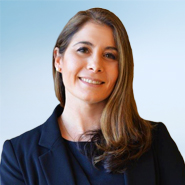
By Megan Smith

Originally posted on 3/12/2019, no content changes.

Equitable distribution is the division of the marital assets and liabilities between the parties. The equitable distribution of the marital assets and liabilities is fundamentally a three-step process.

  1. The assets and liabilities acquired during the marriage must be identified.
  2. The assets and liabilities must be evaluated either by review of the account statements or other documentation, the use of appraisers or the utilization of a forensic accountant, and
  3. The method and respective percentages of the distribution must be determined.

Unlike several other states (most notably California), New Jersey is not a community property state. In community property states, the assets and liabilities are divided equally regardless of any other circumstances. New Jersey is an "equitable distribution" state, meaning that the assets and liabilities acquired during the marriage must be "fairly" distributed between the parties.

What is "equitable" under the facts and circumstances of a particular case is not simply a subjective determination of fairness or equity. If it were, almost every person would argue that "equitable" means that they should receive a higher percentage of the assets. They would argue that because of their perceptions as to why the marriage ended, their perceptions as to their work efforts during the marriage and their general sense of "being victimized" justifies them receiving a higher percentage of the assets.

Those perceptions are, however, largely irrelevant, and the specific statutory factors which must be considered are:

  1. the duration of the marriage;
  2. the age of the parties;
  3. the physical and emotional health of the parties;
  4. any income or property brought into the marriage by each of the parties;
  5. the standard of living established during the marriage;
  6. any written agreements made by the parties either before or during the marriage;
  7. the economic circumstances of each party at the time the division of the property becomes effective;
  8. the income and earning capacity of each party;
  9. each party's educational background, training and employment skills, work experience, absence from the job market;
  10. parties' respective custodial responsibilities for the children of the marriage;
  11. the contribution of each party to the education training and development of the earning power of the other party;
  12. each party's contribution to the acquisition or dissipation of the martial assets, including:
    • the other parties' contribution as a home maker;
    • the tax consequences of the proposed distribution;
    • the value of the property or asset;
    • the need of the parent who has physical custody of a child to own or occupy the marital residence;
    • the debts and liabilities;
    • the need to create a trust or other fund for foreseeable medical educational expenses; and
    • the extent to which either party deferred achieving their career goals.

You should familiarize yourself with each of these factors. If there are facts or circumstances in your case which you feel relate to any of the factors, you must call them to the attention of your Attorney. As your case progresses, your position with regard to the distribution of the assets must focus upon an analysis of these factors, not your own feelings as to what is "equitable."

If your case is ultimately decided by a Judge, the Judge's decision will include a specific analysis of each factor and its relevancy to the facts of your case. Therefore, in order to have some projection as to what a Judge may decide, you must analyze your case in the context of these factors.

It is also important to consider that not all assets must be divided in the same percentages. It is entirely possible that some of the assets in a case could be divided equally while others, because of the relevancy of any one or more of these factors, may be distributed other than equally.

For example, it is not unusual that the value of a small business or professional practice may not be divided equally between the parties. The person operating the business or professionally engaging in the practice may receive a higher percentage of the value. In some instances, the person with specific needs for certain assets, such as the household furnishings to maintain a home for the children, may receive all or substantially all of the household furnishings.

Thus, it is not only important that all of the marital assets and liabilities be considered but that each asset be individually analyzed.

There are also assets which may not be subject to equitable distribution and will be retained by one of the parties. Assets which are received by one of the parties by way of a gift from a third party, inherited assets or assets which are owned prior to the marriage may remain the property of the person who received, inherited or owned the assets prior to the marriage.

If there are such assets, the question then becomes whether any increase in their value during the marriage is distributable. If the increase in value is solely as a result of increased market conditions or inflation, it usually will not be subject to equitable distribution. If the increase in value is the result of the efforts of one or both of the parties, it generally will be subject to equitable distribution.

For example, if one of the parties owned a home at the time of the marriage and that home was renovated or improved by the parties' work efforts and/or financial investment during the marriage, the increase in value resulting from those improvements may be subject to marital distribution. If, on the other hand, the pre-owned asset was a bank account which increased in value solely as a result of interest on the account, the increase in value may not be subject to equitable distribution.

If an inherited, gifted or prior owned asset is placed into joint names, sold or transferred into another asset, which is then placed in joint names, it may lose its status as an exempt asset and be converted into an asset subject to marital distribution.

It is impossible to discuss all of the alternatives which may exist regarding prior owned, gifted or inherited assets in a particular case, but the point to emphasize is that you must inform your Attorney that such assets exist so as to allow them to analyze the particular circumstances surrounding those assets, and advise you as to what if any part of the value of that asset may be exempt from or included in the marital distribution.

In terms of valuing the assets, some assets are very simple to value, others much more complex and the majority somewhere in between.

Bank accounts, stock brokerage accounts, 401(k) accounts, or other accounts are easily valued by simply obtaining the most recent account statement. Small businesses and professional practices are very complex and difficult to evaluate. Their value can only be determined through the opinion of a competent forensic accountant who will examine the financial statements, income tax returns and nature of the business or practice and can then provide an expert opinion as to its value.

Many assets may not be as simple as account statements nor as complex as small businesses but may, nonetheless, require the use of an expert or competent appraiser to determine their value. For example, a competent appraiser may have to be engaged to render an opinion as to the value of a home. Actuaries or pension experts may be engaged to offer similar opinions as to the value of pension or retirement accounts, and sometimes there are collectibles, art objects or other personal property of sufficient value to warrant retaining an appraiser as to their value.

Again, it is impossible to discuss all of the alternatives as to the valuation of assets which may be subject to equitable distribution. What is, however, important is to know that you have the right to see the account statements or to obtain other competent expert opinion as to the value of the assets, and you should never settle a case without at least a reasonable level of due diligence to document and determine the value of the assets being distributed

For more information on this topic, please contact Megan Smith at msmith@offitkurman.com.
Categories: Family Law

Related People

Related Services

  • Overview
  • People
  • Family Law Blog
  • Publications & News
  • Events

Firm Highlights

  • Events
    AIA Tri-State Conference
    Princeton will serve as the backdrop for three days of connection, learning, and design leadership. From keynotes to tours to the Tri-State Design Awards, this year’s conference is designed to go far beyond education sessions. Kick off the week with pre-conference intensives and individual state component Design Award celebrations, followed by three days of education, inspiration, networking, and design excellence at the 2026 AIA Tri-State Conference—featuring pre-conference intensives, three keynote speakers, 25 education sessions, curated tours, an expo, spec academies, and the AIA Tri-State Design Awards—bringing together architects and design professionals from New Jersey, New York, and Pennsylvania to connect, learn, and celebrate the best of the profession. G2. Designing Secure Practices: Cybersecurity, Data Privacy, Contractual Provisions, and Insurance Risks for Architects (4:00 PM - 5:30 PM) Architects and design professionals increasingly rely on cloud platforms, BIM software, and digital tools to manage sensitive data, creating cybersecurity and privacy risks. A single incident can trigger liability claims, regulatory obligations, reputational harm, and insurance challenges. Yet many firms underestimate how contracts, insurance, and internal practices intersect during a breach. This program offers legal and insurance perspectives on cyber risk in architecture, examining liability exposure, risky contract provisions, and mitigation strategies. A cyber insurance expert will explain policy responses, coverage gaps, coordination with professional liability, and best practices for aligning insurance with contractual risk and protecting firms from evolving cyber threats. Learning Objectives: Identify key cybersecurity and data privacy risks faced by architecture firms and explain how these risks can impact professional liability and project outcomes. Analyze common contractual provisions to determine which clauses may increase exposure to cyber incidents and propose strategies to mitigate these risks. Evaluate the scope and limitations of cyber insurance policies, including coordination with professional liability coverage, to determine how a policy would respond in a breach scenario. Develop actionable risk management strategies by integrating legal, contractual, and insurance considerations to protect sensitive client and project data.
  • Events
    The 2026 Economic, Tax, and Accounting Updates
    We are looking forward to the Mid-Atlantic CFO Roundtable's next event on November 13, 2026. This is a program with topics built for Finance Executives. We are extremely fortunate to have three excellent speakers: Dr. Daraius Irani, Vice President of Business and Public Engagement at Towson University; Mike Stankus, Tax Office Managing Principal at BDO; and Daniel Wahlberg, Managing Partner of Acclare Solutions. The economy is rapidly changing with various factors driving it. The November 3rd midterm elections may also have an impact. Our three expert presenters will discuss the ramifications of the election, and the current year updates to GAAP financial reporting and Federal and State income taxes. Please join us for what will surely be an informative and timely discussion. Meet Our Speakers: Daraius Irani, Ph.D. • Towson University Vice President, Business & Public Engagement Dr. Daraius Irani serves as Vice President of Business and Public Engagement at Towson University as well as the chief economist for the Regional Economic Studies Institute (RESI) at Towson University, a policy group providing economic, fiscal impact, and policy analysis to public and private entities.  Dr. Irani is often called upon to provide economic presentations to organizations across Maryland. He has appeared on numerous television programs and in local and regional print media. Dr. Irani holds a Ph.D. in economics from University of California, Santa Barbara. Dan Wahlberg • Acclare Solutions Managing Partner With over 28 years of experience, Dan Wahlberg is a recognized leader in audit and assurance for the Mid-Atlantic’s middle market business community. As a licensed CPA in Maryland and Virginia, Dan has led assurance practices at top regional firms, including serving as Baltimore Audit Managing Partner and Assurance Practice Leader at BDO USA in Baltimore and as Partner and member of the Management Committee at Hertzbach & Company P.A which merged into BDO in 2020. His expertise centers on delivering clarity, strategic guidance, and proactive solutions to middle-market businesses across Baltimore and beyond. His entrepreneurial spirit has led him to begin a new CPA firm this year with four other CPAs serving the business community. Dan holds a Bachelor of Science in Accounting from Rutgers University and began his career at PWC in New York. He is also deeply engaged in the community, previously serving as President of ACG Maryland and current Board member and as Audit Committee Member for The Associated: Jewish Federation of Baltimore.  Mike Stankus • BDO USA LLP Tax Office Managing Principal Mike Stankus is the Tax Office Managing Principal for the firm’s Baltimore office. He has more than 16 years of experience providing tax planning and preparation and management advisory services for his clients. Mike focuses on advising privately held businesses and their owners on effective growth and tax strategies. He also performs various engagements for mergers and acquisitions and complex cost accounting projects and projections. In addition, he represents various government contracting clients before the DCAA and assists with FAR compliance. Mike’s areas of concentration include working with government contractors, professional service firms, construction companies, and homebuilders.
  • Blog Posts
    Powering the Future Maximizing Energy Storage Value with David Braun
    In this episode of the MSSIA Insight Podcast, host Matthew Karmel, Chair of Offit Kurman’s Environmental & Sustainability Practice, sits down with David Braun, Chief Commercial Officer at Intelligent Generation, to explore how distributed energy storage is creating new opportunities for businesses, developers, and the broader energy grid.With more than 35 years of experience in the energy and utility sector, David shares how battery storage can help commercial and industrial customers earn revenue, reduce energy costs, and improve power reliability. The conversation explores revenue stacking, including how batteries can generate value through wholesale energy markets, reduce capacity and transmission charges, store excess solar energy, and provide backup power during outages or disruptions.Matthew and David also discuss the evolving energy storage landscape across New Jersey, Pennsylvania, and Delaware, highlighting differences in state policies, utility programs, and opportunities for virtual power plants. David explains how industry collaboration through MSSIA can help advance effective energy policies and accelerate project development.Looking ahead, David shares his perspective on the future of distributed energy storage, the transition toward a more interconnected and resilient grid, and the importance of accurately modeling battery economics to demonstrate project value and support investment decisions. In this episode, you’ll learn about: How battery storage can help businesses earn revenue, save money, and protect operations. What revenue stacking means and how multiple battery applications create economic value. How rising capacity and transmission charges are influencing energy storage opportunities in PJM. The differences in energy storage policies and incentives across New Jersey, Pennsylvania, and Delaware. The role of virtual power plants in supporting grid reliability and managing energy demand. Why accurate financial modeling, customer load profiles, and utility rate structures are critical to evaluating battery projects. How MSSIA supports industry collaboration and policy advocacy across the Mid-Atlantic. Whether you're a solar or storage developer, investor, contractor, attorney, or clean energy professional, this episode offers practical insights into the economics, policy considerations, and emerging opportunities shaping the distributed energy storage market. About the MSSIA Insight Podcast Powered by Offit Kurman and presented in partnership with the Mid-Atlantic Solar & Storage Industries Association (MSSIA), the MSSIA Insight Podcast explores the legal, regulatory, and business developments shaping the solar and energy storage industries across New Jersey, Pennsylvania, and Delaware. Hosted by Matthew Karmel, the podcast features conversations with industry leaders and subject matter experts, delivering actionable insights to help clean energy professionals navigate an evolving industry. New episodes are released every other month.   Join our next policy committee call as a guest to see firsthand the impact we're driving: https://forms.gle/8WqmDvdJUKBh35Qw7
  • Podcasts
    The College Prep Most Parents Skip with Candace Dellacona and Kimberly Lau
    When the "Cornell 7" case made national headlines this fall, many parents found themselves asking a question they never expected to face: what actually happens when something goes wrong on campus? We spend so much time preparing our kids to get into college and succeed once they get there, but how often do we prepare them for what happens next if a report is made, by them or about them? In this episode of The Sandwich Generation Survival Guide, host Candace Dellacona is joined by her colleague Kimberly Lau, who represents both complainants and respondents in Title IX matters such as the case capturing the latest headlines. Together, they break down what Title IX is, who it protects, what happens when a college receives a report, and what students and parents should know before their child ever needs it. Kimberly explains why Title IX reaches far beyond athletics, what it generally means when a student is contacted by the campus Title IX office, and what a family should do first, whether their child is reporting something that happened to them, is the subject of a complaint, or simply got caught up in a situation they never expected. She also walks through how privacy rules affect what a school can share with parents, who can sit in on meetings, how investigations, hearings, and decisions typically unfold, and why preserving evidence and knowing your school's policies early can make all the difference. Whatever the outcome of the case making headlines, it has put a spotlight on how campus processes work, and on how much families often don't know until they're in the middle of one. If you are sending a freshman off to campus, welcoming a student home for the holidays, or simply want to be the kind of parent your child feels safe calling when things go wrong, this conversation offers clear, practical guidance you can use now. As Candace puts it, calling home right away is not a sign that your child has failed at being an adult. It is knowing where to turn. This episode is for general informational purposes only and is not legal advice. Every situation is different, so please consult an attorney about your specific circumstances. Learn more about Kimberly Lau and her practice at Offit Kurman: https://www.offitkurman.com/kimberly-lau Connect with Kimberly on LinkedIn: https://www.linkedin.com/in/kimberlylauesq/ Follow and subscribe to The Sandwich Generation Survival Guide wherever you listen to podcasts. New conversations are released on the first and third Tuesdays of every month. If this episode resonates with you, leave a five-star rating or review and share it with another sandwich generation caregiver!