Blog Posts
Intellectual Property
Longclaw Loses Its Edge: Court Dismisses Game of Thrones Sword Copyright Claim
Jalic, Inc., the officially licensed maker of Game of Thrones prop replicas sold under its Valyrian Steel and Jalic Blades brands, sued more than twenty toy, costume, and novelty companies, accusing them of selling swords that copy “Longclaw,” the wolf-pommel blade (i.e., a sword with a decorative wolf’s head at the end of the handle) carried by Jon Snow in HBO's Game of Thrones series. One defendant, Windy Woman, Inc., doing business as Childish Tendencies, moved to dismiss. In September 2026, a federal court in the Eastern District of Tennessee granted that motion, finding that Jalic had not sufficiently asserted the elements of copyright infringement. The court's reasoning turned on the “Substantial Similarity” filtering test courts use to separate protectable expression from the unprotectable underlying idea. After taking judicial notice of the show's wide cultural reach to satisfy the access element, the court set aside every generic, functionally necessary sword feature (a hilt, a blade, a crossguard) as unprotectable “scenes a faire,” or elements so common to forms of expression that they are ineligible for copyright protection. It also set aside the concept of putting a wolf's head on a pommel; an idea which, however distinctive, sits outside copyright's reach, and, thus, protection attaches only to Jalic's particular form of expression of the wolf’s head. Comparing the exact contours, proportions, and detailing of Longclaw's specific wolf-head design with the accused sword, the court found the overlap too general for a reasonable observer to call the works substantially similar. For businesses that manufacture, license, or sell merchandise inspired by well-known franchises, or that compete in a crowded design category like fantasy weapons and collectibles, the ruling is a reminder that copyright protection reaches the specific way an idea gets rendered and generally not the broad concept behind it. A client accused of copying should ask what is simply generic to the category before conceding similarity, and a client protecting its own designs needs a record of the concrete, distinctive choices that separate its product from the idea behind it. The takeaway is: if you are careful to document the specific expressive detail that makes your product unique, that record, not the shared premise, is what may win the day.
October 8, 2026
Intellectual Property
Lost in 1957, Litigated in 2026: The Copyright Risks Hidden in Older Creative Works
Puerto Rican singer-songwriter Roy Brown spent decades setting the poems of celebrated nationalist poet Juan Antonio Corretjer to music. After Corretjer died in 1985, one of his heirs assigned the poems to Latin American Music Company (LAMCO), a music publisher that registered the works with the Copyright Office in 2000 and began claiming royalties on Brown's recordings. Brown sued, LAMCO countersued, and the parties have been in federal court in Puerto Rico for over twenty years across multiple rounds of litigation. The most recent chapter closed on August 12, when Judge María Antongiorgi-Jordán of the District of Puerto Rico issued a ruling on cross-motions for summary judgment – one which should be on the radar of anyone whose work involves older creative material. The dispute over twelve of the thirteen poems turned on the Copyright Act of 1909, which governed all creative works published before January 1, 1978. Under that statute, publishing a work without a proper copyright notice was fatal to copyright protection, as the work entered the public domain immediately, with no opportunity to fix the mistake. LAMCO and Corretjer's daughter, Consuelo, tried to avoid this result by invoking the "limited publication" doctrine, which provides that sharing copies only with a specifically select group, for a limited purpose, and without allowing further distribution does not trigger the notice requirement. Corretjer was a politically persecuted dissident under FBI surveillance, and the claimants argued he kept his manuscripts within only a trusted circle of allies. They supported that theory with an affidavit from an administrator who had no personal knowledge of any of the events at issue, but the administrator’s description of Corretjer, a political poet determined to reach as many sympathizers and spread his political ideas, undercut the claim that he was carefully restricting who could receive his work. The court granted summary judgment for Brown on all twelve poems. The thirteenth, "Boricua en la Luna" (a piece that functions as something close to a second national anthem for Puerto Rico), survived as a question for the jury. Brown claims Corretjer personally handed him the manuscript at a 1976 concert in Ponce and told him to set it to music. Under First Circuit law, this kind of exchange can establish an oral implied license. Even so, Brown is not out of the woods: issues regarding scope of permission remain, and an informal instruction to "set it to music" may not necessarily authorize decades of commercial recordings, printed lyrics, and album packaging. For clients in the music and arts space, this case illustrates two risks. Pre-1978 creative works are governed by a legal framework that offered no safety net for a missing copyright notice. If the notice was absent when the work was first published, the copyright was lost, and no subsequent registration could claw back the rights. Anyone acquiring or asserting rights in older material needs to examine the original publication history before assuming protection exists. The case also highlights the danger of relying on informal permissions. A verbal authorization granted in a concert hall fifty years ago, with no surviving witness and a principal who has since passed away, may end up before a jury rather than settling the question cleanly, and even a favorable verdict may leave the scope of those rights unresolved.
September 14, 2026
Intellectual Property
Pop Art Time Bomb: The Second Circuit's Ruling in Hayden v. Koons
In the late 1980s, American artist Michael Hayden created a Styrofoam serpent sculpture for Ilona Staller, the Italian adult film actress and parliament member better known as Cicciolina, to use as a prop during her live erotic performances. Hayden sold the work to Staller's production company in 1988 for approximately $900. A year later, Staller’s husband, American artist Jeff Koons, posed with Staller for a series of erotic photographs that would become Koons’ Made in Heaven series. Three of those works depicted Koons and Staller atop Hayden's sculpture, and they debuted at the 1990 Venice Biennale to what Hayden himself described in his complaint as a "media sensation and scandal" that "launched Koons into the art world's stratosphere." Hayden claims he did not discover any of this until 2019, when a news article about an unrelated Staller lawsuit caught his attention. He registered his copyright and sued Koons in December 2021. The case never reached the merits. The Copyright Act requires that infringement claims be filed within three years of when the copyright owner discovers, or reasonably should have discovered, the infringement. The Second Circuit affirmed dismissal on statute of limitations grounds, rejecting Hayden's argument that constructive discovery requires a plaintiff to have actual knowledge of specific triggering facts before the clock starts running. The court clarified that constructive discovery turns on a fact-intensive, objective inquiry into whether a reasonably diligent copyright holder, given all the surrounding circumstances, should have uncovered the infringement. Applying that standard, the panel found the answer here was obvious: Hayden lived in Italy for nearly three decades, was fluent in Italian, consumed Italian news daily, had a direct professional relationship with Staller, and was present in Italy during the very Biennale that made Koons internationally famous, with Staller prominently featured. The court was careful to note that its ruling does not create a "celebrity privilege" that automatically starts the limitations clock whenever a famous artist is involved. Fame is one factor among many, not a categorical rule. The practical lesson for copyright owners is sobering. A rights holder who ignores widespread, international coverage of allegedly infringing work does so at significant legal peril, regardless of whether they actually saw that coverage. Hayden's claim failed not because he sat on a known injury, but because the court concluded a reasonably diligent person in his position could not plausibly have missed it.
August 11, 2026
Intellectual Property
Danger Zone: Top Gun Heirs Ask Supreme Court to Rewrite the Rules on Copyright Similarity
When Ehud Yonay wrote "Top Guns" for California Magazine in 1983, an 11-page account of the Navy's elite fighter pilot training program, Paramount Pictures came calling almost immediately, licensing the rights, and using the article as the springboard for the 1986 blockbuster Top Gun. After Yonay's death in 2012, his heirs attempted to exercise a powerful but often-overlooked copyright tool: statutory termination rights under 17 U.S.C. § 203, which allow an author's heirs to reclaim copyright grants made during the author's lifetime after a statutory period has elapsed. When Paramount released Top Gun: Maverick in 2022 without compensating or crediting the Yonay estate, the heirs promptly sued for copyright infringement and breach of contract. A district court disposed of the case in 2024, granting Paramount’s motion for summary judgment. The Ninth Circuit affirmed in January 2026, holding that Maverick did not infringe the article because every meaningful similarity between the two works, the shared setting, the fighter-pilot culture, aerial training sequences, etc., reflected unprotectable facts about the real Top Gun program rather than any protected original expression from Yunay’s work. While courts ultimately resolved the § 203 claim forming the basis of the suit in the Yonay’s favor, confirming that the rights to the initial article reverted to them, the central legal battleground became "substantial similarity,” the established standard that copyright plaintiffs must satisfy to show that a defendant copied their original creative expression, as opposed to the underlying facts or ideas, which lie in the public domain. The Ninth Circuit applies a two-step approach to determine substantial similarity. First, an "extrinsic test" that dissects a work into its component parts, filters out unprotectable elements like facts and generic ideas, and compares what remains piece-by-piece. Only works that clear this analytical gauntlet proceed to an "intrinsic test,” a holistic, ordinary-observer assessment of overall similarity. The Yonays argued that the article's vivid language, innovative structure, and the distinctive way Yonay wove those elements into a coherent portrait of a fighter pilot’s life were all protectable, including under a "selection-and-arrangement" theory, which recognizes that an original combination of otherwise unprotectable elements can itself merit copyright protection. The Court disagreed; every similarity, the Court stated, either dissolved into uncopyrightable facts about the real program or evaporated into abstract narrative ideas too general to be owned (the "redemption of a hero," beauty and terror juxtaposed in aerial sequences). Thus, the Yonays' selection-and-arrangement theory failed because the narrative patterns they identified were storytelling conventions, not Yonay's original contribution. The Yonays are appealing the Ninth Circuit’s decision and are applying for certiorari to make their case before the Supreme Court, basing their appeal on a new theory highlighting a significant circuit split. While the Ninth Circuit requires plaintiffs to clear the extrinsic-dissection test before any holistic similarity assessment, the Second, Third, Fifth, Seventh, and D.C. Circuits consider overall similarity without the threshold hurdle. Should SCOTUS grant certiorari and find for the Yonays, the result may be a sea change in the way copyright analysis is handled in one of the busiest jurisdictions for such cases. The Second and Ninth Circuits handle the heaviest copyright dockets in the country, covering the publishing and entertainment capitals. Yet, rights holders face materially different legal standards depending on which coast their lawsuit lands. The Yonays’ petition frames this as a $2 trillion problem, invoking copyright-intensive industries' contribution to the national economy, and argues that the Ninth Circuit's approach effectively strips protection from works like Yonay's, where original expression is inseparable from journalism about real events. Whether the Court grants certiorari remains to be seen, but the petition puts a consequential question about how courts measure creative similarity directly on its radar.
August 3, 2026
Intellectual Property
AI Back in Court: MiniMax Studio’s “In your Pocket” Faces Hollywood Studios Copyright Infringement Claims
When an AI company markets its product as a "Hollywood studio in your pocket," it probably shouldn't be surprised when Hollywood lawyers come knocking. Such is the lot of MiniMax, a Shanghai-based tech company whose video and image generation platform, Hailuo AI, became the target of a joint copyright lawsuit filed by Disney, Universal, and Warner Bros. Discovery in a California federal court last fall. The studios' complaint alleges that Hailuo AI was built on a foundation of stolen intellectual property: that MiniMax scraped and trained its model on the studios' copyrighted films without permission, and that the resulting platform can generate eerily accurate, downloadable images and videos of characters like Darth Vader, Wonder Woman, and the Minions, all with MiniMax's own branding slapped on them, at the push of a button. The lawsuit raises two distinct types of copyright infringement claims. The first involves the AI's training: the argument that feeding a model copyrighted films without a license is itself an unauthorized reproduction of those works, regardless of what the model later produces. The second involves the AI's outputs: the finished videos and images that directly replicate protected characters. The studios also pursued a theory of contributory infringement, arguing that MiniMax didn't just passively enable infringement, but actively encouraged it. The company's own promotional materials featured generated clips of the studios' characters, and it sponsored tutorial videos walking users through how to produce content like "Spider-Man and Supergirl kissing in the park." On May 22, 2026, a federal judge denied MiniMax's motion to dismiss, rejecting both the company's claim that a U.S. court lacked authority over a Chinese defendant and its argument that the studios hadn't stated a viable legal claim. On the contributory infringement theory in particular, the court found the studios' allegations sufficient to proceed. The studios have framed the stakes in stark terms, warning that as generative AI advances, it's only a matter of time before these tools can produce full-length unauthorized films. While that outcome remains speculative, the core legal question the case will force courts to answer is concrete: can an AI company build a commercial product on copyrighted works it never licensed, and then profit from an output that reproduces those works on demand? If the studios prevail, the answer will reshape how AI developers approach content licensing and what rights holders can expect in return. For now, MiniMax's motion to dismiss has been denied, the parties are headed toward discovery, and the "Hollywood studio in your pocket" is facing the real Hollywood in court.
June 22, 2026
Trademark and Copyright
“Alright, Alright, Alright,” — Taylor’s Version. Taylor Swift follows Matthew McConnaughey’s Novel Approach to Using Trademark Rights to Enforce Against AI Impersonation
Ever eager to retain control over her masters and ensure that she “never goes out of style,” Taylor Swift is the latest public figure looking toward registration of sensory trademarks to protect her name and likeness in a roundabout way. On April 24, 2026, Taylor Swift's company, TAS Rights Management, filed three trademark applications with the U.S. Patent and Trademark Office: two "sound marks" capturing her spoken voice (which include the language "Hey, it's Taylor" and "Hey, it's Taylor Swift") and one design mark consisting of a photograph of Swift performing onstage during The Eras Tour. This echoes our prior writing regarding similar applications filed by the actor, Matthew McConnaughey, as Swift’s applications represent the latest in a growing movement of public figures attempting to use trademark rights to protect their names and likenesses — most likely due to the increasing accessibility of AI technology, which can impersonate such figures. While sound marks have historically been used to protect iconic brand audio cues, like Netflix's "tu-dum", the MGM lion roar, or NBC's chimes, these public figures have attempted to apply the same framework for their spoken voices and image. This genuinely novel use of trademark law is as-of-yet untested, and Swift's motivation here is not hard to read, as her likeness has been used without permission in numerous AI-generated fakes, including by Meta's AI chatbots, in non-consensual pornographic images, and in false political endorsements shared during the 2024 presidential election. The legal theory underlying these filings is novel and creative precisely because existing law was never designed for this purpose. Under current U.S. law, a musician's recorded performances are protected by copyright law, while the unauthorized commercial exploitation of a person's name or likeness is addressed by state-level right-of-publicity statutes. Individual states, including New York and California, have right-of-publicity laws that prevent unauthorized commercial use of a person's name, image, and likeness (“NIL”), but trademark infringement claims can be filed in federal court, making them a potentially more powerful deterrent as those cases apply nationwide and are not dependent on individual states’ differing enforceability limitations. Most importantly, trademark enforcement doesn't just stop identical uses as copyright enforcement does. Rather, trademark enforcement is designed to protect a rights owner against anything "confusingly similar" to a registered mark. This is a meaningfully broader standard that could reach AI-generated content that approximates, but doesn't exactly replicate Swift's voice or appearance. Trademark claims also enhance the ability to obtain emergency injunctive relief and to recover damages against AI platforms themselves. However, these applications face an unsure road to registration. Trademark protection traditionally requires that the mark function as a source identifier (i.e., signaling to consumers the origin of a product or service) and it is far from settled whether a person's voice or image satisfies this standard. Historically, trademarks are not designed to protect an individual's general likeness, voice, or persona. Swift's filings may be best understood as a deliberate effort to layer additional federal remedies on top of existing right-of-publicity and copyright protections rather than a “cure-all” to the elusive offense of AI impersonation, the scale and sophistication of which is not subject to a single body of law. Whether these applications ultimately succeed, they reflect a broader and accelerating trend: public figures and their counsel actively searching for any available legal structure to fill the enforcement gap that generative AI has created. It is clear that Swift believes that she will continue to Party Like It's 1989™. image credit SockaGPhoto - stock.adobe.com
May 11, 2026
Trademark and Copyright
AI Copyright Litigation Continues as NVIDIA Training Data Case Moves Forward
A ruling earlier this month by Judge Jon S. Tigar in Nazemian et al. v. NVIDIA Corp., No. 4:24 cv 01454 JST (N.D. Cal. filed Mar. 8, 2024), declining to dismiss key claims in the case following NVIDIA’s motion to throw out portions of the complaint, signals that courts continue to be reluctant to resolve copyright disputes concerning AI training and outputs at the pleading stage. The ongoing class action against NVIDIA demonstrates why disputes over AI training data sourcing will continue to shape copyright doctrine well beyond the first wave of generative AI cases. In Nazemian a class of authors, including Abdi Nazemian, Brian Keene, Stewart O’Nan, Susan Orlean, and Andre Dubus III, allege that Nvidia violated the Copyright Act by copying and storing unauthorized digital copies of their books to train its NeMo Megatron large language models, asserting claims for direct infringement, contributory and vicarious infringement, statutory damages, and injunctive relief. They also make claims under the Digital Millennium Copyright Act, alleging removal of copyright management information. Central to the case are the plaintiffs’ allegations that NVIDIA’s training datasets incorporated pirated works sourced from “shadow libraries,” including Books3 (derived from Bibliotik), The Pile, SlimPajama, and Anna’s Archive, each of which allegedly contain massive numbers of unauthorized copies of copyrighted books. Unlike earlier AI disputes that focused on whether model outputs were substantially similar to copyrighted works, the Nazemian action frames infringement as complete at the point of copying of the inputs into the model when works were allegedly downloaded and retained, regardless of whether subsequent model training is transformative. In allowing the direct infringement and related claims to proceed, the court made clear that fair use presents a mixed question of law and fact not suited for resolution on a Rule 12(b)(6) motion, particularly where the provenance, scope, and scale of the copied materials remain disputed. The ruling ensured that NVIDIA would not obtain an early exit from the litigation and underscored that allegations of unlawful data acquisition alone can carry a complaint past the pleading stage. The Nazemian litigation sits within an expanding ecosystem of AI copyright cases, which at present comprises more than 50 such actions pending in U.S. federal courts, including actions involving Meta Platforms, Anthropic, and OpenAI. While recent fair‑use rulings have not stemmed the AI litigation tide, the legal discussion has shifted from abstract debates about innovation policy to examinations of data sourcing, internal decision‑making, and statutory compliance. Even as courts acknowledge that AI training may satisfy the “transformative use” inquiry, they continue to treat market harm, licensing markets, and unlawful acquisition as fact‑dependent questions. It appears that so long as AI developers rely on massive training data sets and courts remain skeptical of practices involving pirated or unlicensed sources, copyright litigation over AI training models will continue to pervade.
May 4, 2026
Intellectual Property
Knowing Isn’t Enough: The Supreme Court Redefines ISP Liability for Piracy
When users pirate music, movies, or other creative works online, the internet service provider (“ISP”) supplying their connection may know more than you might think. Companies like Cox Communications receive thousands of automated notices identifying exactly which subscriber accounts are associated with illegal downloading — in Cox’s case, such notices accrued over a period of two years. In Cox Communications v. Sony Music Entertainment, decided March 25, 2026, the Supreme Court confronted a deceptively simple question: if an ISP knows a subscriber is using its service to steal copyrighted content and keeps providing that service anyway, is the ISP itself liable? A jury of the lower court said “yes,” issuing relief to the tune of roughly $1 billion. The Supreme Court has now unanimously reversed the jury’s decision, although the Justices aren’t in agreement with respect to their rationale and extent. Writing for the majority, Justice Thomas held that an ISP can only be liable for contributing to its users' infringement if it intended that the provided service be used for infringement, particularly in two narrow circumstances: 1) if the ISP actively encouraged the illegal activity, or 2) if the service itself was essentially designed for piracy. The Court found that Cox never promoted piracy and, in fact, issued warnings to and suspended infringing accounts. The majority made clear that simply knowing about infringement and failing to cut off service to every potential infringing account (and, indeed, the record suggests that Cox did not know with total particularity which accounts engaged in infringement) is not enough. Justice Sotomayor, concurring, agreed Cox was not liable but warned that the majority had gone too far in strictly defining only two theories of “intent.” She argued that the ruling diminishes the DMCA safe harbor, which was specifically designed to give ISPs an incentive to crack down on repeat infringers in exchange for legal protection. If ISPs can't be held liable regardless of the very strictly defined theories of intent, that no longer has material effect. Justice Jackson joined Justice Sotomayor in her concurrence. For technology providers, implementing procedures to warn against infringement, and even taking action such as suspending service, may successfully ward off secondary liability. For copyright holders, particularly in the music, film, and entertainment industries, this decision has the potential to present a significant setback for IP enforcement, as avenues for pressuring ISPs to police their networks have been substantially narrowed. Going forward, rights holders may need to focus enforcement efforts more directly on individual infringers or on platforms that actively facilitate piracy, rather than on the companies providing the underlying internet connections. While the decision is a major win for ISPs, the Sotomayor concurrence reasoning could signal that future litigation (or future legislation) may set new standards.
April 27, 2026
Intellectual Property
The Lion King Chant Roars Into Federal Court
Most people know the opening chant of Disney's "The Lion King," even if they can't quite place the words. That chant, "Nants'ingonyama bagithi Baba," was composed and originally performed in 1994 by Grammy-winning South African artist Lebohang Morake, known professionally as Lebo M. Its meaning, as published in the 2019 soundtrack liner notes, is a royal Xhosa proclamation: "All hail the king, we all bow in the presence of the king." On March 16, 2026, Lebo M filed a federal lawsuit in the Central District of California against Zimbabwean-born comedian Learnmore Jonasi, who told millions of podcast and social media viewers that the chant actually translates to "Look, there's a lion. Oh my god." The complaint, seeking over $20 million in damages, raises an unusual and provocative question: when does a comedian's viral joke cross the line into actionable harm to an artist's livelihood and legacy? The lawsuit brings four distinct claims. The first invokes Section 43(a) of the Lanham Act, arguing that Jonasi's false "translation" amounts to a misleading description of Lebo M's commercially significant creative work. The remaining three claims concern state law: 1) defamation per se, alleging the joke implies that a celebrated, award-winning composition is meaningless gibberish; 2) trade libel, targeting the disparagement of the composition itself as a commercial product; and 3) tortious interference with prospective economic advantage, based on Lebo M's concern that the viral mockery could jeopardize his decades-long working relationship with Disney. Notably, the complaint does not include a copyright infringement claim, as Jonasi never reproduced the composition itself. Therefore, the theory of harm here is reputational and commercial, not about unauthorized copying of protected works. Ultimately, the case will hinge on the tension between intellectual property protections and the First Amendment. Jonasi's legal team is likely to argue that a humorous riff on a song lyric's meaning is protected speech, comprising an opinion or parody, not a provably false "statement of fact" as defamation law requires. But the complaint lays groundwork to counter that defense: it alleges that Jonasi presented his translation in an informational podcast setting (as opposed to, for example, a stand-up special where such humor is expected as a matter of course), that Lebo M personally contacted Jonasi with the correct translation, and that Jonasi explicitly refused to retract. If the court finds those facts credible, the case for actual malice (and potentially significant damages) becomes much more compelling. For creators, brand owners, and anyone whose professional reputation is tied to a specific body of work, Morake v. Mwanyenyeka is a case worth watching as it develops.
April 6, 2026
Intellectual Property
Britney Spears' Music Catalog Sale Highlights Rise in IP Deals Across the Music Industry
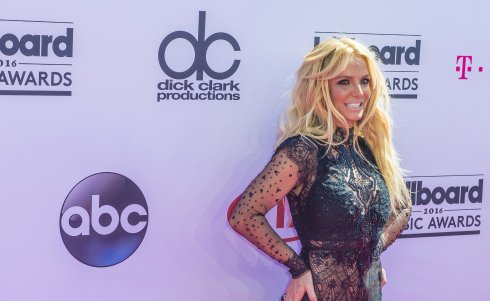
Britney Spears is the latest cultural icon to monetize her intellectual property by selling the rights to her entire music catalog to publisher Primary Wave for an estimated $200 million. This landmark agreement encompasses over two decades of hits and underscores a surging industry trend in which creators convert the long-term value of their IP portfolios into immediate capital. Spears joins a growing list of major artists (including Bruce Springsteen, Bob Dylan, Justin Bieber, and Katy Perry) who have recently brokered massive nine-figure transfers of their publishing and recorded music rights. For artists evaluating their intellectual property strategy, liquidating a catalog offers compelling advantages. The chief and obvious benefit is the immediate, guaranteed lump-sum payout an artist receives, which protects the artist from the uncertainties of fluctuating streaming revenues and shifting market trends. Additionally, a sale relieves the artist and their heirs from the complex, ongoing administrative burdens of managing copyright rights, negotiating licensing deals, and auditing royalties. The firms that acquire these rights assume the responsibility of actively pitching the catalog for lucrative placements in film, television, and commercial branding, by using their resources to maximize the IP's reach. However, cashing out requires artists to make significant trade-offs, the most notable drawback being the forfeiture of long-term royalty streams. If the music's value spikes due to a viral trend or a high-profile placement, the publishing firm reaps the financial windfall, not the creator. Furthermore, artists often surrender the ultimate right to control how their work is commercialized, opening the door for their music to be licensed for campaigns or media they might otherwise have rejected. In today’s highly charged political climate, this trade-off is not insignificant. This monumental sales strategy highlights the immense, tangible value of a well-protected IP portfolio, illustrating the careful balance creators must strike between immediate financial certainty and the long-term stewardship of their brand.
March 2, 2026
Trademark and Copyright
Actor Matthew McConaughey Registers Sensory Trademark “Alright, Alright, Alright” in Enforcement Effort Against AI Deepfakes
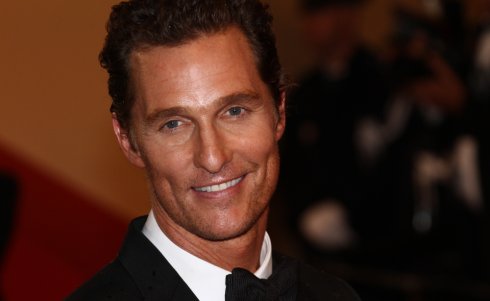
Well-known actor Matthew McConaughey has attracted headlines following the registration of a number of trademarks, not just related to brands with which he may be associated, but also those that address his pop-culture persona. Most interesting among these is McConaughey’s recent registration of the phrase "Alright, alright, alright," first uttered by the actor in the 1993 film Dazed and Confused, which has become strongly associated with the actor’s laid-back, Texas public image. McConaughey, however, has not only registered “Alright, Alright, Alright” as a trademark, but also as less common sensory marks. Sensory marks are trademarks that identify brands through senses other than just text or static logos. Well-known examples include the three-note (G-E-C) NBC Chimes, the MGM lion’s roar accompanying many well-known films, and the specific scent of Play-Doh. According to McConaughey’s legal team, the registration of these sensory marks and other recent registrations represents an attempt to enforce against the ever-increasing problem of AI-generated “deep fake” videos, in which celebrities or other well-known individuals are impersonated, in strikingly authentic fashion. The registration of “Alright, Alright, Alright,” (Reg. Nos. 7995951 and 8070191) as sensory marks, specifically, has the potential to represent a tactical shift in celebrity rights management. By securing federal trademark protection for the specific sound and motion of his delivery of the phrase, McConaughey attempts to move beyond the patchwork of state-level "right of publicity" laws. A federal trademark registration provides nationwide constructive notice of McConaughey’s ownership and creates a legal presumption that his distinct mannerisms and delivery of the phrase serve as source identifiers for the registered Class 09 goods and Class 41 entertainment services, which constitute his on-screen performance. In the context of AI, this allows his legal team to pursue infringement claims under the Lanham Act against entities using AI voice clones or deepfakes to endorse products. Unlike a right of publicity claim, which often requires proving the appropriation of one's "likeness," a trademark claim focuses on consumer confusion; specifically, whether an AI’s use of the catchphrase falsely suggests McConaughey’s sponsorship or approval. However, relying on trademark law to police AI has significant limitations. The primary hurdle is the "commercial use" requirement; trademark laws are designed to prevent consumer confusion in the marketplace, not to protect personal dignity. Consequently, this registration may be ineffective against non-commercial AI generations, such as artistic deepfakes, memes, or satire, which may be protected by the First Amendment or the doctrine of Fair Use. Ultimately, the scope of protection offered by these new registrations may be narrow. While McConaughey can now vigorously enforce against an AI creation saying “alright, alright, alright," this specific registration offers little recourse against an AI model mimicking his voice to say anything else. Infringers could potentially bypass this protection by simply creating AI content that avoids his registered catchphrases while still exploiting his vocal timbre and mannerisms. While this registration adds one weapon to his arsenal, it is likely a specific deterrent rather than a comprehensive shield against unauthorized digital exploitation.
January 26, 2026
Trademark and Copyright
Embedded Videos — Fair Use or Infringement? What the Latest Court Decision Means for Publishers
In early December 2025, the Southern District of New York issued a decision in Level 12 Productions, LLC v. Mediaite, LLC. The holding highlights a growing risk for publishers and businesses that use embedded social media content in their online publications – a widely used practice among a multitude of media companies. This case concerns two videos created by journalist Brendan Gutenschwager, both of which are owned by Plaintiff Level 12 Productions. Defendant Mediaite embedded these videos in articles without obtaining licenses from the plaintiff. The first video showed an anti-immigration rally outside New York City’s Gracie Mansion; the second captured celebrity couple Chrissy Teigen and John Legend walking through a protest at a White House Correspondents’ Dinner. Mediaite’s use of the latter video also included commentary by pundit Megyn Kelly during the playing of the video. Both videos were registered with the U.S. Copyright Office. Mediaite argued that its embedding of these videos did not constitute infringement under the Ninth Circuit’s “server test” and claimed its use was fair use. The Ninth Circuit’s “server test” doctrine holds that a website does not infringe when it embeds protected material hosted on a third-party server, because the site never creates or stores a copy of the work. Instead, a user’s browser is merely directed to retrieve it from its original source. In other words, embedded video is considered to be equivalent to linking to a source rather than a public display as defined by the Copyright Act. The Second Circuit has previously declined to adopt the Ninth Circuit’s server test in prior disputes involving similar uses of embedded video. Judge Vargas followed the Second Circuit’s precedent, rejecting the server test and reaffirming that embedded video constitutes a public display under 17 U.S.C. § 101 even if the content itself is hosted on a third-party server. Regarding fair use, the court reached different conclusions for the two videos. In video one, the court did not overturn the lower court’s holding, which found no fair use. For video two, however, the court held that Mediaite’s use was fair, since Mediaite embedded the copyright-protected video in a manner featuring Megyn Kelly’s commentary on the same, and thus the copyright-protected material was effectively transformed. The fact that media publishers cannot rely on the Ninth Circuit’s server test in the Second Circuit, while not surprising, remains significant, as it limits publishers’ ability to embed media in online publications without a license. On the other hand, this holding does little to affect either Circuit’s application of highly contextual fair use analyses. Courts will still look for a transformative purpose to establish that a use is fair. For publishers and media outlets, the takeaway is clear: audit your embedding practices and treat embedded social media content as you would any other copyrighted material. When in doubt, secure a license, especially if the embedded content is central to your story but not the subject of commentary.
January 9, 2026
Trademark and Copyright
Termination Rights Under Scrutiny in Harper Lee Adaptation Cases as USCO Steps In
It’s said: “you never really understand a person until you consider things from his point of view,” but the Dramatic Publishing Company (“DPC”) is not so interested in considering the point of view of the Harper Lee Estate in the disputes over the rights to produce stage adaptations of Lee’s seminal work, To Kill a Mockingbird. The suits center on the exercise of termination rights under Sections 203 and 304 of the U.S. Copyright Act, invoked by Harper Lee in 2011 to terminate the exclusive right granted to DPC in 1969 to create and license amateur stage adaptations of the novel, and whether a derivative work created prior to such a termination may continue to be licensed by the licensee. The Lee Estate seeks to terminate Lee’s 1969 grant of dramatic rights, however DPC argues that its adaptation constitutes a lawful derivative work created prior to the effective date of termination, thereby preserving its continued exploitation rights under the derivative works exception to Sections 203 and 304. This conflict places the parties at odds, in both the Second and Seventh Circuits, over the scope of the termination right and the durability of licenses which permit the creation of derivative works, pre-termination. The U.S. Copyright Office (“USCO”) weighed in on April 15, 2025, by amicus brief, saying “Terminate all the rights you want, but it’s a sin to expand a derivative post-termination.” Addressing the core legal issue, the USCO supported a narrow reading of the derivative works exception, warning that an expansive interpretation would erode the statutory policy underpinning termination rights. The brief emphasizes that post-termination exploitation of derivative works should be confined to uses that do not alter or expand upon the original derivative work, and that new derivative post-termination uses should remain unauthorized. The brief thus urges the courts to adopt an interpretation that protects the integrity and utility of Sections 203 and 304. This position reinforces the principle that termination rights are intended to give authors and their heirs a meaningful opportunity to renegotiate or reclaim control of their works. Note that Section 203 of the Copyright Act does not cut off the right of a former licensee to exploit lawfully created derivative works. Instead, the law specifically allows the continued use of derivative works prepared before the termination date. The termination only reverts the licensed rights to the original copyright owner and prevents the creation of new derivative works after the termination date. The result of these suits may drastically limit an author’s ability to control the use of derivatives versions of their works, provided such works were created during the original grant period. While we do not know when we can expect the Seventh and Second Circuits to issue their decisions, rest assured we will provide an update at that time. The USCO’s amicus brief echoes the rationale they employed when confirming their final rule regarding termination rights of songwriters under the Music Modernization Act in July 2024, which further reinforces the narrow interpretation of the derivative works exception advocated in the brief. While the rule addresses royalty distributions for, specifically, musical works (as opposed to other copyright-protected works), its underlying principle, that post-termination exploitation must not expand upon pre-existing derivative works, applies in this Harper Lee dispute. Here, DPC’s continued licensing of stage adaptations arguably constitutes an expansion of the original derivative work, especially if new productions introduce changes or reinterpretations. The Office’s rule affirms that termination rights are meant to restore meaningful control to authors and their heirs, and that derivative works created under an original grant should not serve as a perpetual license to innovate or profit post-termination. The principle underlying the USCO’s July 2024 rule lends weight to the Lee Estate’s position and may influence how courts assess the scope of permissible post-termination uses.
December 1, 2025
Commercial Litigation
D.C. District Judge Narrows Case Between E-Commerce Giants, Temu and Shein
In December 2023, Temu (operated by Whaleco Inc.), a general e-commerce platform specializing in drop-shipping resale goods sold at deep discounts, filed suit against Shein, a similarly structured fast-fashion clothing manufacturer. In their suit, Temu alleged that Shein perpetuates a "mafia-style" scheme to monopolize the fast-fashion market through supplier intimidation, trade secret theft, and abuse of the Digital Millennium Copyright Act. Temu claimed that Shein coerced Chinese suppliers, who provide the overwhelming majority of Temu’s inventory, into filing over 33,000 allegedly baseless copyright takedown notices on Temu’s website in order to disrupt Temu's operations. Shein countersued in August 2024, accusing Temu of encouraging sellers to infringe intellectual property rights, stealing Shein's trade secrets and product designs, and operating a counterfeiting-reliant business model. This battle between Shein and Temu reached a critical moment on September 30, 2025 when a district judge in the District of Columbia dismissed key claims of plaintiff Temu, while allowing Temu’s intellectual property claims to proceed. This recent ruling proved a strategic victory for Shein. The court dismissed Temu's antitrust claims under the Sherman and Clayton Acts, ruling that the alleged anticompetitive conduct occurred in China and fell outside U.S. jurisdiction. The court dismissed Temu's trade secret claims for similar reasons, as the alleged theft of trade secrets occurred overseas. However, the court left Temu's intellectual property claims intact, finding that Temu adequately pleaded infringement of its trade dress by Shein, direct copyright infringement related to Temu’s promotional mobile phone games, and violations of DMCA Section 512(f) for knowingly issuing false copyright takedown notices. This case underscores critical challenges for companies operating in global e-commerce markets – especially as international drop shipping business models become increasingly ubiquitous. In particular, U.S. courts have faced increasing difficulty addressing allegedly anticompetitive conduct by overseas entities whose actions may still be felt in the U.S. Meanwhile, such actors continue to misuse DMCA takedown procedure to gain a competitive edge in the market rather than as an IP protection tool. As both companies face broader regulatory scrutiny worldwide (Temu recently paid $2 million to the FTC to settle INFORM Consumers Act violations), this case may influence how courts evaluate jurisdictional questions in international supply chain disputes and assess claims of DMCA abuse in competitive marketplaces.
October 27, 2025
Sports Entertainment and Media
From Cameo to Courtroom: George Santos’ Copyright Claims Fall Flat
Despite the best efforts of the government, George Santos refuses to leave the public eye – for now, at least. On September 15, 2025, the Second Circuit affirmed the dismissal of former Congressman George Santos' copyright infringement and state law claims against late night show host and comedian, Jimmy Kimmel, as well as the Walt Disney Company. The case arose from Kimmel's use of personalized videos on his late-night show, Jimmy Kimmel Live! that Santos created through the Cameo platform. Kimmel and his staff submitted paid requests to George Santos through the popular app, Cameo, in which notable public individuals record and send personalized messages in exchange for money. Kimmel proceeded to air these recordings on his late-night show as part of "Will Santos Say It?" segments, which mocked Santos' willingness to create content for money. The district court dismissed all claims under Rule 12(b)(6), finding that the Fair Use doctrine barred the copyright claims, while the state law claims for breach of contract, breach of implied contract, and fraudulent inducement either failed on the merits or were preempted. On the copyright claims, the Second Circuit conducted a thorough fair use analysis under 17 U.S.C. § 107, focusing primarily on the transformative nature of Kimmel's use of the materials for satirical purposes. The court rejected Santos' argument that the use wasn't transformative because Kimmel had "instigated" the videos' creation, emphasizing that transformativeness is judged by what a reasonable observer would think rather than the subjective intent of either party creating the work at issue. The court found Kimmel's use was clearly transformative commentary and criticism, noting that while Santos claimed Kimmel’s purpose in soliciting the recordings was also to mock Santos and demonstrate Santos’ willingness to say absurd things for money, a reasonable observer would view the videos as conveying "feelings of hope, strength, perseverance, encouragement, and positivity." The court also found no harm to the market, since Kimmel's use didn't usurp Santos' market by offering a competing substitute. As for Santos’ state claims, the court affirmed their dismissal on substantive grounds. Santos' direct breach of contract claim failed because he was not considered a party to Cameo's Terms of Service and could not establish third-party beneficiary status under Illinois state law, which requires implied terms to a contract to be "so strong as to be practically an express declaration." His implied contract claim failed under New York law for not pleading essential contractual terms or demonstrating a meeting of the minds. Finally, his fraudulent inducement claim failed because he could not allege actual out-of-pocket losses as required under New York law. While Kimmel could have relied on commentary under Section 107 of the Copyright Act as a non-infringing use, this case reaffirms the power that satire also has to transform a work under the Fair Use doctrine. While deceit may not endear one to the deceiver, neither will it necessarily endanger them in a court of law (depending on the use, of course).
October 17, 2025
Sports Entertainment and Media
Neil Young and Backing Band Hit Like a Hurricane, Sued for Trademark Infringement by Luxury Jewelry Brand
Luxury jewelry and apparel brand, Chrome Hearts, LLC has filed a lawsuit against rock legend Neil Young and his current backing band, the Chrome Hearts, in the Central District of California, alleging that both the backing band’s use of the “CHROME HEARTS” phrase and Young's use of "Neil Young and the Chrome Hearts" on merchandise (NYTCH) generates significant consumer confusion in the market, and infringes Chrome Hearts' federally registered CHROME HEARTS trademarks. The complaint asserts five causes of action including, federal trademark infringement, false designation of origin, unfair competition under California law, and common law trademark infringement and unfair competition. Chrome Hearts, which has operated its brand since 1988, and frequently collaborates with well-known musicians, argues that Young's band’s incorporation of the exact CHROME HEARTS word mark on merchandise and promotional materials violates their federally protected rights. In support of their contention, Chrome Hearts alleges salient instances of actual confusion, strengthening the plaintiff’s allegations beyond mere hypotheticals. Per the complaint, multiple apparel vendors have already mistakenly assumed a connection between NYTCH and Chrome Hearts, strongly suggesting the consumer perception of a purported relationship between Chrome Hearts, Young, and his band. The complaint also includes images of specific instances of use of Chrome Hearts designs, or designs evocative of Chrome Hearts’ IP, by third party vendors adorning the t-shirts and other merchandise sold at Young’s concerts, even though Young’s official merchandise does not use Chrome Hearts’ registered designs. The complaint further alleges that Young and Co. had knowledge of the alleged infringement, as Chrome Hearts had sent multiple notice letters regarding this alleged misuse prior to filing suit. Chrome Hearts seeks aggressive relief including temporary, preliminary, and permanent injunctions to halt all use of the NYTCH name and Chrome Hearts marks, mandatory recall and destruction of infringing inventory, and damages including attorney fees. If Chrome Hearts’ allegations make it to trial, we will see whether Neil Young truly has a Heart of Gold, or whether this Old Man’s callous disregard for well-established intellectual property rights were left Down by the River back in 1969.
October 14, 2025
Sports Entertainment and Media
Court Reinstates Jury Finding in Disney Motion Capture Copyright Dispute
The Ninth Circuit recently issued a partial reversal of a grant of summary judgment to Disney in a dispute stemming from the misuse of motion capture software. This case arose when Disney's visual effects contractor, Digital Domain 3.0 “DD3,” allegedly used Rearden's copyrighted MOVA motion capture software without authorization during production of the 2017 Beauty and the Beast film. While a jury found Disney vicariously liable and awarded $250,638 in actual damages plus $345,098 in profits, the district court granted Disney's motion for judgment as a matter of law, concluding that Disney lacked the ability to supervise DD3's directly infringing conduct. The ability of Disney to supervise DD3’s misuse constitutes a necessary element of vicarious liability. The Ninth Circuit disagreed on appeal, holding that sufficient evidence supported the jury's finding that Disney had the practical ability to supervise and control DD3's conduct. The court rejected Disney's arguments that it was impractical to conduct due diligence on every piece of software used by vendors and that it had no way to identify the infringement, finding that the jury could reasonably conclude Disney had the reasonable ability to identify DD3's potentially infringing use of MOVA. However, the court affirmed the district court's decision to treat the jury's profit award as advisory, ruling that there is no jury trial right for profit remedies under the Copyright Act. This decision has the potential to motivate large studios such as Disney to rethink their due diligence obligations in cases involving large-scale productions with multiple vendors and complex technological workflows.
September 25, 2025
Intellectual Property
Lawsuit Against AI Giant Anthropic Settles
A class action copyright infringement lawsuit brought by U.S. authors against the AI company Anthropic has reached settlement, avoiding a trial set to begin in December. The class of plaintiff-authors alleged in the suit that Anthropic used millions of pirated books without authorization to train its popular Claude AI assistant. This case has had an unusual path to settlement, following a split opinion in June by Northern California District Judge, William Alsup. Alsup held that Anthropic's use of copyrighted works for AI training constituted fair use, but determined the company nonetheless violated copyright law by maintaining pirated books in a "central library" for use far beyond training purposes. This liability exposure, which could have potentially led to billions or even trillions of dollars in penalties assessed against Anthropic if the pending trial did not go its way, was likely the primary factor which drove Anthropic toward settlement. The settlement's broader impact on pending AI copyright litigation against other major defendants such as OpenAI, Microsoft, and Meta remains uncertain, as this landscape of copyright law remains largely unsettled. Just two days following Judge Alsup’s ruling, Northern California District Judge Vince Chhabria issued a somewhat contrasting opinion in a similar authors' lawsuit against Meta, which suggested that Meta's fair use defense held water. However, the judge suggested that the defense could fail if that suit’s plaintiffs adjusted their arguments to indicate AI models’ potential to flood the market with reproductions of the authors’ works. With dozens of AI copyright cases pending, the unpredictability surrounding these novel legal questions may either incentivize additional settlements or encourage defendants to hold out for potentially favorable precedential rulings. As authors, attorneys, executives, and judges alike continue to navigate this new copyright landscape, time will tell whether more AI companies follow in Anthropic’s footsteps and seek dispute resolution before trial.
September 11, 2025
Sports Entertainment and Media
Federal Court Rules SoundExchange Lacks Standing in SiriusXM Royalty Dispute
Judge Naomi Reice Buchwald of the U.S. District Court for the Southern District of New York dismissed SoundExchange's $150 million lawsuit against SiriusXM, finding that the performance rights organization lacks legal standing to pursue litigation against broadcasters. The August 7, 2025, decision centered on allegations by SoundExchange, a non-profit entity designated by Congress as the singular entity responsible for collecting and distributing digital performance royalties for sound recordings, that SiriusXM manipulated its revenue accounting to shortchange artists on royalties stemming from the company’s satellite radio services. SoundExchange based its suit primarily on Section 114 of the U.S. Copyright Act, and claims that the underpaid royalties by SiriusXM have climbed since filing the initial suit in 2023, now allegedly exceeding $400 million. Judge Buchwald's opinion concluded that while Section 114 of the Copyright Act designates SoundExchange as the authority for collecting and distributing digital performance royalties, Congress never explicitly granted the body a private right to enforce nonpayment through litigation —unlike Section 115 — which expressly confers similar litigation powers to The Mechanical Licensing Collective. Notably, Judge Buchwald did not specifically address the merits of SiriusXM’s alleged nonpayment, restricting analysis solely to the threshold issue related to Section 114 of the Copyright Act, potentially leaving a door ajar for further enforcement by SoundExchange. SoundExchange disputed the ruling, calling Judge Buchwald's interpretation "entirely wrong on the law" and argued that Congress's inclusion of the word "enforcement" in Section 114 necessarily implies litigation authority. The organization contends that being charged with collecting and distributing royalties without the ability to bring legal action against non-compliant licensees would undermine the entire statutory licensing framework's function and efficiency. SoundExchange also points to practical precedent, noting as well that SiriusXM has acknowledged in prior disputes that SoundExchange reserves the right to sue for compliance. The ruling may have broader implications beyond the immediate SiriusXM case, affecting SoundExchange's enforcement capabilities across the digital music industry, including pending lawsuits against Napster and Sonos for similar nonpayment. SoundExchange is considering an appeal to the Second Circuit and potentially filing actions in state courts to preserve its enforcement mechanisms. The case presents a fundamental question about Congressional intent in creating the modern digital music licensing framework and whether administrative efficiency requires corresponding enforcement authority, with the resolution likely to have lasting implications for the balance of power between streaming services and rights holders in the music industry.
August 20, 2025
Intellectual Property
Voice Actors Clear Early Legal Hurdle in AI Cloning Suit
Voice actors received a rare, if incomplete, victory against alleged AI infringers in a recent opinion from an SDNY judge in Lehrman v. Lovo, Inc. Voice actors Paul Lehrman and Linnea Sage filed an action against AI voiceover company Lovo, alleging the company used artificial intelligence to synthesize and sell unauthorized "clones" of their voices. Plaintiffs discovered their voices being used in YouTube videos and podcasts after they had been hired through the freelancing app, Fiverr, for what they believed were limited voice recording projects used for research purposes. The result is a case of first impression regarding AI voice cloning tech, asserting claims under New York civil rights and consumer protection laws, the Lanham Act, the Copyright Act, and various common law theories, including breach of contract, fraud, conversion, unjust enrichment, and unfair competition. Judge J. Paul Oetken issued a mixed ruling on Lovo's motion to dismiss, concluding that "for the most part, Plaintiffs have not stated cognizable claims under federal trademark and copyright law." The court explained that what plaintiffs sought was essentially "copyright protection for their voices" as abstract concepts rather than specific expressions, and that copyright "must concern the expression of ideas, not the ideas themselves." However, the court did allow the plaintiffs’ breach of contract and right of publicity claims to proceed, finding that communications through Fiverr and the platform's terms of service supported their allegations that the voice recordings were used beyond the agreed scope. The court also moved claims under New York Civil Rights Law Sections 50 and 51 forward, stating that these state laws are "tailored to balance the unique interests at stake" in voice misappropriation cases. While the ruling represents a partial victory for the voice actors, it highlights significant gaps in federal intellectual property protections for AI-generated content and voice cloning technology. The court's decision suggests that voice actors and similar plaintiffs may find more success pursuing state law remedies for unauthorized AI voice cloning rather than relying on federal copyright protections.
August 6, 2025
Intellectual Property
Supreme Court to Hear Cox Communications Case on ISP Copyright Liability
On June 30, 2025, the Supreme Court accepted a petition for certiorari brought by Cox Communications, and denied one brought by Sony in the same matter, following the advice of Solicitor General Sauer. The dispute stems from a massive $1 billion copyright infringement verdict against Cox Communications, in which music publishers (including Sony, Universal, and Warner Music, among others) alleged that Cox was liable for the illegal distribution of 10,017 musical works by the ISPs subscribers. The Fourth Circuit previously affirmed a lower court’s ruling that Cox was liable to the plaintiff publishers for contributory infringement, while overturning the lower court’s finding of vicarious liability. As a result, both Cox and Sony filed competing petitions for certiorari seeking clarification from the Supreme Court regarding different aspects of ISP copyright liability. The Supreme Court will review two critical questions that could reshape how internet service providers handle copyright infringement. First, whether an ISP materially contributes to copyright infringement by continuing to provide internet access to particular subscribers after receiving notice that their accounts have been linked to active and ongoing copyright infringement. The Department of Justice noted this ruling creates "substantial tension" with a recent Supreme Court analysis of contributory liability in Twitter v. Taamneh, where the Court found that mere passive provision of services without active assistance doesn't constitute contributory liability. Second, the Court will examine the "circumstances under which a contributory infringer can be held liable for enhanced statutory damages based on a finding of "willful infringement,"" specifically whether knowledge of subscriber infringement alone suffices for a willfulness finding or if the ISP must have reasonably believed its own conduct violated copyright law. The decision could fundamentally alter how ISPs manage their networks and respond to copyright infringement notices, with Cox arguing that overly broad liability standards could jeopardize internet access for all Americans. Depending on the outcome of this case, American internet users may see ISPs tighten their grip when enforcing against pirate websites or unauthorized distributors of IP, as ISPs aim to minimize any and all liability potential. We will continue to keep this space updated as the case progresses.
July 11, 2025
Intellectual Property
Jimmy Page Accused of Infringing 'Dazed and Confused'
If the ongoing acrimony between Daryl Hall and John Oates wasn’t enough to fill the void of aging rock stars airing their grievances in court, never fear. There’s an endless well where that came from. Jake Holmes, original writer and composer of the song Dazed and Confused, has sued Led Zeppelin’s Jimmy Page, among other musical production and publishing entities, for damages related to a songwriting credit he feels he is owed. Indeed, Holmes wrote the now-iconic hit in 1967, at which time Jimmy Page heard the song and rearranged the composition for his then-outfit, The Yardbirds. Page would later work with Robert Plant to reimagine the song for their upstart band, Led Zeppelin, again neglecting to credit Holmes for his role in the song’s creation. Off the heels of a now-settled 2010 lawsuit regarding the issue, the recently released documentary, Becoming Led Zeppelin, has brought the song, and Holmes’ claims, back into public consciousness. Doubtless, Holmes wanted to strike while the iron is hot. Plaintiff Holmes filed a complaint in the U.S. District Court for the Central District of California, asserting three primary claims: two for copyright infringement and one for breach of contract. Holmes alleges he is the sole copyright owner of Dazed and Confused, originally registered in 1967. He claims that Jimmy Page and associated defendants, willfully infringed on this copyright by exploiting the composition without authorization—first in connection with the Yardbirds’ performances and later through its use in the 2025 documentary Becoming Led Zeppelin. Holmes's complaint alleges that, despite a 2011 settlement agreement (resolving the prior 2010 suit, which affirmed Holmes’s exclusive rights to the composition), Jimmy Page, Succubus Music Ltd., and WC Music Corp. continued to falsely license and monetize recordings of Dazed and Confused as if Page were the sole author. Holmes contends that these recordings include numerous Yardbirds live releases and that the defendants generated revenue from licensing, streaming, and royalties without proper attribution or payment to Holmes. Additionally, Holmes claims that the recent documentary film Becoming Led Zeppelin incorporated unauthorized performances of Dazed and Confused—both by the Yardbirds and by Led Zeppelin—again falsely crediting Page and excluding Holmes. He asserts that multiple defendants, including major production and distribution entities like Sony Pictures Classics and Big Beach LLC, participated in the infringing activity. Holmes seeks actual or statutory damages, injunctive relief, an accounting of profits, and attorneys' fees, alleging willful infringement and breach of the 2011 settlement agreement. This new action has the potential to set a standard for infringement cases regarding works so central to the infringing entity’s identity as to reframe that entity’s success completely. Time will tell whether Page’s Levee will finally Break, or whether Page and Zeppelin will Ramble On as they have for the past 50+ years.
May 28, 2025
Intellectual Property
Trade Dress at a Glance: Protecting the Look and Feel of a Product
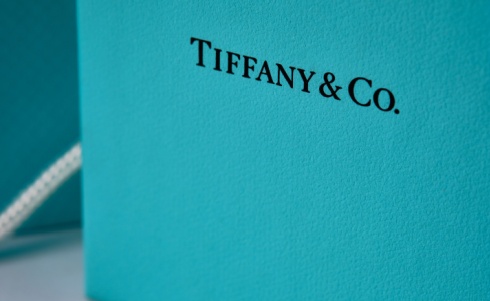
When safeguarding their consumer reputation, most companies recognize the value in their brand names, logos, slogans, and their associated goodwill and the importance of protecting those assets. However, many neglect to protect their trade dress: the look and feel of a company’s product, packaging, or services. Trade dress can be a powerful source-identifying tool: rather than protecting a specific name or logo, trade dress is about the “overall design and appearance” of a product. It can include elements that may not be protectable on their own. Nora Beverages, Inc. v. Perrier Group of Am., Inc., 269 F.3d 114, 118 (2d Cir. 2001). Trade dress can come in many forms, and courts have upheld trade dress protection in colors, store layouts, and website designs. The U.S. Supreme Court recently referenced trade dress as part of its discussion on whether elements of a dog squeaky toy infringed on several Jack Daniel’s trademarks — including their styled white filigree and distinctive square bottle. More on that decision and its implications on First Amendment protections can be found in our previous client alert here. This article focuses instead on how companies can incorporate trade dress protections into their intellectual property portfolio. The Elements of Trade Dress To qualify as a protectable trade dress, the product packaging or design must meet two main criteria: it must be inherently distinctive (or have acquired a secondary meaning that makes it source-identifying) and be nonfunctional. “Distinctiveness” can be a nebulous term, and courts consider the distinctiveness of product design and packaging differently. The Supreme Court has held that a product’s design is not inherently distinctive without acquiring secondary meaning that ties it to a brand. Wal-Mart Stores, Inc. v. Samara Bros., 529 U.S. 205, 212 (2000). A product’s packaging, however, or the overall design elements of a restaurant or retail store (which the Court viewed as being more akin to packaging than product), can be inherently distinctive. In instances where an element of package design is particularly unique or fanciful or when several commonplace elements are taken together to make a whole, trade dress may lead a consumer to associate it with a particular company or brand. Some packaging design elements are distinctive enough to qualify as protectable trade dress in their own right. One of the most famous examples is the design of a glass bottle of Coca-Cola; without any additional labeling or context, the average consumer can immediately identify the brand behind it and the product contained within it. Some characteristics, like specific colors, may not be inherently distinctive at their outset but can acquire a secondary meaning through their use — such as Tiffany & Co.’s distinct blue box. Trade dress looks at the entirety of a design. Even commonplace elements without a solid secondary meaning, such as the examples above, can be part of a distinctive trade dress. Grouped together, such elements can form a unique whole, and the more elements used to establish the overall look and feel, the more likely a trade dress is to be protected. For example: in 2013, Apple was able to secure protection for its retail locations’ overall look and feel. Taking the elements of their store design as a whole, Apple conveyed an overall image that was distinct and identified their brand. In some cases, a trademark registered and protected in its own right gained more robust protection through its incorporation into trade dress. In Gucci Am., Inc. v. Guess?, Inc., 868 F. Supp. 2d 207, 248 (S.D.N.Y. 2012), Guess was found not to have infringed on one of Gucci’s trademarked logos with their similar mark, but the Court found that when the logos were both used in a similar brown-on-beige product design, it was a step too far. Non-functionality is the other essential element of trade dress. Functionality, in this case, covers elements necessary for product use and those that affect cost or quality. When the features that make the product useable and the aesthetic elements that allow a customer to identify the source are one and the same, courts are reluctant to classify those features as trade dress. Visually distinct components that are also protected by a utility patent, for example, are generally not protected as trade dress. TrafFix Devices, Inc. v. Mktg. Displays, Inc., 532 U.S. 23, 29 (2001). However, the inclusion of functional elements in a trade dress does not necessarily render it unprotected. The hands and dial of a watch are undoubtedly useful, but their aesthetic qualities are trade dress. Cartier, Inc. v. Sardell Jewelry, Inc., 294 F. App’x 615 (2d Cir. 2008). A functional aspect that incidentally creates a distinctive feature (such as a decorative embossment made by a patented process) can also be protected trade dress. McAirlaids, Inc. v. Kimberly-Clark Corp., 756 F.3d 307, 312 (4th Cir. 2014). Taking Appropriate Action Trade dress is protected by federal law, and companies concerned that a competing product is imitating the look and feel of their trade dress can sue under the Lanham Act. Although it is possible to protect trade dress without registering it with the U.S. Patent and Trademark Office first, an ounce of prevention is worth a pound of cure. Taking the proactive step of registering a trade dress makes it easier for companies to enforce their rights: for example, 15 U.S.C.A. § 1125(a)(3) states that a person who seeks to protect an unregistered trade dress has the burden of proving the elements they wish to protect are nonfunctional. Registering their trade dress on the principal register can save a company that burden. Companies, particularly the design and marketing departments, should consult with their trademark attorneys early in product development to avoid unintended infringement pitfalls in their products and packaging and to determine if registering their trade dress is practical and serves their specific needs. This summary of legal issues is published for informational purposes only. It does not dispense legal advice or create an attorney-client relationship with those who read it. Readers should obtain professional legal advice before taking any legal action.
July 20, 2023
Intellectual Property
Name, Image & Likeness (NIL): Three Key Legal Issues Facing Businesses in College Athlete Endorsement Deals to Date
The commercial landscape of college athletics has experienced significant change in recent months. The release of the new NCAA “interim policy,” prompted in part by the U.S. Supreme Court decision in NCAA v. Alston, has allowed college athletes and businesses to benefit from new endorsement and income opportunities involving the licensing of an athlete’s name, image, and likeness (“NIL”). Following the NCAA interim policy released in June 2021, a multitude of states enacted NIL statutes outlining the procedures and limitations for endorsement deals by athletes to license their NIL. Despite the world of opportunities that have opened up, the NIL landscape faces ongoing uncertainty and potential pitfalls due to the patchwork of NCAA, state, and university rules and regulations requiring compliance by college athletes and businesses. In order to benefit from all that NIL has to offer and avoid problems, businesses should be aware of three main legal issues that have been prevalent in NIL deals to date. (1) NIL agreements should comply with NCAA policies, state laws, and university rules In pursuing opportunities to contract with college athletes, businesses should perform their legal due diligence before finalizing any deal. Companies should strive to ensure that an NIL agreement complies with the NCAA interim policy, state law, and any applicable rules adopted by the school itself. If the state has yet to pass an NIL statute, the agreement should be flexible enough to accommodate future laws that may be enacted. Businesses should also consider that Congress may adopt a uniform federal law affecting NIL agreements. Even if a possible NIL deal satisfies the relevant state laws, businesses should also seek compliance with NCAA policies, such as the prohibitions against both pay-to-play and using NIL as a recruiting inducement. This means the agreement and related compensation cannot be, among other things, contingent on the athlete attending a specific school, participating in a certain number of games, or performing at a certain level. Businesses seeking endorsement deals with college athletes should also be aware of the categorical prohibitions on athlete association with certain brands or products under state law or university rules. These categorical exclusions vary by state and by institution and may even be enforced through team-specific codes of conduct. (2) NIL agreements should avoid conflicts with the university’s intellectual property and existing sponsorships A frequent hot topic in NIL deals has been the potential for conflicts with existing school or team sponsorships and with the use of school-specific intellectual property (“IP”), which may involve the school’s logos, nick-names, slogans, mascots, venues, and in some cases, team colors. Businesses should be aware of the possible limitations of NIL deals. NIL deals usually grant the sponsor the right to use the athlete’s IP. However, these agreements may not cover the use of the school’s IP, and the schools are not obligated to agree that their IP can be used. If the business wants the athlete to wear their team jersey, use the team locker room, or showcase a school landmark, the company will need to seek permission from the school itself. Universities have sometimes invoked their right to refuse such requests. Additionally, agreements between businesses and college athletes cannot conflict with existing school or team sponsorships with other companies. Athletes may face serious consequences if a NIL deal conflicts with existing sponsorships. Thus, it is in the business’s best interest to ensure that such conflicts do not occur. (3) NIL agreements should consider social media legal and branding issues The marketing opportunities presented by NIL deals have attracted both national brands and small, regional, and non-traditional businesses that may have previously struggled to secure high-profile endorsements. Nearly all businesses can now partner with college athletes, especially for relatively low-cost social media campaigns promoting their brands to an athlete’s followers. Using an athlete’s NIL in a social media campaign presents an enticing option for businesses that wish to engage with a younger audience, but there are certain risks associated with social media that should be evaluated and monitored closely. First, businesses should carefully vet the athlete and ensure that their personal brand and character align with the business’s approach to marketing. Social media campaigns can allow athletes to promote a company in a way that feels more personal and authentic to consumers. However, social media platforms also allow for real-time posting of user-generated content, which might not be subject to prior review. This could potentially hurt the business’s image if the athlete or others make comments that are not a good fit for the company. In addition, the ease through which photos and videos are shared on social media presents the risk of an athlete inadvertently violating IP limitations imposed by the school. To avoid these issues, businesses should consider designating a representative who will be responsible for managing the social media relationship between the athlete and the company’s brand. Conclusion In short, the groundbreaking changes in the NCAA interim policy on NIL have opened up a world of opportunities for businesses and college athletes. However, the legal risks associated with NIL deals require the respective parties to stay well informed on the relevant and quickly changing rules and regulations. In order to ensure your business is well protected, it is important to consult with counsel before entering into any NIL agreement. This summary of legal issues is published for informational purposes only. It does not dispense legal advice or create an attorney-client relationship with those who read it. Readers should obtain professional legal advice before taking any legal action.
December 29, 2021
Intellectual Property
Navigating the New NIL Landscape: A Checklist for Athletes Looking to Profit
On June 30, 2021, the college athletics landscape was significantly altered, as the NCAA announced an “interim policy” concerning the commercialization of college athletes’ names, images and likenesses (“NIL”). NIL includes an athlete’s name, appearance, signature, nicknames and any other signs, slogans, sayings or symbols that can be used to identify that individual. Here is a basic step-by-step guide to help college athletes profit from their own NIL while complying with NCAA, state and school rules: (1) Know the interim NCAA policy. Athletes can now profit from NIL. State law where the school is located will apply. The school’s rules will also apply, even if there is no state NIL law. You can hire professional representation (attorneys, agents) with certain limitations. You must report NIL activities consistent with state law and school rules. Avoid NIL affiliation with NCAA’s banned sub-stances (drugs, performance-enhancing drugs, etc.). (2) Does your state have an NIL law? If so, know it. In order to play the game, you have to know the rules. Therefore, start by learning about your state's NIL law. If you are unsure, contact your athletic department or a local attorney for guidance. What are the “banned categories” in the state (drugs, alcohol, gambling, etc.)? What are the reporting requirements? What makes someone eligible to help you with NIL deals (state agency requirements)? (3) Know your institution’s NIL policy. You must know what your school does and does not allow. Can you use the school’s logo or facilities in your NIL activities with or without pre-approval? Is there a process to request approval to use school logos and facilities? Can you conduct NIL activities during team-sanctioned events? What are your school’s “banned categories”? Are there special NIL social media rules? Does your proposed endorsement conflict with the school’s existing product agreements? What are the school’s NIL reporting requirements? Does your school have a designated NIL administrator to help you? What is the enforcement mechanism and ap-peal procedure if you make an alleged NIL mistake? (You should consider hiring professional representation to help avoid this.) (4) Protect your NIL. If you are in the market for significant NIL deals, you should consider protecting your intellectual property (“IP”). Seek legal counsel with experience in both IP and sports law. The initial consultation will typically be at no cost. Beyond that, a small expense up front can pay off down the road. Register your IP. Register your name, nickname, or slogan as domain names. Protect your right to use your own NIL and prevent unauthorized third-party use by filing for trademark protection. What is a trademark? It is a word (name or nickname), symbol, design or slogan that can specifically identify you in commercial activities. Consider hiring a trademark attorney to assist you. How do I determine if it is cost-effective to take these steps? The NIL market is extremely new and, therefore, tough to judge. However, the more substantial contracts are being executed by players with larger social media followings and on-field presence. Regardless, do NOT sell yourself short. Test the market and see what deals you may attract. (5) Understand the impact of any earned income. Earning income from NIL may affect your personal financial situation, including your tax status and liabilities, your immigration status, and/or your financial aid package. (6) Seriously consider hiring professional representation. In accordance with NCAA, state and school guidelines, consider obtaining professional representation, such as an attorney or agent registered in the state. Also, consider whether obtaining financial, tax, immigration or other professional advice would be helpful. At the end of the day, no NIL deal is worth your NCAA eligibility or institutional good standing. This summary of legal issues is published for informational purposes only. It does not dispense legal advice or create an attorney-client relationship with those who read it. Readers should obtain professional legal advice before taking any legal action.
September 13, 2021
Intellectual Property
A Checklist for University Policies Addressing Student-Athlete Name, Image and Likeness (NIL) Issues
In the wake of the Supreme Court's decision in Alston v. NCAA, the National Collegiate Athletic Association ("NCAA") issued an interim policy announcing that it will no longer enforce its rules prohibiting compensation for the use of a student-athlete's name, image and likeness ("NIL"). Other athletic associations have like-wise amended their bylaws to allow student-athletes to profit from the use of their NIL. Additionally, new laws recently enacted by many states, such as Pennsylvania, now require institutions of higher education to publish policies on these issues. To comply with NCAA rules and state law, universities face a range of somewhat complex considerations in forming and implementing NIL policies and procedures. Here are some of the key issues in the form of a practical checklist: Know the NCAA policy or the policy of the athletic association that governs your institution's teams. The NCAA has a Division Manual for each of its three divisions. The Manuals are several hundred pages long and include at least several dozen policies that address issues that may be impacted by NIL activity. These manuals and policies have not yet been revised. Instead, the NCAA's interim policy states simply: "Individuals can engage in NIL activities that are consistent with the law of the state where the school is located. Colleges and universities may be a resource for state law questions. Individuals can use a professional services provider for NIL activities. College athletes who attend a school in a state without a NIL law can engage in NIL activity without violating NCAA rules related to name, image, and likeness. State law and schools/conferences may impose reporting requirements." https://www.ncaa.org/about/taking-action Know what hasn't changed in the NCAA manuals. Subject to state law, the NCAA still prohibits a "NIL agreement without quid pro quo (e.g., compensation for work not performed)." Subject to state law, the NCAA prohibits "NIL compensation contingent upon enrollment at a particular school." Subject to state law, the NCAA still prohibits "compensation for athletic participation or achievement. Athletic performance may enhance a student-athlete's NIL value, but athletic performance may not be the 'consideration' for NIL compensation." Subject to state law, the NCAA still prohibits "institutions providing compensation in exchange for the use of a student-athlete's name, image or likeness." https://ncaaorg.s3.amazonaws.com/ncaa/NIL/NIL_QandA.pdf (See Q. 11) Know your state's NIL law. A majority of states have enacted brand-new NIL laws, and the requirements vary considerably. Some states even require that institutions create funds from ticket sales or other promotional activities to benefit athletes. Pennsylvania's new law contains many provisions similar to those in other states. For example: Pennsylvania's law applies to institutions within Pennsylvania and to students participating in intercollegiate athletics at those institutions. The laws of other states may also apply to their residents regardless of where they attend school. 24 P.S. §20-2001k, et seq. Pennsylvania's law permits college athletes to earn compensation for the use of the athlete's NIL and provides that the compensation must be commensurate with the market value of the athlete's NIL. Pennsylvania's law prohibits college athletes from accepting compensation in exchange for their attendance, participation, or performance at the institution ("pay-for-play"). Pennsylvania's law prohibits college athletes from earning compensation for NIL use "in connection with a person, company or organization related to or associated with the development, production, distribution, wholesaling or retailing" of the following: Adult entertainment products and services. Alcohol products. Casinos and gambling, including sports betting, the lottery, and betting in connection with video games, online games, and mobile devices. Tobacco and electronic smoking products and devices. Prescription pharmaceuticals. A controlled, dangerous substance. Other products or activities prohibited by the institution. Pennsylvania's law also permits institutions to prohibit student NIL use more broadly: (i) in activities that conflict with existing institutional sponsorship arrangements and (ii) based on other considerations that conflict with institutional values, as defined by the institution. The Pennsylvania law requires institutions to have policies that "specify the name, image or like-ness activities [in] which the college student may not engage." Pennsylvania's law requires students to disclose proposed NIL contracts to a designated official of the institution at least seven days before the execution of the contract. Pennsylvania's law prohibits institutions (i) from preventing student-athletes from earning compensation through the use of the student's NIL or (ii) from obtaining professional representation in relation to NIL use. Pennsylvania's law prohibits institutions from arranging third-party compensation for a student-athlete relating to NIL use as an inducement to recruit prospective students. Pennsylvania's law requires any person producing a college team jersey, video game, or trading card for profit to make a royalty payment to each athlete whose NIL or "other individually identifiable feature" is used. Pennsylvania's law does not require institutions to facilitate or enable NIL opportunities for athletes. The law specifically states that it does not require an institution to permit athletes to use the institution's marks, logos, mascots, or other intellectual property. Know your state's student-athlete agency law. Many states, including Pennsylvania, require registration, which may include payment of fees and posting of bonds. See, e.g., 5 Pa.C.S. §3301 et seq. Tell the students where to find a list of "banned products." Pennsylvania's law requires that institutions disclose to students the types of deals that the institution prohibits. Therefore, institutional policies should let students know which products and activities are prohibited by state law and by institutional decree. For example, should student-athletes be permitted to engage in NIL activity for CBD and hemp products? Nutritional supplements? Guns? Professional sports teams? Gambling? Broadcasters? Can they contract with university entities, such as a meal service? Institutional policies should also specify products that conflict with school contracts, such as institutional sponsorship deals that include exclusivity promises. Policies should let students know whether all teams have a conflict or just certain teams. Is certain activity prohibited on social media? Tell students whether and how they can use the school's copyright materials (including game footage, logos, nicknames, mascots, etc.), and if appropriate, how to get permission to do so. Consider requiring all vendors, whether involved through the student NIL process or otherwise, to seek approval in the same way for the use of school marks. Tell students whether they can use the school's facilities and fields for NIL purposes, and if so, how to get permission to do so. Tell students whether NIL activity can interfere with class time or team activities. Warn students of other potential hazards, including: The need to consult with the designated school official for international students (because many students are in the United States on visas that prohibit employment), and The need to consult with the financial aid office (because a successful NIL venture may result in income, which may need to be included in determining income-based financial aid eligibility and awards). Indeed, before rolling out an NIL policy, it might be a good idea to coordinate with the university's financial aid office and international student office. Require disclosure of student-athlete NIL contracts. Pennsylvania law requires disclosure to the institution of all NIL contracts at least seven days prior to the execution of the contract. In other states, some institutions are establishing dollar amount thresholds. Your policy should clarify what happens in the event the institution is unable to respond in a timely manner. Does a failure to respond mean that the student has the institution's approval to proceed? Create a formal process for disclosure of NIL deals by student-athletes and review by the school. Many schools may find it helpful to designate an NIL coordinator. Consider requiring all agents representing student-athletes for NIL activities to register with your school and to provide basic information. Consider advising students of the need to comply with NCAA rules regarding agents, including that students "shall be ineligible… if the individual enters into an oral or written agreement with an agent for representation in future professional sports negotiations that are to take place after the individual has completed eligibility in that sport." NCAA Manual, Div. 1, 2021-22, bylaw 12.3.1.3. Consider providing education to students about (a) the NIL and agent registration laws, (b) protecting intellectual property, (c) financial acumen, and (d) university policies and procedures. Consider an internal appeal process or grievance process for NIL issues. Consider other policies and documents that may require review and revision: School contracts containing licensing provisions. Will the school be responsible for student NIL disputes with a university vendor? Insurance policies. Will the university's insurance respond if there are disputes? Social media policies. Student forms granting the university permission to use the student's NIL in connection with university promotional activity. Student discipline policies which may need to specifically identify the types of discipline that may be assessed on students who violate NIL rules. Student grievance policies. Do existing policies allow students to file complaints if the institution prohibits a proposed NIL contract or fails to respond to a proposed contract? Takeaways. Institutions of higher education must create policies to inform student-athletes of their rights and responsibilities and consider updating related rules across the full range of inter-connected issues within the institution. Institutions must be prepared to make further updates as additional guidance becomes available and as rules change.
September 13, 2021
Intellectual Property
It’s a New Game: Pennsylvania Statute Adopted on College Athlete Compensation for Name, Image and Likeness
On June 30, 2021, Governor Tom Wolf signed legislation to allow college athletes in Pennsylvania to earn compensation for the use of their name, image, and likeness ("NIL"). The new law, adopted as part of Senate Bill 381 ("SB 381"), was signed on the same day the NCAA approved a related policy reversing its long-held prohibition against such NIL activity. The new Pennsylvania statute, along with similar laws in other states and the NCAA policy reversal, follows years of mounting pressure from athletes. These reform initiatives reached a clear turning point with the unanimous antitrust decision by the U.S. Supreme Court in National Collegiate Athletic Association v. Alston on June 21, 2021, affirming an injunction against NCAA rules that had limited the education-related benefits schools may offer student-athletes. The NCAA's June 30 policy allows students who participate in intercollegiate athletics to engage in NIL activities consistent with the laws of the state in which their school is located. Those attending school in a state without NIL laws can still participate without violating the NCAA's NIL rules. Other non-NCAA athletic conferences may issue their own rules as well. However, Pennsylvania's new statute does not include those who take part in club or intramural sports or professional sports outside of intercollegiate athletics. SB 381 returns the individual Right of Publicity to college athletes, which was originally denied by prior NCAA regulations. With these regulations set aside, athletes can now take advantage of the same rights enjoyed by other public figures. SB 381 provides much-needed guidance in Pennsylvania for institutions of higher education and for athletes and their potential representatives in this brand-new and unprecedented era of student-athlete endorsements and compensation. Essential analysis and practical takeaways for athletes and schools are presented below. COLLEGIATE ATHLETES SB 381 states that "a college student-athlete may earn compensation for the use of the college student athlete's name, image or likeness." However, athletes should be cautious when pursuing opportunities, as there are specific rules and limitations under this new law. The statute includes detailed provisions about disclosure required by athletes before signing potential NIL deals; avoiding NIL compensation in exchange for participation or commitment to a school; avoiding product and service categories banned for use of NIL; avoiding conflicts with current school sponsorships; hiring professionals for assistance; and bringing a lawsuit if necessary. Under SB 381, athletes must disclose any potential NIL deals "at least seven days prior to execution of the contract to an official of the institution of higher education, who is designated by the institution of higher education." NIL compensation cannot be "provided in exchange ... for a current or prospective student-athlete to attend, participate or perform at a particular institution." This provision is intended to avoid transforming collegiate athletics into some form of a "pay-to-play" scheme. By way of restriction, the law provides that athletes "may not earn compensation . . . in connection with a person, company or organization" associated with these product and service categories: - Adult entertainment, - Alcohol, - Casinos and gambling, including sports betting, - Tobacco and electronic smoking products, - Prescription pharmaceuticals or - Controlled substances Furthermore, athletes may not engage in NIL activities and contracts that "conflict with existing institutional sponsorship arrangements at the time." For example, a school may be able to prohibit an athlete from engaging in an NIL agreement with one athletic shoe company when the school has a prior sponsorship arrangement with a different athletic shoe company. Schools may also prohibit a student's NIL activities based on other considerations, such as conflicts with "institutional values." In addition, schools "shall have policies that specify" the NIL activities in which athletes "may or may not engage." In addition to NIL compensation paid on a fixed-fee basis, athletes may also earn royalty payments. SB 381 requires a party that produces a college team jersey, video game or trading cards "for the purpose of making a profit" to make a royalty payment to each athlete whose NIL or "other individually identifiable feature" is used. It is important to note that payment for royalties or endorsements shall not affect the athlete's eligibility, scholarship, or grant-in-aid. College athletes can hire professional representation for their NIL dealings. These professionals can be: (1) An athlete agent meeting state registration requirements under 5 Pa.C.S. Ch. 33; (2) A financial advisor acting under Pennsylvania law; or (3) An attorney admitted to practice law by a court of record of the Commonwealth. However, "a person that represents an institution of higher education may not represent a college student-athlete in a business agreement." This language in the Commonwealth's new law needs clarification, but some may interpret this to mean that an individual representing the school in some capacity cannot also represent an athlete of that same university in their NIL dealings. These issues regarding potential conflicts for law firms in particular and whether such conflicts can be waived are yet to be determined. Athletes also maintain their right to pursue a private civil action for any violation of SB 381's NIL provisions, and they may receive costs and reasonable attorney fees, in addition to damages, if they prevail. COLLEGES AND UNIVERSITIES Pennsylvania colleges and universities ("institutions") and athletic associations and conferences, including the NCAA, are now prohibited from preventing an athlete from earning NIL compensation. An institution itself cannot be prevented by an association or conference from participating in intercollegiate athletics due to an athlete's NIL dealings. Institutions are not required "to identify, create, facilitate, negotiate or enable opportunities" on behalf of athletes to earn NIL compensation, but they can choose to do so. In addition, institutions are not required by SB 381 to allow athletes to use the school's "name, trademarks, service marks, logos, symbols or any other intellectual property," but again, they can choose to do so. This will open the door to opportunities for institutions to share in a revenue stream should they elect to license the use of their intellectual property as part of an athlete's endorsement campaign. Institutions may prohibit an athlete's involvement in NIL dealings that conflict with existing institutional sponsorship arrangements at the time of the athlete's disclosure. Similarly, institutions can prohibit NIL dealings that conflict with "institutional values." Institutions of higher education "shall have policies" that specify the NIL activities in which athletes "may or may not engage." As discussed above, prohibited NIL activities could include, at the very least, adult entertainment, alcohol, casinos and gambling (including sports betting), tobacco and electronic smoking products, prescription pharmaceuticals, or controlled substances. Schools also have the right to expand this list in accordance with their values and codes of conduct. In addition, schools maintain the right to establish and enforce academic standards and requirements, team rules of conduct or other rules of conduct, disciplinary rules applicable to all students, and policies regarding participation in intercollegiate athletics, such as NCAA rules. Schools must designate "an official of the institution of higher education" to receive notice from students disclosing a possible NIL contract. Also, "any person" who sells merchandise using an athlete's NIL must pay royalties to the athlete. This includes sales of jerseys, cards, or other merchandise that uses an athlete's name, image, or some other feature of identity. While the use of the term "any person" is slightly ambiguous, we believe that this is intended to include institutions of higher education. PRACTICAL TAKEAWAYS Athletes thinking about profiting from their NIL should consider contacting a licensed attorney and/or other professionals to assist them with the process. Endorsement agreements are often long, complicated documents that may contain language that works against the athlete's interests if not carefully reviewed. In addition, students will need assistance to ensure they are abiding by state law, school rules, and NCAA policies. Athletes may also benefit from professional representation if they want to negotiate for the right to use the logos and other intellectual property of their school or conference. Colleges and universities will need to closely address and monitor this issue. In considering opportunities for NIL compensation, an athlete who deems it to be cost-effective may further benefit from seeking federal trademark protection for his/her name, signature, nicknames, logos, and the like. Similarly, athletes should consider registering internet domain names based on such categories. Legal counsel well-versed in the costs and processes associated with intellectual property laws and practices can help to make these economic determinations and strategic filings. Institutions should consider drafting specific NIL rules, including those required by SB 381, and updating other relevant policies. Effective written policies will provide necessary guidance for athletes and protect the interests of the school. Ongoing training for staff and monitoring of NIL activities will also protect the school's interests in the event of a dispute. Policies should identify the official at the school who will be responsible for reviewing and approving contracts disclosed by athletes and address the circumstances under which contracts will not be approved. In order to protect its intellectual property, an institution should also consider expanding its portfolio of registered trademarks and logos to include protection for product categories that are likely to be the subjects of athlete NIL endorsements. Although institutions are not required to facilitate NIL opportunities for students, it will likely benefit the institution to find appropriate ways to assist athletes in such activities. Schools may want to consider relaying such opportunities to their athletes and suggest prospects for mutual participation in these deals. SB 381 constitutes a significant development for collegiate athletes in their longstanding efforts to protect and benefit from their Right of Publicity. However, there are some outstanding questions that remain, including: Will institutions be subject to the statutory provisions requiring royalty payments for the sale of merchandise using athletes' NIL? Can institutions charge athletes a royalty or a flat fee for the use of the institutions' trademark, logo, and other intellectual property in conjunction with the athletes' endorsement deals? What are the parameters of the conflicts provision stating, "a person that represents an institution of higher education may not represent a college student-athlete in a business agreement"? What effect will this have on lawyers and law firms, and can these conflicts be waived? Is there a transparency requirement for these NIL contracts, and must they be disclosed to the public? When a student discloses a potential NIL contract at least seven days prior to its execution, as required by SB 381, what will happen if the school fails to review the contract within this time? Athletes and institutions, as well as companies con-templating endorsement deals with students, should consider working with attorneys and other professionals who have broad experience with the various interrelated aspects of these issues, including the state and federal laws for higher education, intellectual property, sports law, and other relevant subjects. In short, the game has changed in a big way for both college athletes and their educational institutions. We are monitoring these emerging issues and will continue to report on material developments. As these matters evolve over time, individuals and organizations should consult with counsel. This summary of legal issues is published for informational purposes only. It does not dispense legal advice or create an attorney-client relationship with those who read it. Readers should obtain professional legal advice before taking any legal action.
July 15, 2021
Intellectual Property
Summer School for Intellectual Property
Universities Must Prepare Student-Athlete Endorsement Policies in Response to New NCAA Rules On June 30, 2021, the National Collegiate Athletic Association (“NCAA”) officially adopted a uniform interim policy suspending previous NCAA name, image and likeness (“NIL”) rules for all incoming and current student-athletes in all sports. The move would allow athletes in all NCAA divisions to profit from endorsements, their signatures, public appearances, and other business ventures for the first time in over a century. Background College student-athlete’s ability to receive full compensation has been at the forefront of statutory, litigation and political initiatives for the last several years. In addition to the class action antitrust lawsuit that culminated in the U.S. Supreme Court’s recent ruling in NCAA v. Alston, several states have taken legislative action to address student-athlete endorsements. California’s Fair Pay to Play Act passed in 2019 and is set to become effective on January 1, 2023. New Jersey’s NIL law will become effective in 2025, but efforts are underway to move up that date. Indeed, several other states have also taken up the baton with more immediate effect: similar endorsement laws in Alabama, Florida, Georgia, Mississippi, and New Mexico already went into effect on July 1, 2021. The NCAA’s Board of Governors had previously proposed expanding its NIL rules in April 2020, but the Divisions failed to take action. Apparently, the abrupt implementation on June 30, 2021, of the new interim policy was likely prompted by the recent outcome in Alston, along with concerns that the state-by-state approach could give rise to further litigation and complications for recruitment and compliance. The NCAA has signaled that this expansive new policy is only temporary and that it intends to pursue a federal solution with Congress that would provide clarity on a national level. The New Rules The new NCAA policy provides the following guidance to college athletes, recruits, and member schools: Individuals can engage in NIL activities that are consistent with the law of the state where the school is located. Colleges and universities may be a resource for student-athletes regarding state law questions. College athletes who attend a school in a state without an NIL law can engage in this type of activity without violating NCAA rules related to name, image and likeness. Individuals can use a professional services provider for NIL activities. Student-athletes should report NIL activities, consistent with state law or school and conference requirements, to their university. Additionally, students are allowed to sign with agents or other professional representatives to help them acquire endorsement deals with the following caveat – students cannot stipulate that the agents would represent them in future negotiations outside of the NCAA. Some restrictions still remain in effect. NIL compensation cannot be contingent upon enrollment at a particular school, nor can the school compensate an athlete in exchange for the use of the student’s NIL. Compensation for athletic participation or achievement, or pay-for-play, remains prohibited, as affirmed by the U.S. Supreme Court in NCAA v. Alston. Next Steps for Colleges and Universities The change in NCAA policy means that higher education institutions nationwide will have to accelerate their response over this summer in time for the fall athletic season. Such preparation may be especially important, as the NCAA policy encourages student-athletes to turn to their schools for information about their state’s NIL law. Schools in states that have adopted NIL laws may have the benefit of such state rules as a guideline, but all schools will have to confront some common issues: Whether to permit the student-athlete to use the school’s trademarks in endorsements and, if so, what kind of reasonable restrictions should be put in place? Would the school require an approval process for the endorsements? How do the NIL rules affect the school’s other policies (for example, its social media use policy) or the school’s existing relationships with sports retailers? What new resources should be made available to help the school and the students navigate the legal and compliance issues related to student endorsements? While some schools, such as Louisiana State University, will allow students to use its official logos and facilities in endorsements so long as the athletes ask for written permission, not all schools will adopt such a broad policy. Schools may want their policies, training, and related communications on this issue to reflect possible complications and disputes. For example, how will the school approach a situation where a student enters into an endorsement agreement for products or approach that could give rise to further litigation and complications for recruitment and compliance? The NCAA has signaled that this expansive new policy is only temporary and that it intends to pursue a federal solution with Congress that would provide clarity on a national level. For this summer, at least, schools have their hands full with a significant intellectual property homework assignment. This summary of legal issues is published for informational purposes only. It does not dispense legal advice or create an attorney-client relationship with those who read it. Readers should obtain professional legal advice before taking any legal action.
July 6, 2021
Intellectual Property
What Does the Future Hold for College Athletics after the Supreme Court Decision in NCAA v. Alston?
On June 21, 2021, the United States Supreme Court issued a unanimous decision in National Collegiate Athletic Association v. Alston. The long-anticipated decision affirmed the injunction against NCAA rules that limited the education-related benefits schools may offer student-athletes. But perhaps equally as important as the majority decision is the concurring opinion by Justice Kavanaugh. BACKGROUND Current and former student-athletes in men’s Division I FBS2 football, and men’s and women’s Division I basketball brought a class-action claim against the NCAA and eleven Division I conferences, alleging that their agreement to restrict the compensation colleges and universities may offer the student-athletes who play for their teams violated the Sherman Anti-trust Act. The District Court’s March 2019 ruling enjoined the NCAA from enforcing “rules limiting the education-related benefits schools may offer student-athletes—such as rules that prohibit schools from offering graduate and vocational scholarships.” However, the District Court decision also allowed the NCAA to maintain its rules limiting athletic scholarships to the full cost of attendance and restricting compensation and benefits unrelated to education. The Ninth Circuit affirmed, and the injunction took effect in August 2020. SUPREME COURT DECISION On appeal, the Supreme Court only considered the injunction’s legality. The Court unanimously held that “[t]he district court’s injunction is consistent with established anti-trust principles” and that the NCAA’s compensation restrictions were “properly subjected to antitrust scrutiny under a ‘rule of reason’ analysis.” The Court determined that: First, “the NCAA enjoys ‘near complete dominance of, and exercise[s] [monopoly] power in, the relevant market’” of “athletic services in men’s and women’s Division I basketball and FBS football.” As a result, the NCAA and its member schools are able to “restrain student-athlete compensation in any way and at any time they wish, without any meaningful risk of diminishing their market dominance.” Second, while the NCAA was concerned that the injunction would result in “micromanagement” of its business, the Court noted that the injunction applies only to the NCAA’s rules “limiting the education-related benefits” that conferences or schools may offer student-athletes. Relaxing these restrictions will not “blur the distinction between college and professional sports,” and the NCAA can achieve the “same procompetitive benefits” by significantly less restrictive means than its current rules provide. Finally, because the injunction applies only to the NCAA and multi-conference agreements, the Court reasoned that the injunction both leaves the NCAA with “considerable leeway” and leaves the individual conferences and their member schools “free to impose whatever rules they choose.” With this in mind, the Court upheld the injunction prohibiting the NCAA from enforcing its rules limiting education-related benefits that conferences and schools may provide to student-athletes, including those rules limiting scholarships for graduate or vocational school, payments for academic tutoring, and paid post-eligibility internships. These education-related benefits could not “be confused with a professional athlete’s salary.” The Court also held that the NCAA may continue to limit cash awards for academic achievement, but only if those limits are no lower than the cash awards currently allowed for athletic achievement (currently a maximum of $5,980 per year, but the NCAA is free to reduce the amount). To the extent the NCAA is concerned that schools might exploit the injunction to give student-athletes “unnecessary or inordinately valuable items” that are only nominally related to education, the Court held that the NCAA can specify and enforce “rules delineating which benefits it considers legitimately related to education” and forbid questionable benefits. Finally, the NCAA and its member schools can propose a definition of “compensation or benefits related to education,” and the NCAA is free to regulate how conferences and schools provide them. TAKEAWAYS Alston may bring student-athletes one step closer to receiving full benefits for their services. Looking forward, Justice Kavanaugh’s concurring opinion may give hope to student-athletes that further ground can be gained on this issue. Justice Kavanaugh directed his attention to the NCAA’s remaining compensation rules and suggested that they also “raise serious questions under the antitrust laws.” He found that these rules should also be scrutinized under “rule of reason” analysis, “absent legislation or a negotiated agreement between the NCAA and the student-athletes.” In such a case, Justice Kavanaugh leaves little doubt about how he would rule: The NCAA’s business model would be flatly illegal in almost any other industry in America . . . Price-fixing labor is price-fixing labor . . . No-where else in America can businesses get away with agreeing not to pay their workers a fair market rate on the theory that their product is defined by not paying their workers a fair market rate. And under ordinary principles of anti-trust law, it is not evident why college sports should be any different. The NCAA is not above the law. Alston and the threat of potential future litigation may spur the NCAA to negotiate an agreement with conferences and schools, or even with student-athletes if they become unionized, out of concern that another court will use “rule of reason” analysis to dismantle its remaining compensation rules or otherwise “micromanage” its business. A negotiated agreement would at least allow the NCAA to maintain some control over whether any of its remaining compensation rules remain intact. The NCAA may also explore other options to achieve more robust compensation for student-athletes, including further expansion of the rules on how student-athletes may use their name, image and likeness beyond the NCAA Board of Governors’ proposed rules from April 2020. Read the Court’s ruling in Alston here: https://www.supremecourt.gov/opinions/20pdf/20-512_gfbh.pdf. This summary of legal issues is published for informational purposes only. It does not dispense legal advice or create an attorney-client relationship with those who read it. Readers should obtain professional legal advice before taking any legal action.
June 28, 2021